


Behind the Comic: Dogmo’s deceptively simple strips open with the familiar—a dinner question, a worried bystander, a cry for help—then yank the rug with a final panel that rewrites everything before it. Clean outlines, pastel palettes and deadpan faces give each tonal reversal room to land, whether it’s pop-culture send-ups, bleak animal gags or a hot-dog costume gone citywide. Nineteen brisk comics, one reliable trick: the punchline takes a sudden turn.
Dogmo comics often begin with a familiar setup—a dinner-table question, a concerned bystander, a call for help—before turning it into something far less expected. The joke is rarely just in the dialogue; the final panel frequently changes how the earlier scene reads.
This batch ranges from everyday misunderstandings to pop-culture send-ups and bleak animal gags. Dogmo’s clean outlines, pastel colors and uncluttered staging make each premise easy to follow, giving the last line or visual reveal room to land.
What makes the dinner-table exchange feel like a mock job interview?
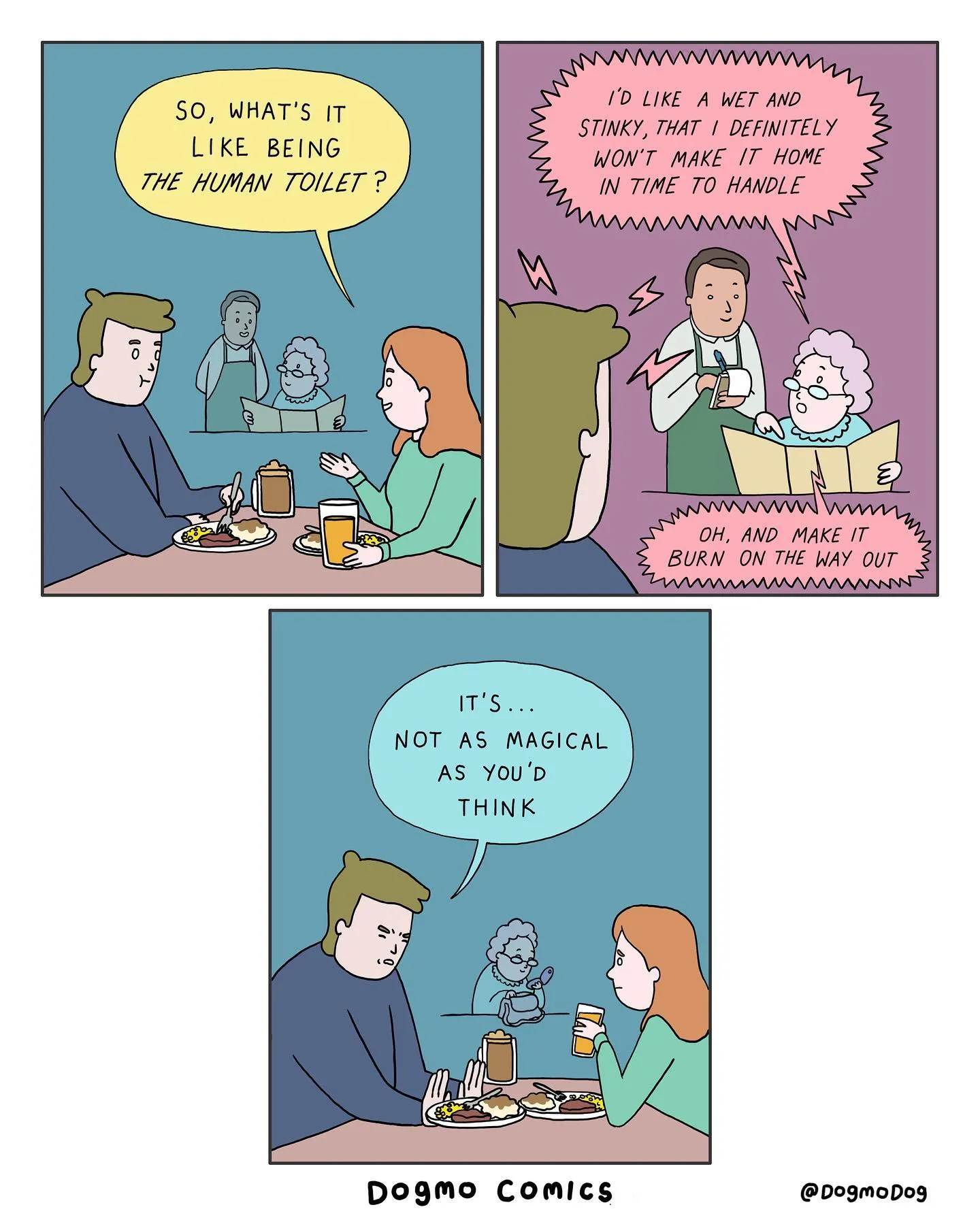
The background figure makes the dinner exchange feel like a mock job interview, sharpening the bluntness of the answer.
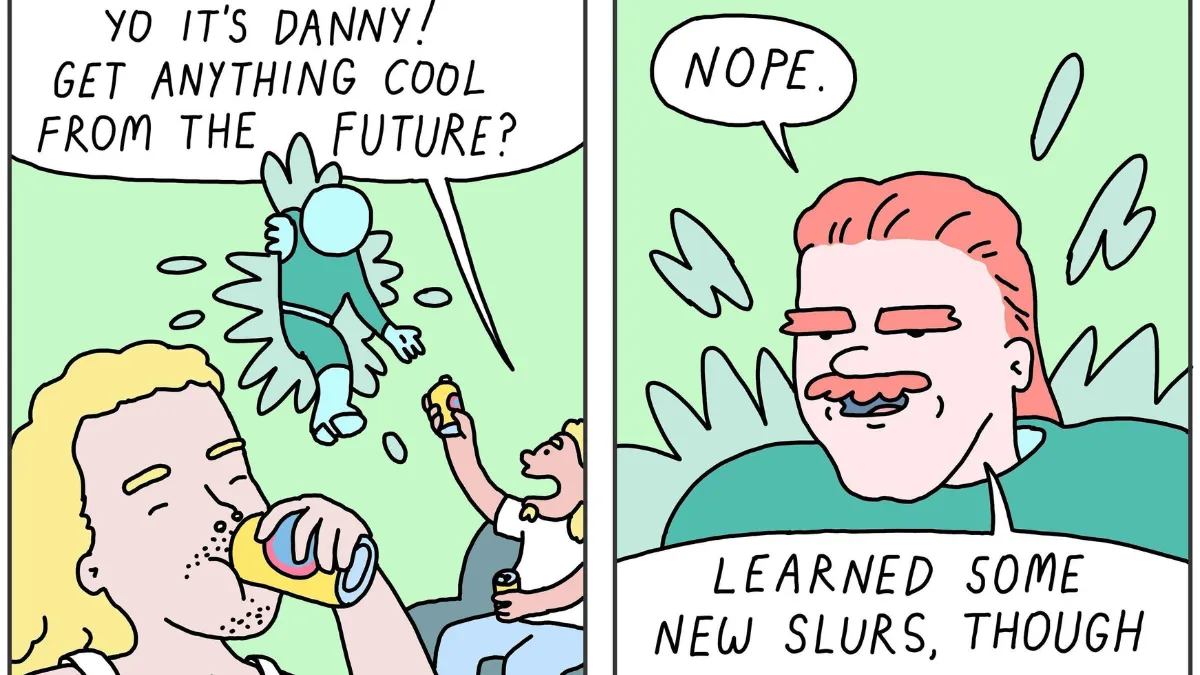
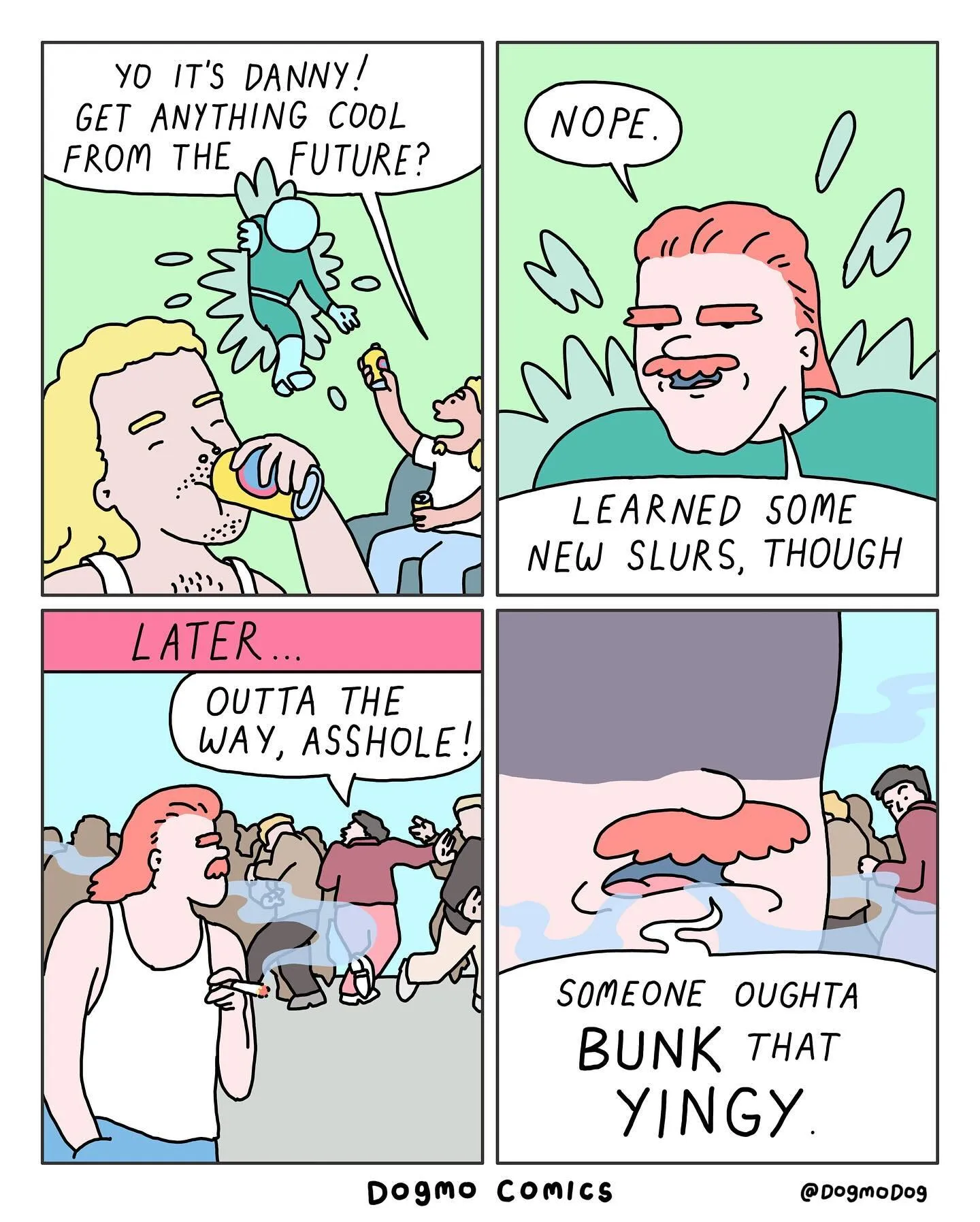
What does the time traveler actually bring back?
Why does the woman’s concern turn to embarrassment?
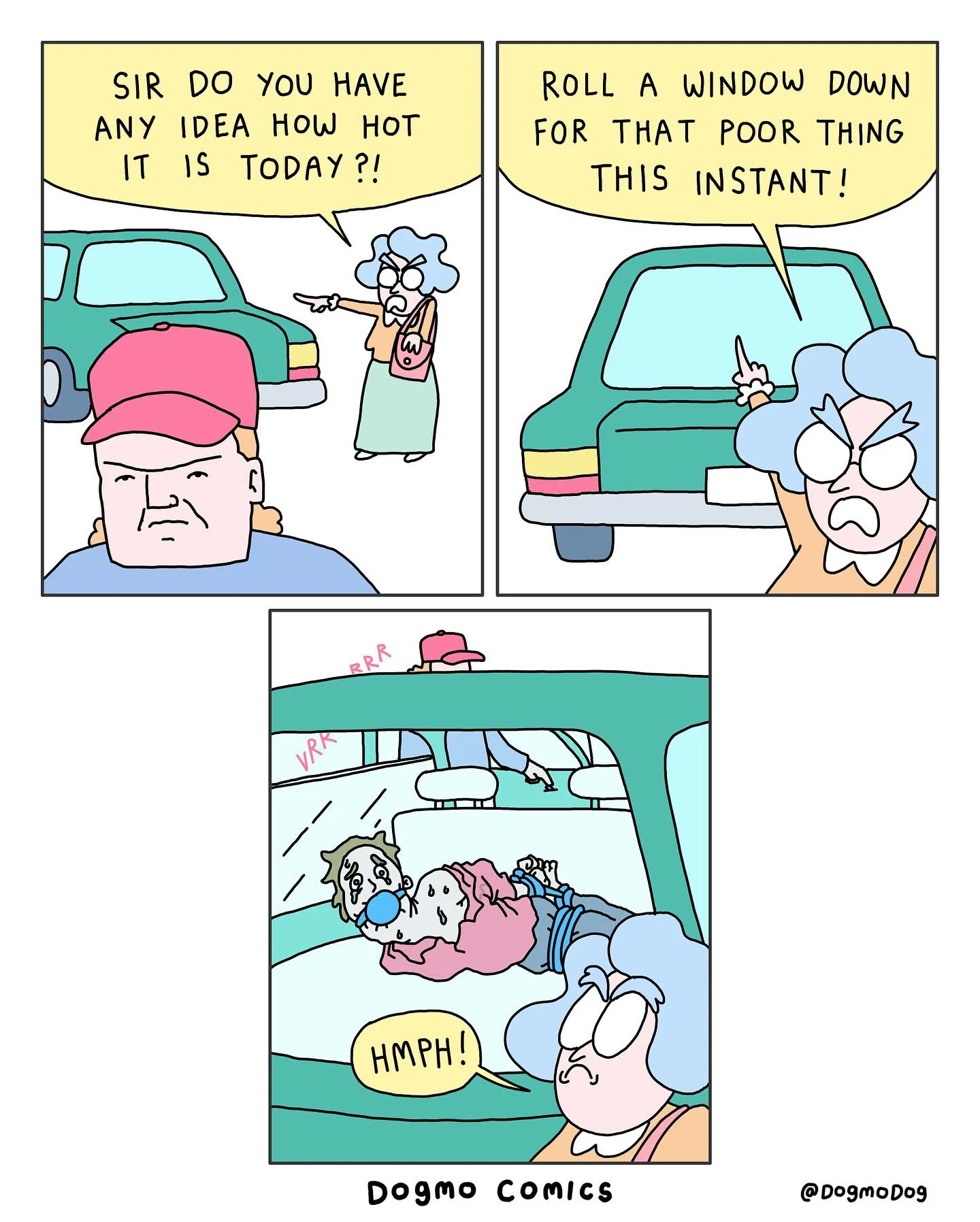
The woman’s concern collapses into embarrassment when the dog is revealed to be already inside the car.
How does the hot-dog costume at the bus stop begin?
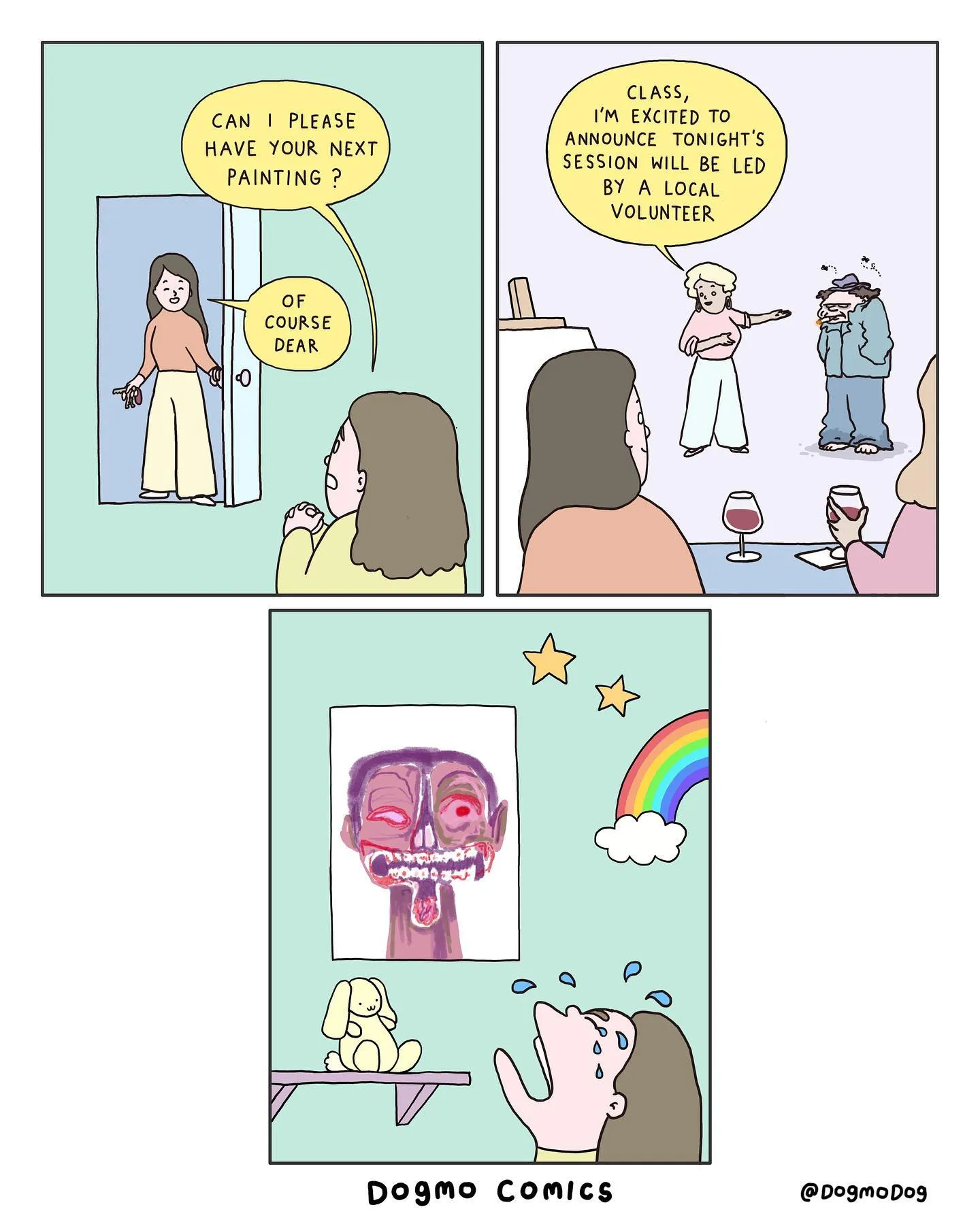
What twist lands in comic #5?
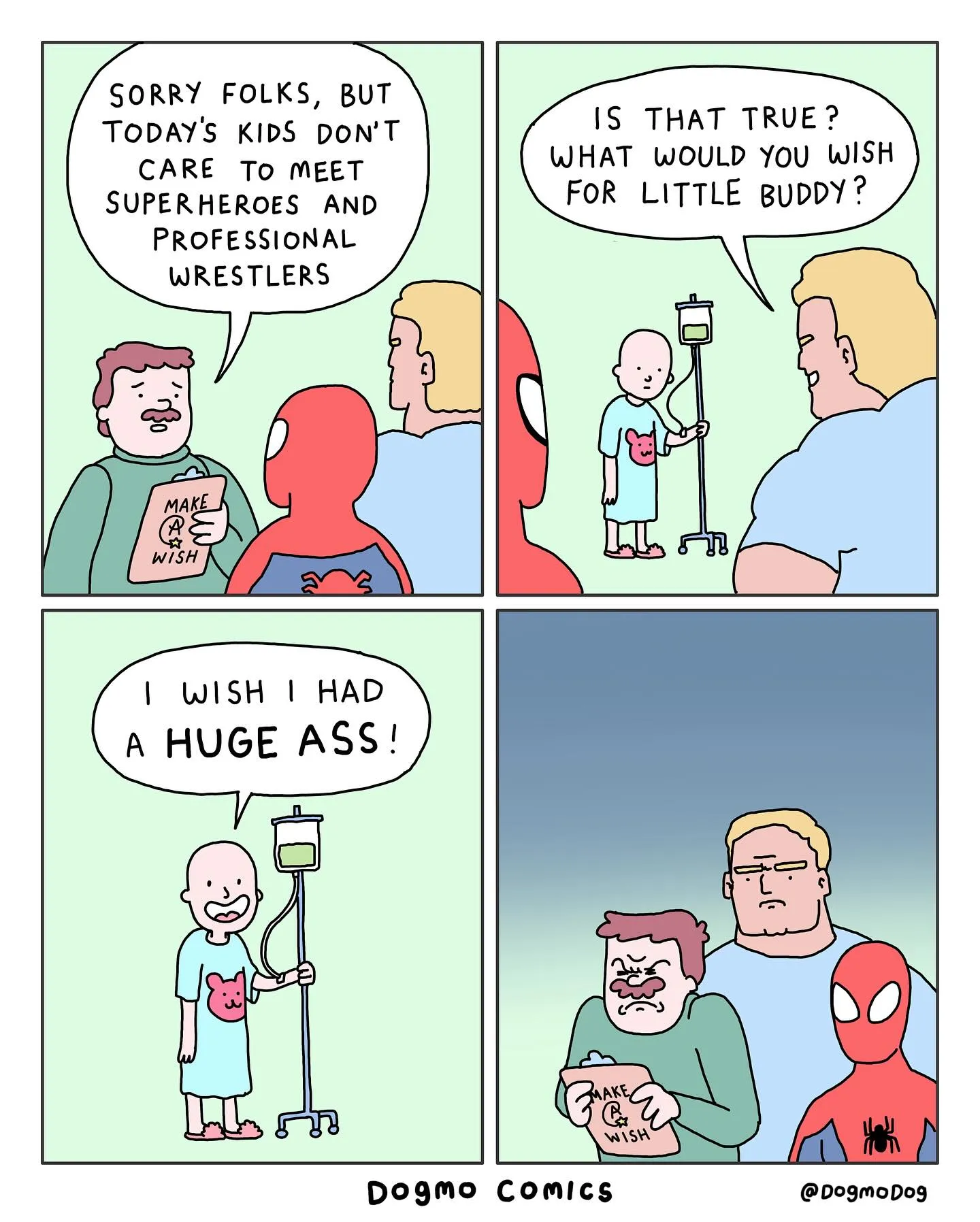
What reversal does comic #6 deliver?
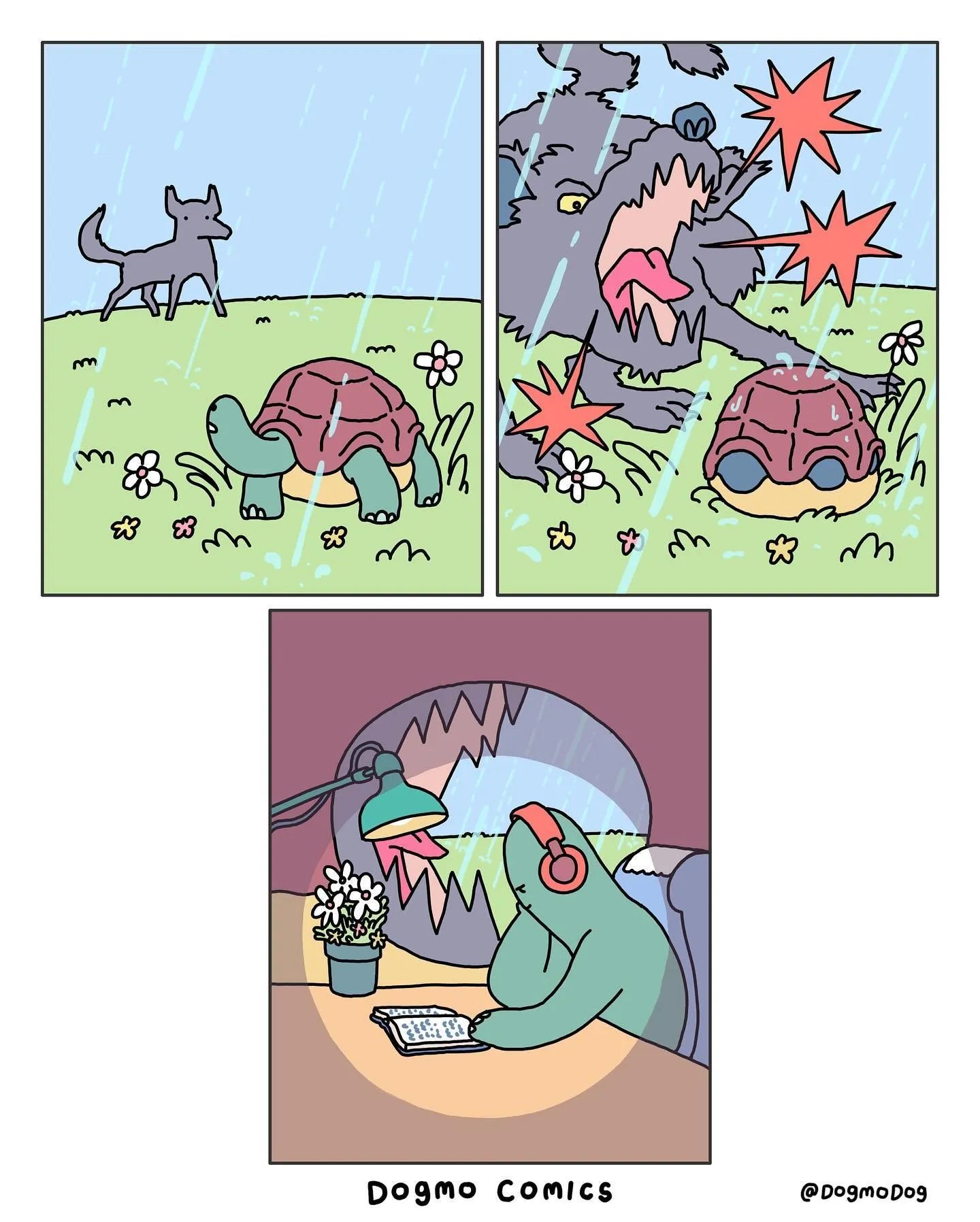
What unexpected turn arrives in comic #7?
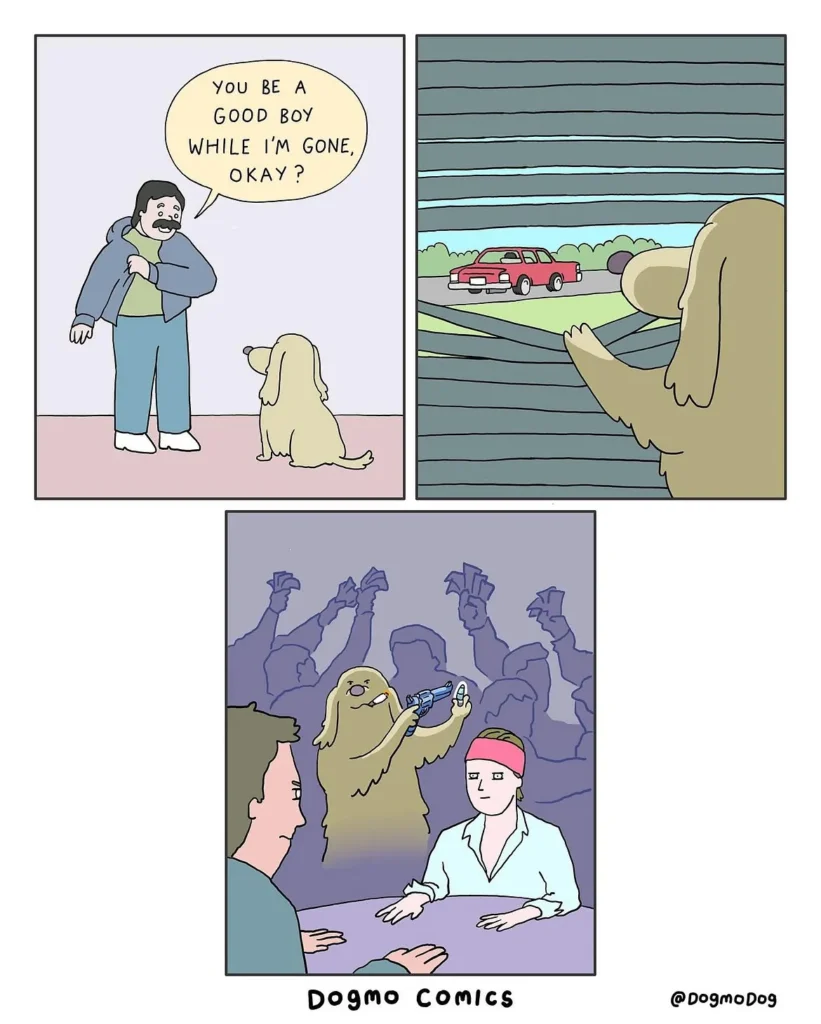
How does comic #8 flip its setup?
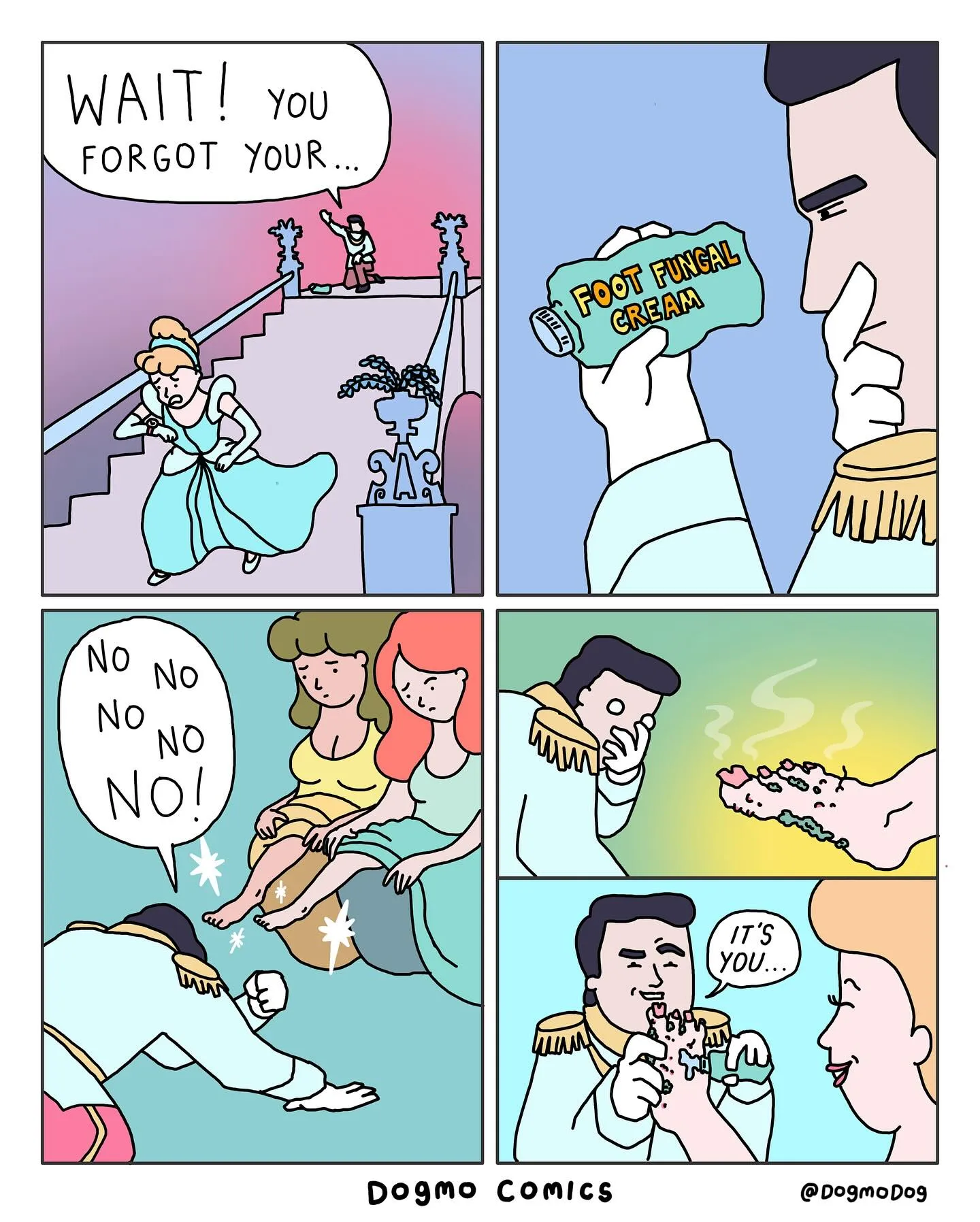
What punchline twist hides in comic #9?
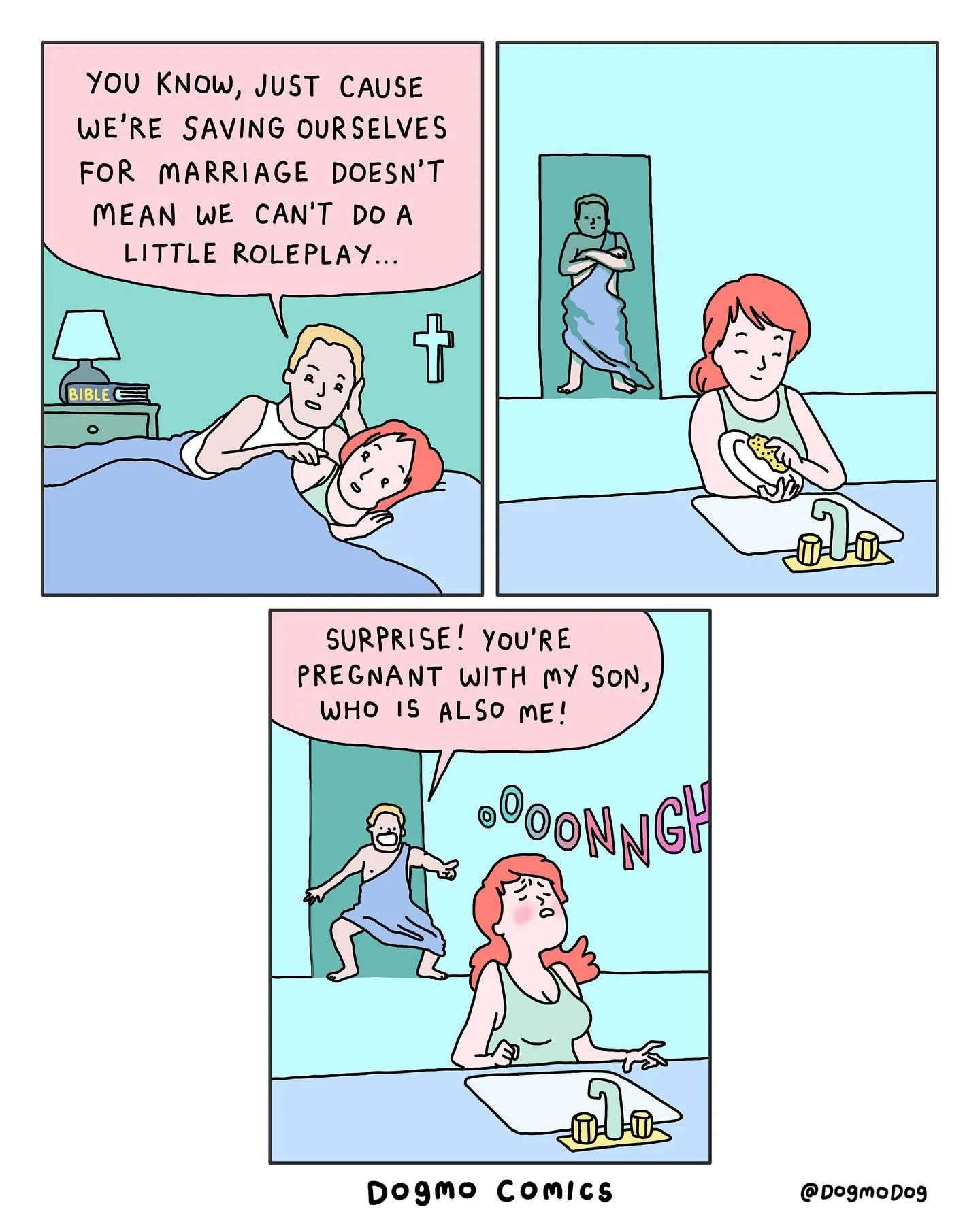
How does one strange commuter become a citywide craze?
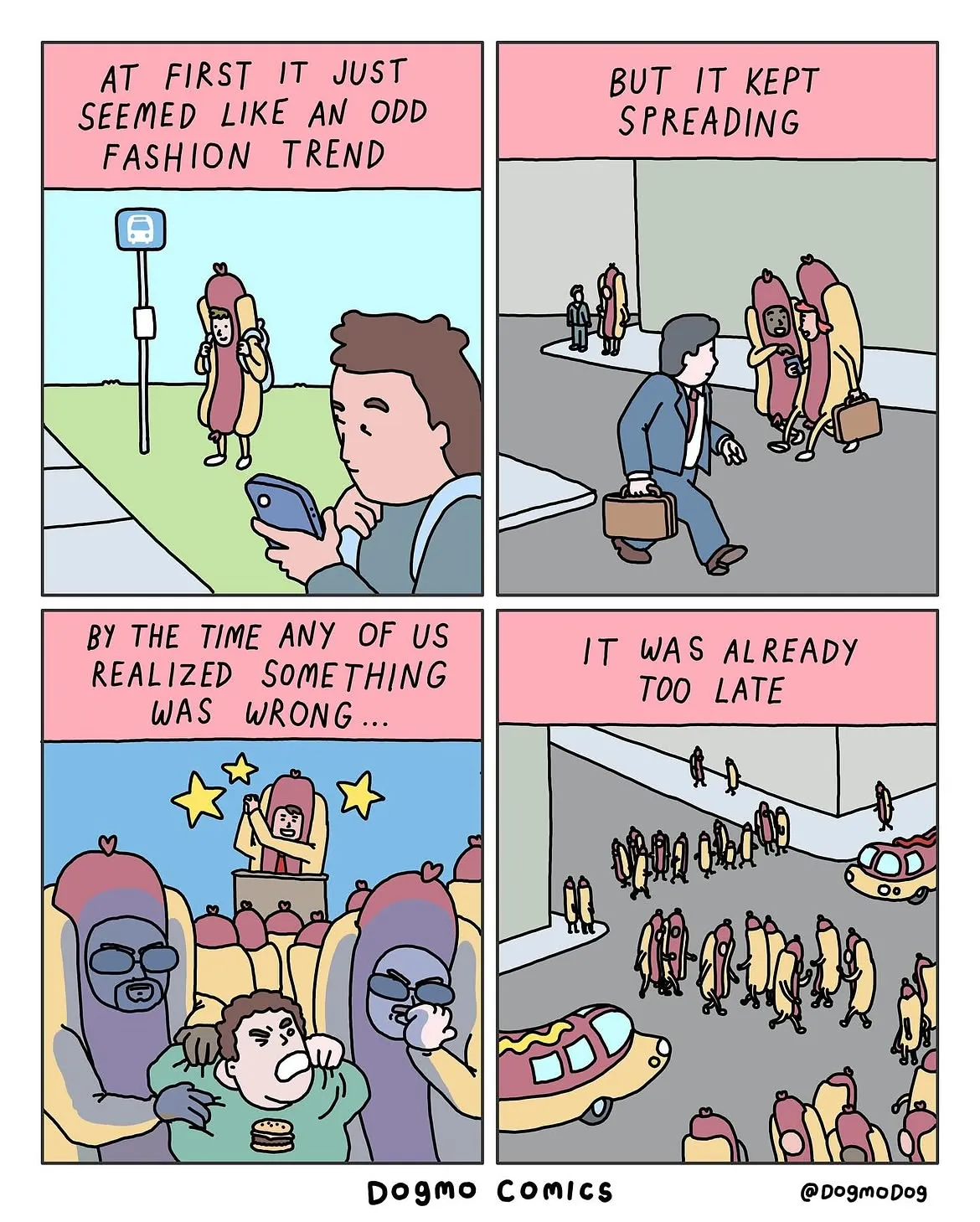
One strange commuter becomes a crowd in costume, turning an isolated sighting into a whole-city craze.
Why does Bond’s final response make the villain’s threat feel negotiable?
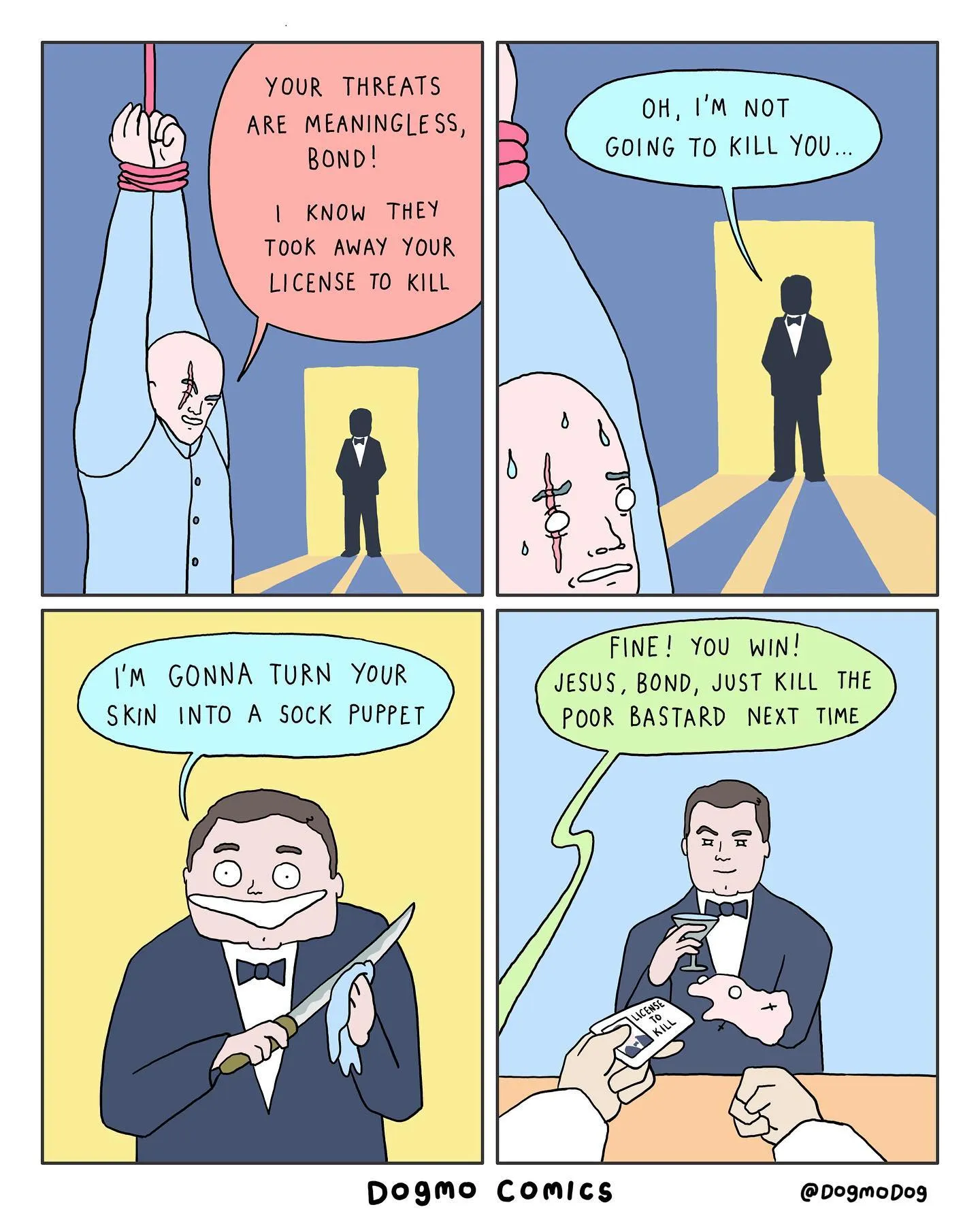
The villain offers a worse fate than death; Bond’s final response makes the threat feel almost negotiable.
What sudden turn does comic #12 take?
Why is the vanished warning light the real payoff?
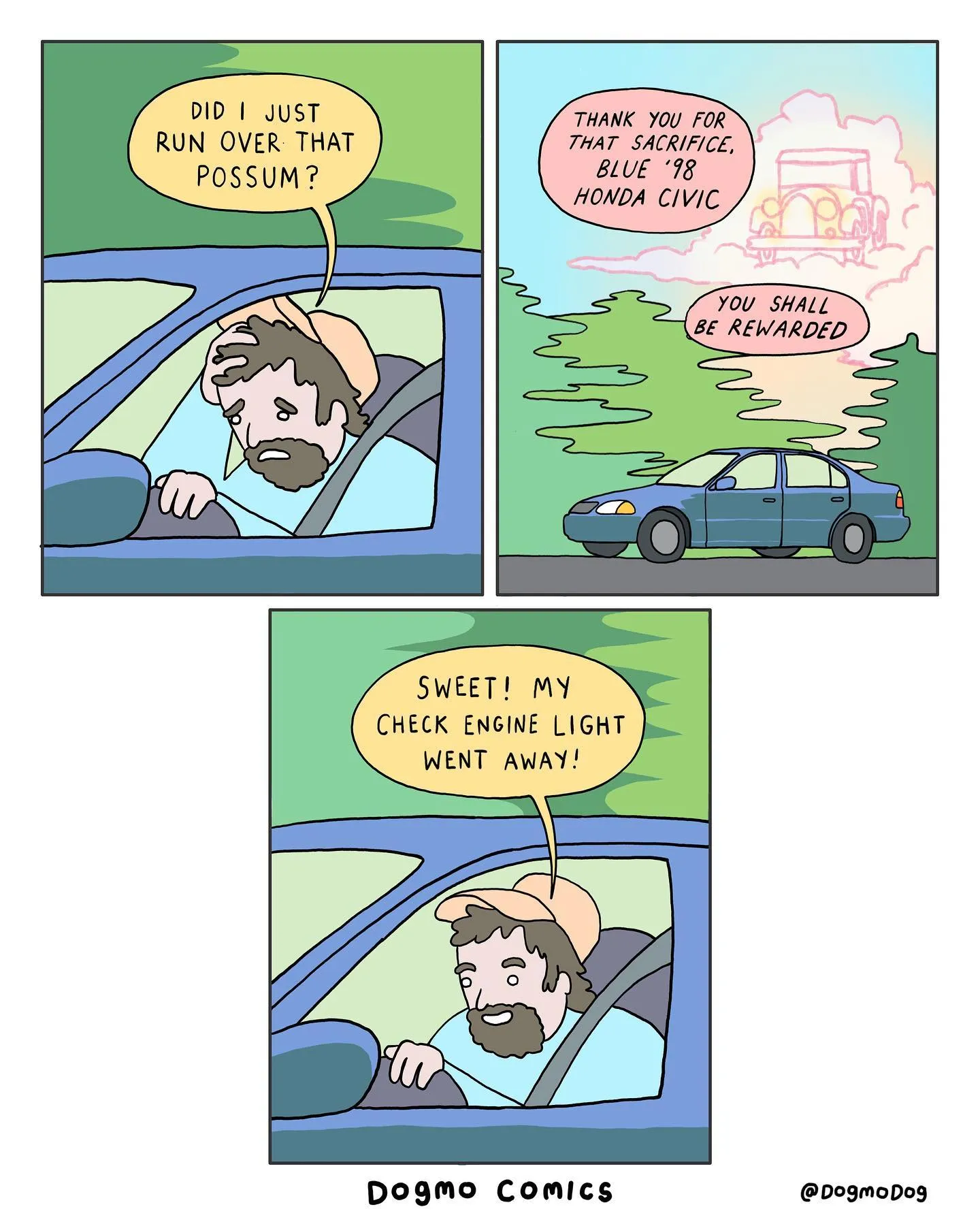
The driver treats supernatural compensation as a car repair, making the vanished warning light the real payoff.
What reversal does comic #14 spring?
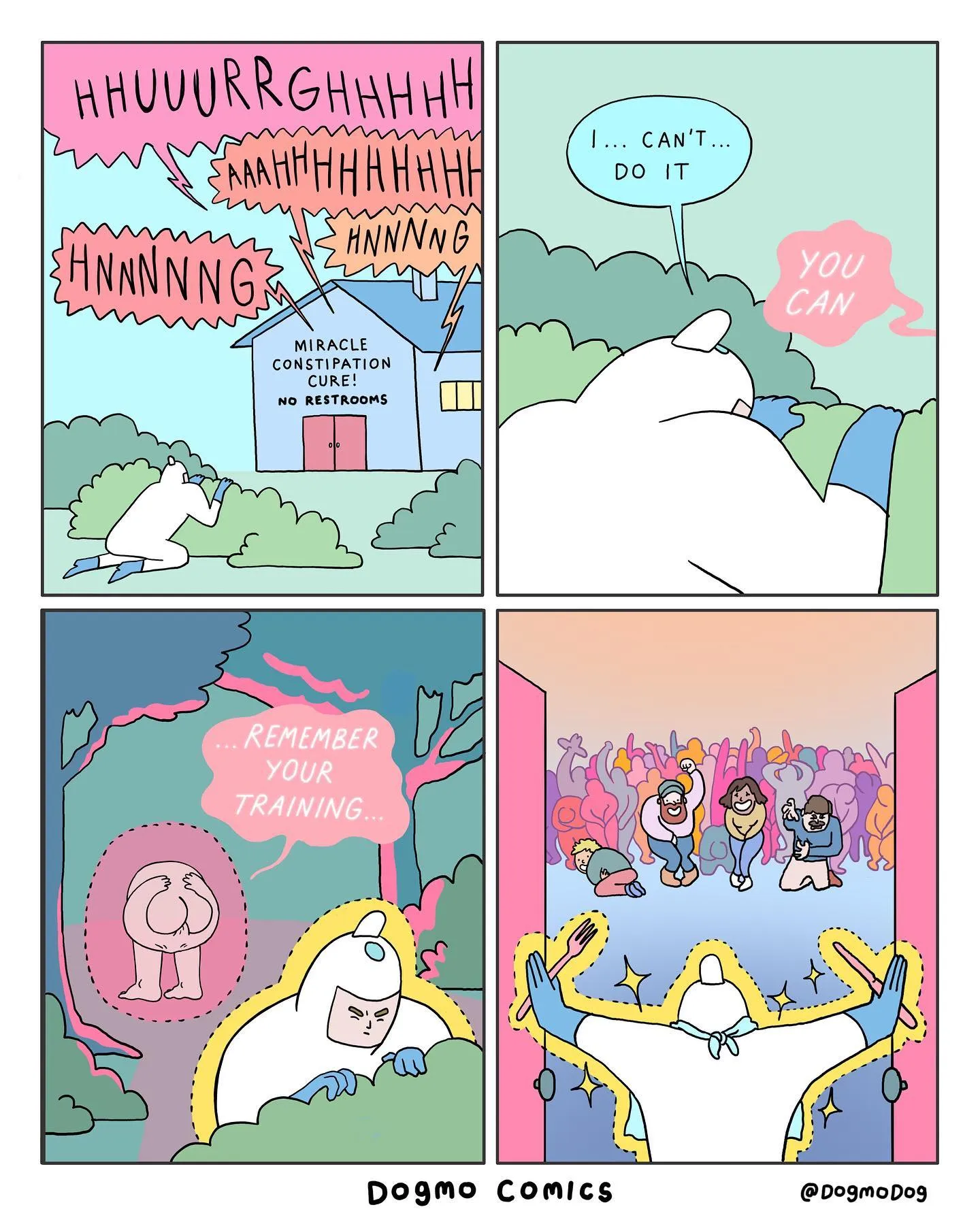
How does comic #15 subvert its premise?
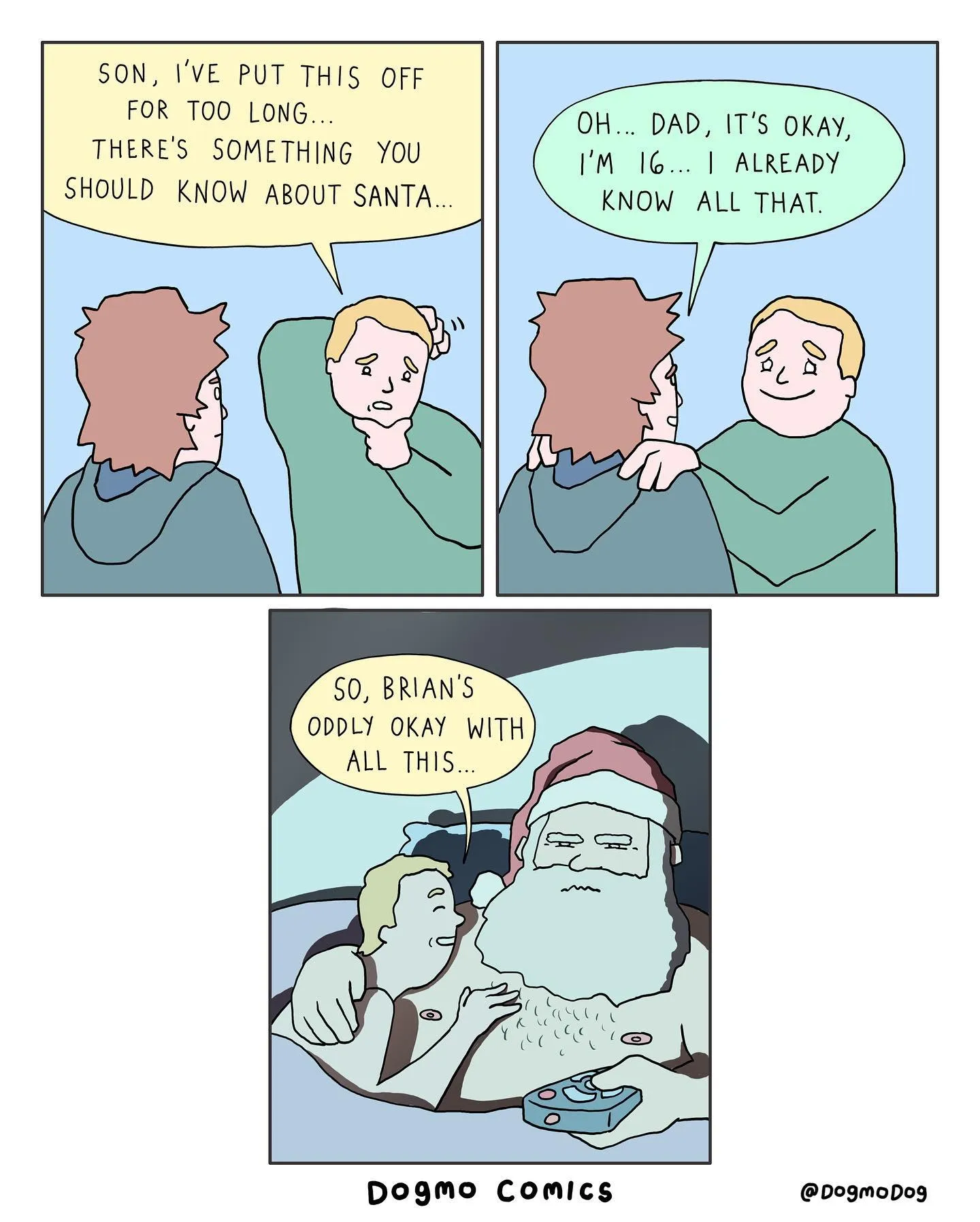
What twist does comic #16 reveal?
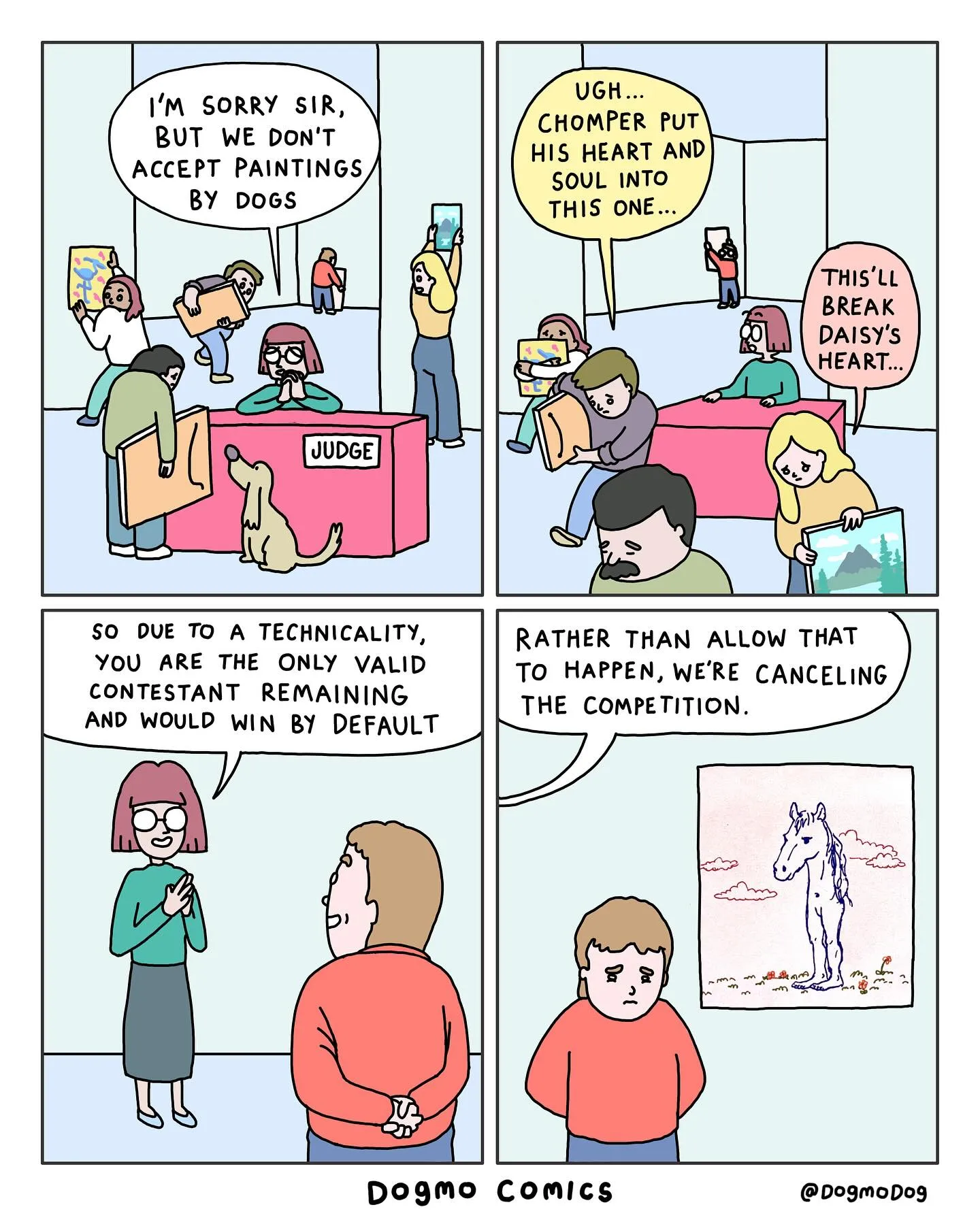
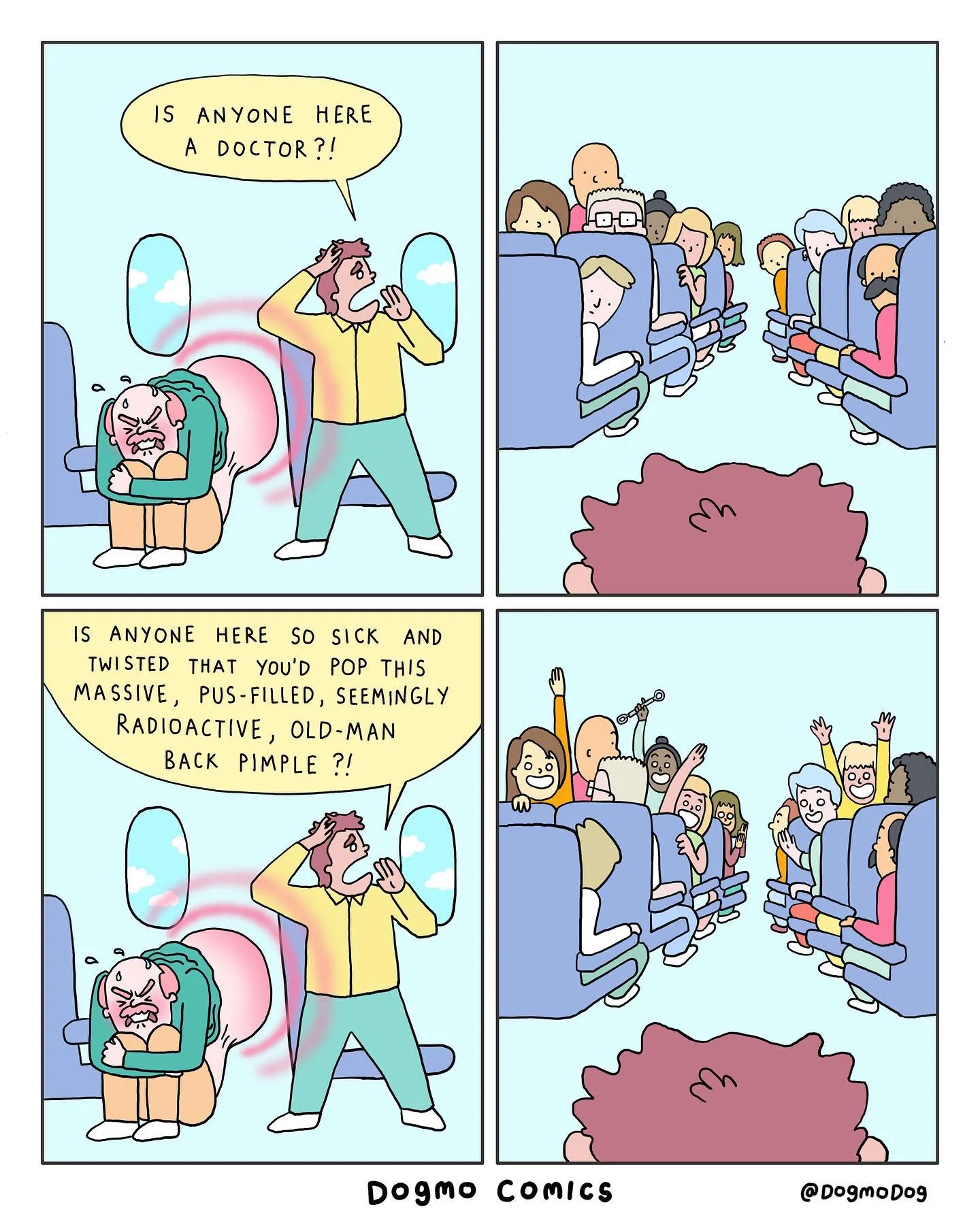
What unexpected punchline closes comic #17?
Why does the dog mascot’s confidence flip a service promise into panic?
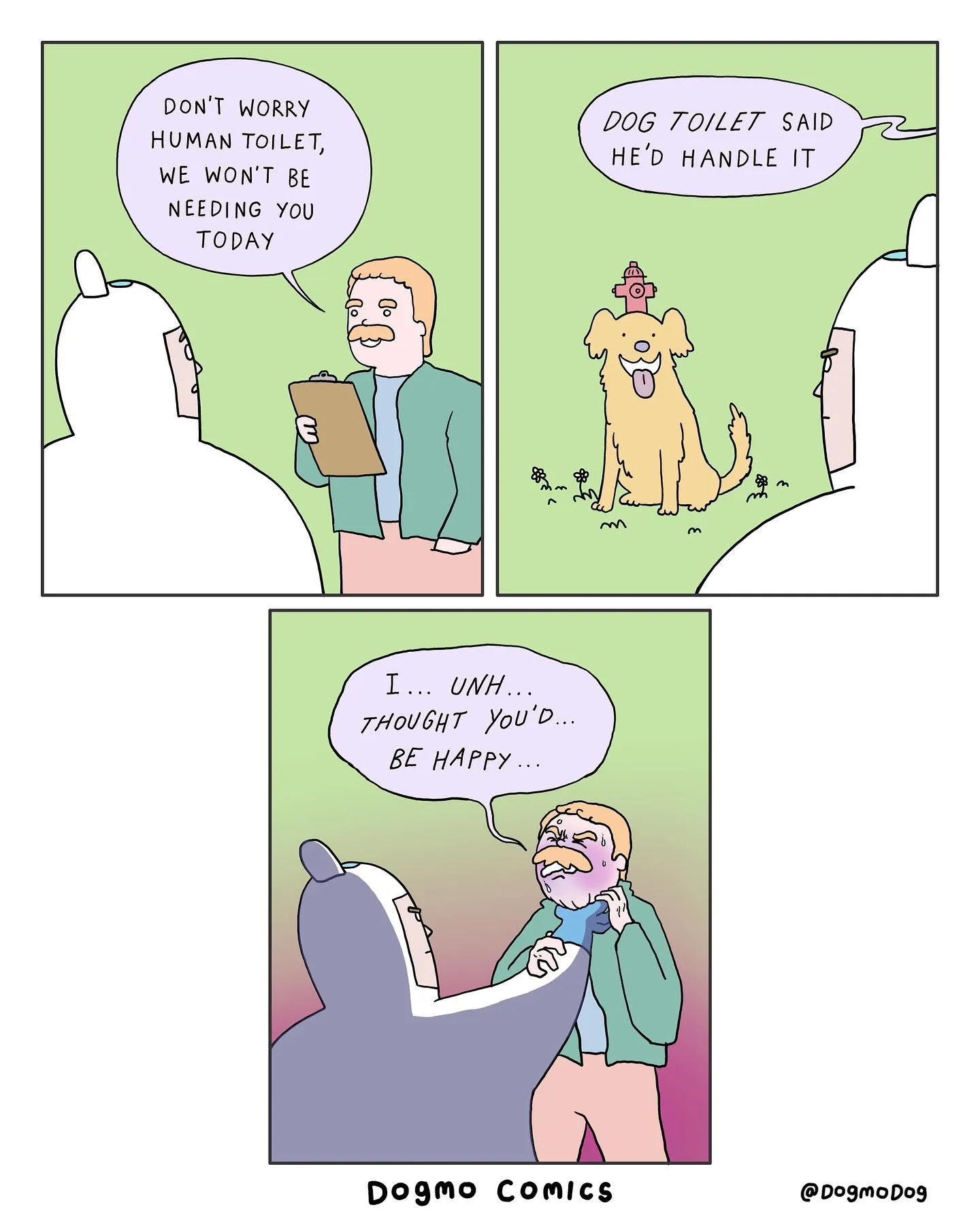
The dog mascot’s confidence clashes with the human’s alarm, flipping a reassuring service promise into panic.
What final reversal does comic #19 deliver?
Who is Dogmo, and what shapes their comics?
Dogmo publishes as Dogmodog and makes short webcomics built on spare outlines, clear staging and abrupt tonal reversals. A Comics Connoisseurs profile reports that comics became a creative outlet alongside work and everyday obligations, while a later feature quotes the artist describing the strips as largely non-autobiographical. Follow the creator on Instagram.
Dogmo’s setups are brief, but the payoff often depends on how the last panel reframes everything before it. Which reversal worked best for you? For a related take on visual misdirection, explore The Baptman’s dark comic punchlines.
📖 Comic Transcript, Scene Description & Humor Notes (Click to Expand)
How do the scenes and visuals set up each gag?
Dogmo's signature clean outlines and soft pastel palette frame a series of deceptively simple scenes: a tense dinner table, a bus stop, a hospital room, a tavern phone call. Characters wear blank, wide-eyed expressions that make their deadpan reactions land harder, while uncluttered backgrounds keep every visual gag front and center. The humor shifts from awkward social misunderstandings to pop-culture send-ups and bleak animal bits, always with the same calm staging that lets the abrupt tonal reversal do the heavy lifting.
What happens panel by panel and line by line?
- Panel 1: A dinner-table exchange turns into a mock job interview, with a blunt answer landing harder thanks to the background figure.
- Panel 2: A time traveler is asked what cool things he brought back and reveals he only learned new insults.
- Panel 3: An elderly woman demands a driver roll down the window for a dog, only to find the dog already inside.
- Panel 4: A hot-dog costume at a bus stop snowballs into a citywide fashion craze.
Why do these comics resonate so easily?
These comics work because they mirror real life's awkward pauses and then escalate them into absurdity. We recognize the concerned bystander, the dinner interrogation, the hopeful question—and the sudden reversal feels like the punchline we never expected but instantly understand.
🎭 Comic Highlights & Relatable Takeaways
✨ A dinner-table exchange can feel like a mock job interview when a background figure silently judges your blunt answers.
✨ An elderly woman's concern for a dog collapses into embarrassment the moment she realizes the dog is already inside the car.
✨ A time traveler asked about cool things from the future only brings back new insults, which says a lot about what people actually value.
✨ A single hot-dog costume at a bus stop snowballs into a citywide fashion craze, showing how quickly one odd sighting becomes a trend.
💬 Comic Q&A & Behind the Scenes
💭 What makes Dogmo comics so effective at landing a sudden punchline?
Dogmo's clean outlines, pastel palette, and uncluttered staging keep each premise easy to follow, so the final panel can quietly reframe everything before it. That spare visual language gives the last line or reveal real room to land, which is why the reversals feel so sharp.
💭 Why do so many Dogmo strips hinge on the final panel rather than the dialogue?
Because the joke often isn't in what characters say but in how the last image recontextualizes the whole scene. A dinner exchange becomes a mock job interview, or a concerned bystander's worry collapses into embarrassment, and suddenly the earlier panels read completely differently.
💭 How does Dogmo balance everyday setups with pop-culture send-ups and bleaker gags?
The strips move fluidly between familiar situations like bus stops and hospital rooms and broader references like Bond villains or time travelers. The consistent calm staging holds it together, letting awkward social misunderstandings, visual misdirection, and darker animal humor all share the same deadpan tone.
💭 Who is behind Dogmo comics, and where can readers follow the artist?
Dogmo publishes as Dogmodog, creating short webcomics built on spare outlines and abrupt tonal reversals. Comics became a creative outlet alongside work and daily obligations, and the artist describes the strips as largely non-autobiographical. You can follow the creator on Instagram for new batches.
💭 Where do Dogmo's visual gags get their biggest payoff, like the dog already inside the car?
The payoff lives in the reveal itself, where a character's concern or confidence flips into embarrassment or panic. The dog mascot clashing with a human's alarm, or a commuter becoming a citywide craze, shows how Dogmo uses uncluttered staging to make each visual twist hit cleanly.


