


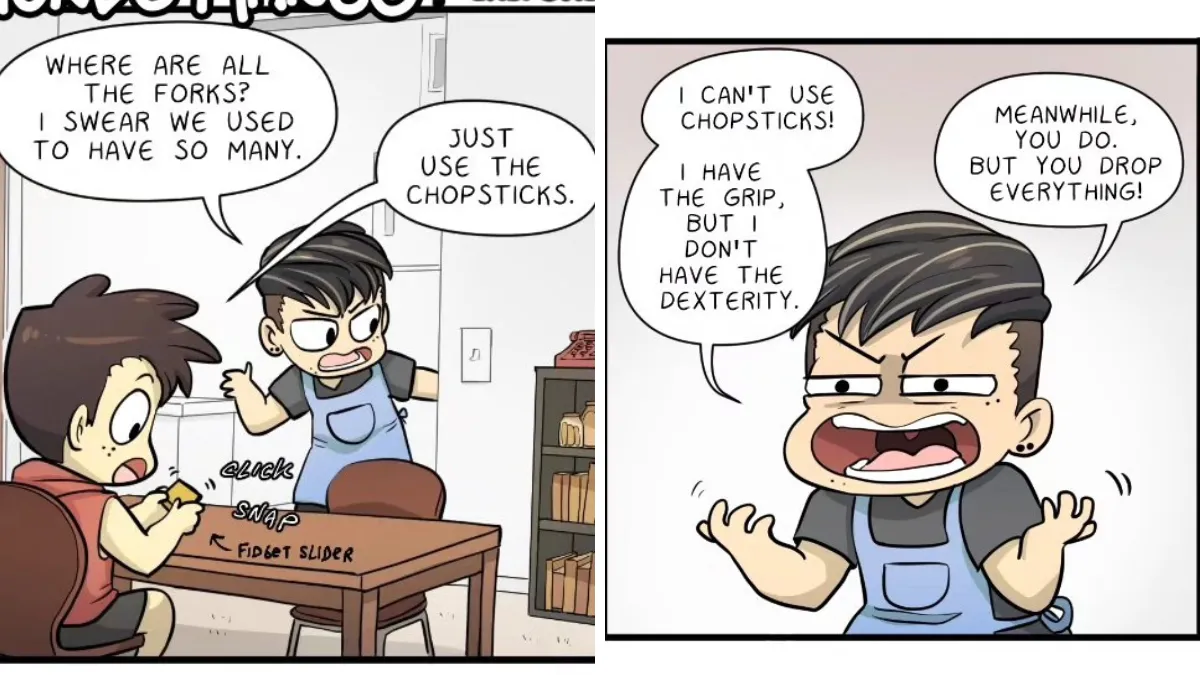
Behind the Comic: Mondo Mango turns the tiny stuff of friendship into comedy gold, and this roundup of 20 strips proves it. The Kao’s rounded, wide-eyed characters stumble through late nights, stubborn chopsticks, questionable hair decisions and marbles sorted with suspicious devotion. Clear four-panel pacing and expressive reactions do the heavy lifting, flipping familiar moments one step past reasonable. Expect teasing, frustration and a few unexpectedly tender beats. Which strip feels most like your own life?
These 20 Mondo Mango comics about friends and everyday life find their jokes in ordinary habits: staying up too late, collecting marbles, struggling with chopsticks and worrying over a new hair color. Familiar situations become funny when the characters take them one step too far.
The Kao draws rounded, wide-eyed characters and uses clear four-panel pacing, expressive reactions and small visual reversals. The collection moves between teasing friendship, everyday frustration and a few unexpectedly tender beats.
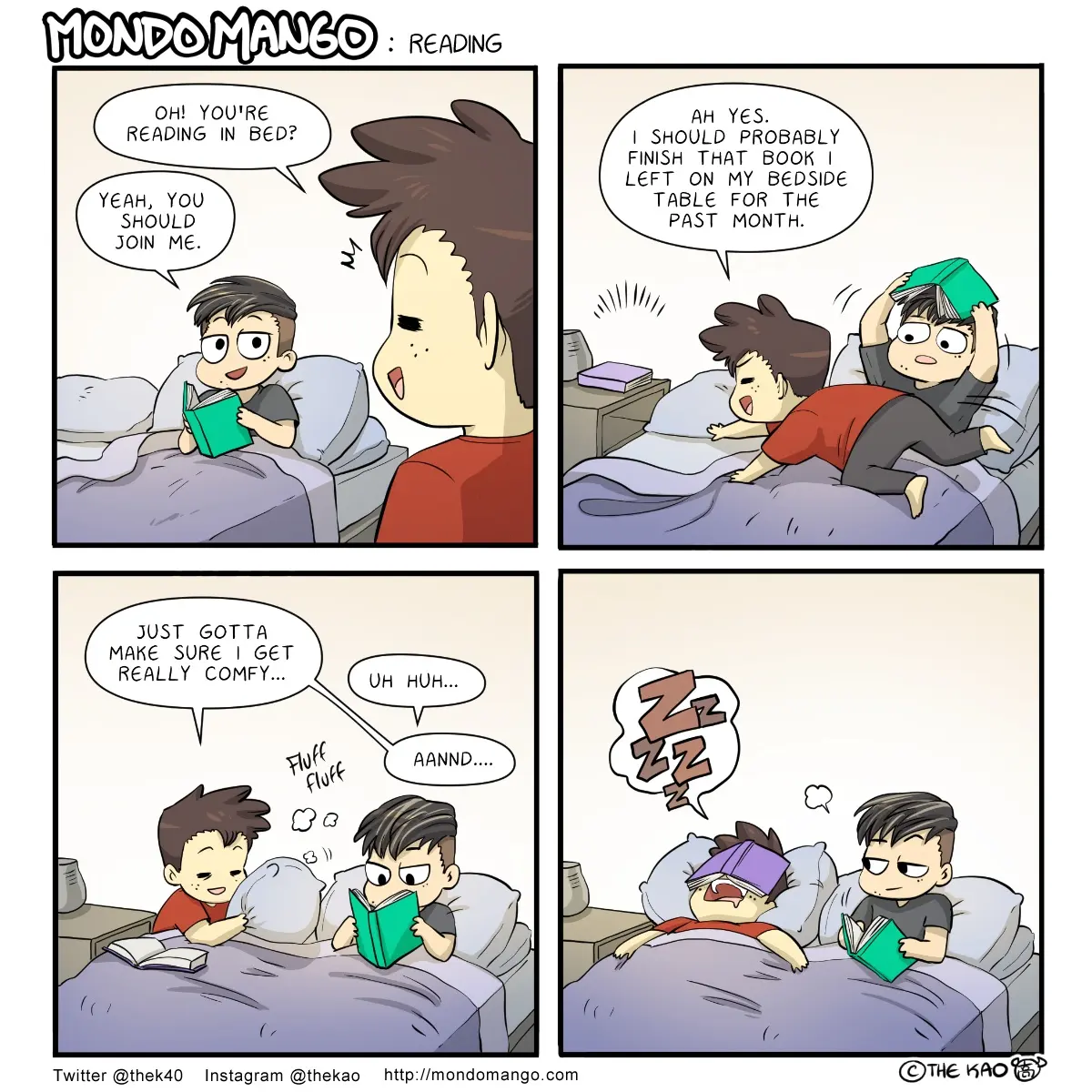
What happens in #1 — Reading?
What happens in #2 — Passage of Time?
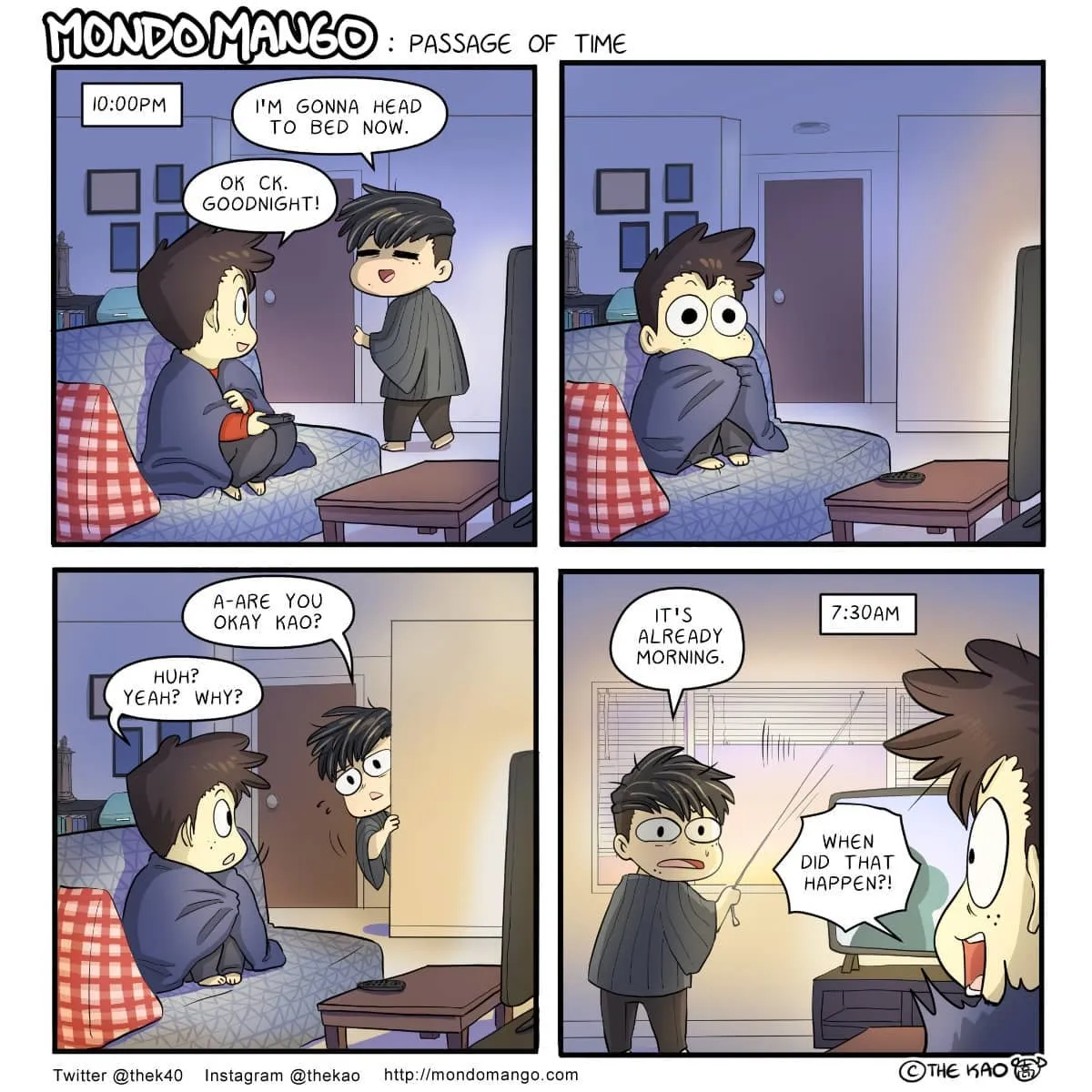
The shift from 10 p.m. to 7:30 a.m. makes the lost hours visible before the character can explain them.
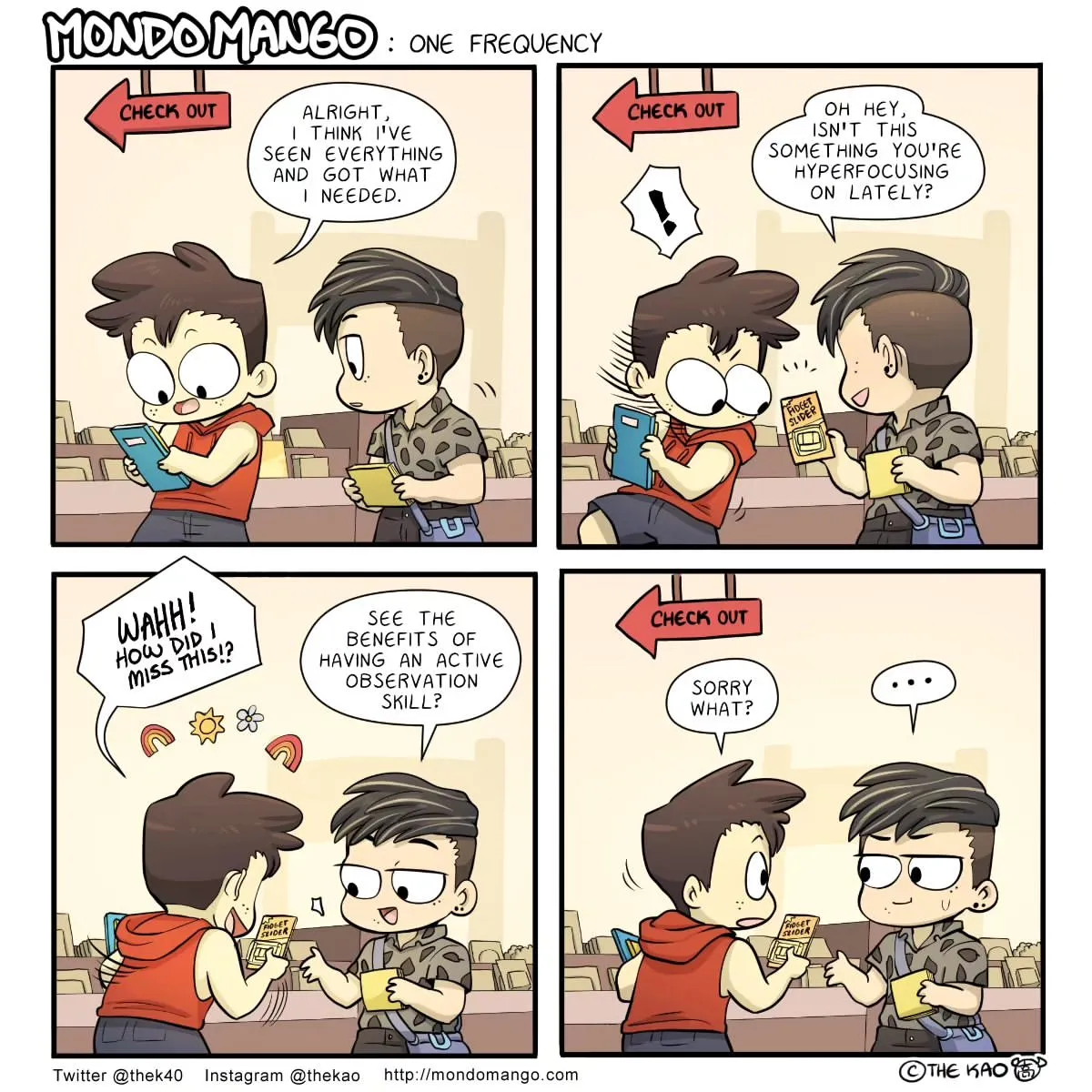
What happens in #3 — One Frequency?
What happens in #4 — Marbles?
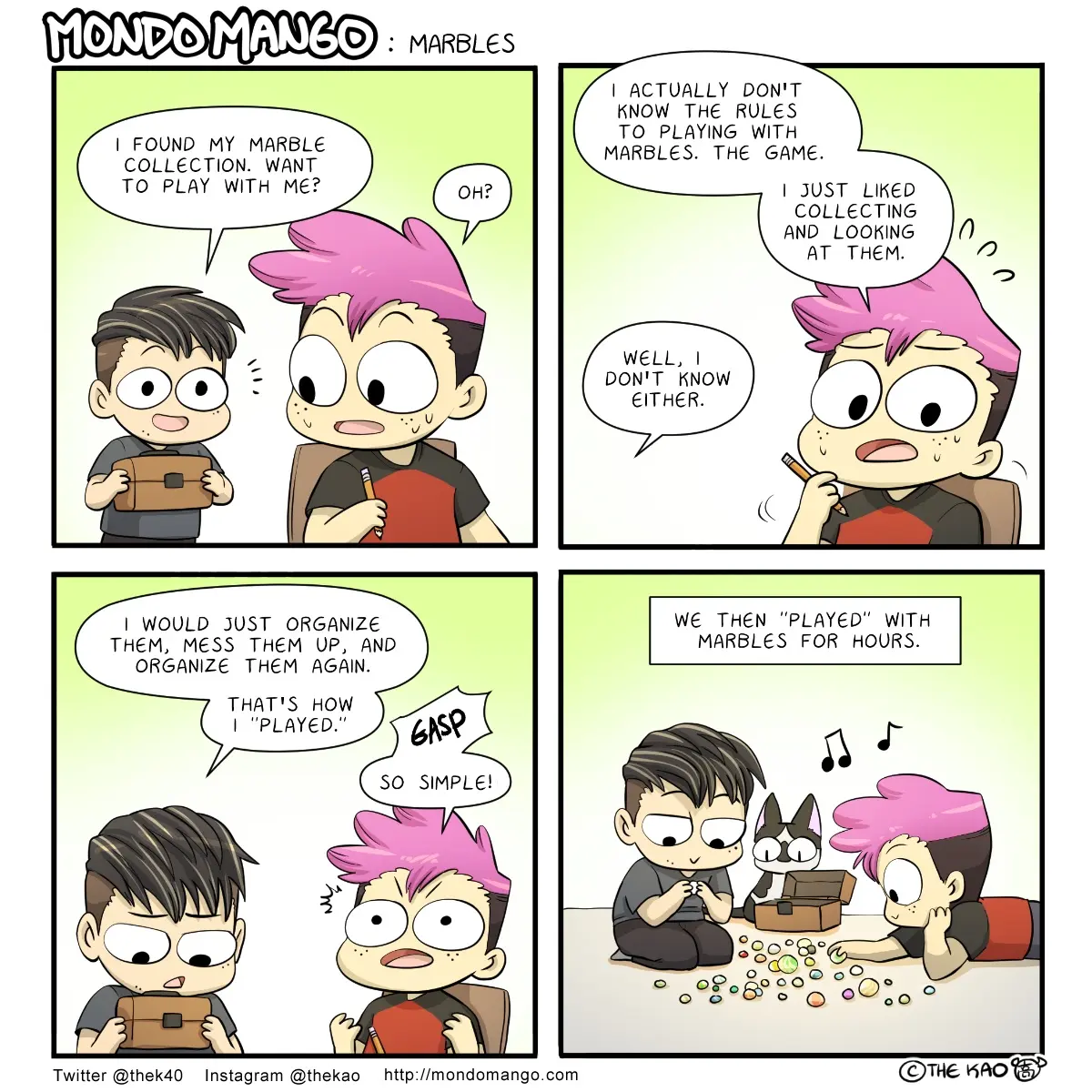
The joke hinges on a different idea of play: sorting, scattering and reorganizing marbles is the whole activity.
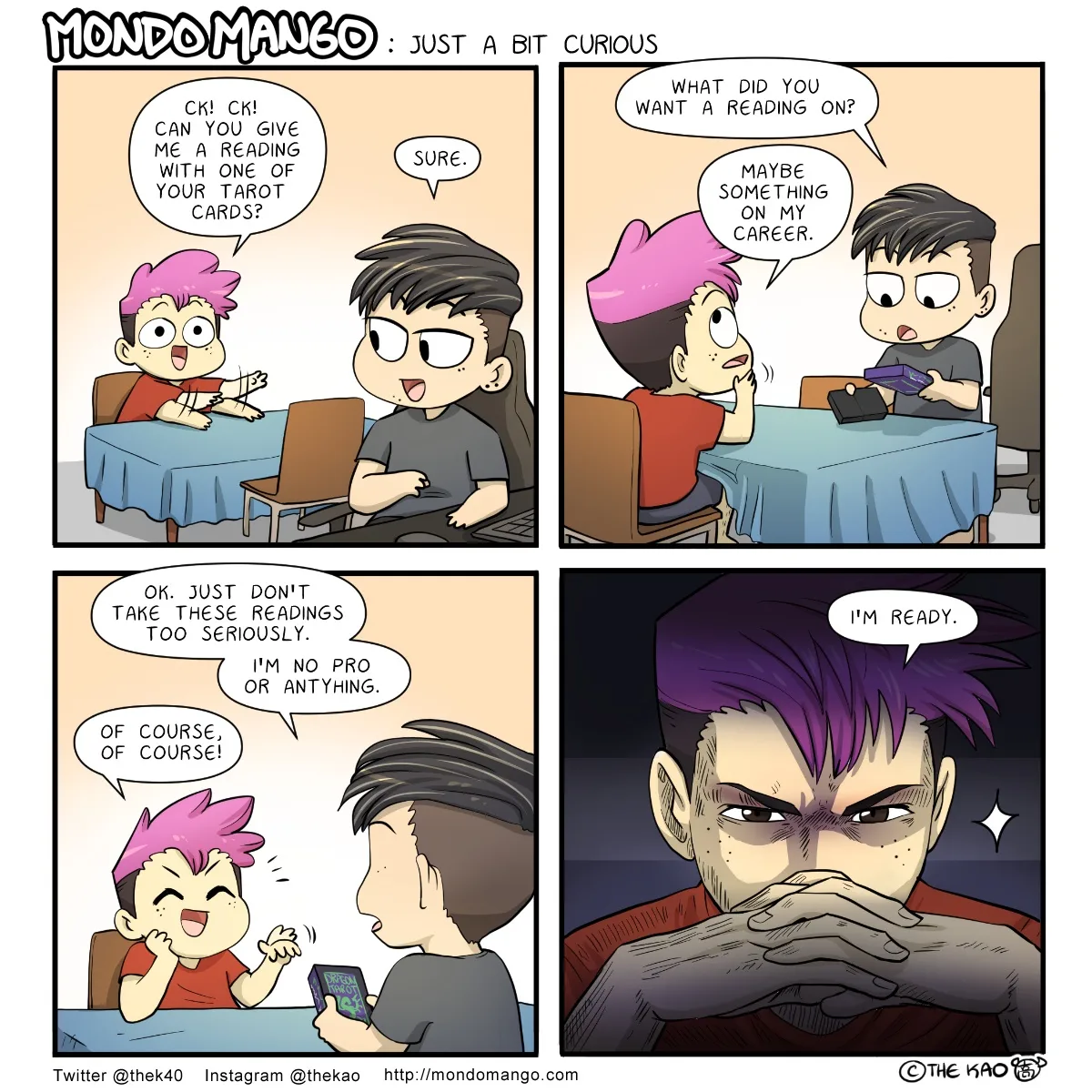
What happens in #5 — Just a Bit Curious?
What happens in #6 — Is It Dirt?
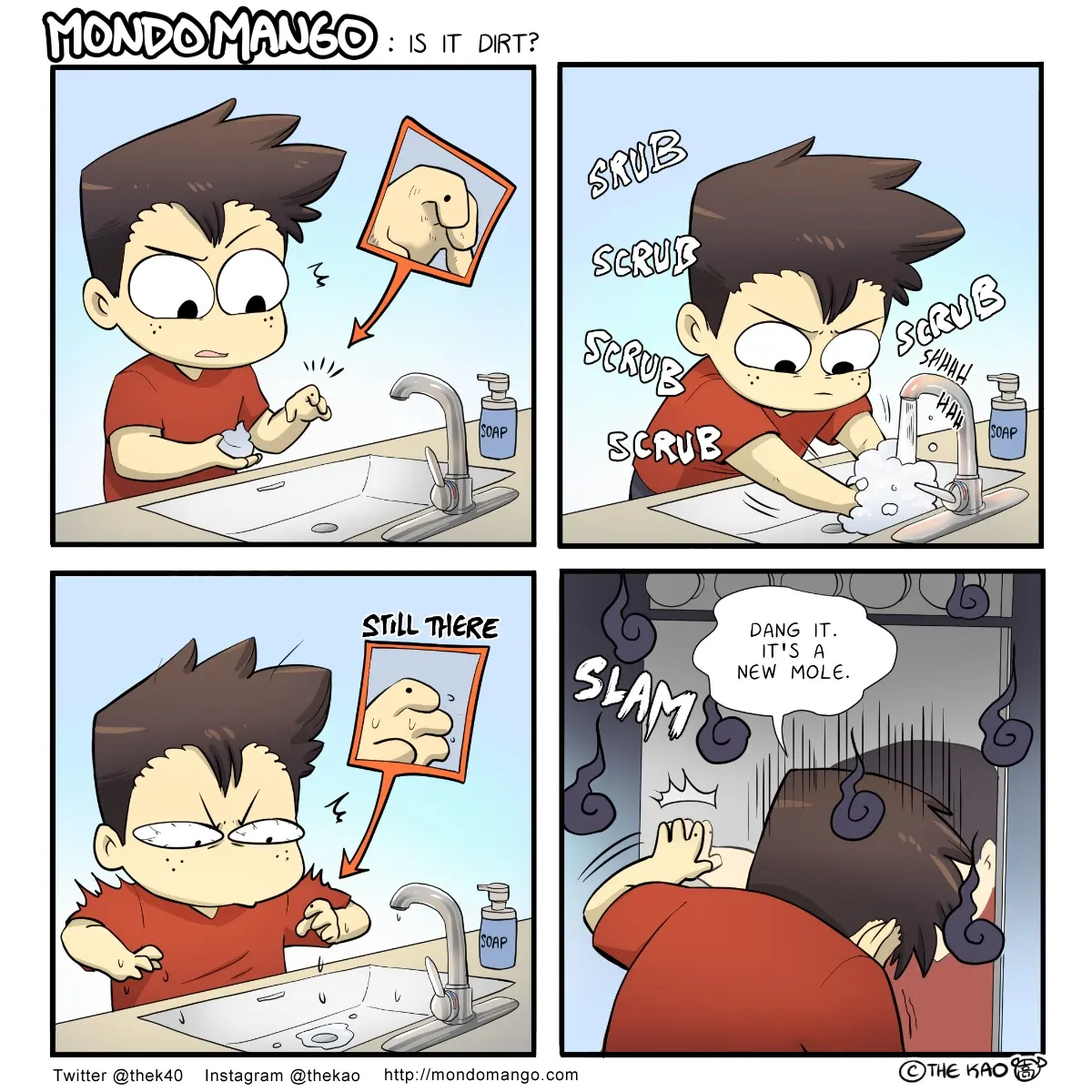
A close-up tracks the stubborn spot as the boy scrubs; the final reveal makes it a new mole, not dirt.
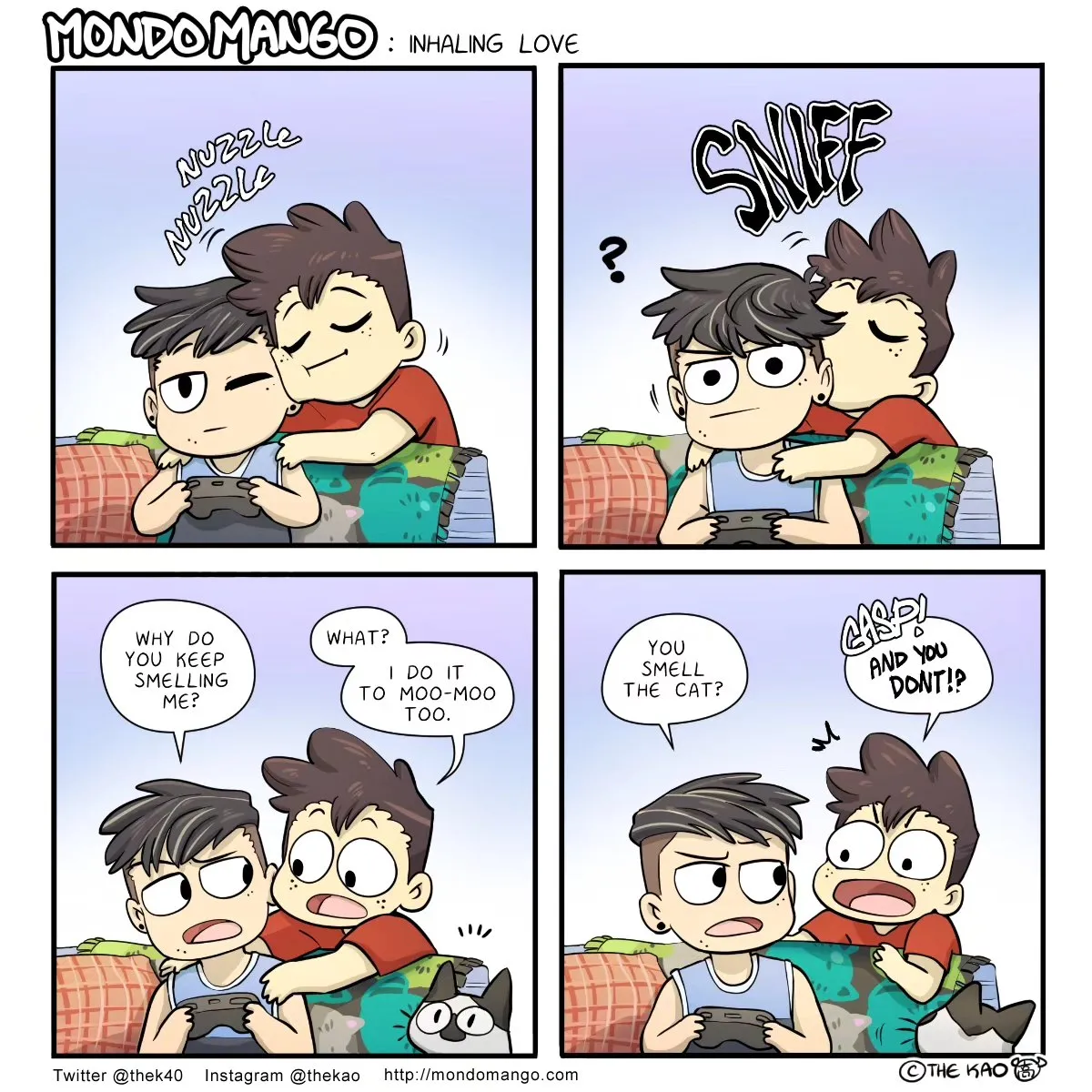
What happens in #7 — Inhaling Love?
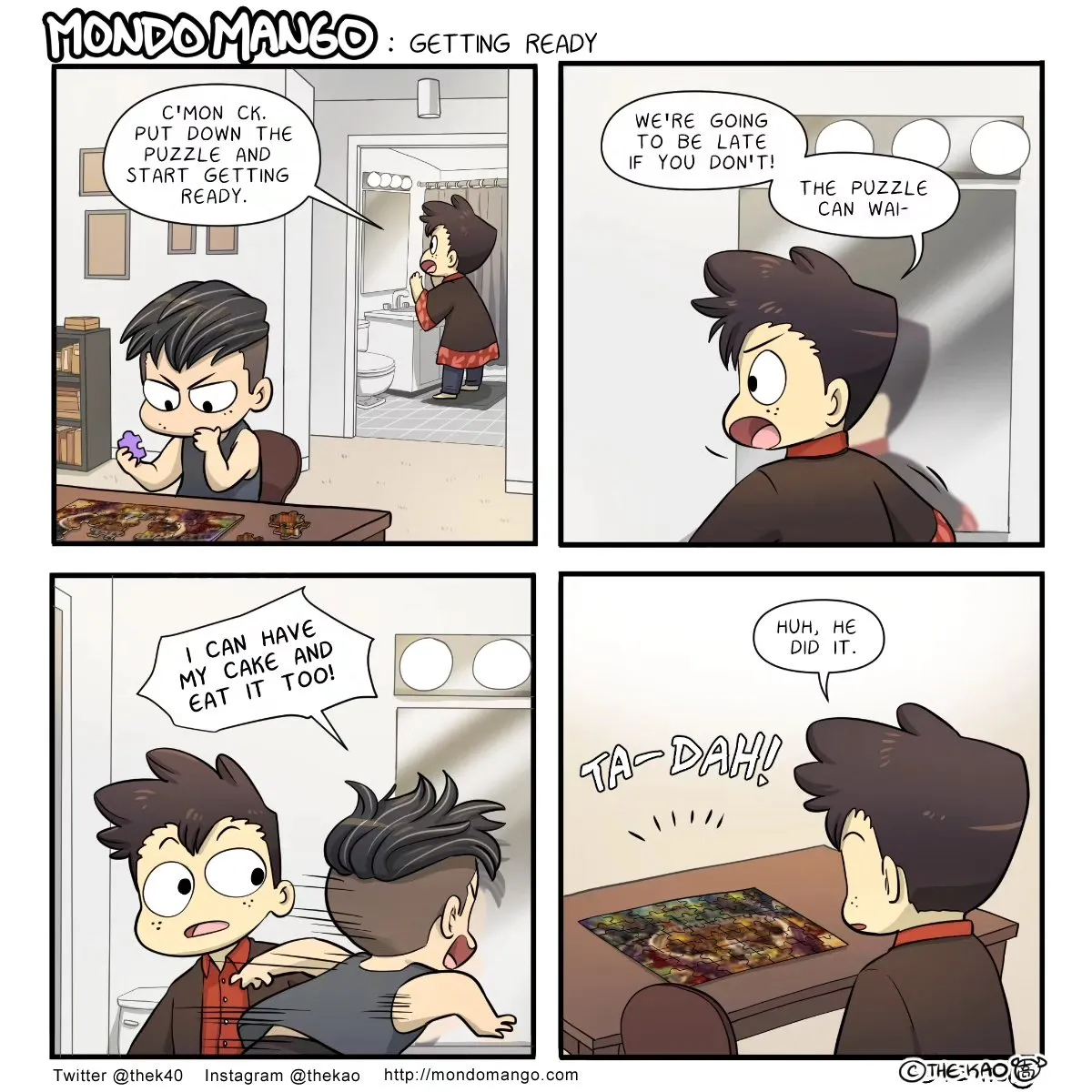
What happens in #8 — Getting Ready?
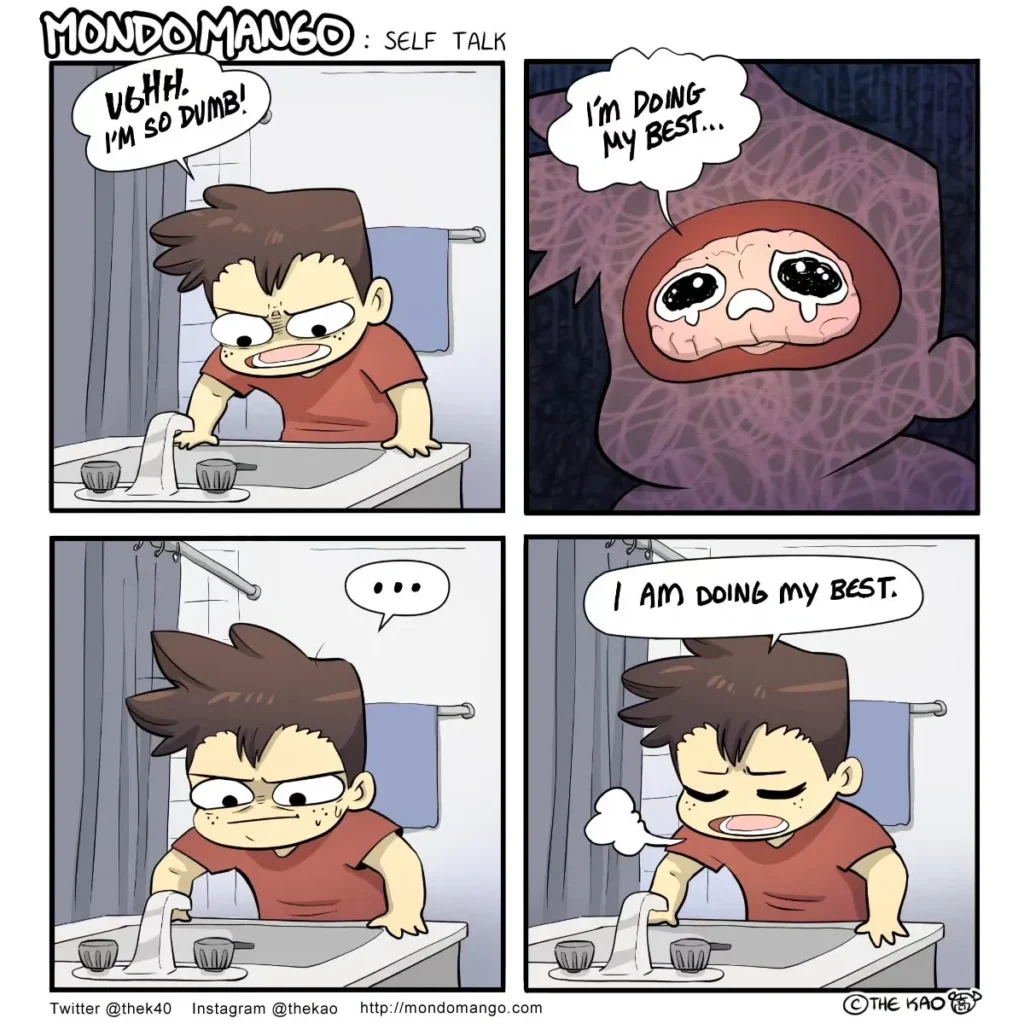
What happens in #9 — Failure?
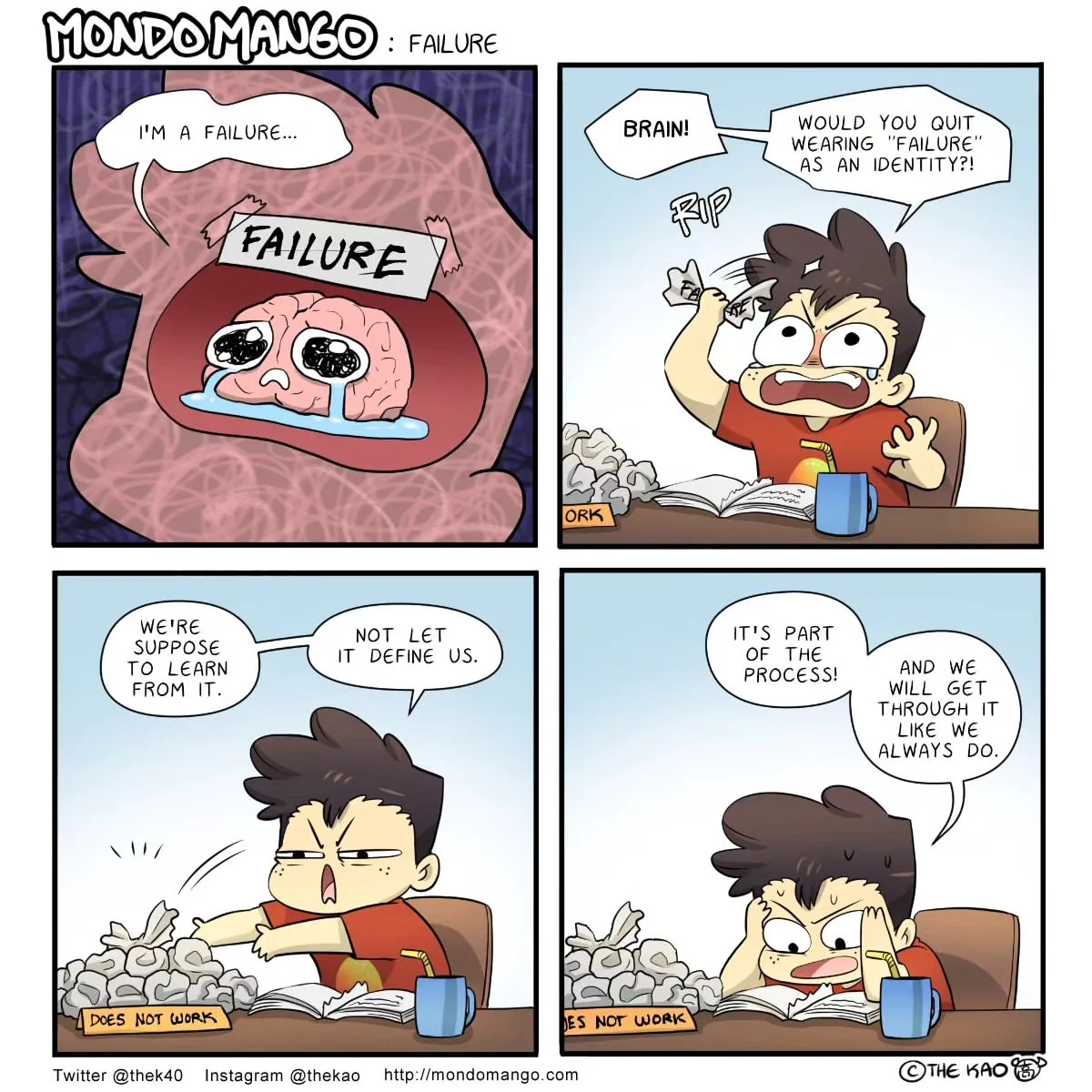
By giving the brain a literal “FAILURE” label, the strip turns self-criticism into a character the boy can argue with.
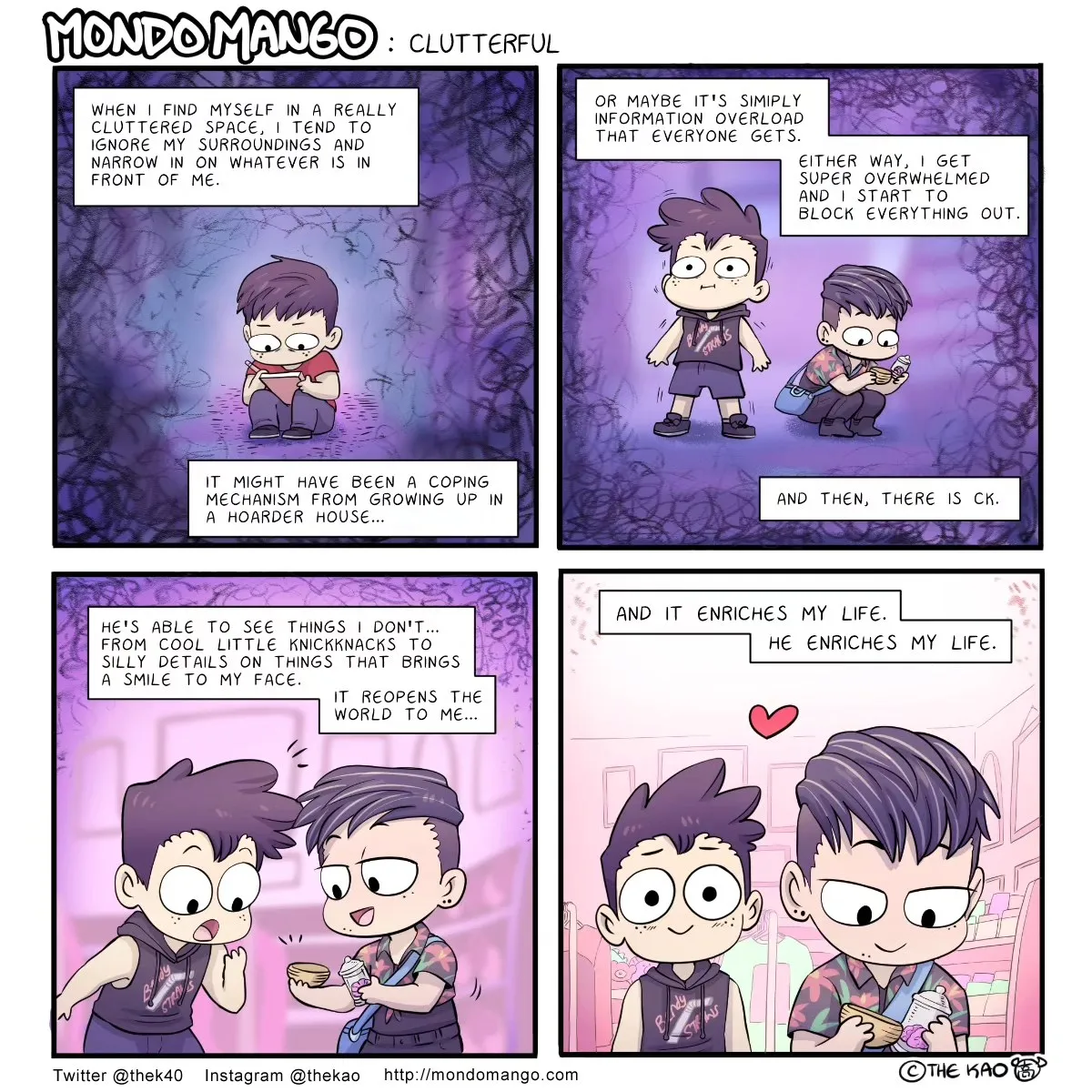
What happens in #10 — Clutterful?
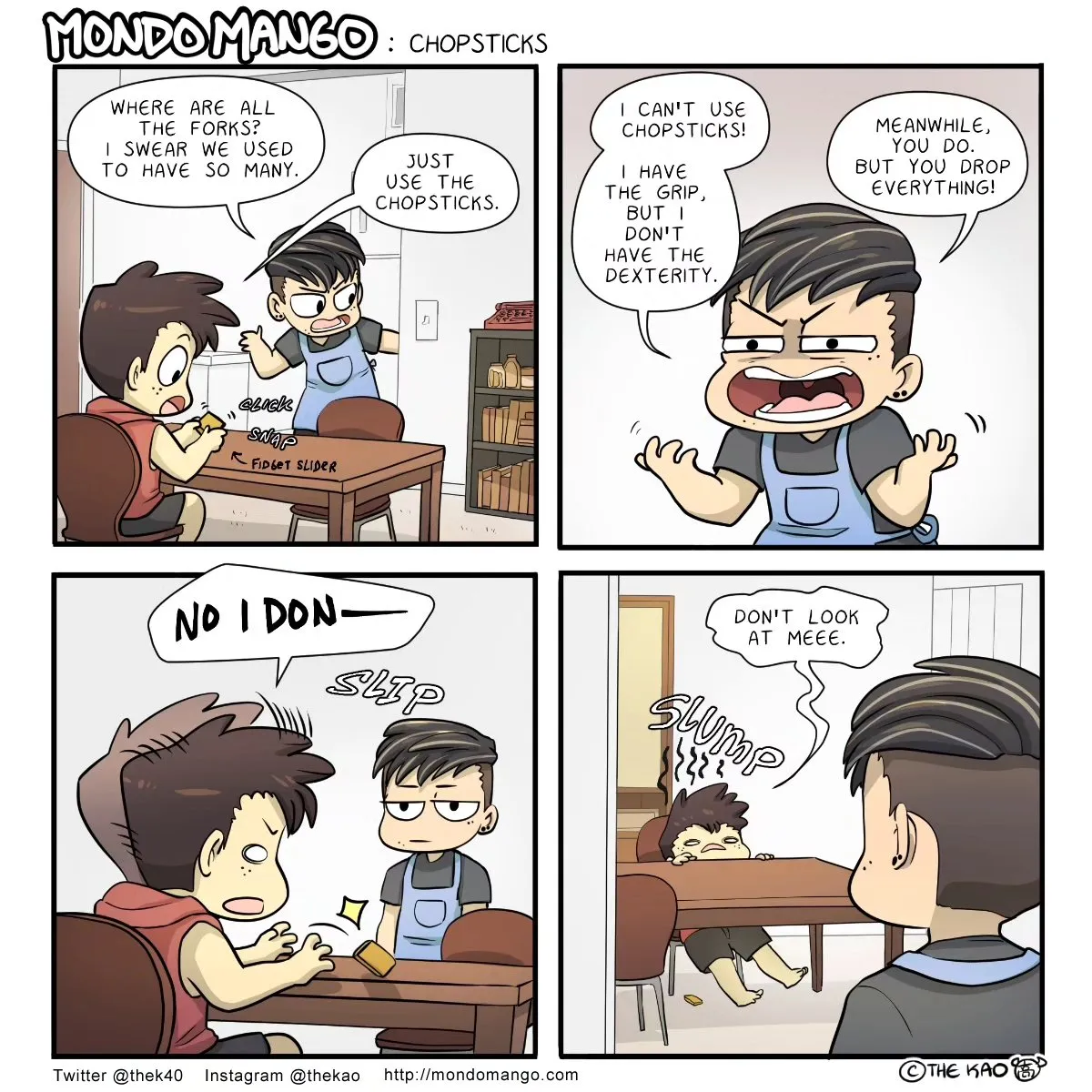
What happens in #11 — Chopsticks?
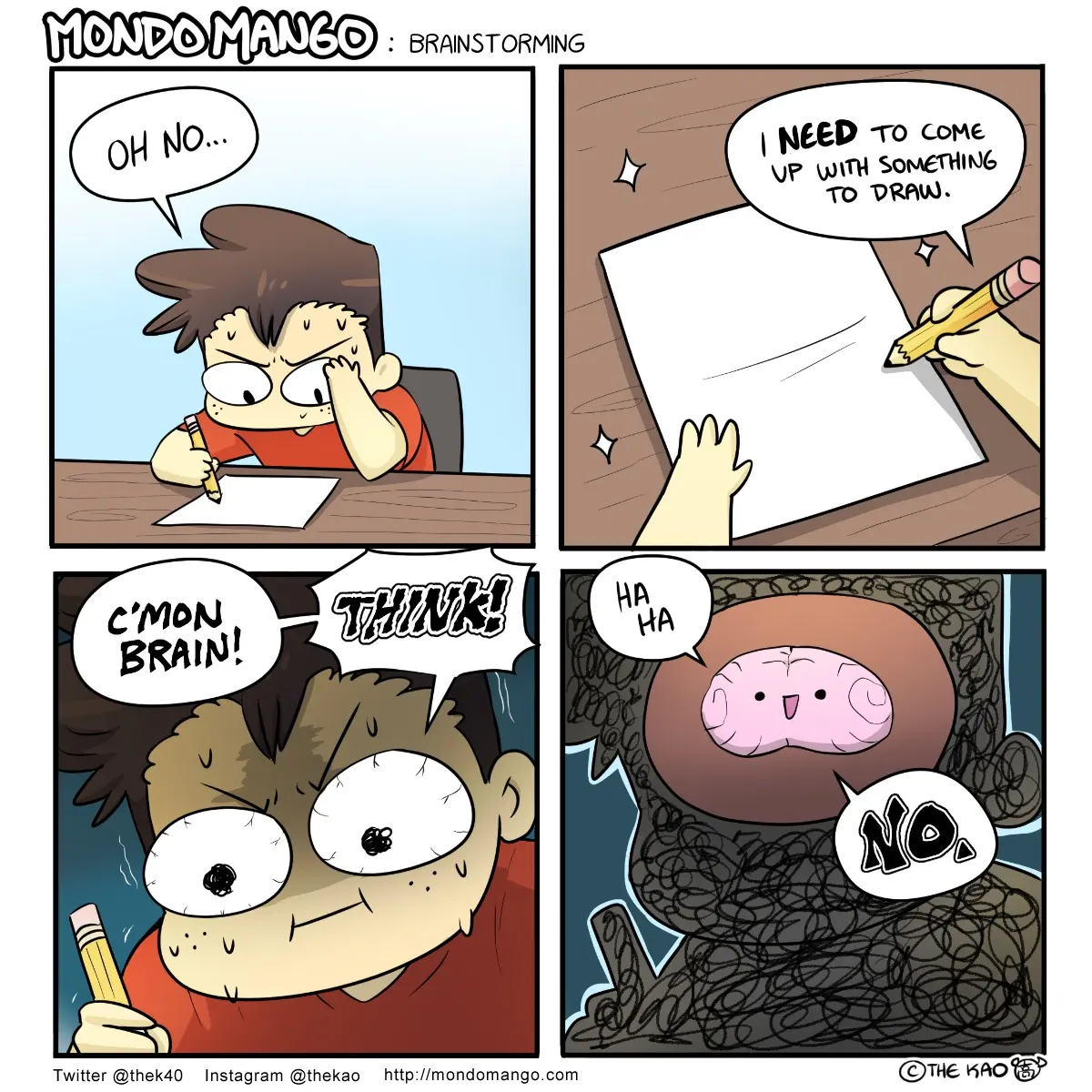
What happens in #12 — Brainstorming?
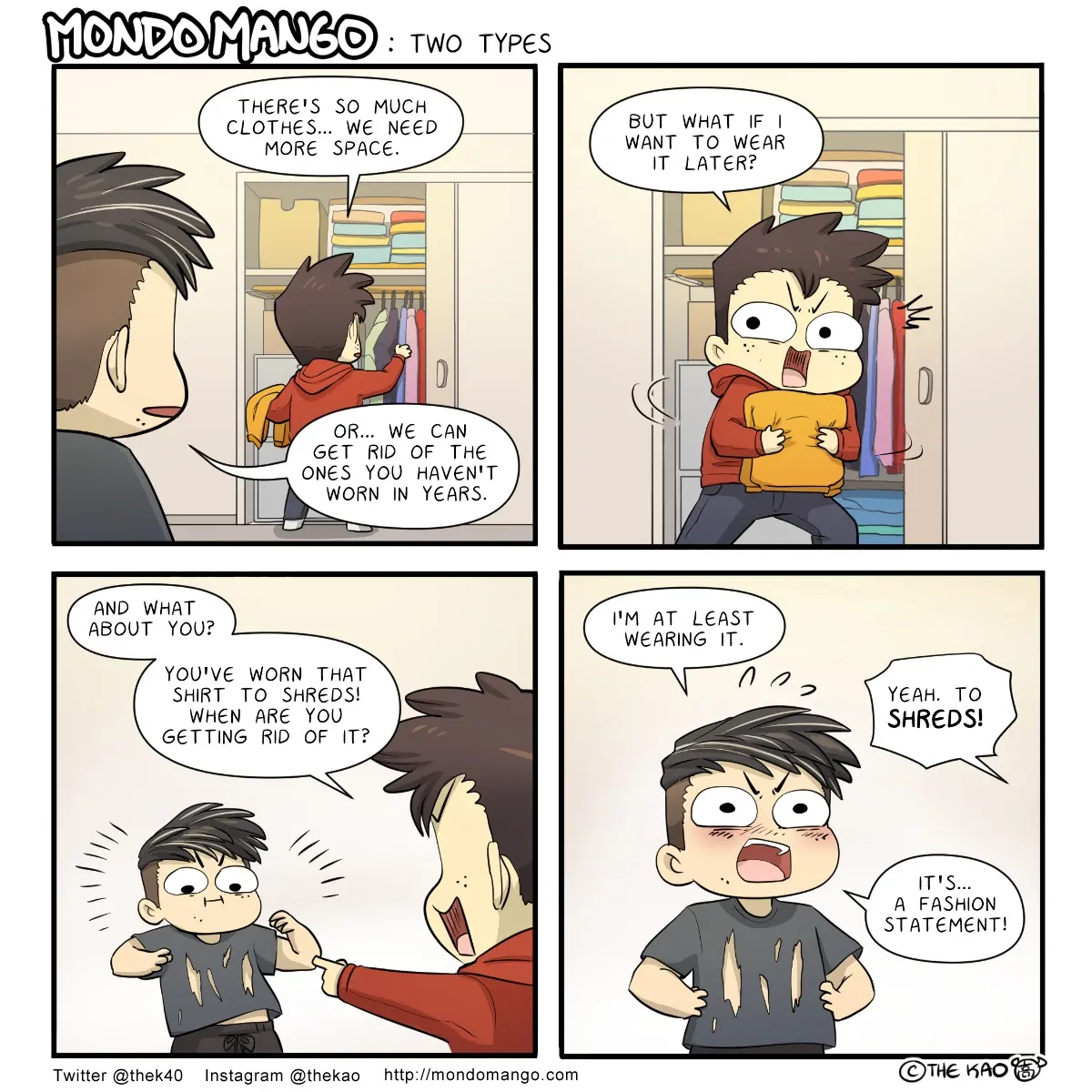
What happens in #13 — Two Types?
What happens in #14 — The Embrace?
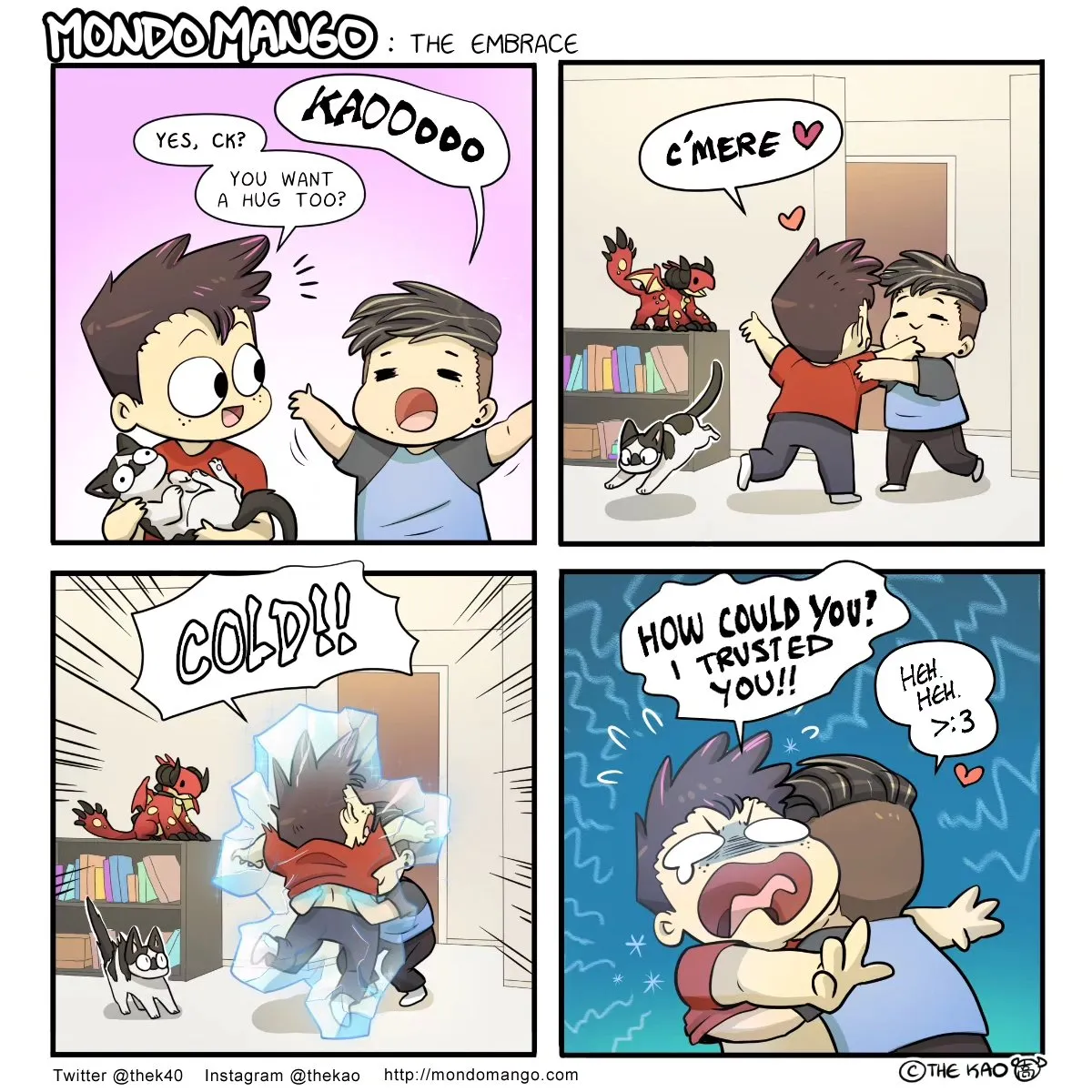
The welcome hug becomes an icy prank, with the exaggerated cold effect flipping the mood in one panel.
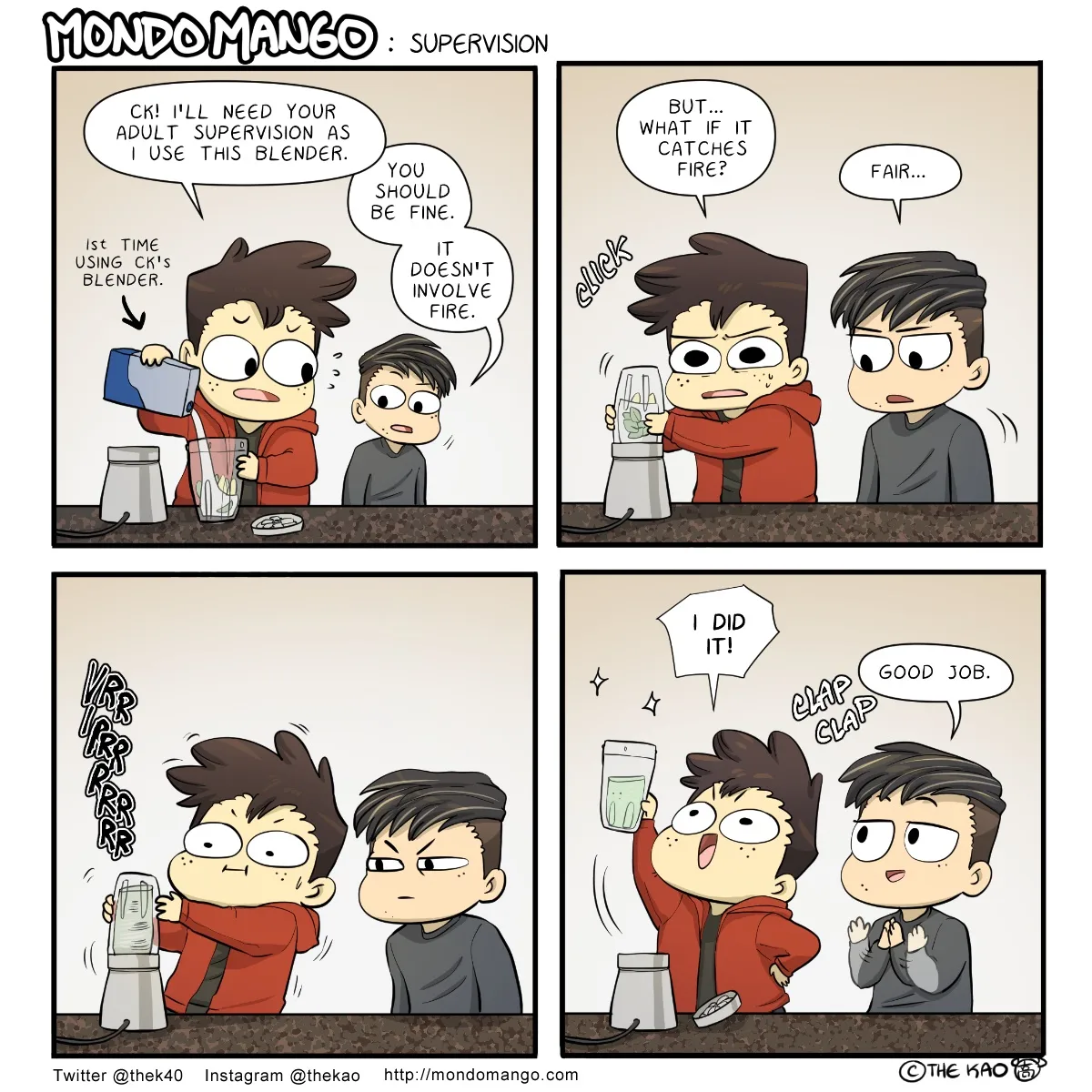
What happens in #15 — Supervision?
What happens in #16 — Summer Hair?
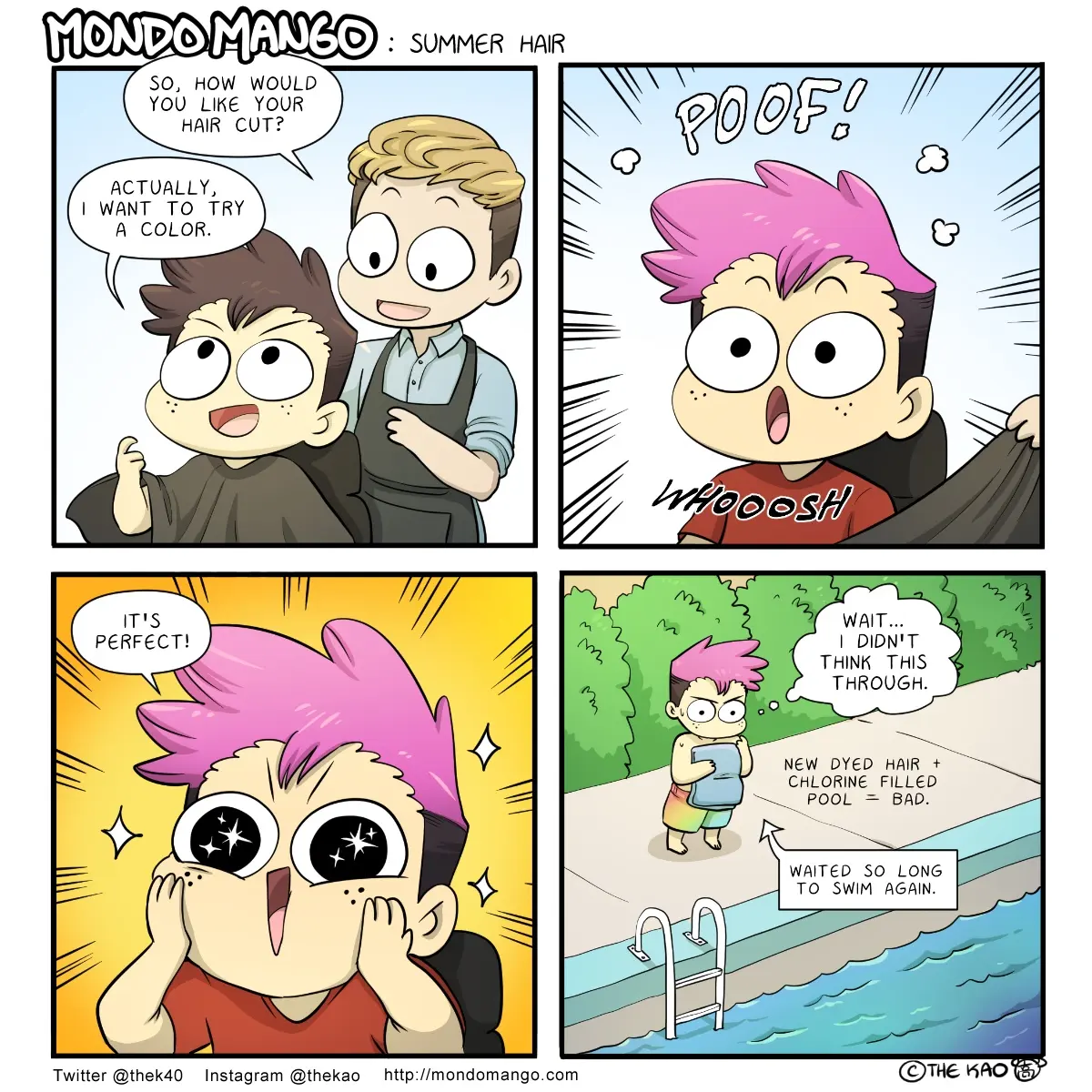
What happens in #17 — Squirrel?
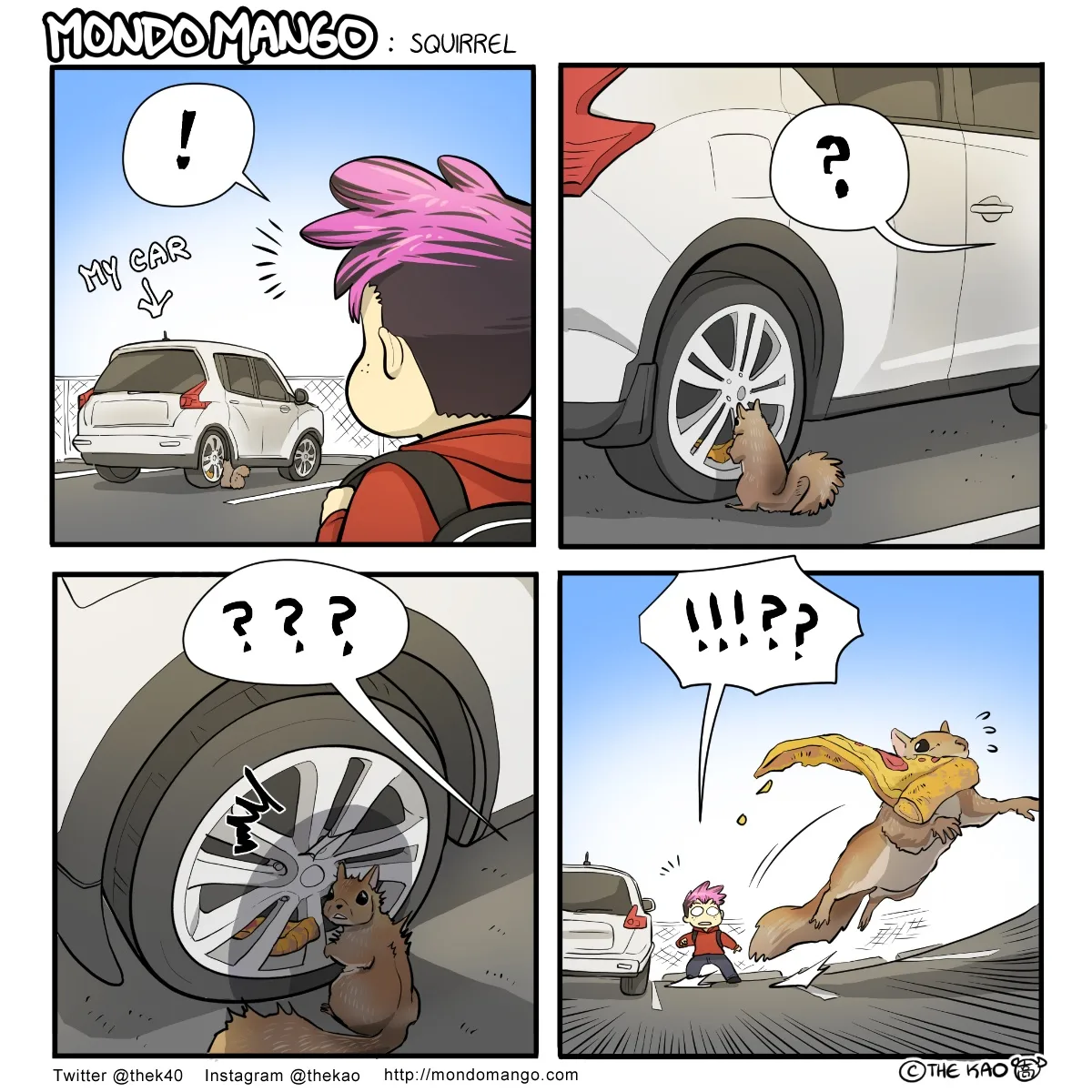
The squirrel’s tiny struggle around a car wheel escalates into slapstick, with the airborne last panel delivering the joke.
What happens in #18 — Spooked?
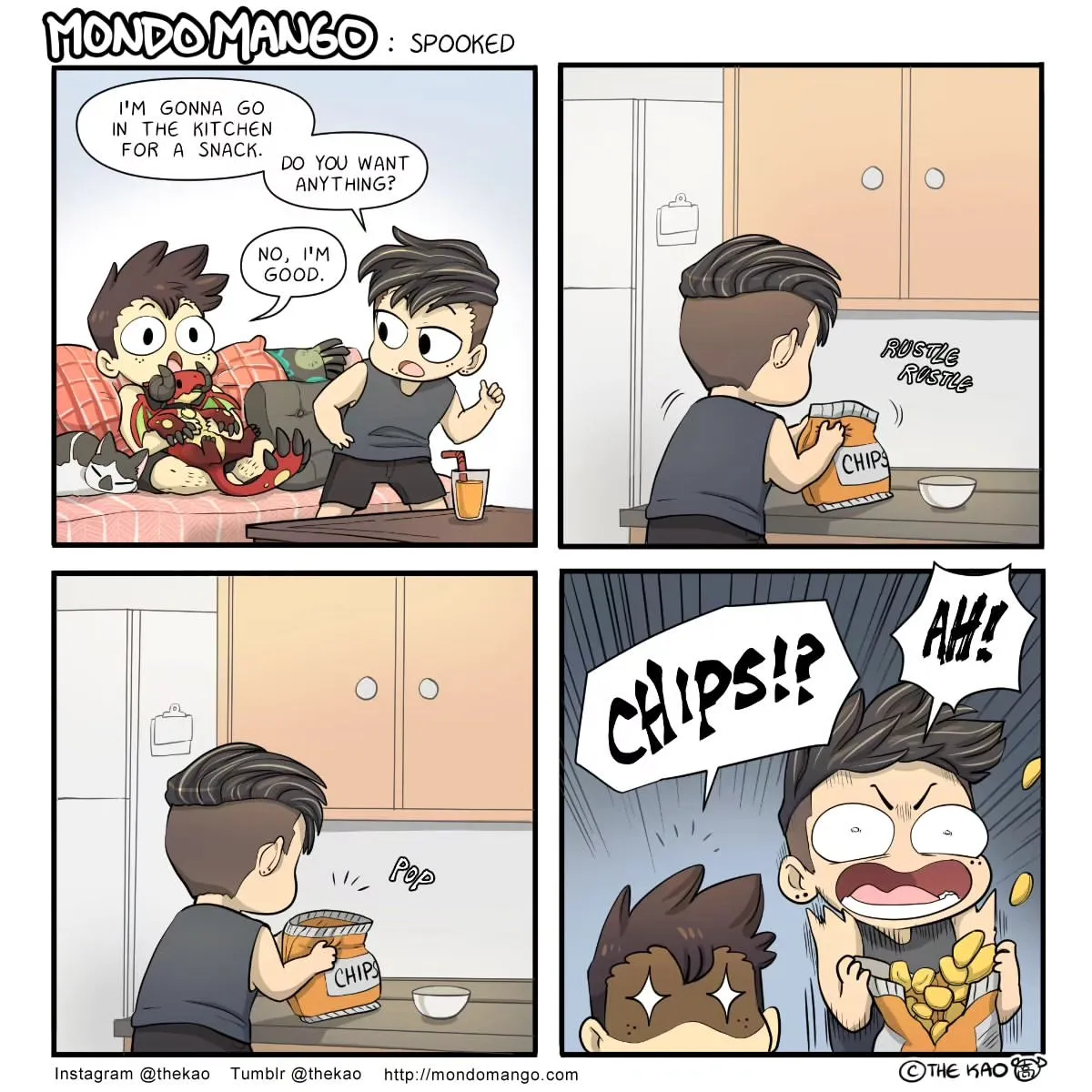
What happens in #19 — Shoppin’?
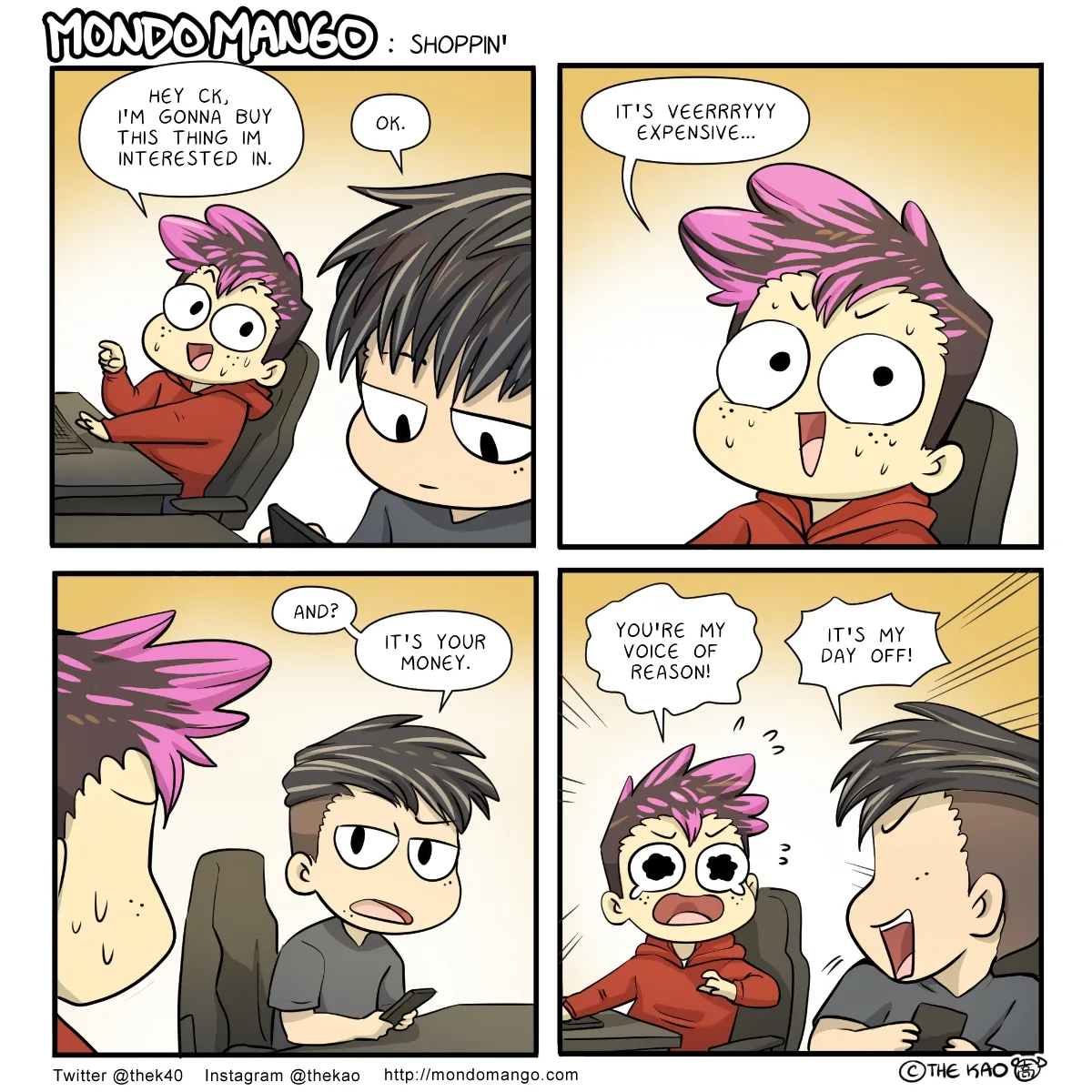
What is #20?
Who is The Kao?
Vincent Kao, who publishes as The Kao, is a Taiwanese American illustrator and comic artist with a BFA in Illustration from Columbia College Chicago. His official biography identifies Mondo Mango as a slice-of-life series and Magical Boy as a Prism Award-winning, GLAAD-nominated webcomic. His Tapas creator profile displayed 223.1k subscribers in the public snapshot retrieved during this check. The Mondo Mango listing showed about 25 million views and 2.2 million likes; WEBTOON showed about 21.2 million views and roughly 104,000 series subscribers. The separate WEBTOON creator profile returned inconsistent follower counts across public snapshots, so no exact figure is quoted. His official Instagram is cross-linked from Tapas, but its live follower count was unavailable.
Why are these everyday moments so sharply observed?
Which of these 20 strips feels most familiar to you? For more daily-life humor, browse our roundup of comics that nail everyday life.
📖 Comic Transcript, Scene Description & Humor Notes (Click to Expand)
What is the scene and visual setup?
The Kao's rounded, wide-eyed characters act out familiar domestic scenes in clean four-panel strips: a cozy bedroom where one friend settles in to read, a living room glowing with late-night TV, a kitchen table where chopsticks refuse to cooperate, and a bathroom mirror where a stubborn spot turns out to be something else entirely. Expressive faces and small visual reversals carry each joke, shifting from teasing to tender without warning.
How do the panels and dialogue break down?
- Panel 1: A character invites a friend to read in bed, then gets comfortable and drifts off to sleep instead.
- Panel 2: One friend says goodnight and leaves; the other keeps watching TV and suddenly realizes it's morning.
- Panel 3: A boy scrubs a stubborn mark on his hand, only to discover it's a new mole.
- Panel 4: A character struggles with chopsticks while a friend insists having the grip isn't the same as having dexterity.
Why is it so relatable?
These strips work because the behavior is instantly recognizable: the goodnight that becomes an all-nighter, the mole mistaken for dirt, the chopstick humiliation. The Kao exaggerates just one step past normal, letting readers laugh at habits they recognize in themselves and their friends.
🎭 Comic Highlights & Relatable Takeaways
✨ The comic makes the lost hours between 10 p.m. and 7:30 a.m. visible, capturing that relatable feeling of staying up too late without realizing it.
✨ In the marbles comic, the joke hinges on a different idea of play where sorting, scattering, and reorganizing marbles is the whole activity rather than any game.
✨ A close-up tracks a stubborn spot as a boy scrubs, only for the final reveal to show it is a new mole rather than dirt, a moment many people will recognize.
✨ The welcome hug becomes an icy prank with an exaggerated cold effect that flips the mood in a single panel, showing how The Kao uses small visual reversals for humor.
💬 Comic Q&A & Behind the Scenes
💭 What makes Mondo Mango comics so relatable to everyday life?
The Kao mines tiny habits we all share, like staying up too late or fumbling with chopsticks, then pushes them one step too far. That gentle exaggeration turns ordinary moments into recognizable comedy, so readers laugh because they see themselves in every wide-eyed reaction.
💭 Why does The Kao's four-panel pacing work so well for humor?
Clear four-panel structure gives each strip a setup, build, and punchline rhythm readers can feel instantly. Expressive reactions and small visual reversals land the joke without clutter, letting quiet beats like a mole reveal or an icy hug do the comedic heavy lifting.
💭 How does Mondo Mango balance teasing friendship with tender moments?
The collection moves between playful pranks and unexpectedly warm beats, so teasing never feels cruel. Comics like The Embrace flip mood in a single panel, showing that affection and mischief live side by side in real friendships, which keeps the series emotionally honest and charming.
💭 Who is The Kao, and where can readers find Mondo Mango?
Vincent Kao, publishing as The Kao, is a Taiwanese American illustrator with a BFA from Columbia College Chicago. Mondo Mango appears on Tapas and WEBTOON, where it has drawn millions of views, alongside his Prism Award-winning webcomic Magical Boy.
💭 Where do the funniest Mondo Mango jokes come from?
Most jokes grow from misread situations: a stubborn spot that turns out to be a mole, marbles sorted instead of played, or a brain literally labeled FAILURE. These small visual reversals reframe ordinary frustration as something absurd, which is exactly why the strips stick with readers.


