Animals make unusually good comic characters because they let an artist hold a mirror up to people without drawing another ordinary office worker or neighbor. In these 19 Herta Burbe animal comics, wolves plan like rival strategists, birds negotiate modern inconveniences, and snails turn emotional avoidance into a recognizable habit. The cast includes familiar creatures and stranger little beings, but the motives underneath are human: pride, loneliness, distraction, status, and the wish to find an easier way through a problem.
The collection moves between quick wordplay, visual reversals, and jokes that widen into social observations. A quiet landscape can become a stage for an unexpectedly elaborate scheme; a small speech bubble can turn an animal fact into a punchline; and a second scene can make an old argument look newly familiar. Burbe’s softly colored drawings, light outlines, and wide-eyed expressions keep the situations clear while allowing each final detail to change how the scene reads. The supplied order is preserved below, including one repeated image file.
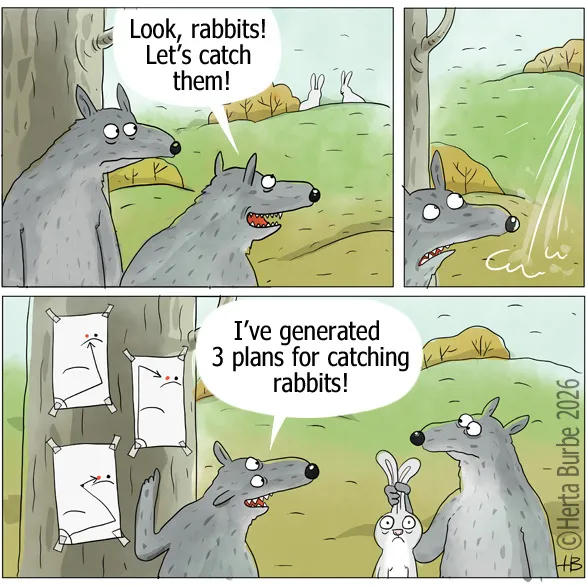
#1 – Wolves and Their Rabbit-Catching Plans
#2 – The Elephant Expert on Parrots
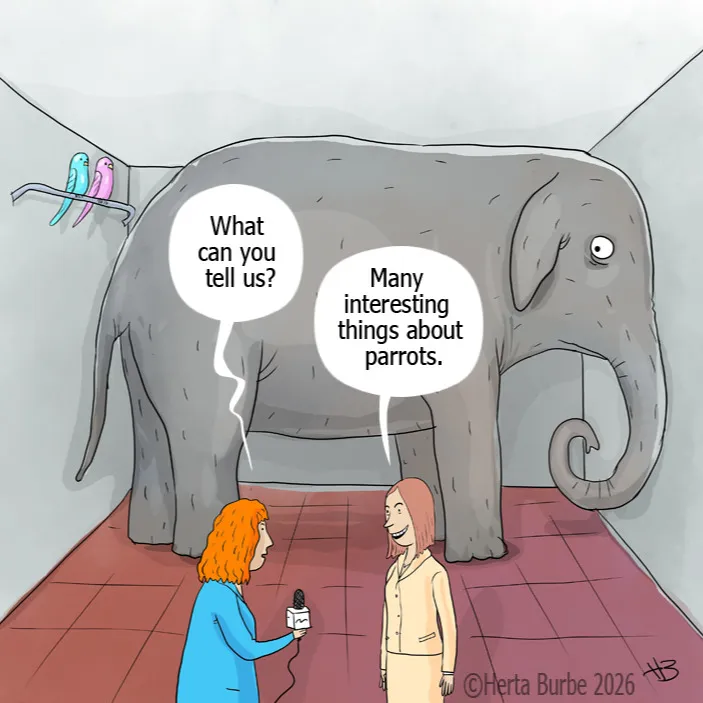
Burbe’s clean compositions make the first read effortless: the characters are easy to identify, the speech bubbles are direct, and the expressions do much of the acting. That clarity gives the jokes room to travel. Instead of crowding a panel with detail, she often lets one unusual answer or reaction carry the scene.
#3 – Tiny Organisms Fear Intelligence
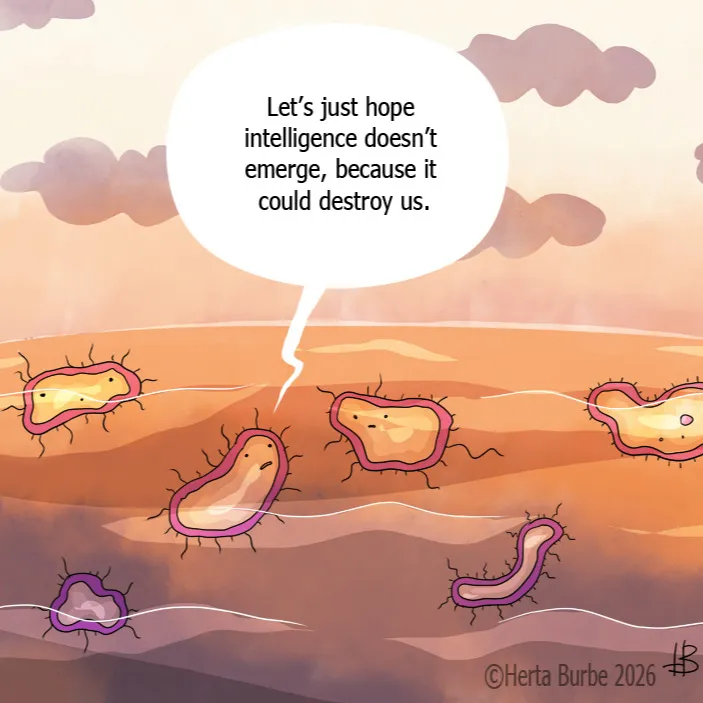
#4 – An Ancient Argument Goes Corporate
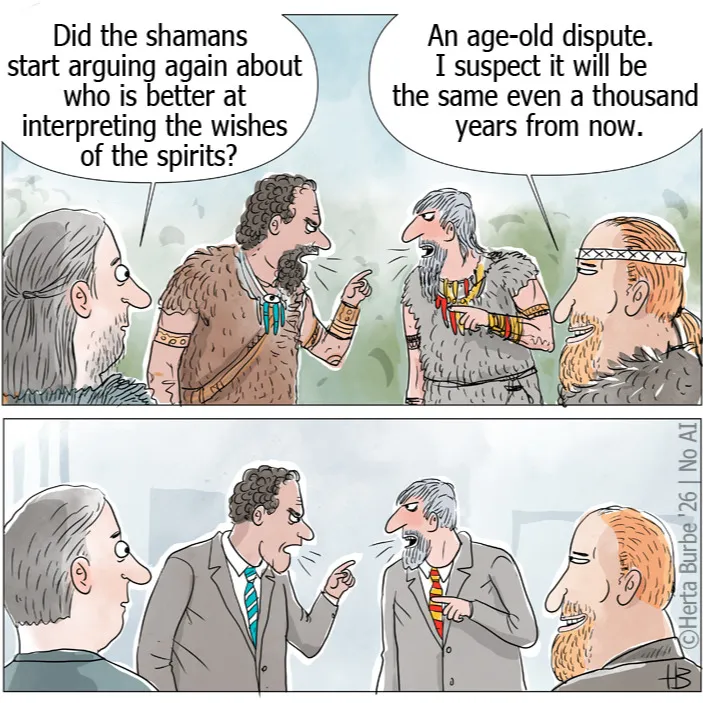
The time jump in the shaman scene is especially effective because it treats a modern disagreement as an old human habit rather than a new problem. Burbe’s humor often comes from that kind of scale shift: a tiny creature worries about intelligence, or a centuries-old dispute reappears in a meeting room with different clothes and the same gestures.
#5 – A Snail Writes Its Life Story
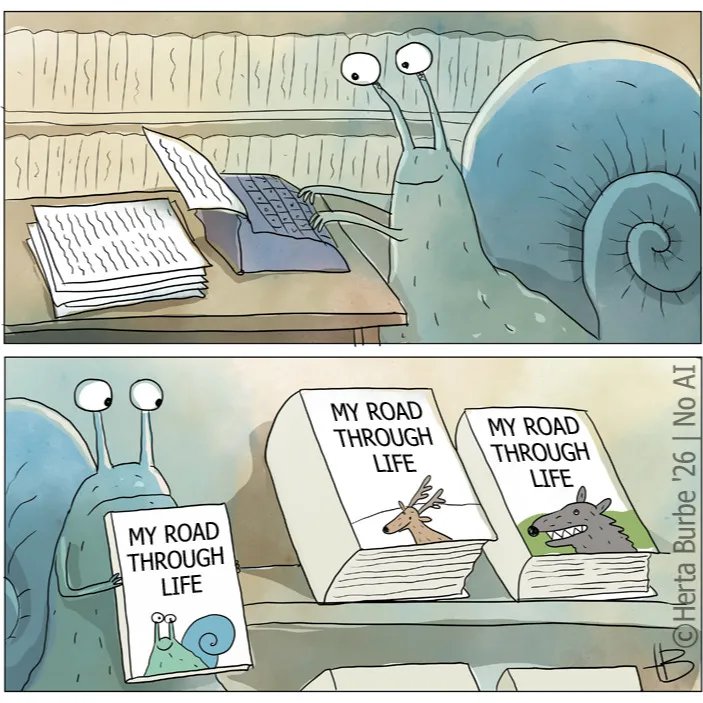
#6 – Crows Reclaim the Skies
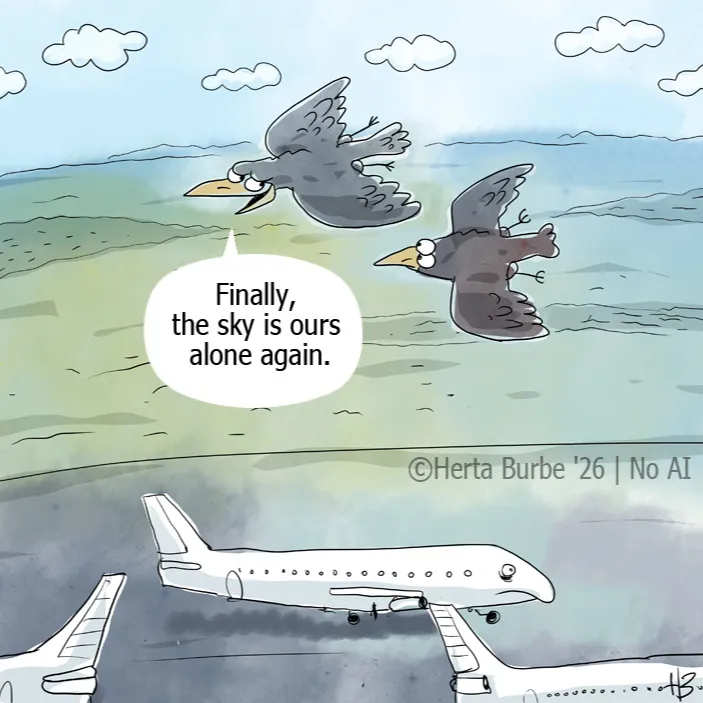
Animals in this collection are not simply decorative stand-ins. They have their own priorities and their own view of the world, which makes familiar human ideas look freshly strange. A snail’s autobiography and two crows’ claim to the sky both turn a simple premise into a compact point of view.
#7 – A Sheep Becomes a Woolly Target
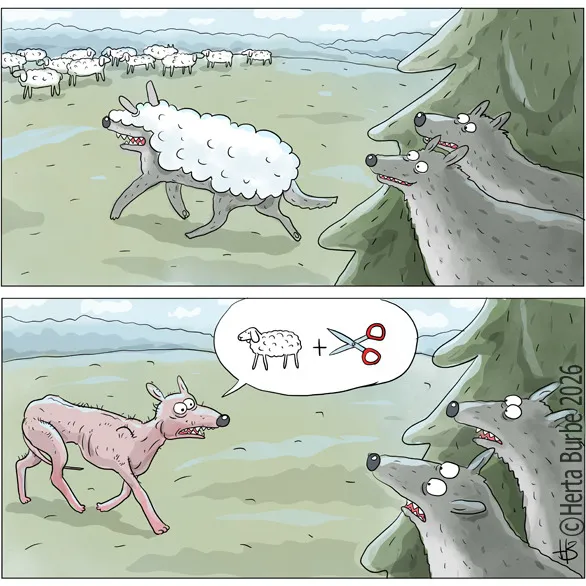
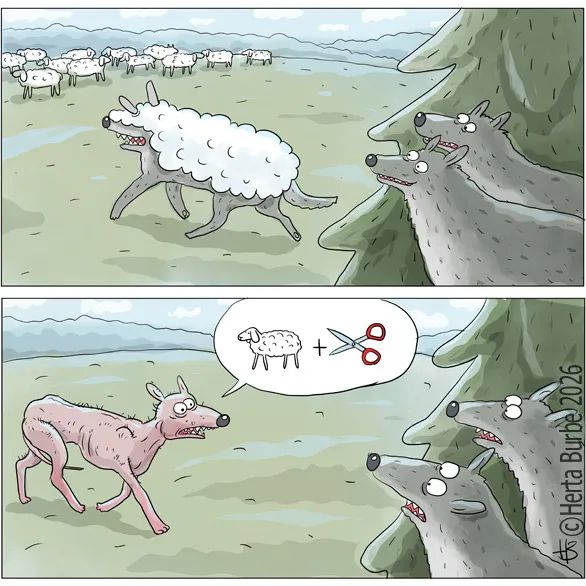
#8 – The Sheep Scheme Appears Again
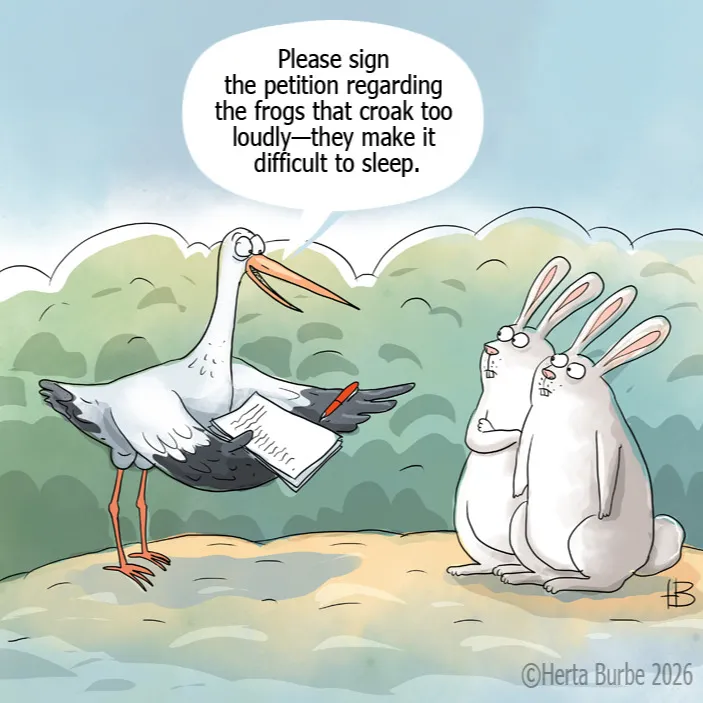
#9 – Rabbits Petition Against Noisy Frogs
#10 – Mail, Then a Voice Message
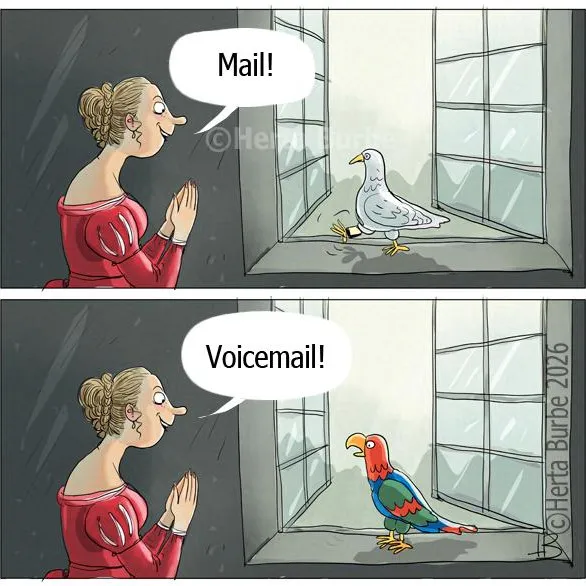
The middle run shows how much mileage Burbe gets from extending a premise by one step. A predator’s plan becomes oddly practical, a complaint about noise becomes civic paperwork, and the familiar difference between mail and voicemail is reimagined through birds. Readers who enjoy animal characters taking on human roles may also like our collection of 44 heartwarming animal comics by Rajnik Patel.
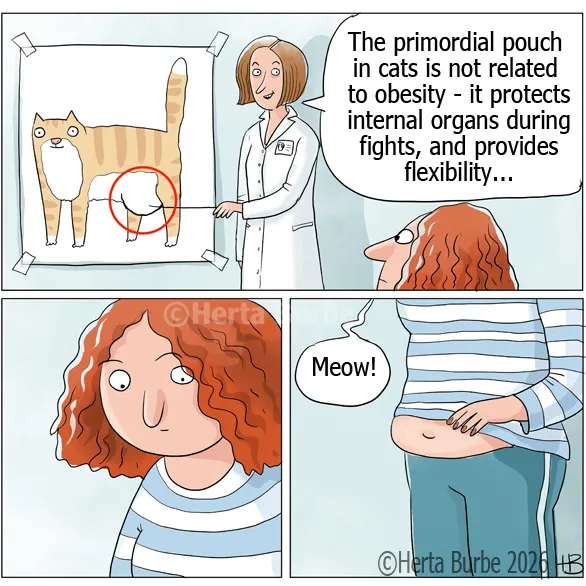
#11 – The Cat’s Primordial Pouch
#12 – Counting to Nine, Then Loneliness
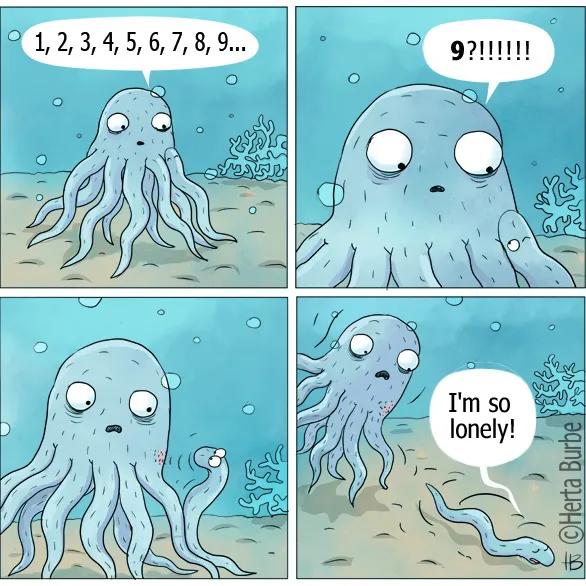
Some of the strongest gags here begin with a factual or numerical idea, then give it an emotional consequence. The octopus joke uses a count that seems harmless until the last panel changes its meaning. That quick turn from information to feeling is one reason these drawings remain memorable after the immediate laugh.
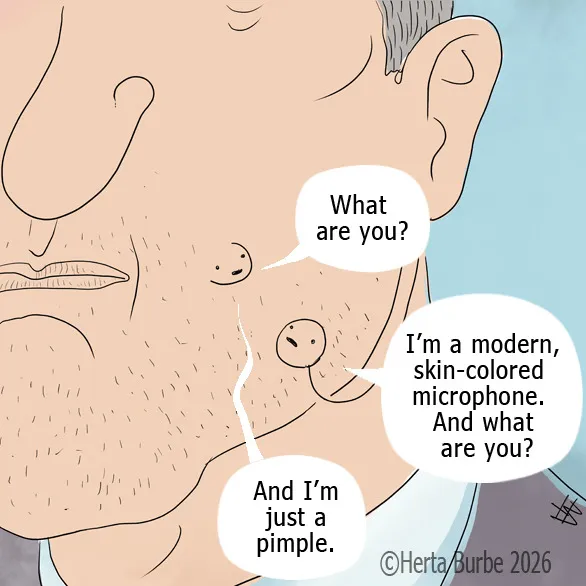
#13 – A Microphone That Looks Like a Pimple
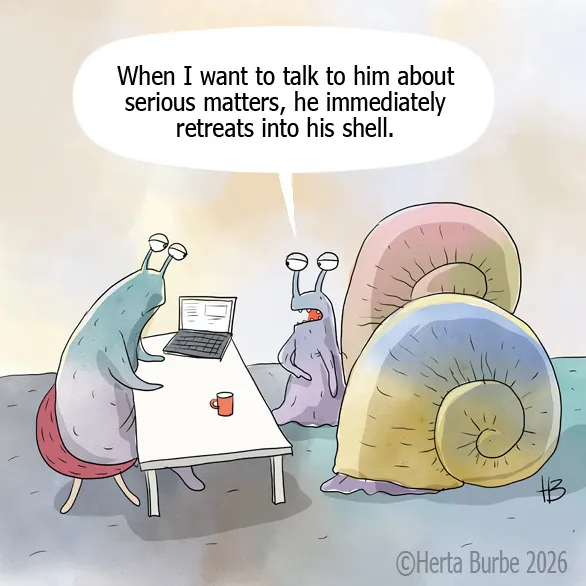
#14 – Serious Talks, Shelled Away
#15 – Swifts Keep Their Distance
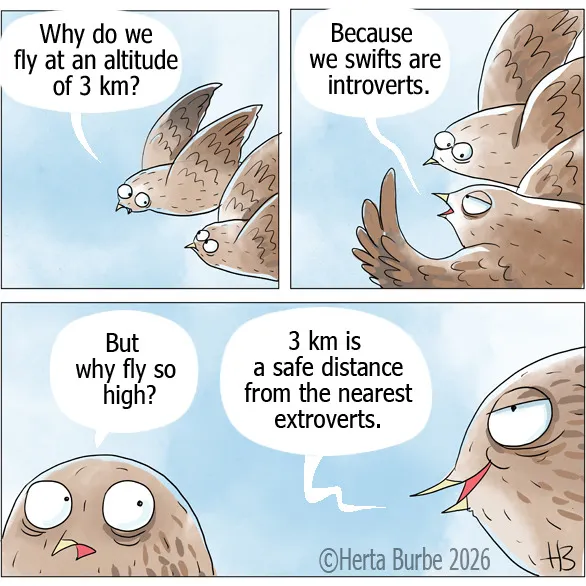
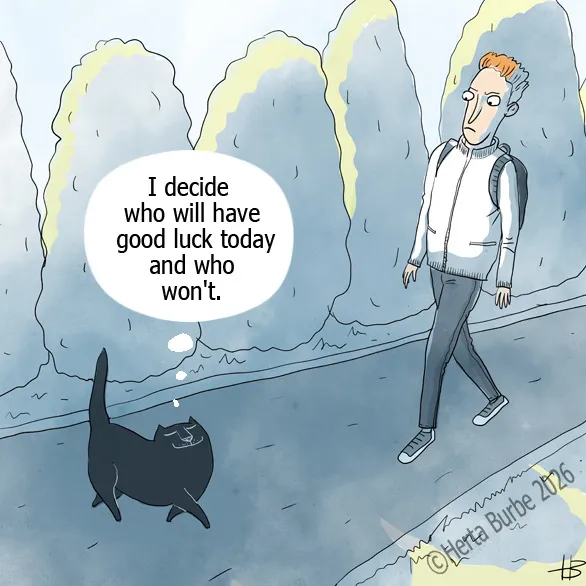
The animal personalities are recognizable without becoming one-note. The swifts’ carefully maintained distance, the snail’s retreat, and the cat’s imagined control over luck each exaggerate a behavior people know from somewhere in their own lives. The joke works because the creature’s logic is consistent even when the situation is absurd.
#16 – A Cat Decides Who Gets Good Luck
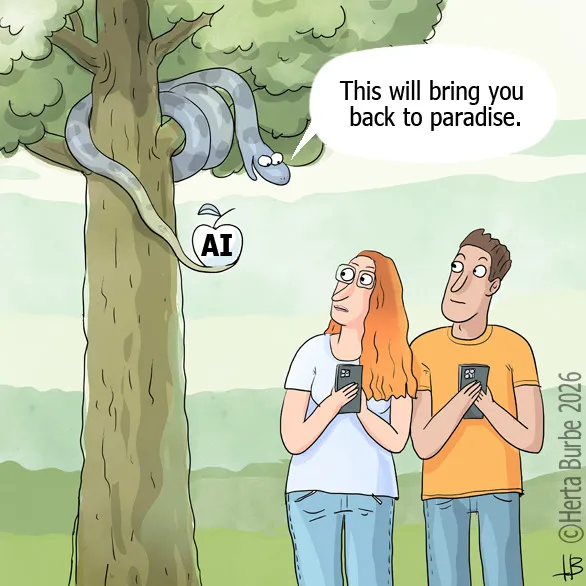
#17 – AI Promises a Return to Paradise
#18 – Lemmings Need More Psychologists
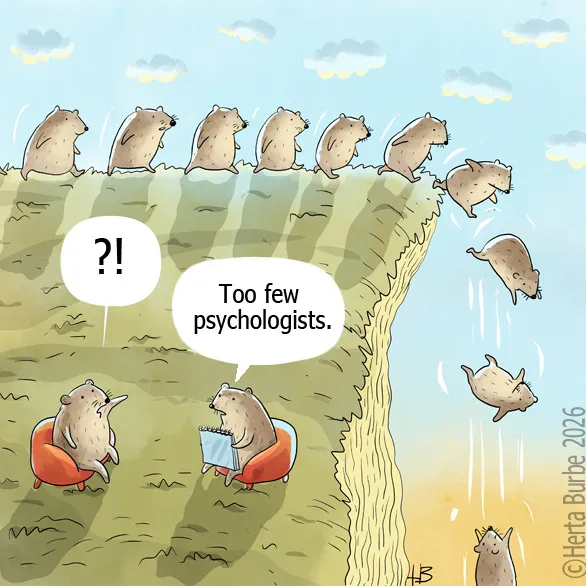
The later strips widen the lens again, mixing superstition, technology, and crowd behavior. A black cat treats luck as a personal assignment, an AI-labeled snake borrows a very old promise, and the cliffside gathering turns a familiar animal reference into a dry comment on collective behavior. The soft visual style keeps these ideas playful rather than heavy-handed.
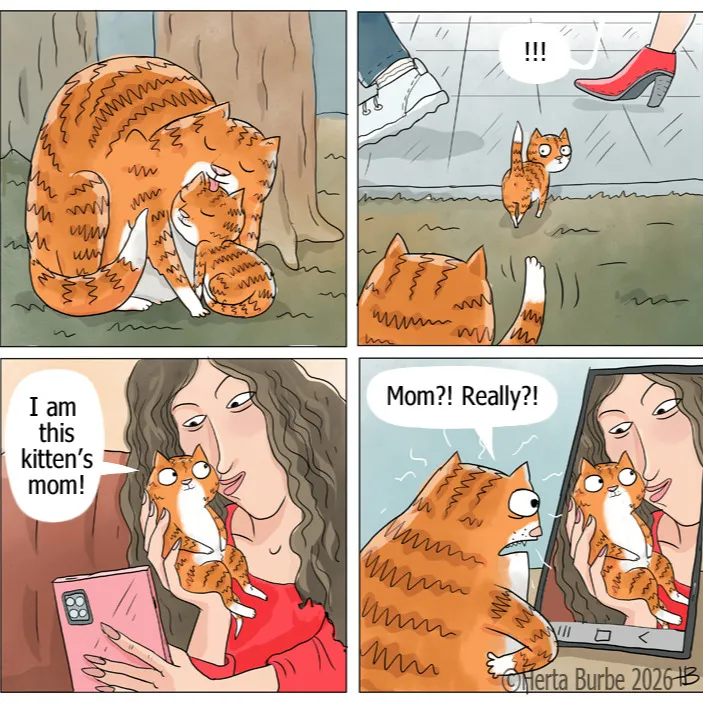
#19 – A Kitten’s Unexpected Mother
Taken together, these comics show how flexible animal humor can be. Burbe moves from gentle observation to sharper satire without changing the visual language: expressive eyes, distinctive silhouettes, uncluttered scenes, and a final detail that redirects the reader’s attention. Some punchlines depend on a single phrase; others gain their force from the contrast between two panels or two eras. The variety keeps the gallery lively, while the repeated interest in how characters think makes it feel like one coherent collection.
There is also an appealing balance between warmth and skepticism. The animals may be clever, anxious, self-important, or hopelessly distracted, but the drawings rarely need to explain the joke twice. Which idea stayed with you most: the wolves’ planning, the swifts’ social distance, or the cat that believes it manages everyone’s luck? Readers who would like to see another selection from the same creator can visit our earlier Herta Burbe comic feature.
About the artist: Herta Burbe describes herself on her official website as a creator of comic strips and more. In her public creator profile, she says she makes a new comic or cartoon each day and returns to recurring subjects, including cat-themed work. Her site’s archive shows new posts dated March 2026. You can also follow the Instagram profile supplied for this feature. A current public follower count could not be confirmed during this research check.
📖 Comic Transcript, Scene Description & Humor Notes (Click to Expand)
🎨 Scene & Visual Setup
Burbe's softly colored panels feature wide-eyed wolves, birds, snails, and stranger creatures drawn with light outlines and uncluttered backdrops. In the featured strip, two wolves stand in an open landscape, calmly discussing how to catch a rabbit, their expressions deadpan and businesslike. Later scenes shift to an elephant giving a baffling interview answer, a snail presenting an autobiography, and swifts explaining their altitude as social distancing. The animals keep their own logic, but their pride, avoidance, and status games are unmistakably human.
💬 Panel & Dialogue Breakdown
- Panel 1: Two wolves announce their rabbit-catching plans, trading ideas with the seriousness of rival strategists.
- Panel 2: An elephant being interviewed surprises the room by offering expertise about parrots instead.
- Panel 3: A snail presents a book titled My Road Through Life, shelved beside similar animal memoirs.
- Panel 4: A snail at a table is told it retreats into its shell whenever a serious conversation begins.
💡 Why It's So Relatable
The humor works because each animal follows its own consistent logic while behaving exactly like a person you know—overplanning, dodging conflict, or claiming credit for luck. Recognition arrives before the punchline, which makes the final panel land as both absurd and true.
🗺️ More in the Related Topic Cluster Hub
- 🔗 Related Read in This Series: Check out our complete guide & collection on comics about life (Comics About Life: 19 Infinipop Strips and Funny Twists).
- 🔗 Related Read in This Series: Check out our complete guide & collection on relatable comics (19 Relatable Comics About Overthinking and Everyday Life).