


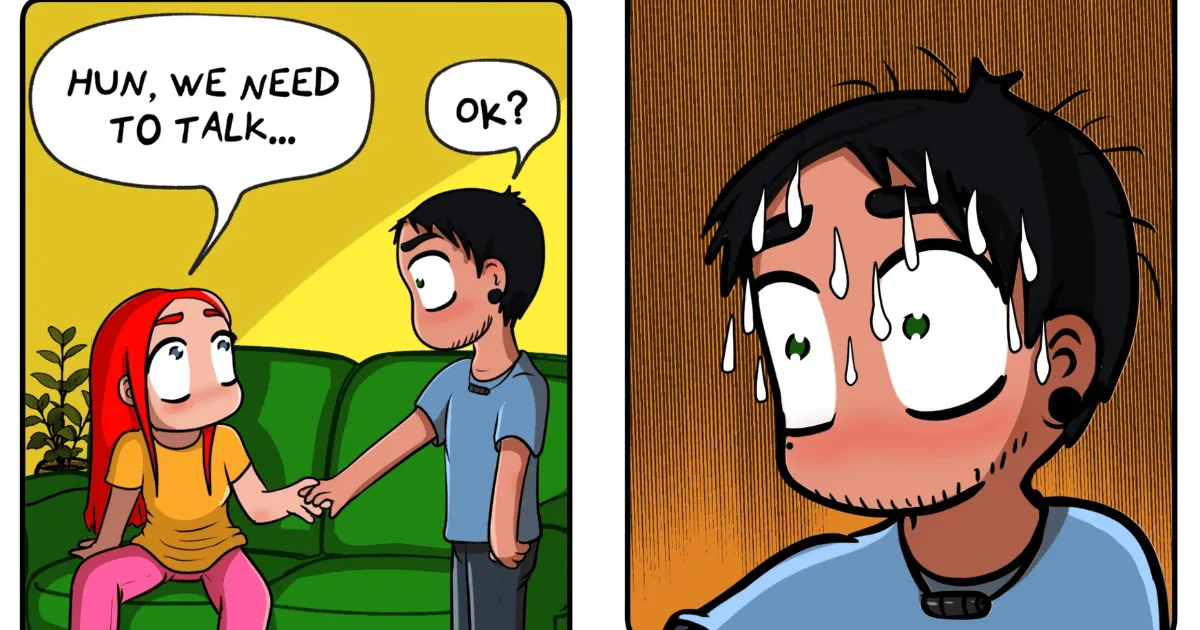
Quick Answer: This collection of 19 Tardaasa comics by Linnéa Aasa, also known as Tardee, turns ordinary moments into awkward, exaggerated scenarios. A request for chips becomes a domestic standoff, affection is rendered as a literal chemical craving, and a basic 3D printer search balloons into an extravagant upgrade. Bright color and elastic facial expressions keep each setup legible, while final panels often shift the emotional temperature. The strips cover couple banter, cultural stereotypes, public debate, and a bookstore dilemma, showing how visual exaggeration delivers a sharp turn without lengthy explanation.
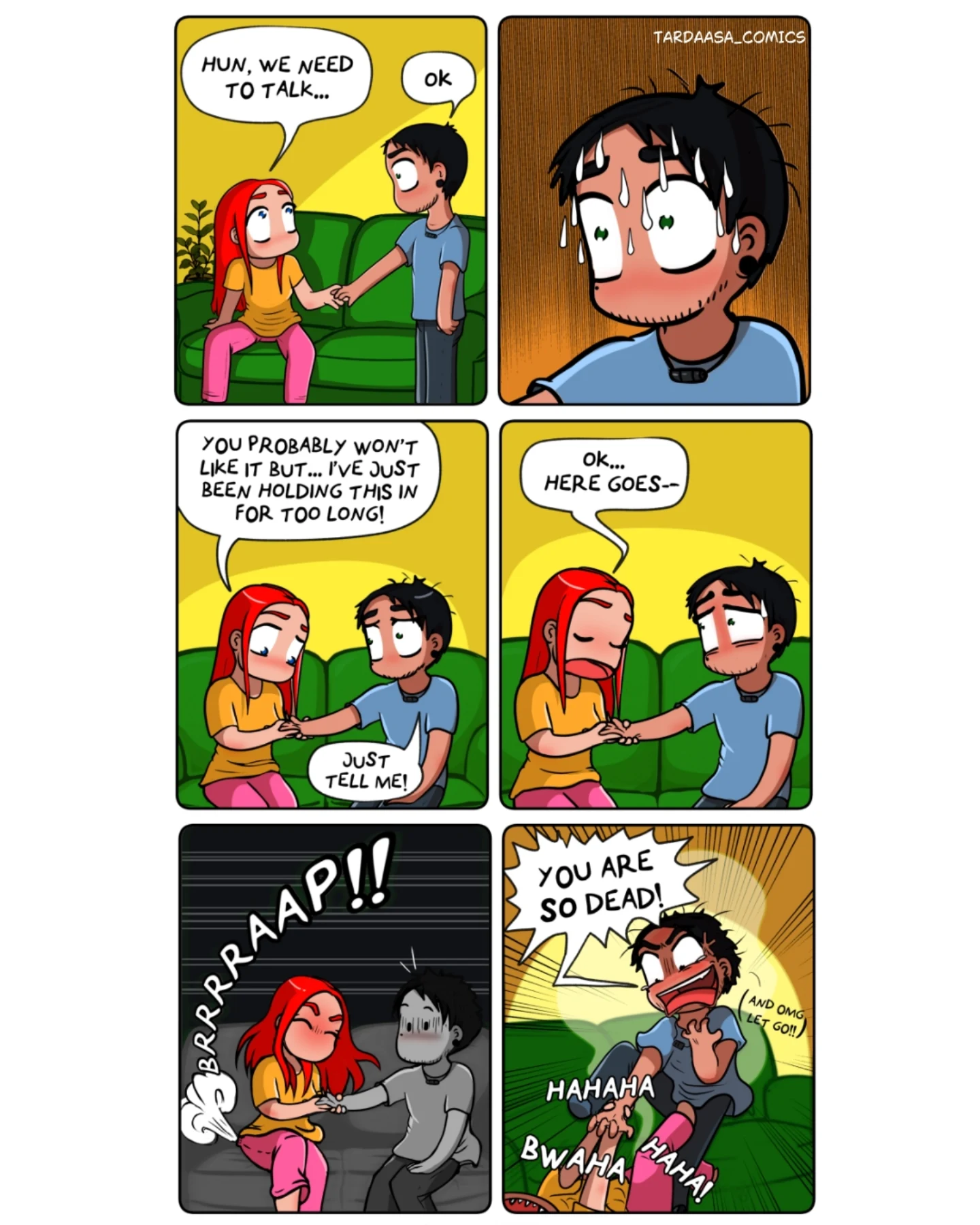
Across these 19 Tardaasa comics, ordinary situations rarely stay ordinary for long. A request for chips becomes a domestic standoff, affection is turned into a literal chemical craving, and a search for a basic 3D printer balloons into an extravagant upgrade. Bright color and elastic facial expressions keep each setup legible, while a final panel often changes the emotional temperature.
Cartoonist Linnéa Aasa, also known as Tardee, makes short-form webcomics about relationships, social habits, and subjects people do not always discuss politely. This selection moves from couple banter to cultural stereotypes, public debate, and a bookstore dilemma. Rather than sticking to one theme, the collection shows how visual exaggeration can deliver a sharp turn without a long explanation.
What happens in comic #1?
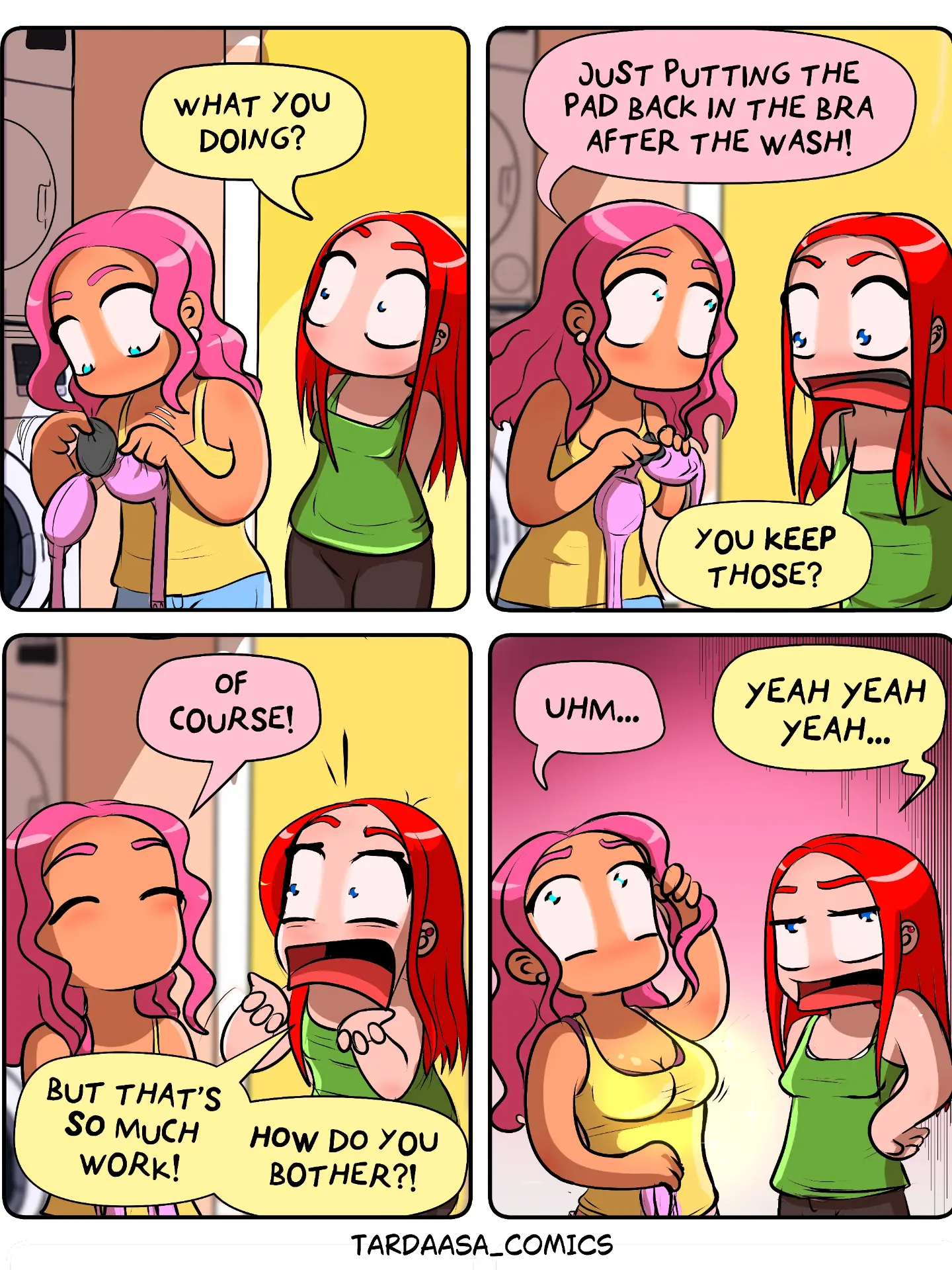
What happens in comic #2?
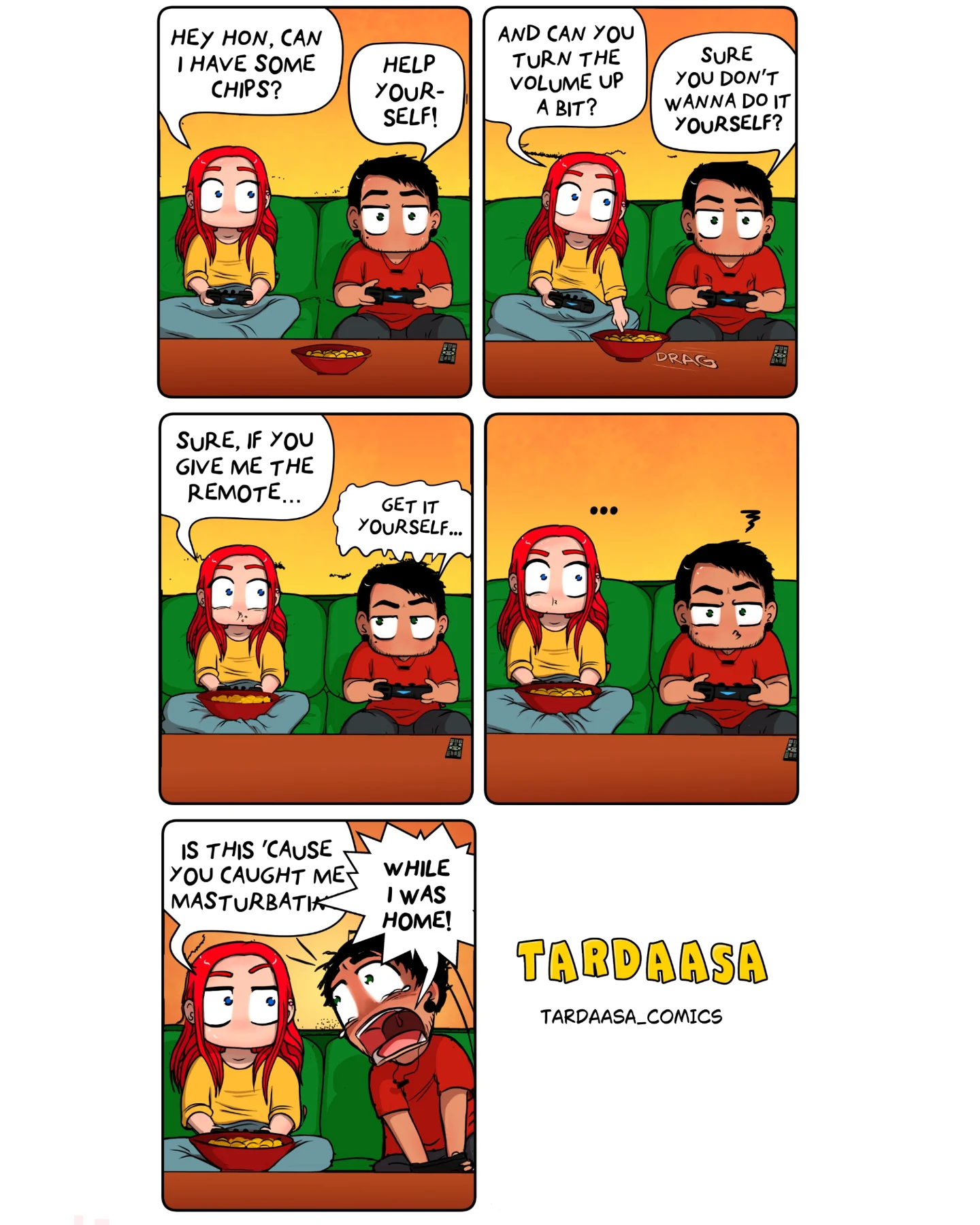
The requests are less important than the partner’s repeated refusal to help; the final silent stare becomes the punchline.
What happens in comic #3?
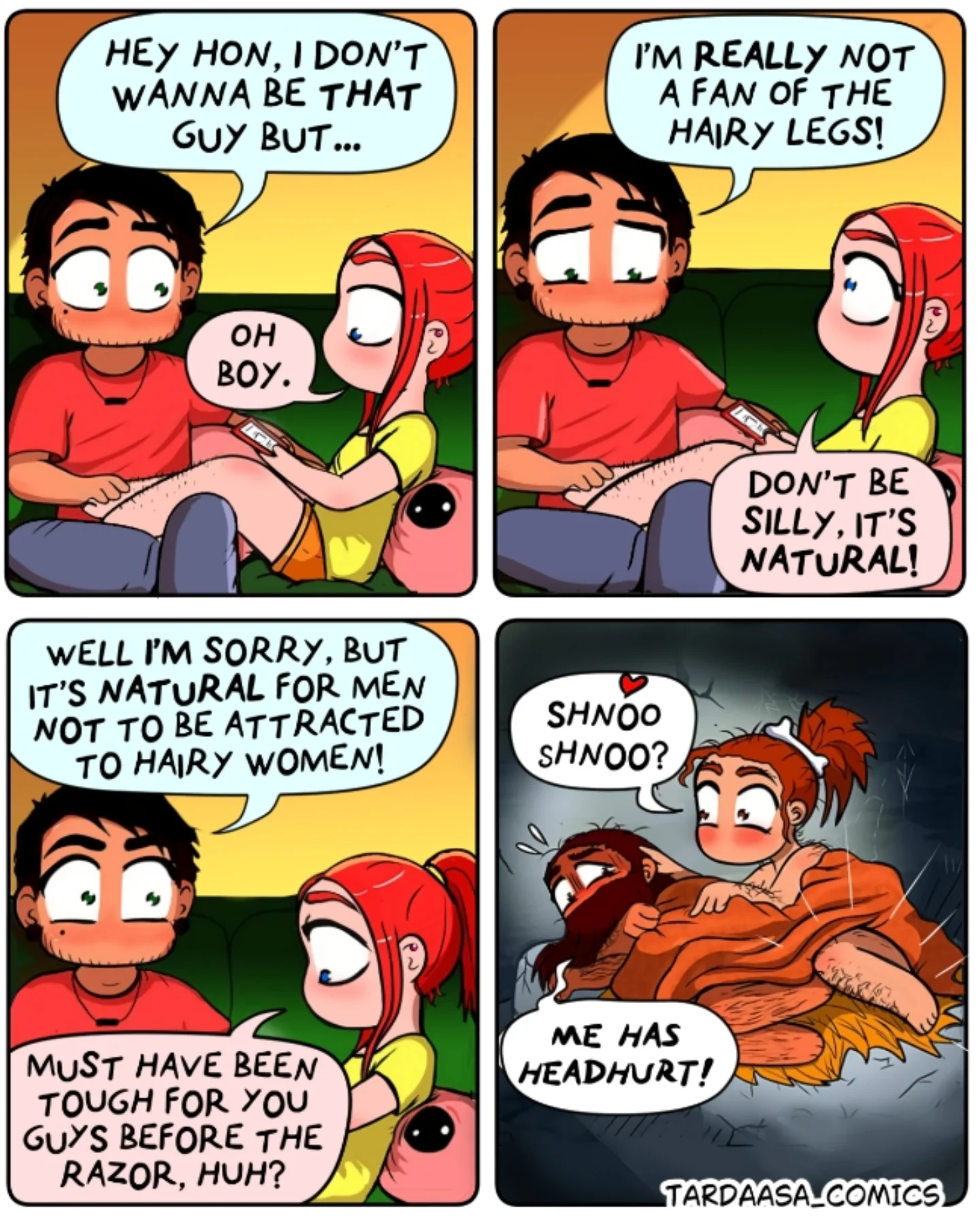
What happens in comic #4?
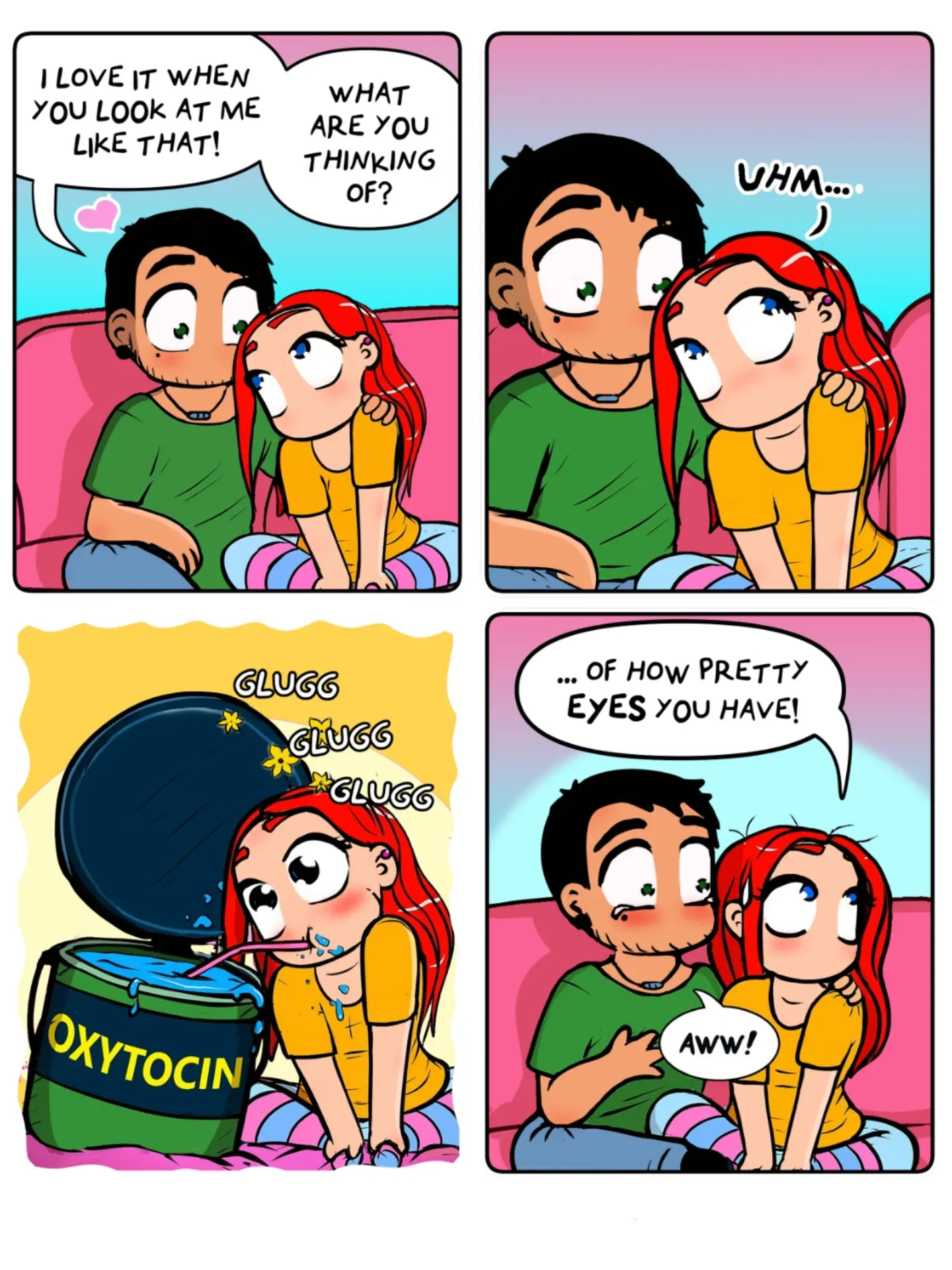
Turning oxytocin into a bucket makes attraction absurdly literal, and the sudden visual shift supplies a second joke.
What happens in comic #5?
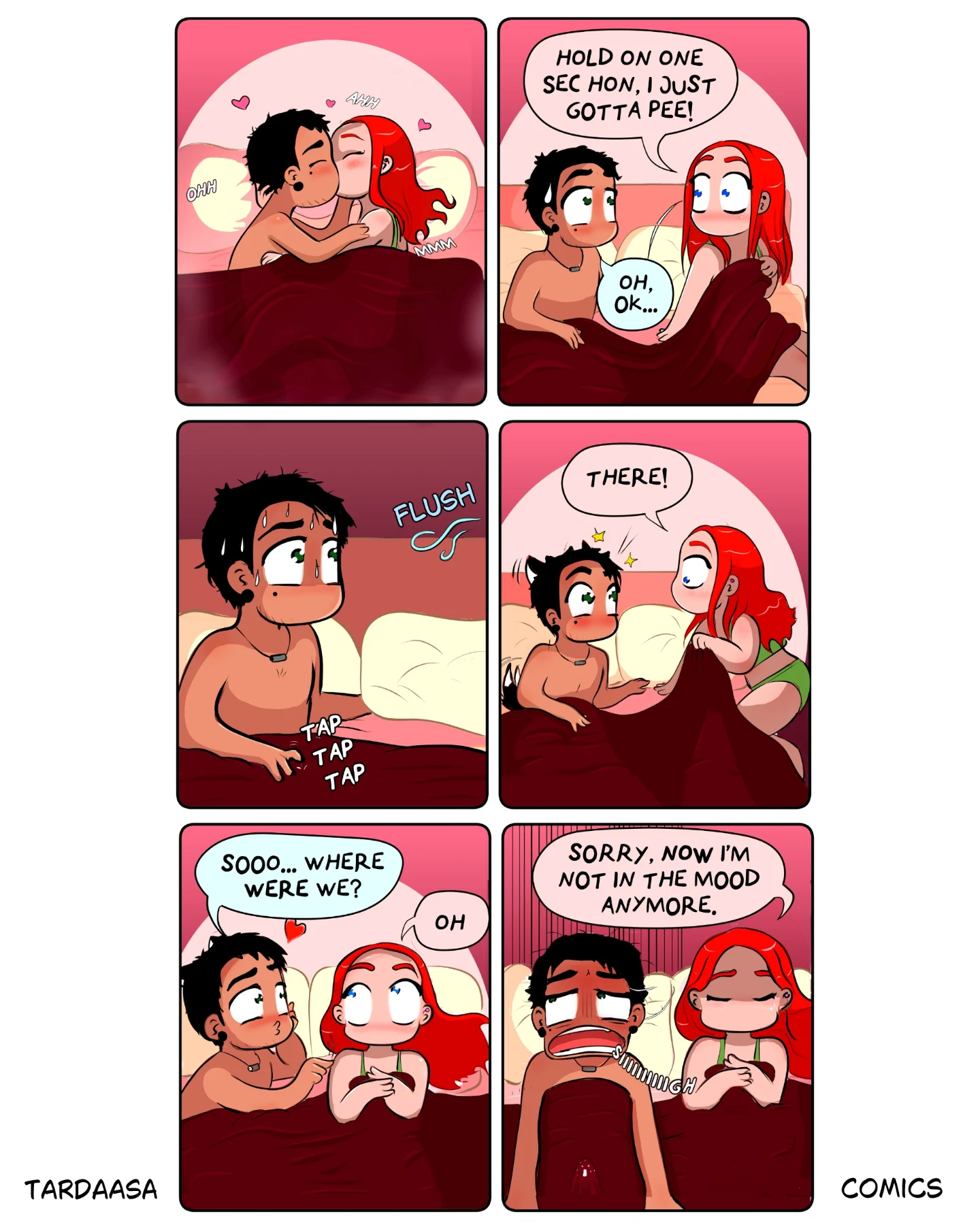
What happens in comic #6?
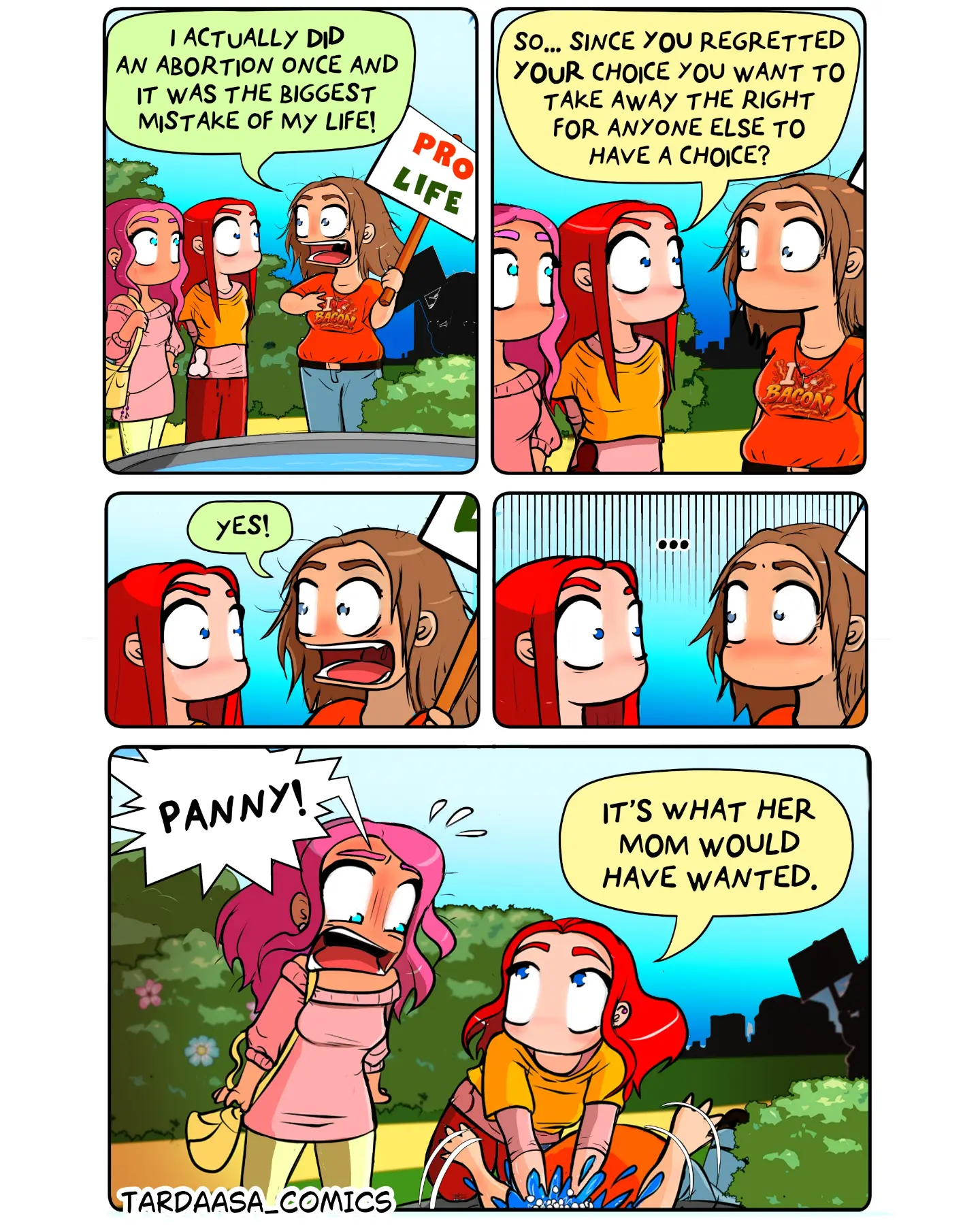
One person’s regret is quickly reframed as a rule for everyone else, exposing the argument’s central contradiction.
What happens in comic #7?
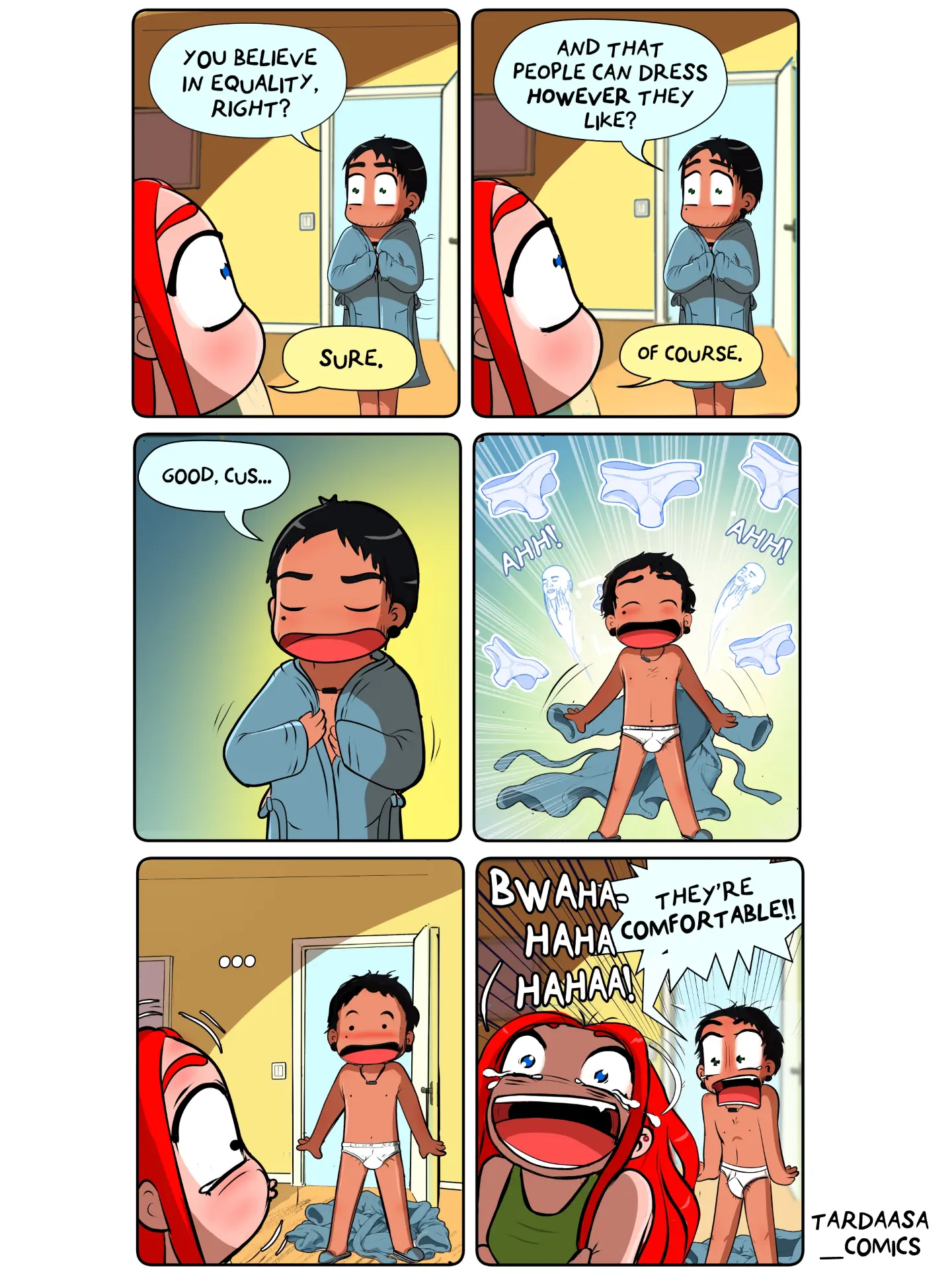
What happens in comic #8?
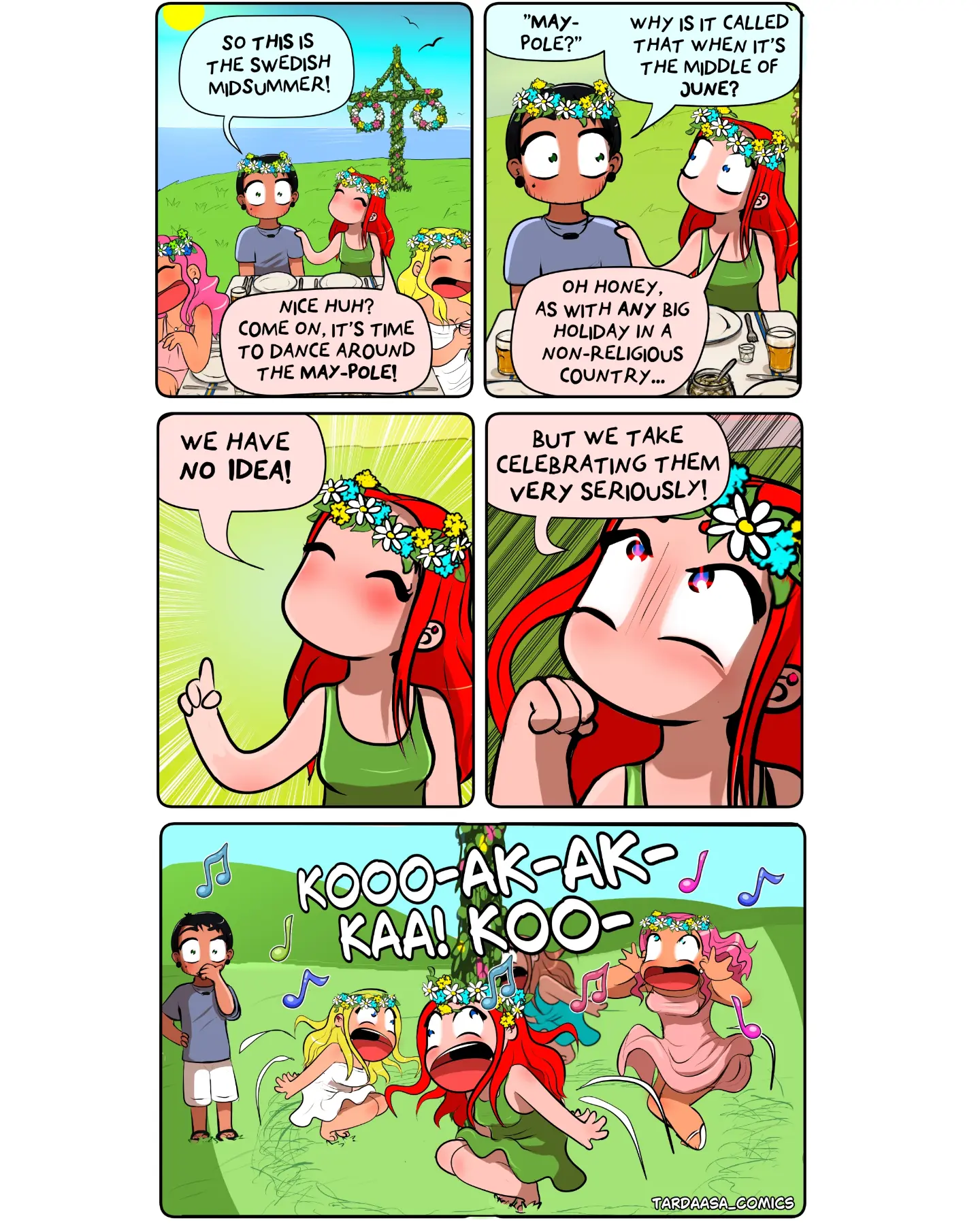
What happens in comic #9?
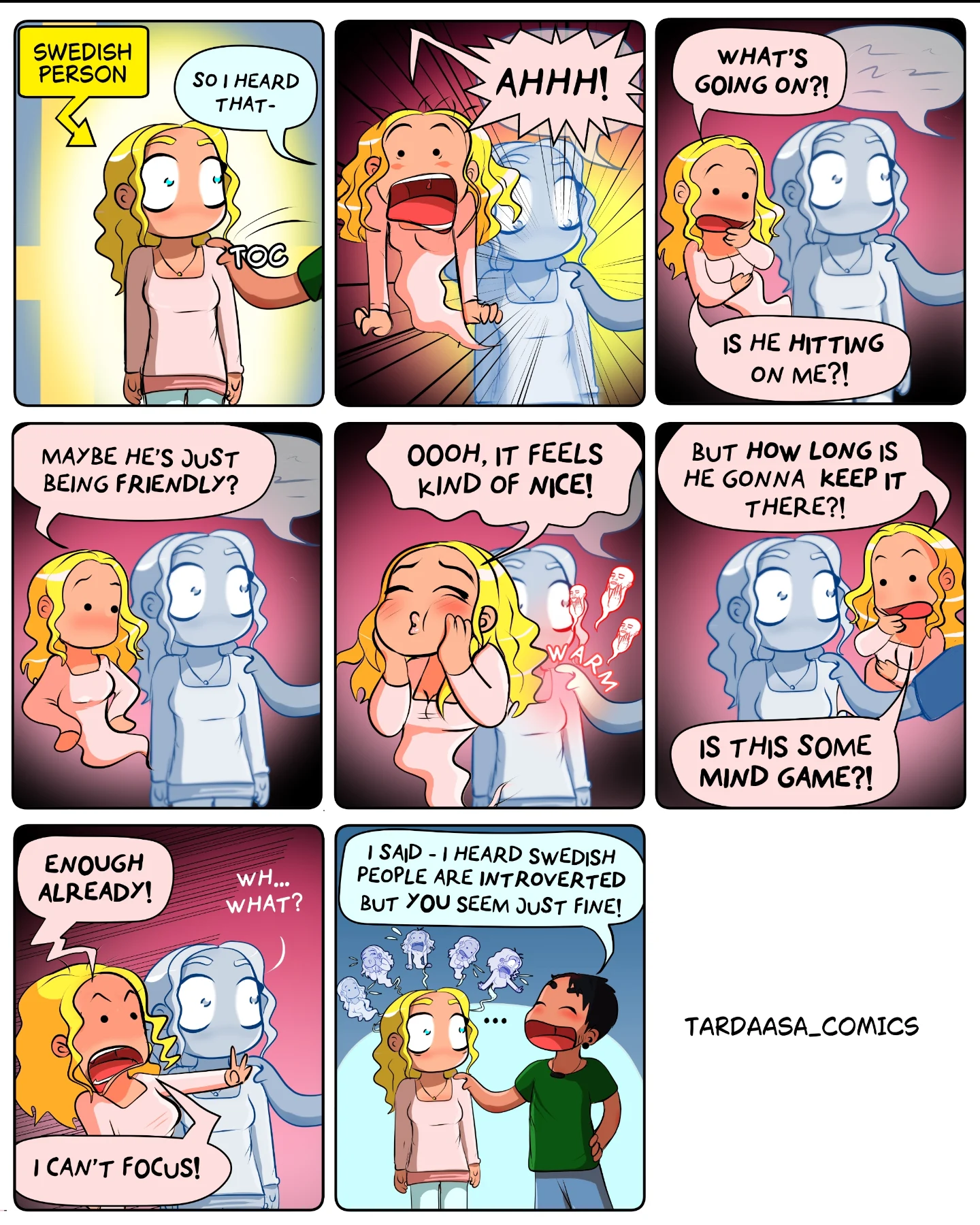
The blue-tinted double externalizes her imagined encounter; the final line deflates a flirtation into a remark about introversion.
What happens in comic #10?
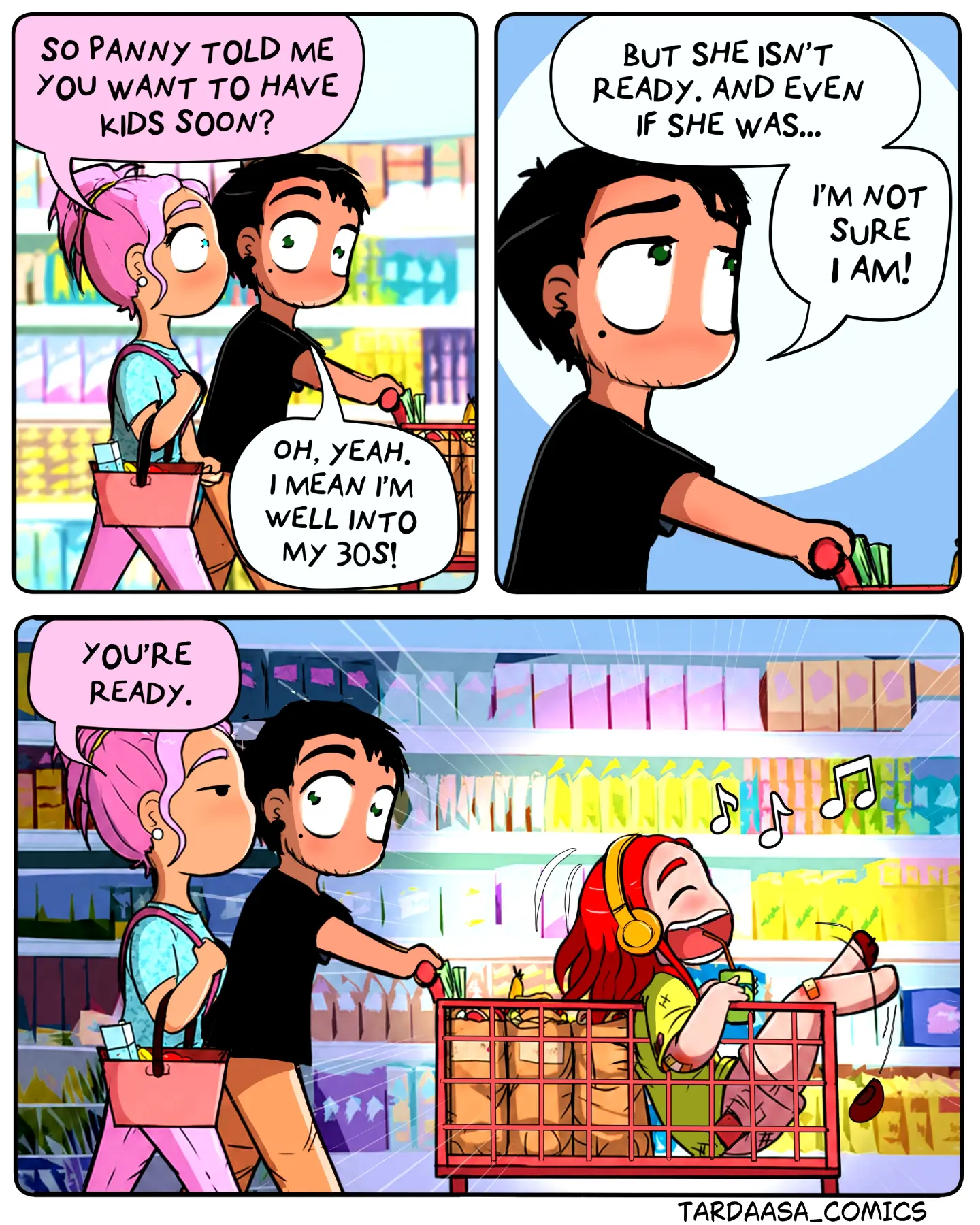
What happens in comic #11?
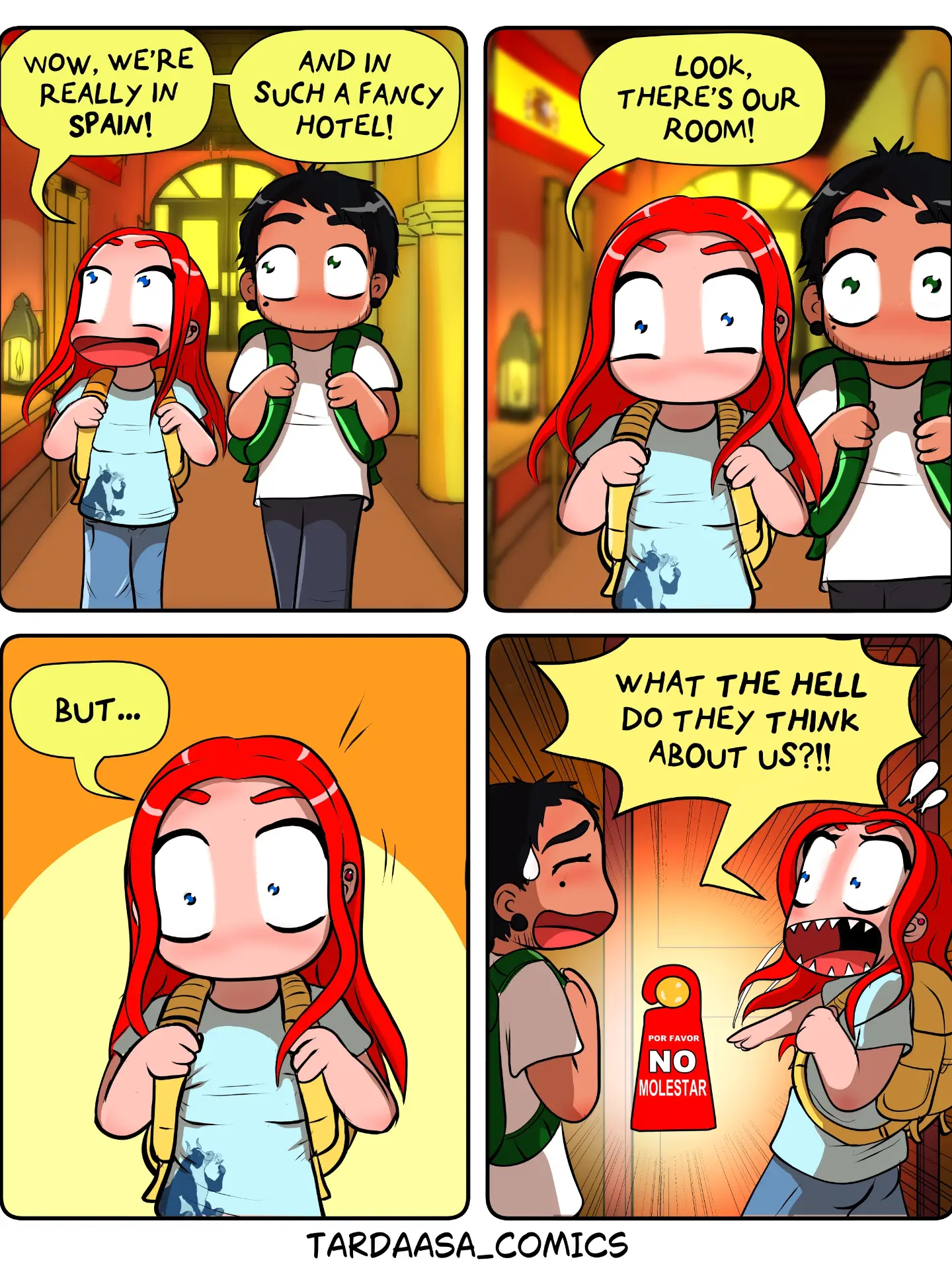
What happens in comic #12?
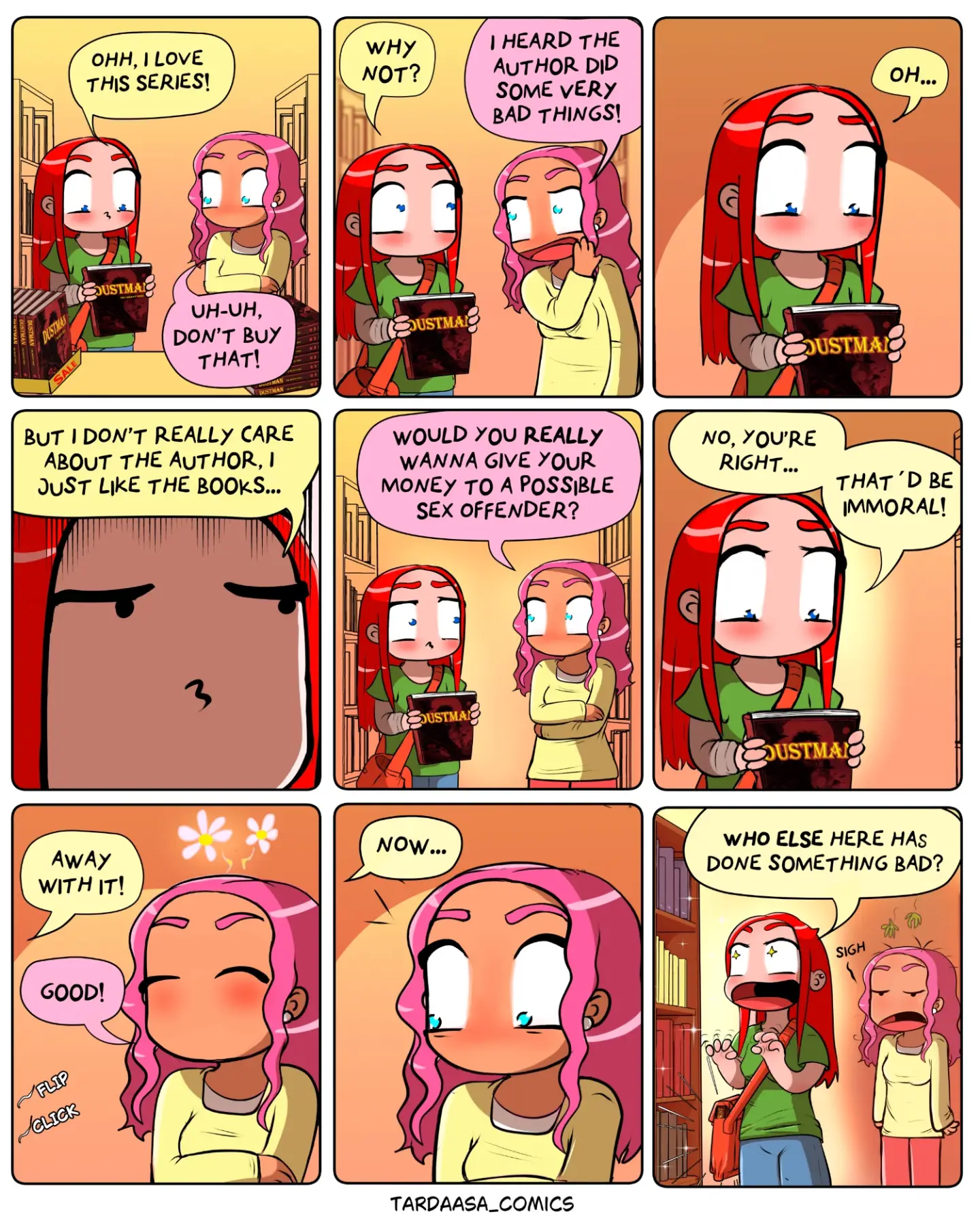
The bookstore scene stages the art-versus-artist debate, then turns the character’s moral certainty back on itself.
What happens in comic #13?
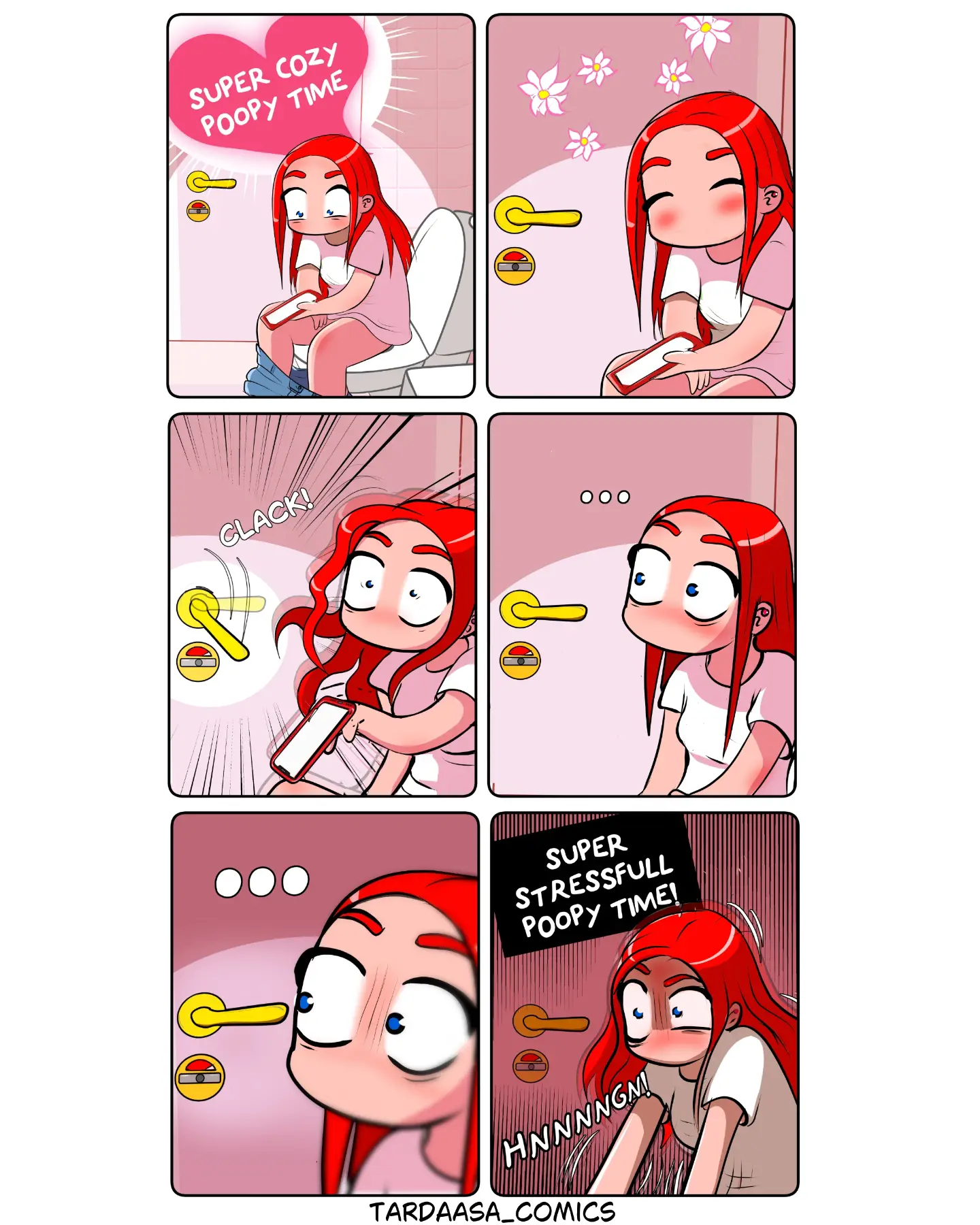
What happens in comic #14?
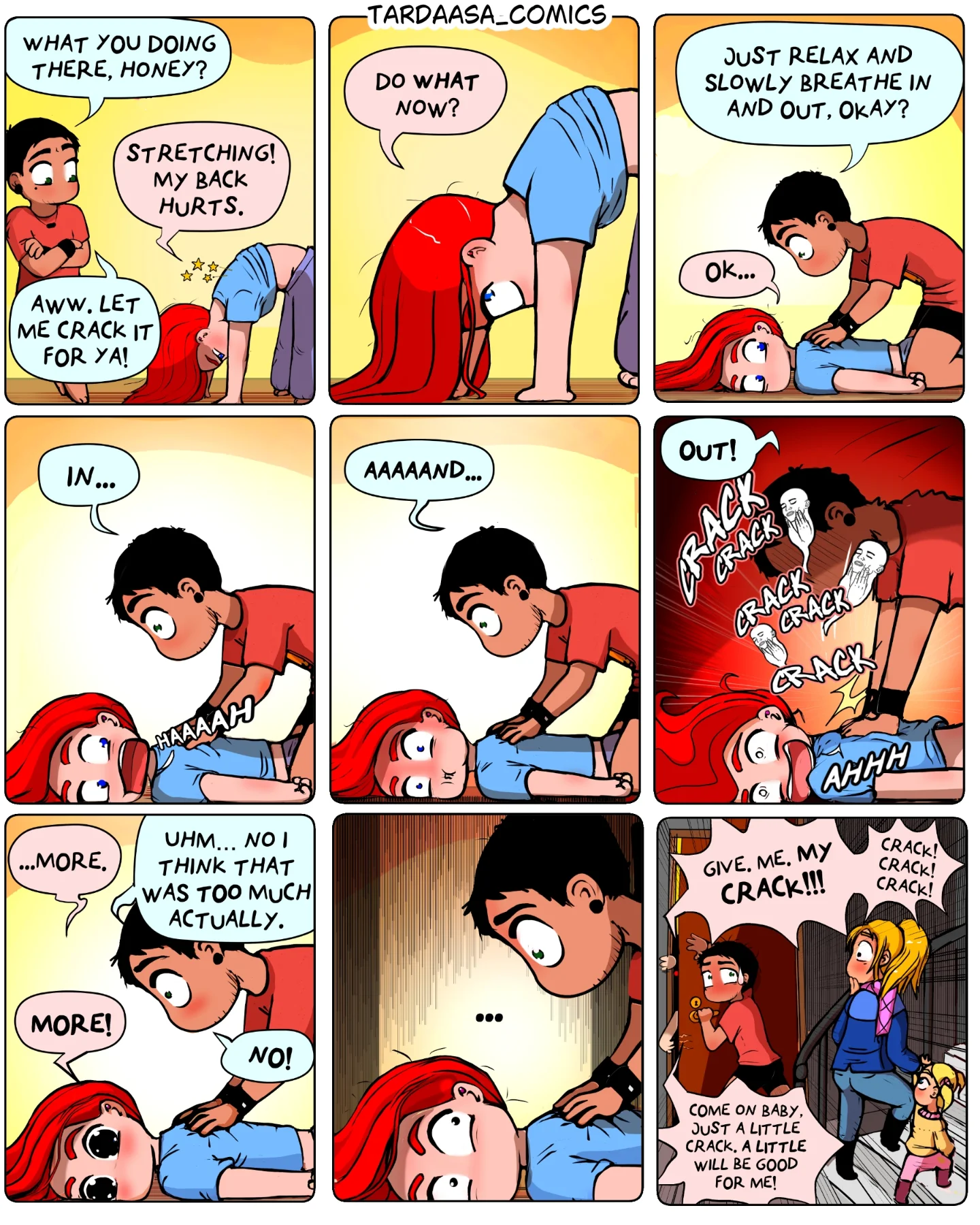
What happens in comic #15?
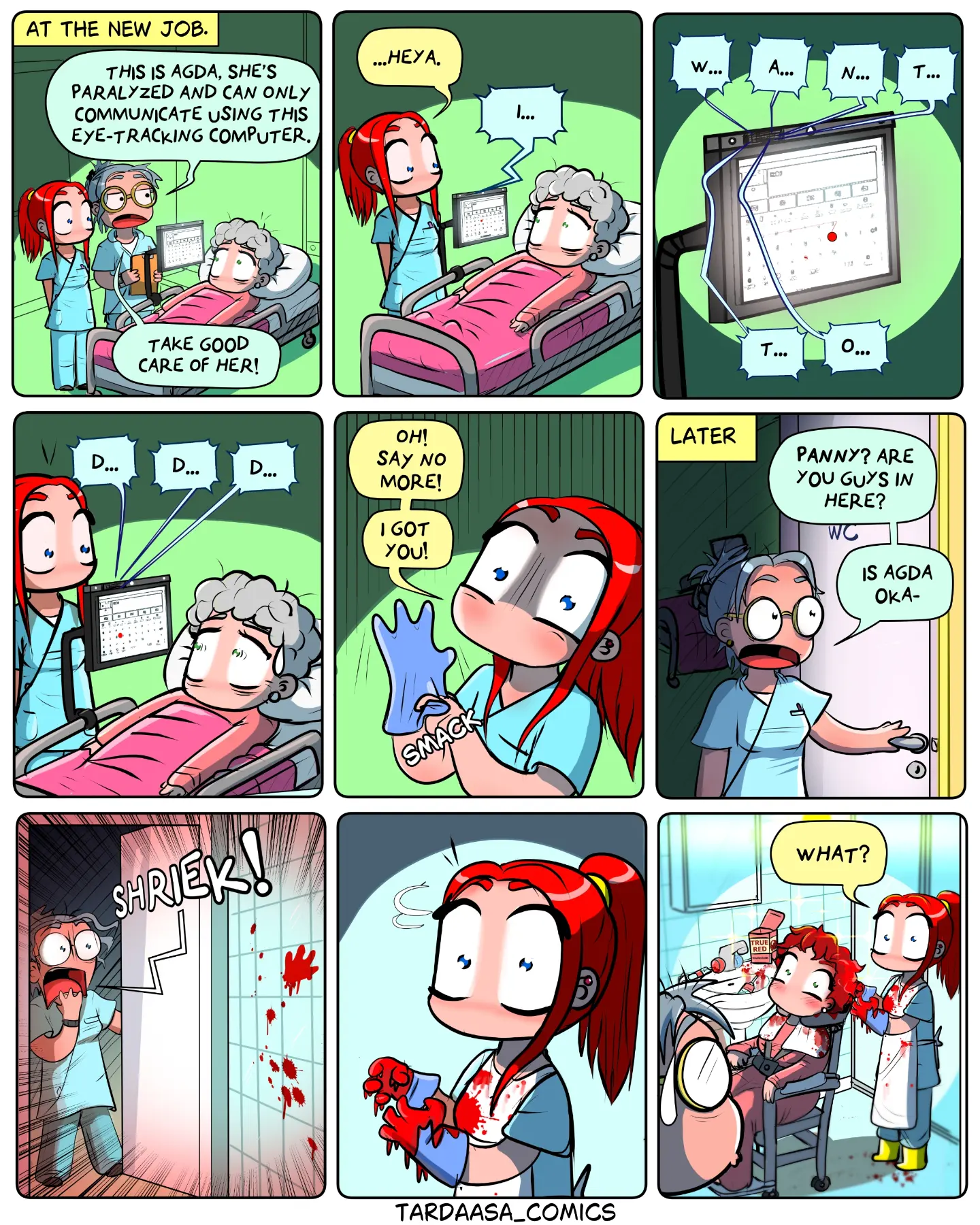
What happens in comic #16?
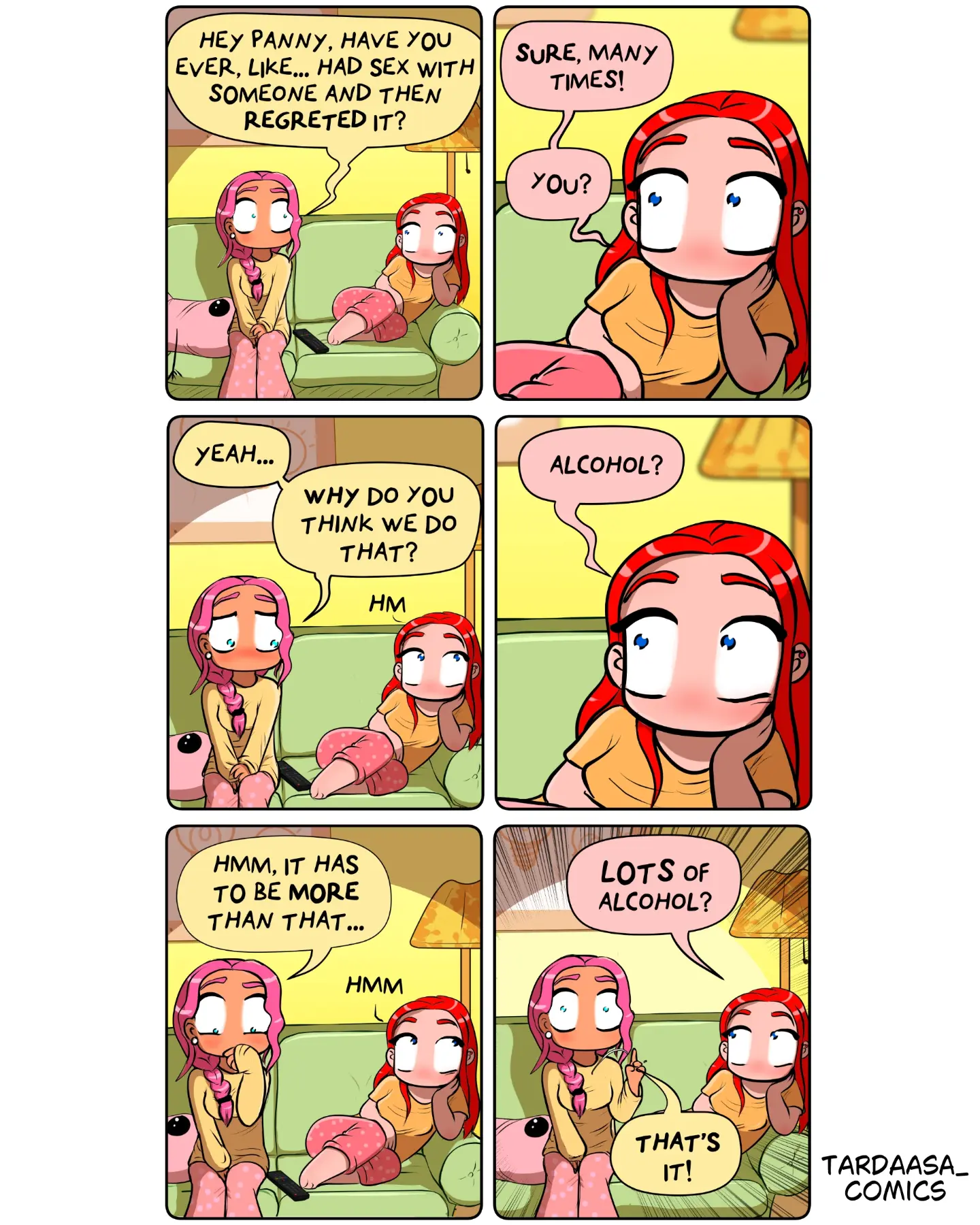
What happens in comic #17?
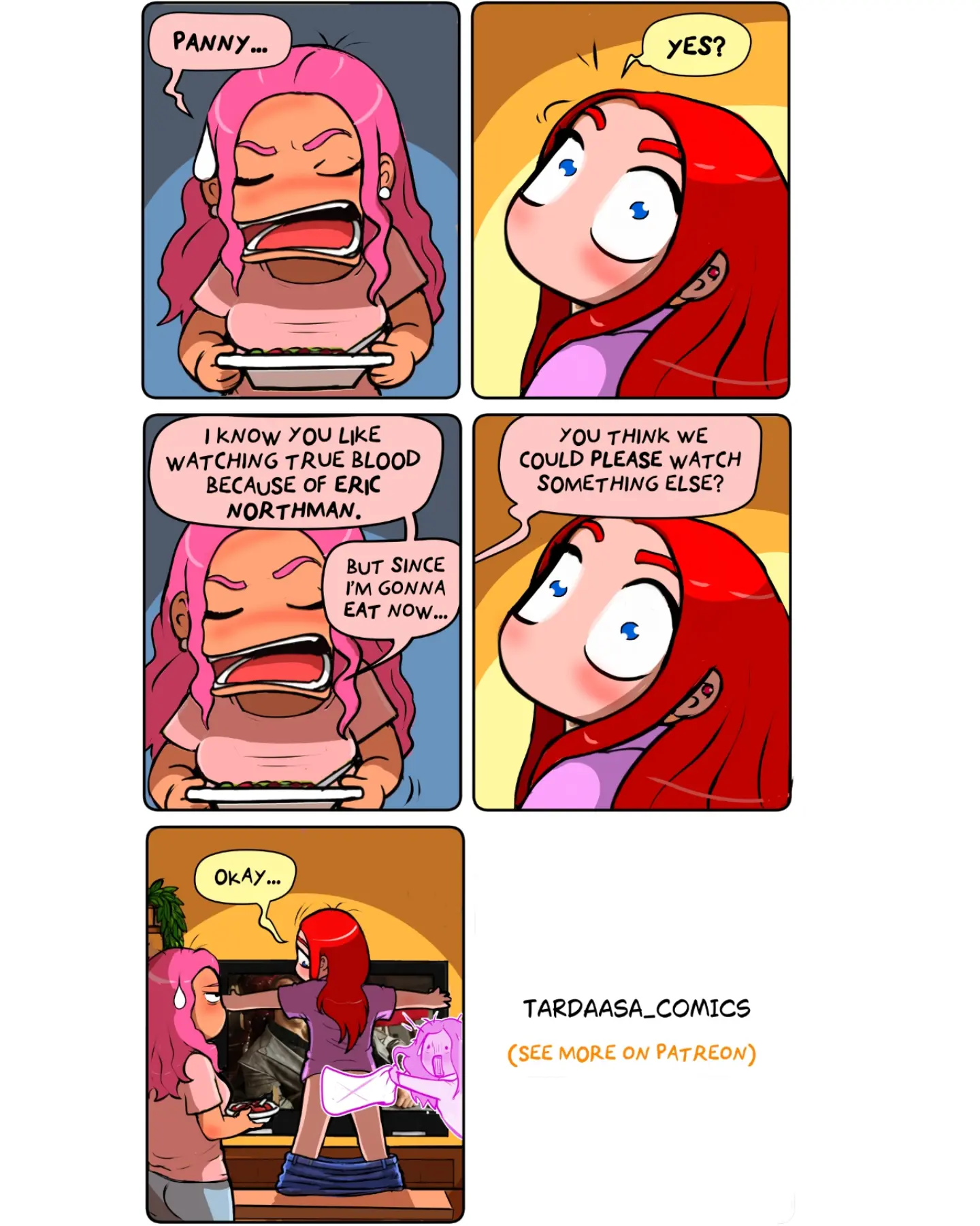
What happens in comic #18?
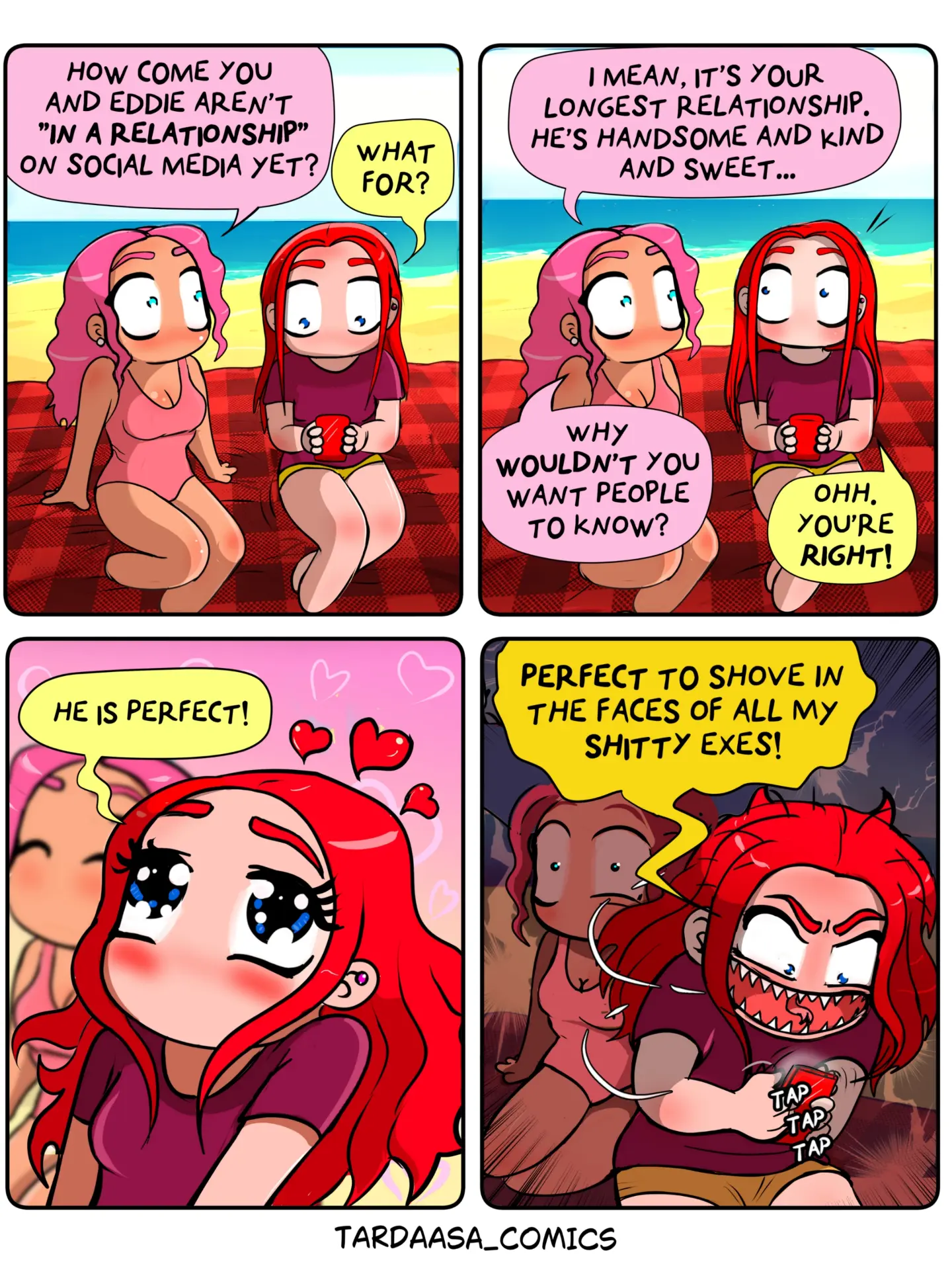
What happens in comic #19?
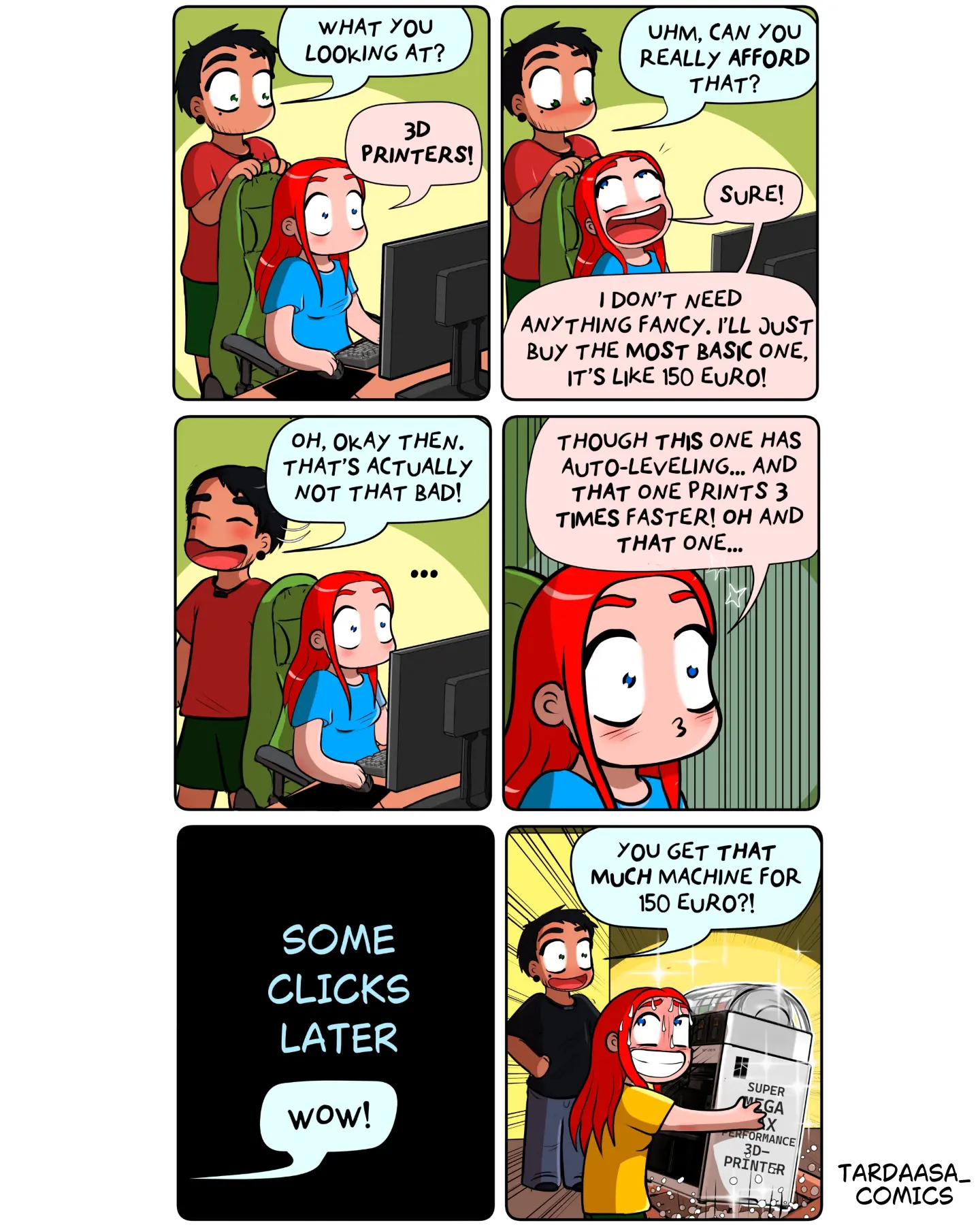
Every added printer feature seems reasonable until the final image reveals how far the original budget has slipped.
What happens in comic #20?
Who is Linnéa Aasa?
Linnéa Aasa is the creator behind Tardaasa Comics and has also used the name Tardee. In a interview, Aasa described the strip’s beginnings as a compact “gag of the day” format: one idea carried to its punchline. These pages show how that structure can stretch across multiple panels, with color, pose, and facial exaggeration sharing the storytelling work. Follow Tardaasa on Instagram for more comics.
Taken together, this set moves from domestic negotiations to social satire without losing its expressive, quick-turn rhythm. For another look at the creator’s work, read our earlier Tardaasa Comics feature.
Key Data & Statistics
The article features 19 Tardaasa comics.
The selection includes numbered entries up to #20.
Cartoonist Linnéa Aasa is also known as Tardee.
Aasa described the strip's beginnings as a compact "gag of the day" format.
Frequently Asked Questions
Who is the creator behind Tardaasa Comics?
Linnéa Aasa, also known as Tardee, is the creator behind Tardaasa Comics. She makes short-form webcomics about relationships, social habits, and subjects people do not always discuss politely, using bright color and elastic facial expressions to keep each setup legible.
What themes do the 19 Tardaasa comics cover?
The selection moves from couple banter to cultural stereotypes, public debate, and a bookstore dilemma. Rather than sticking to one theme, the collection shows how visual exaggeration can deliver a sharp turn without a long explanation, spanning domestic negotiations and social satire.
How did Aasa describe the strip's beginnings?
In an interview, Aasa described the strip's beginnings as a compact gag of the day format: one idea carried to its punchline. These pages show how that structure can stretch across multiple panels, with color, pose, and facial exaggeration sharing the storytelling work.
Why does the final panel matter in these comics?
A final panel often changes the emotional temperature of each setup. For example, a request for chips becomes a domestic standoff where the partner's repeated refusal matters less than the silent stare, which becomes the punchline.
Where can readers follow Tardaasa Comics for more?
Readers can follow Tardaasa on Instagram for more comics. The article also suggests reading an earlier Tardaasa Comics feature for another look at the creator's work, which moves from domestic negotiations to social satire without losing its expressive, quick-turn rhythm.


