


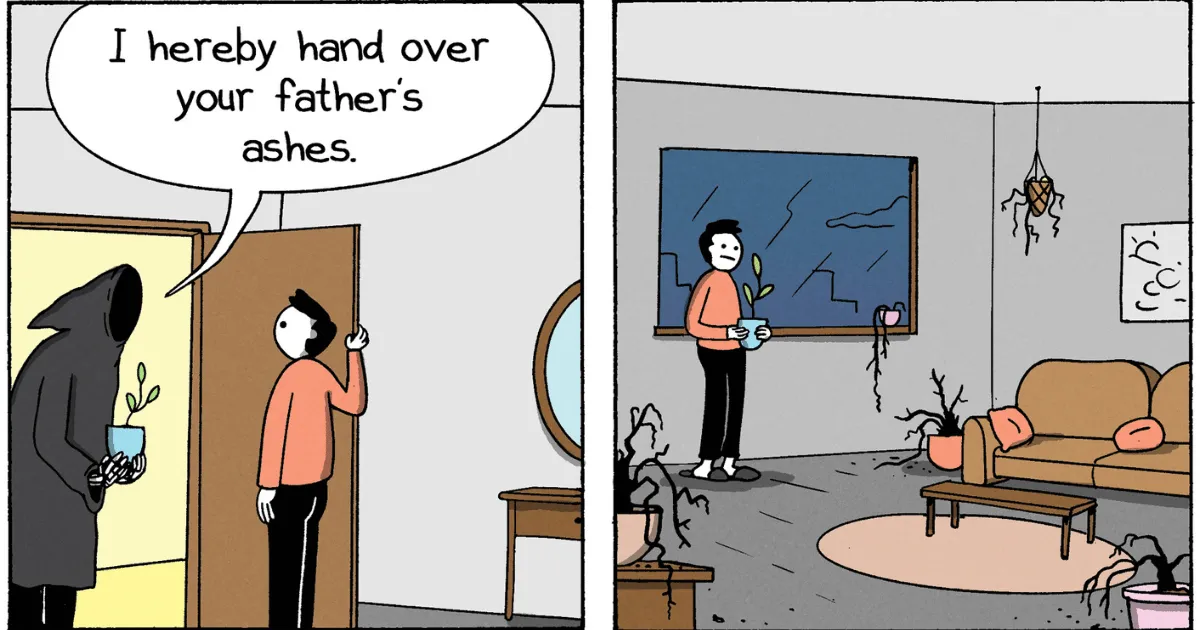
Quick Answer: This collection of 20 War and Peas comics by Elizabeth Pich and Jonathan Kunz blends clean, colorful art with dark, adult punchlines. The strips range from pirate inclusivity and witchy folklore to office resentment, cat etiquette, and a vampire's literal snack. Many share a tight rhythm: an ordinary exchange, one sharp turn, and a final image that pushes the premise further. Recurring devices include misread phrases and characters' unshakable logic, as when a captain's insult backfires or a cat's many lives exceed the Reaper's records.
The 20 War and Peas comics here move from pirate inclusivity and witchy folklore to office resentment, cat etiquette, and a vampire’s very literal idea of a snack. The artwork stays clean and colorful while the punchlines veer into dark, adult, or socially pointed territory.
Created by Elizabeth Pich and Jonathan Kunz, War and Peas often builds a gag around a misread phrase or a character’s unshakable logic. These strips jump between unrelated worlds, but many share the same tight rhythm: an ordinary exchange, one sharp turn, and a final image that pushes the premise further.
How does the final ship turn the captain's defense into a visual reveal?
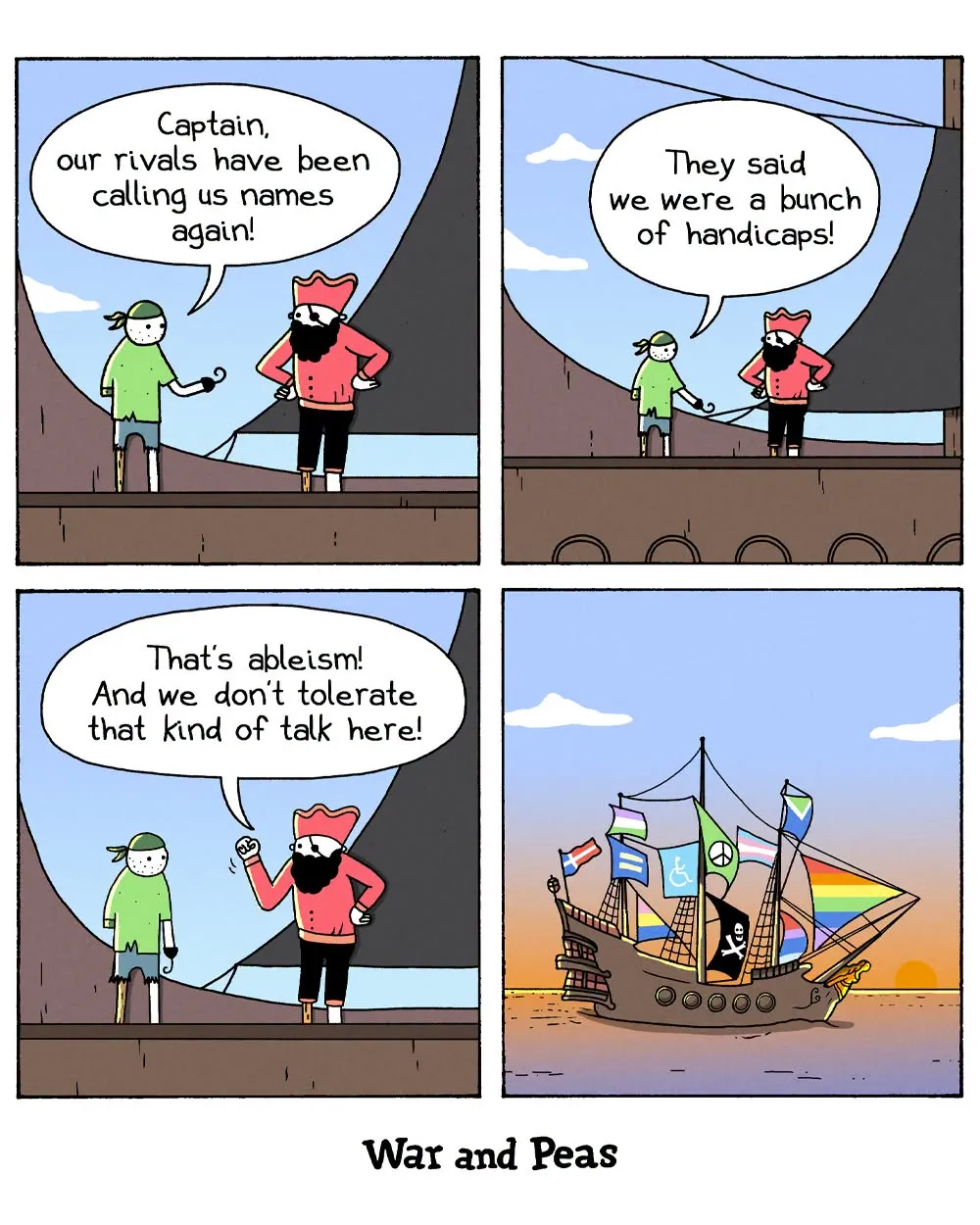
The final ship turns the captain’s defense into a visual reveal, its many pride and accessibility flags making the insult backfire.
How does the patient treat a medical-office cue as a plot twist?
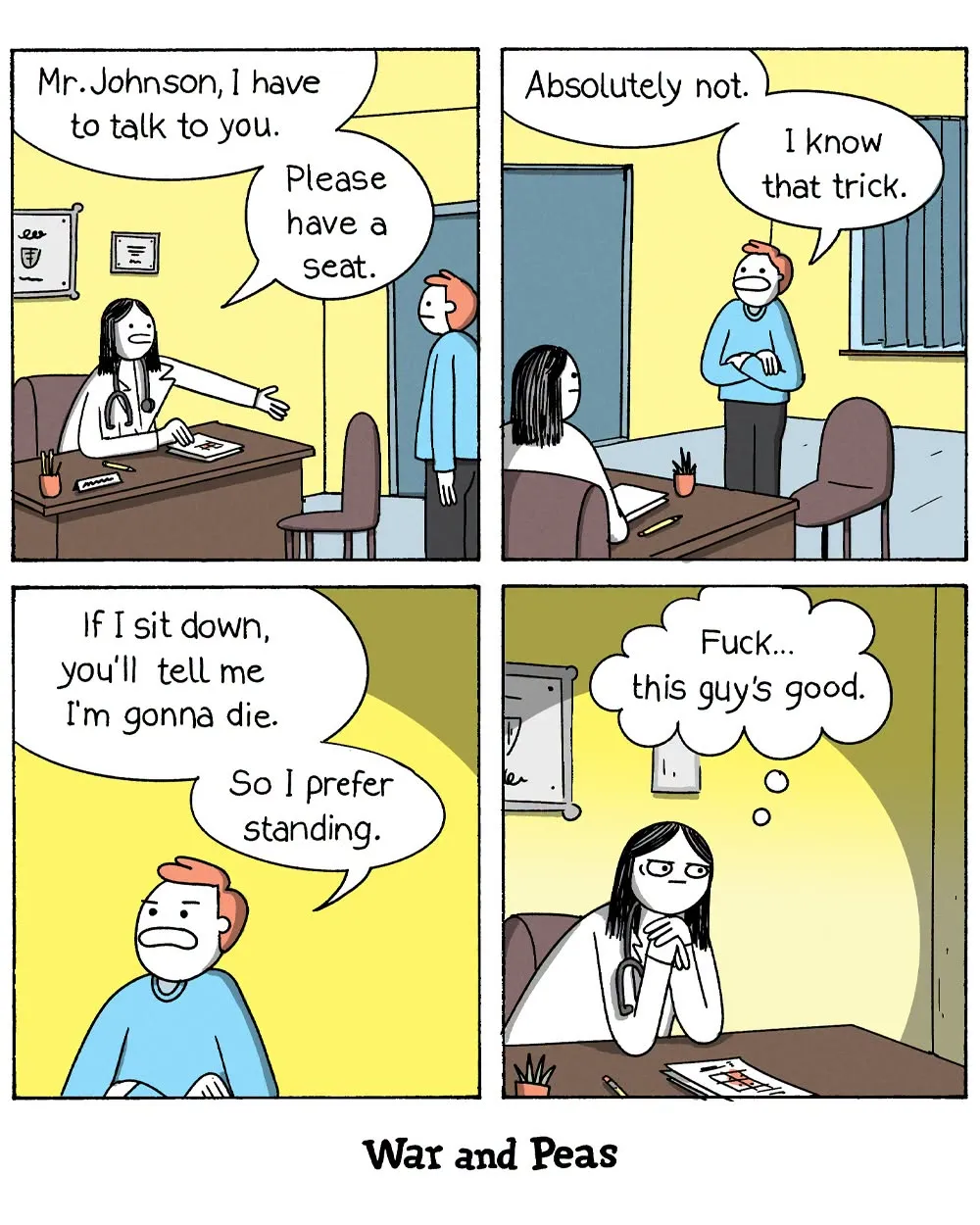
The patient treats a medical-office cue as a plot twist; the doctor’s private reaction concedes he has read the room.
How does a vague instruction become literal woodland guidance?
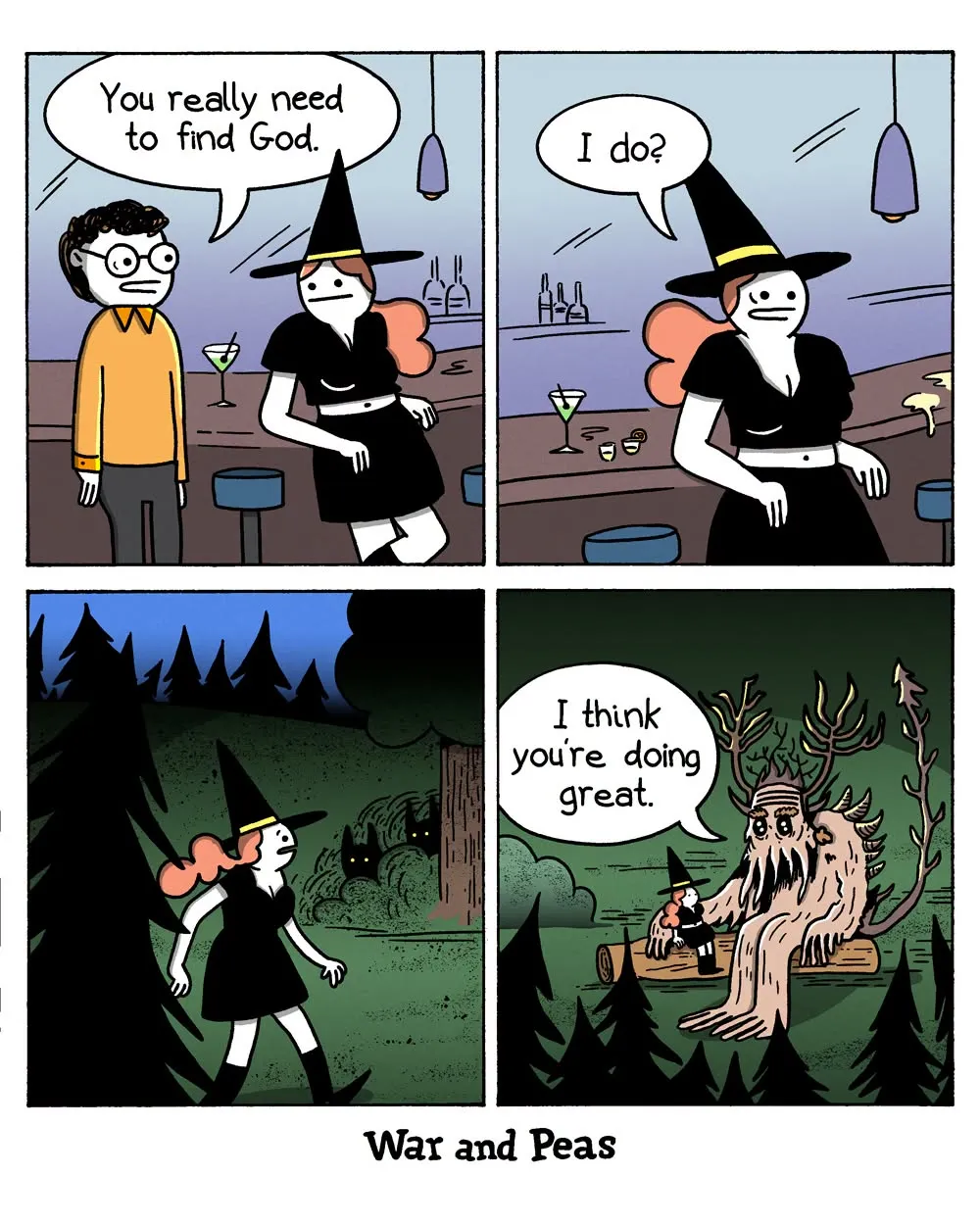
A vague instruction becomes literal woodland guidance, and the expected sermon is replaced by a supportive forest deity.
What happens in comic #4?
Why does the vampire's double meaning work in comic #5?
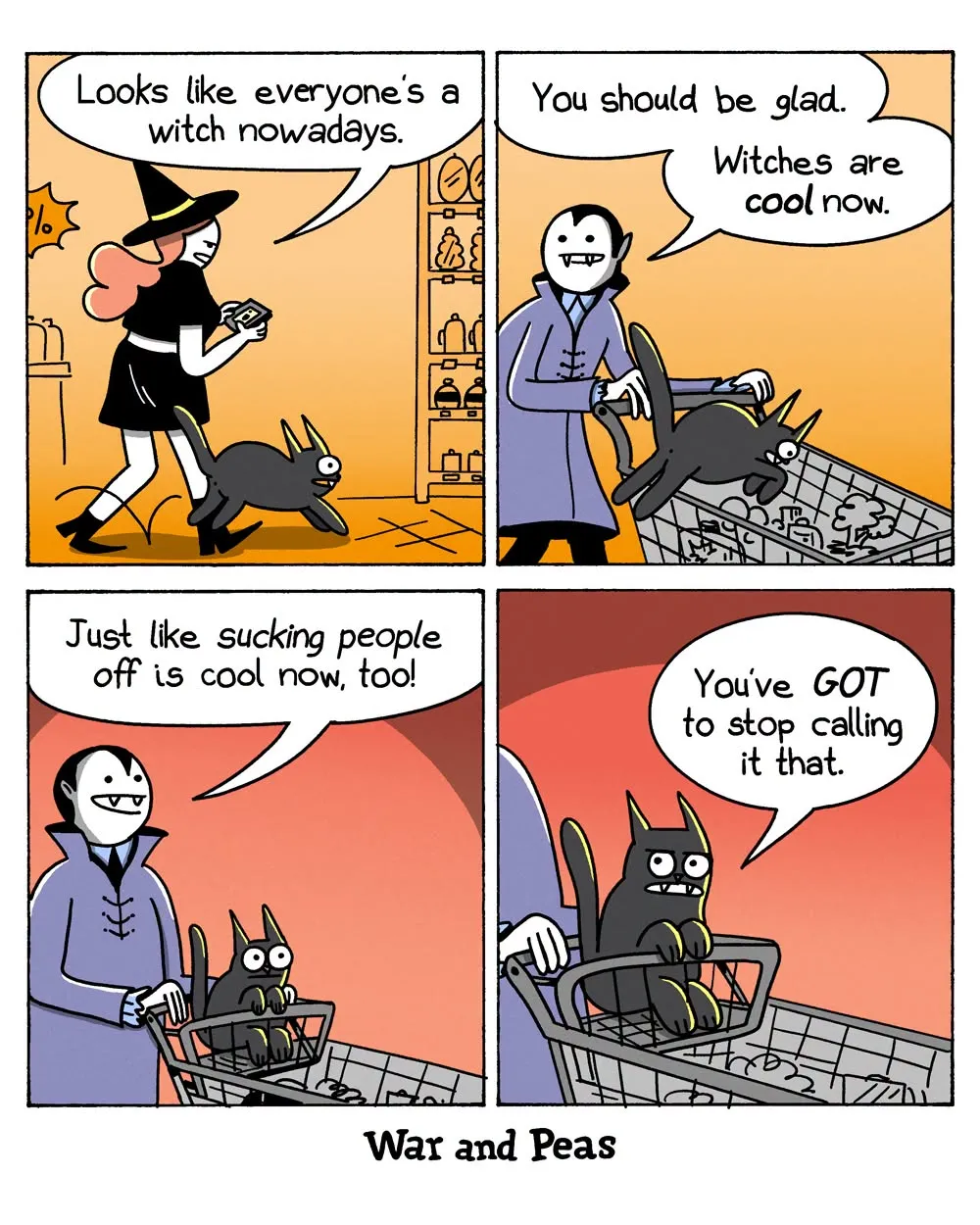
The vampire’s double meaning works because he misses the innuendo in his own words; the cat catches it immediately.
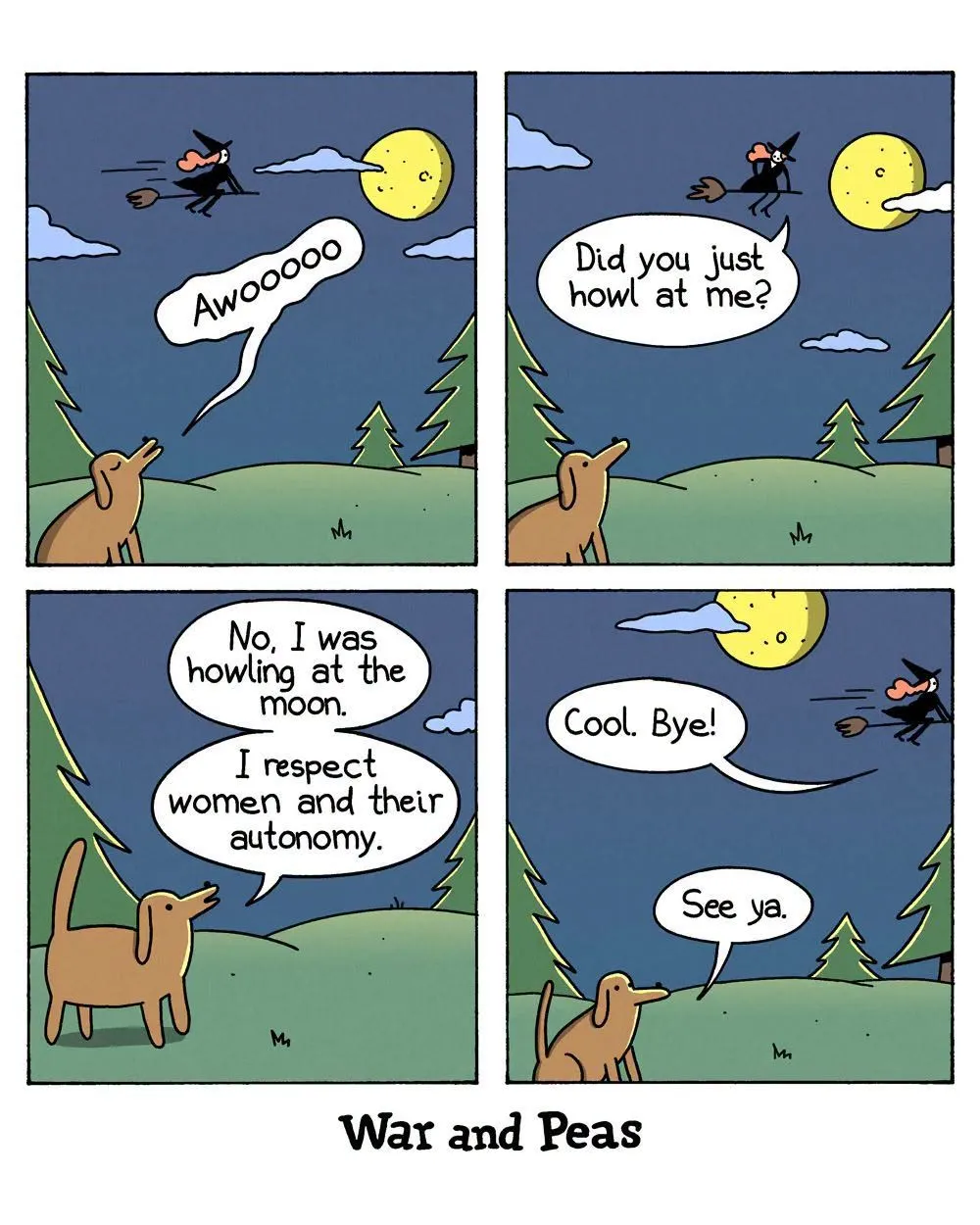
How does the fairy's seasonal correction set up the witch's political definition of fall?
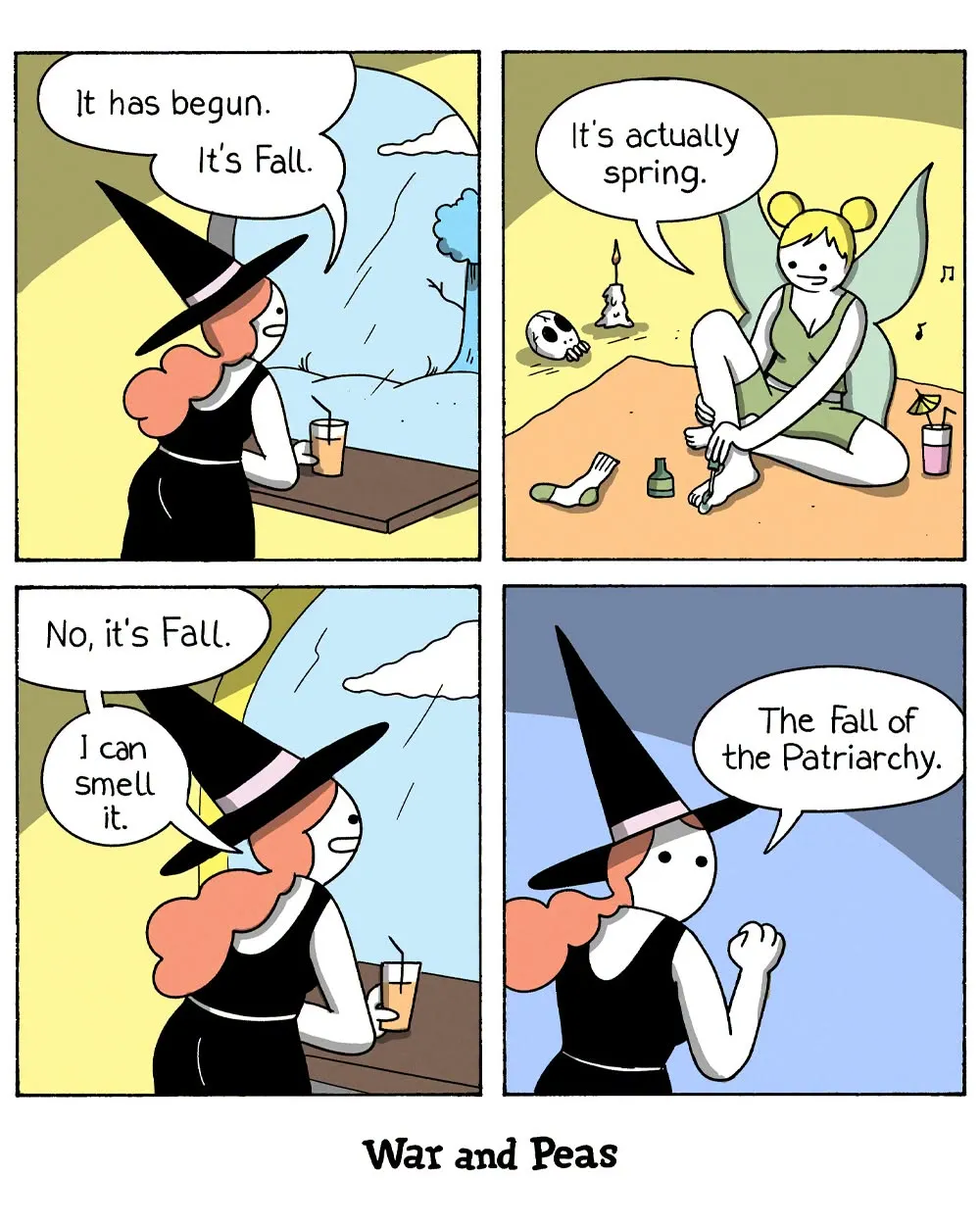
The fairy’s calm seasonal correction sets up the witch’s much bigger, explicitly political definition of “fall.”
What happens in comic #7?
How does a cosmic question become a deadpan bookkeeping problem?
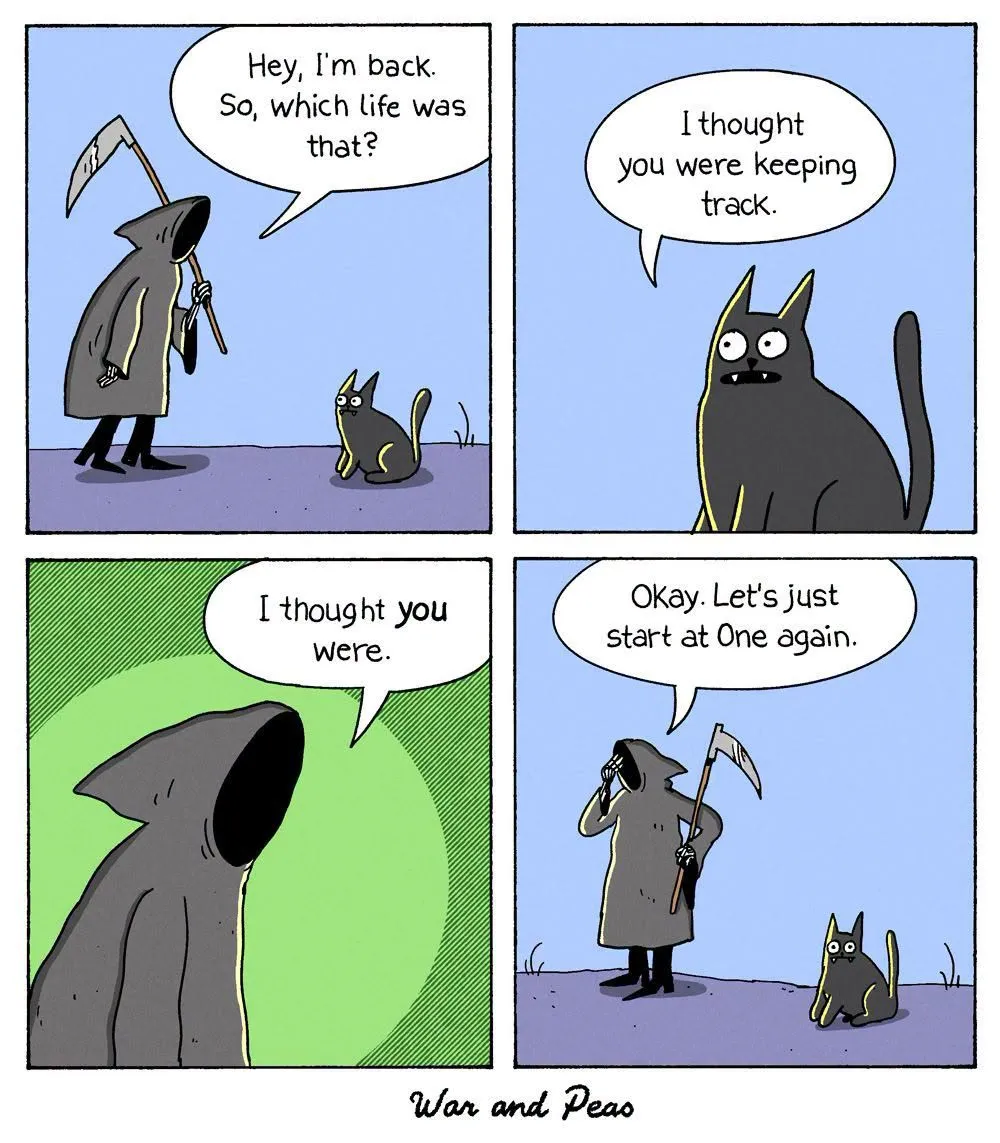
A cosmic question becomes a deadpan bookkeeping problem: the cat’s many lives exceed the Reaper’s records.
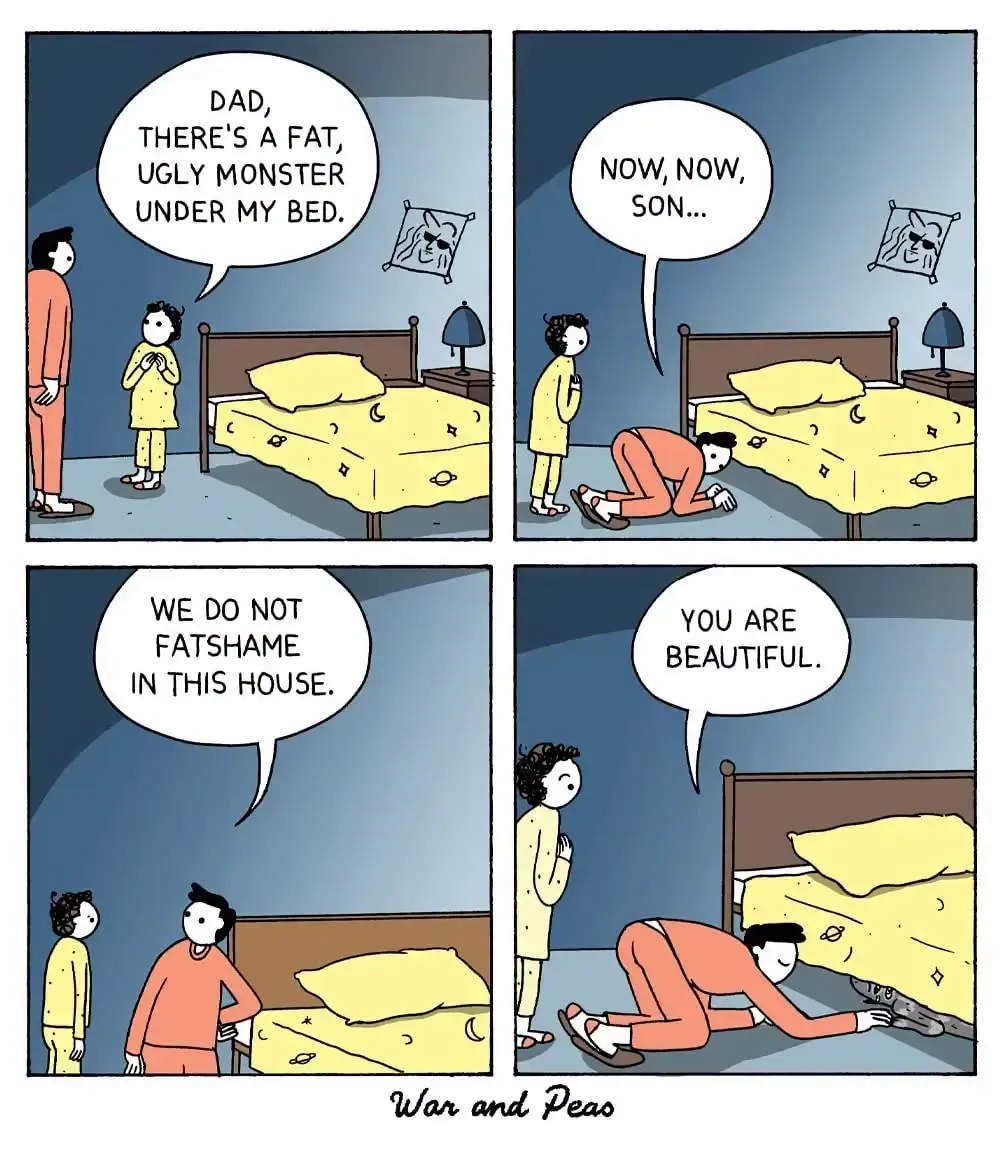
What happens in comic #9?
How does the teacher's delivery make the crude greeting sound like school policy?
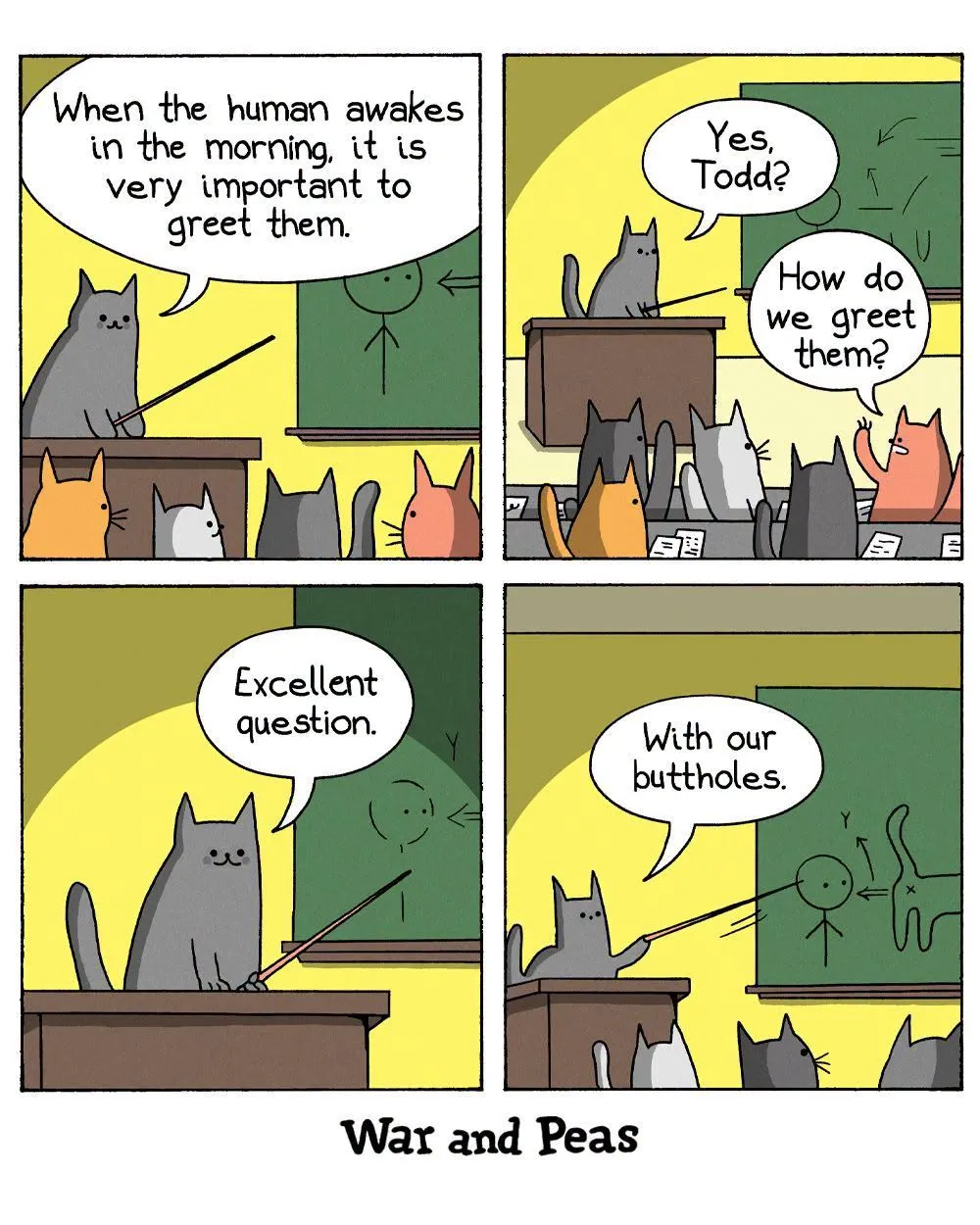
The teacher’s calm, lecture-like delivery makes the deliberately crude greeting sound like standard school policy.
What happens in comic #11?
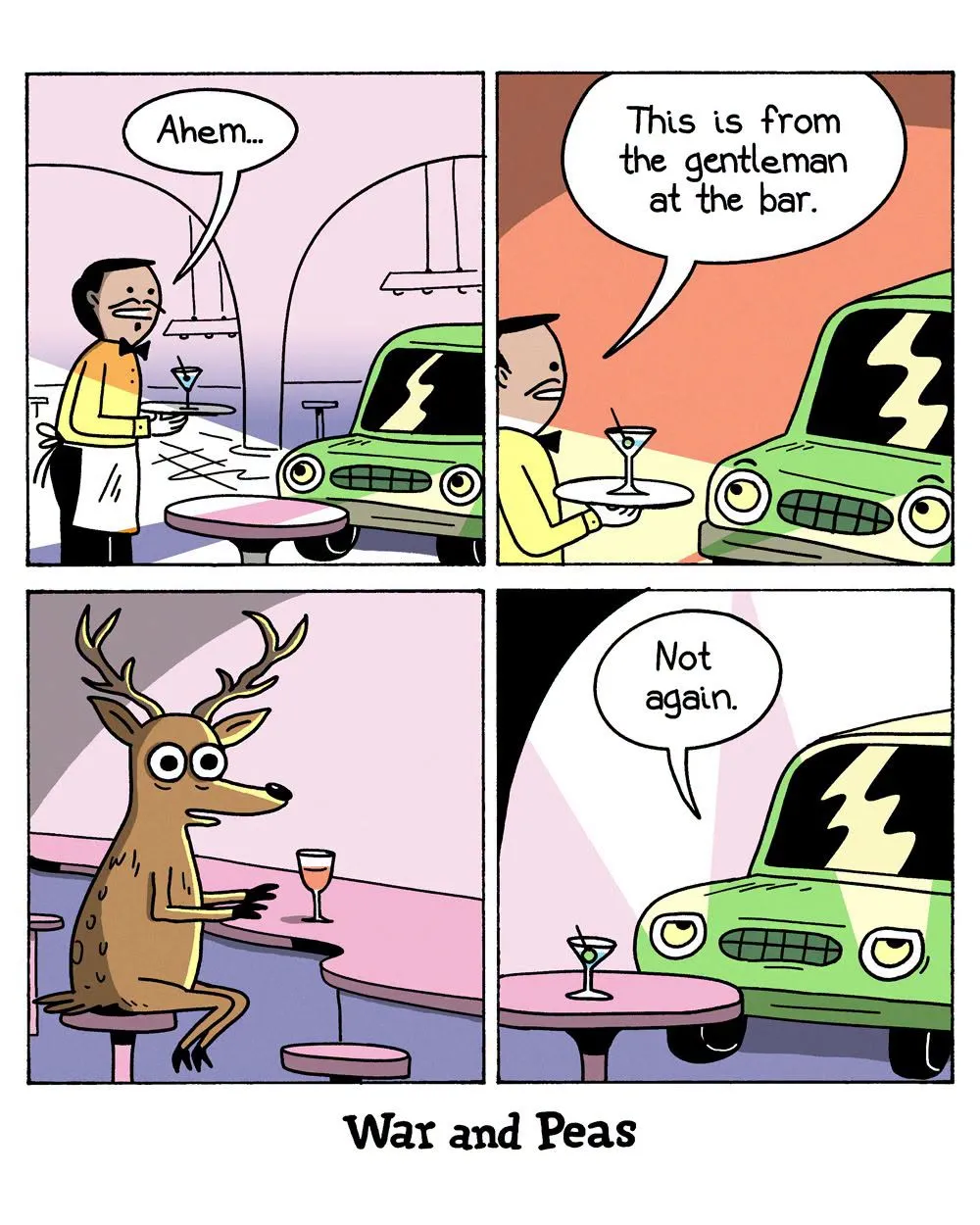
What happens in comic #12?
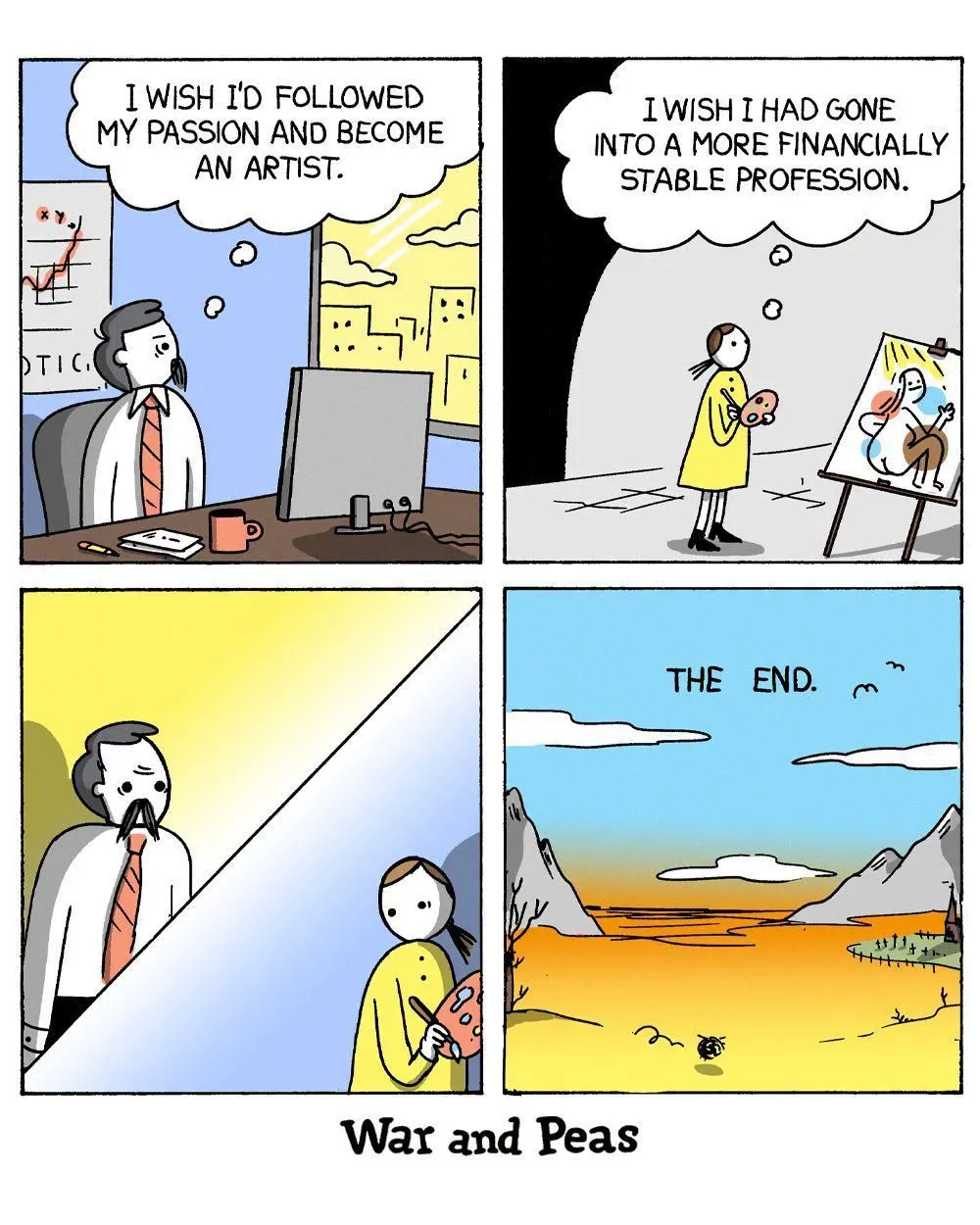
What happens in comic #13?
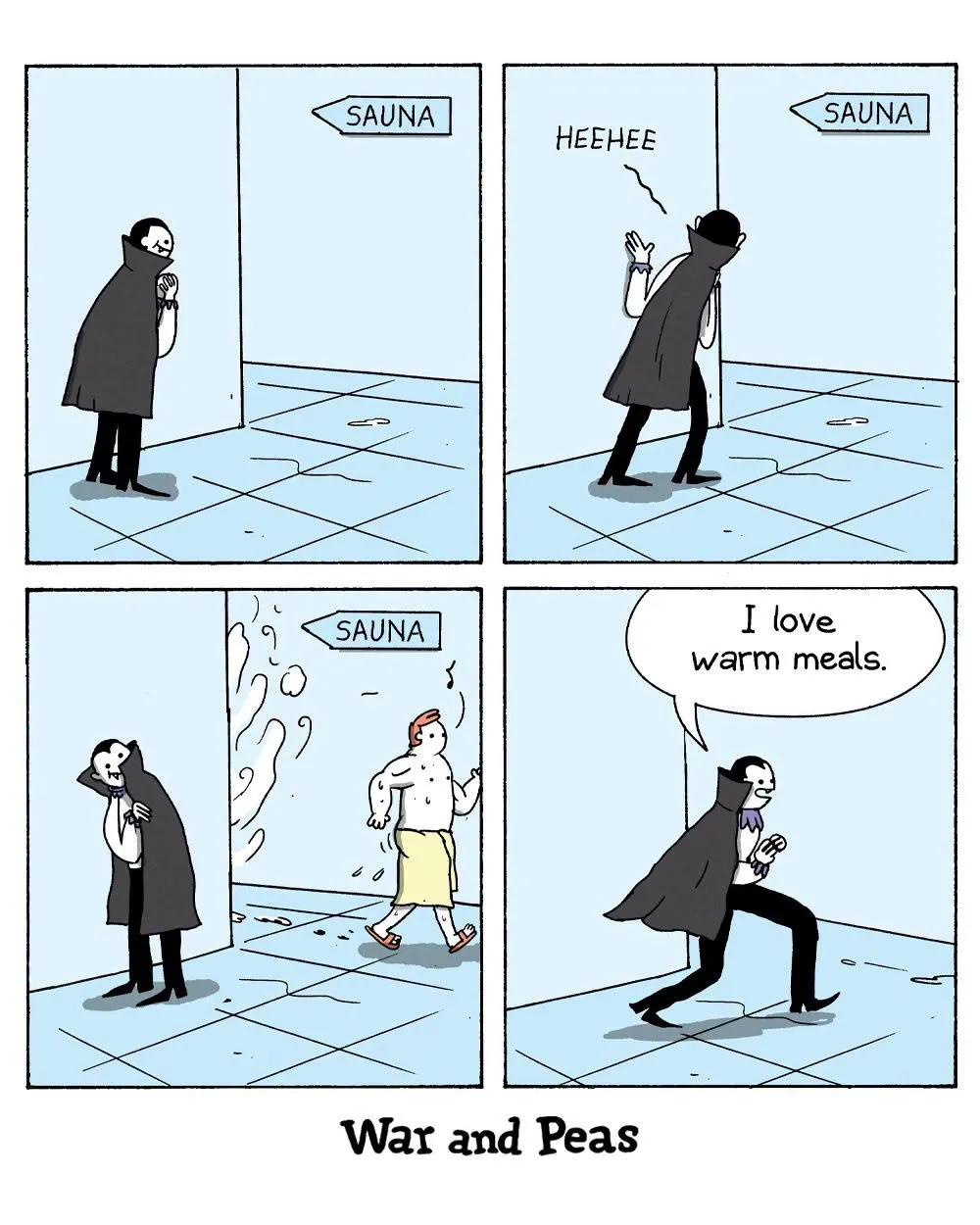
What happens in comic #14?
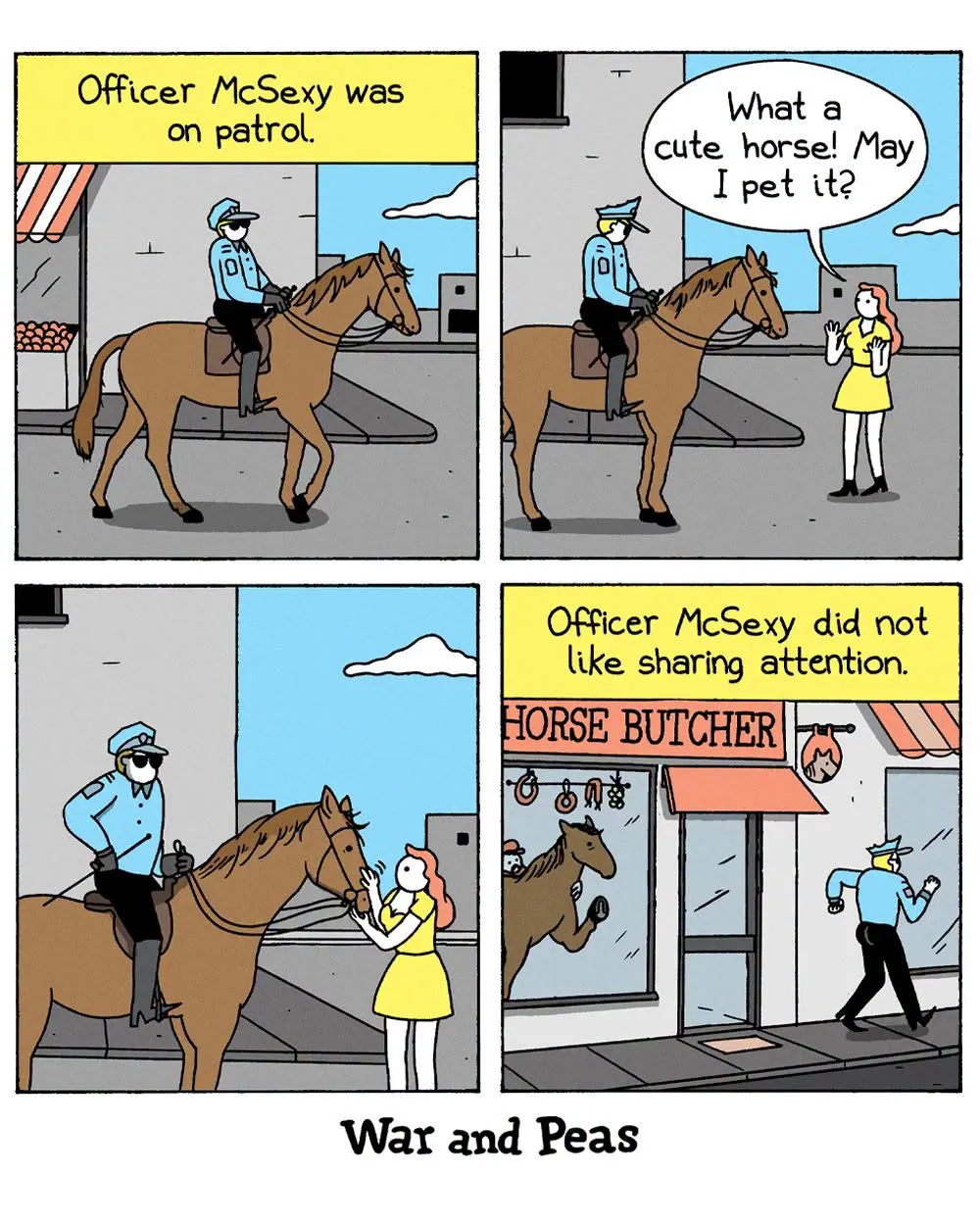
What happens in comic #15?
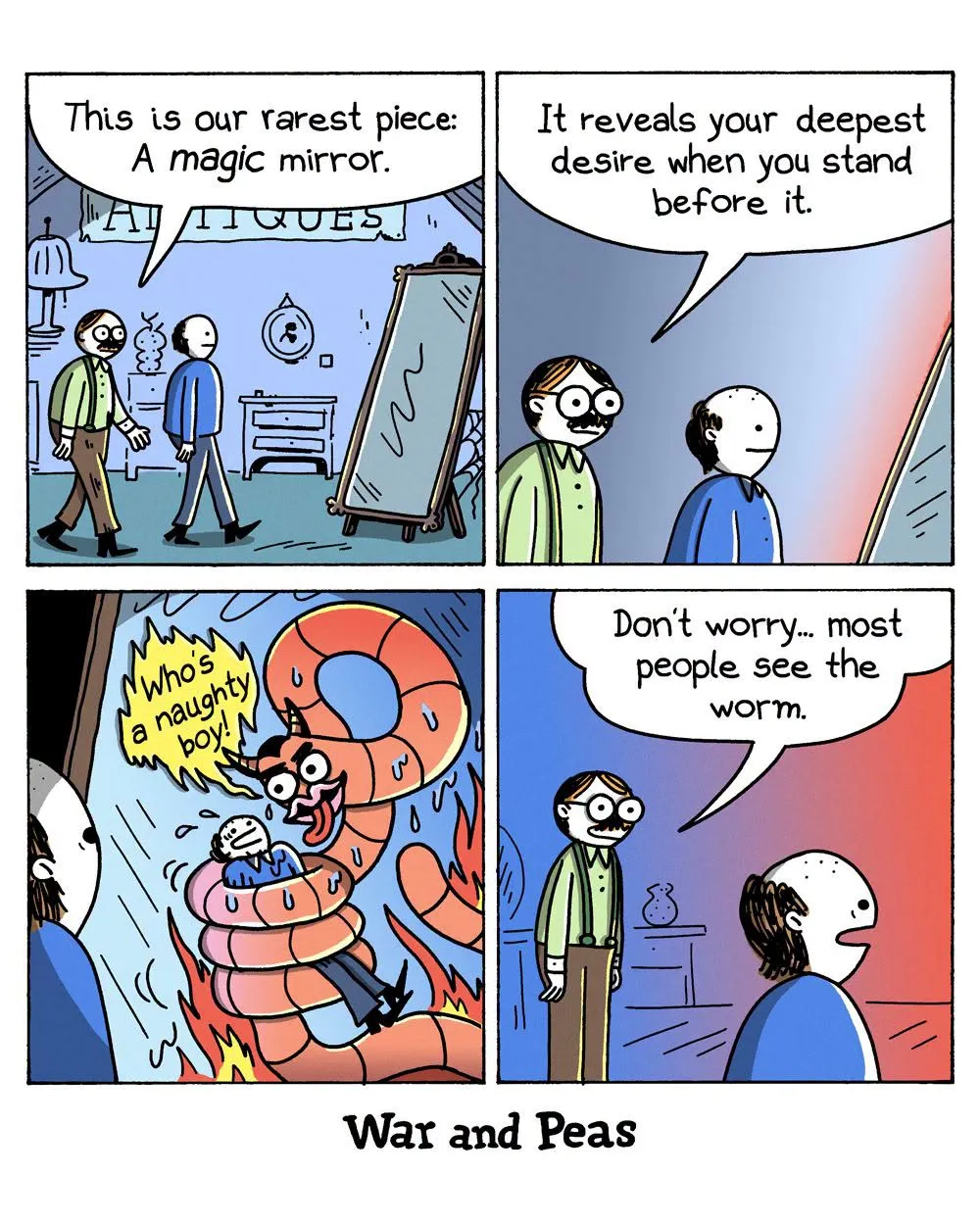
What happens in comic #16?
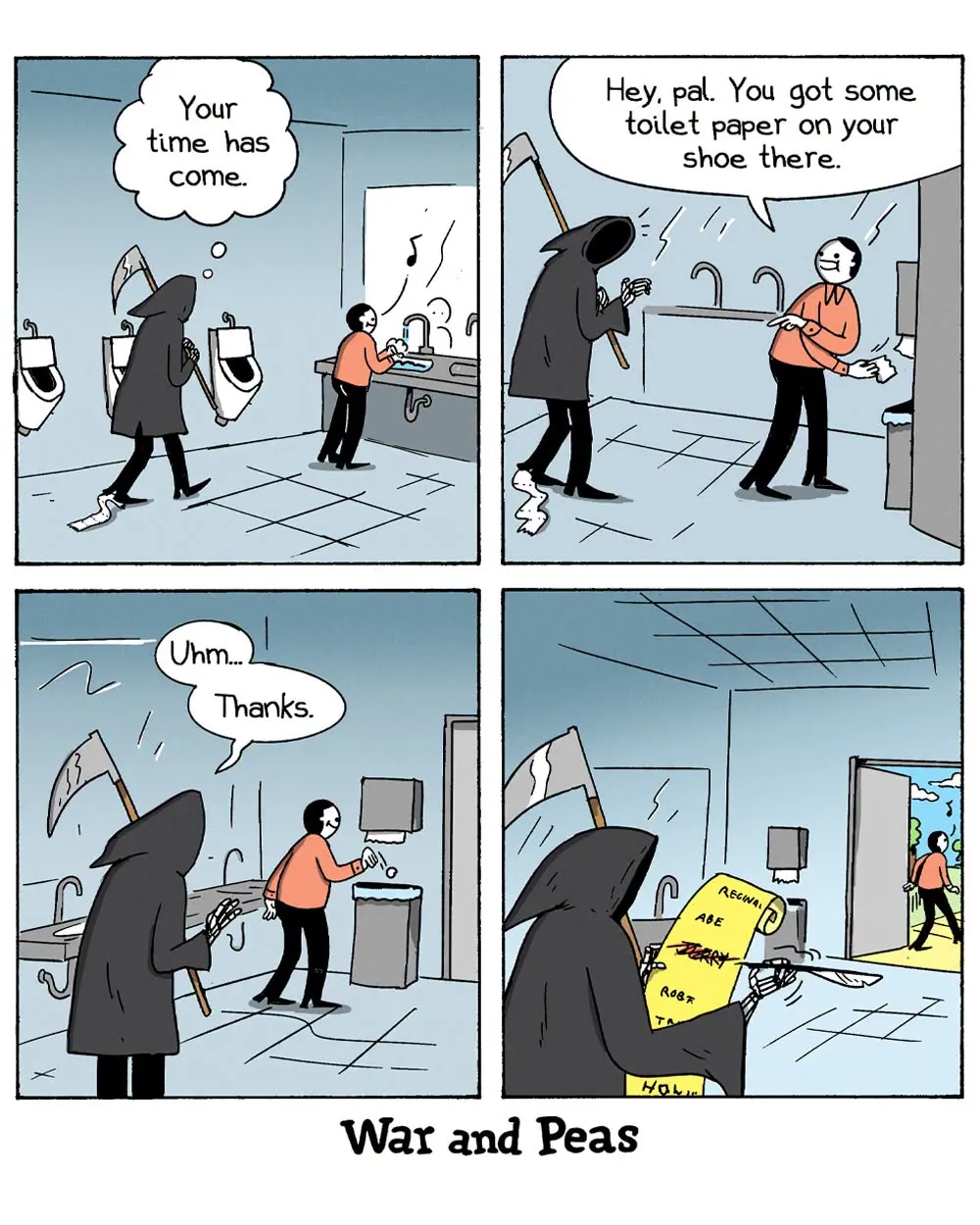
What happens in comic #17?
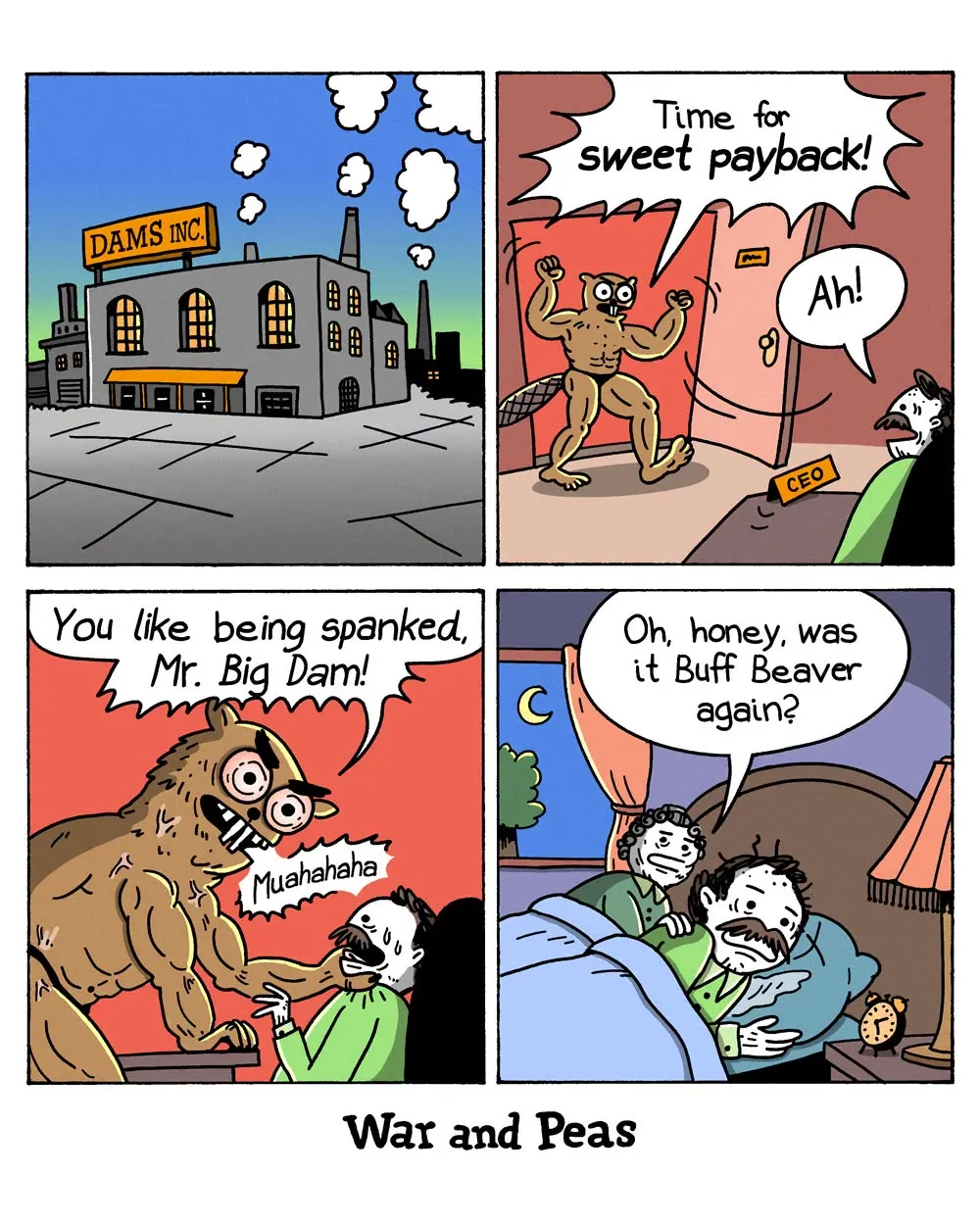
What happens in comic #18?
How is the chipper office persona revealed as a grim confession?
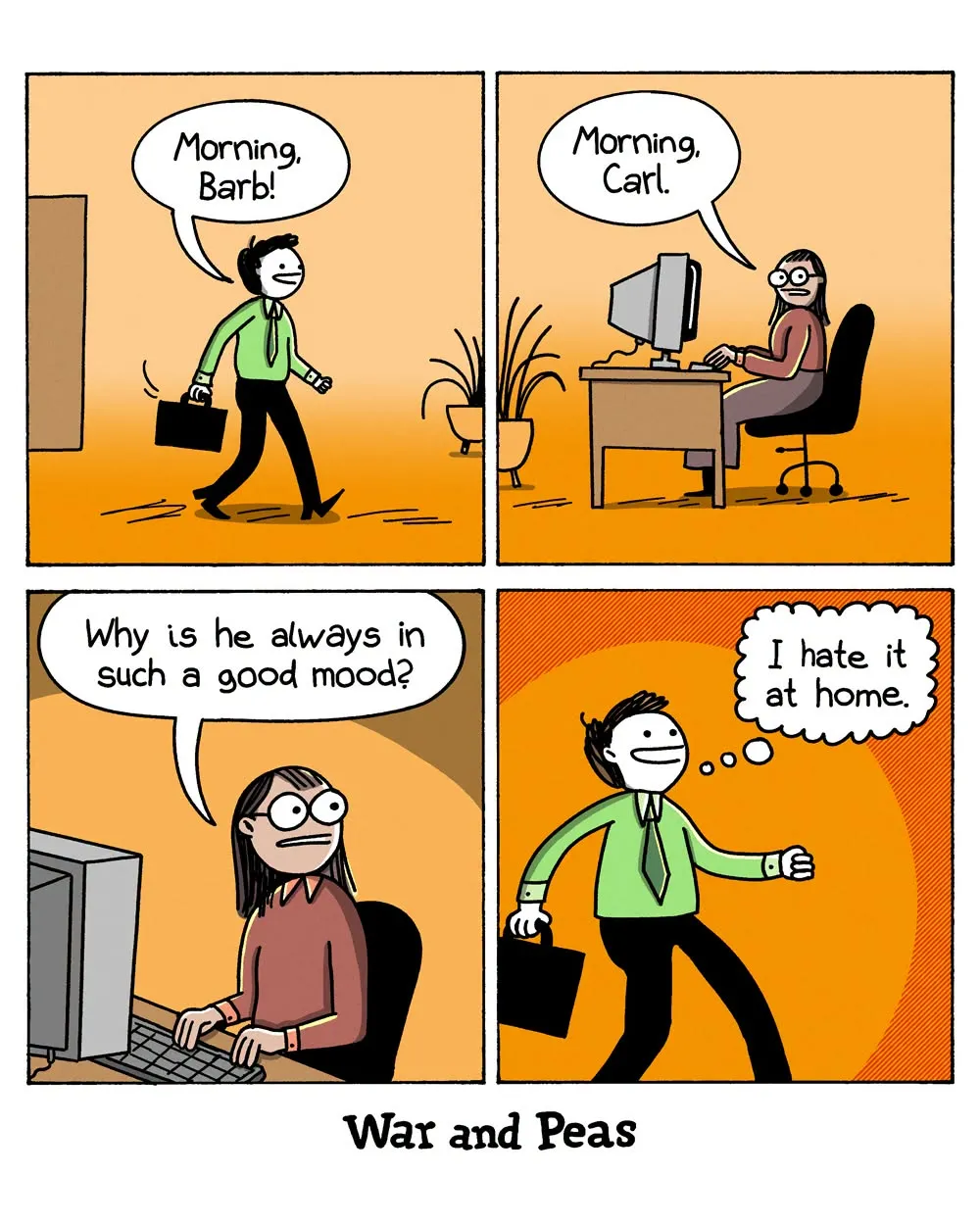
The chipper office persona is revealed as a contrast with home, turning routine politeness into a grim confession.
What happens in comic #20?
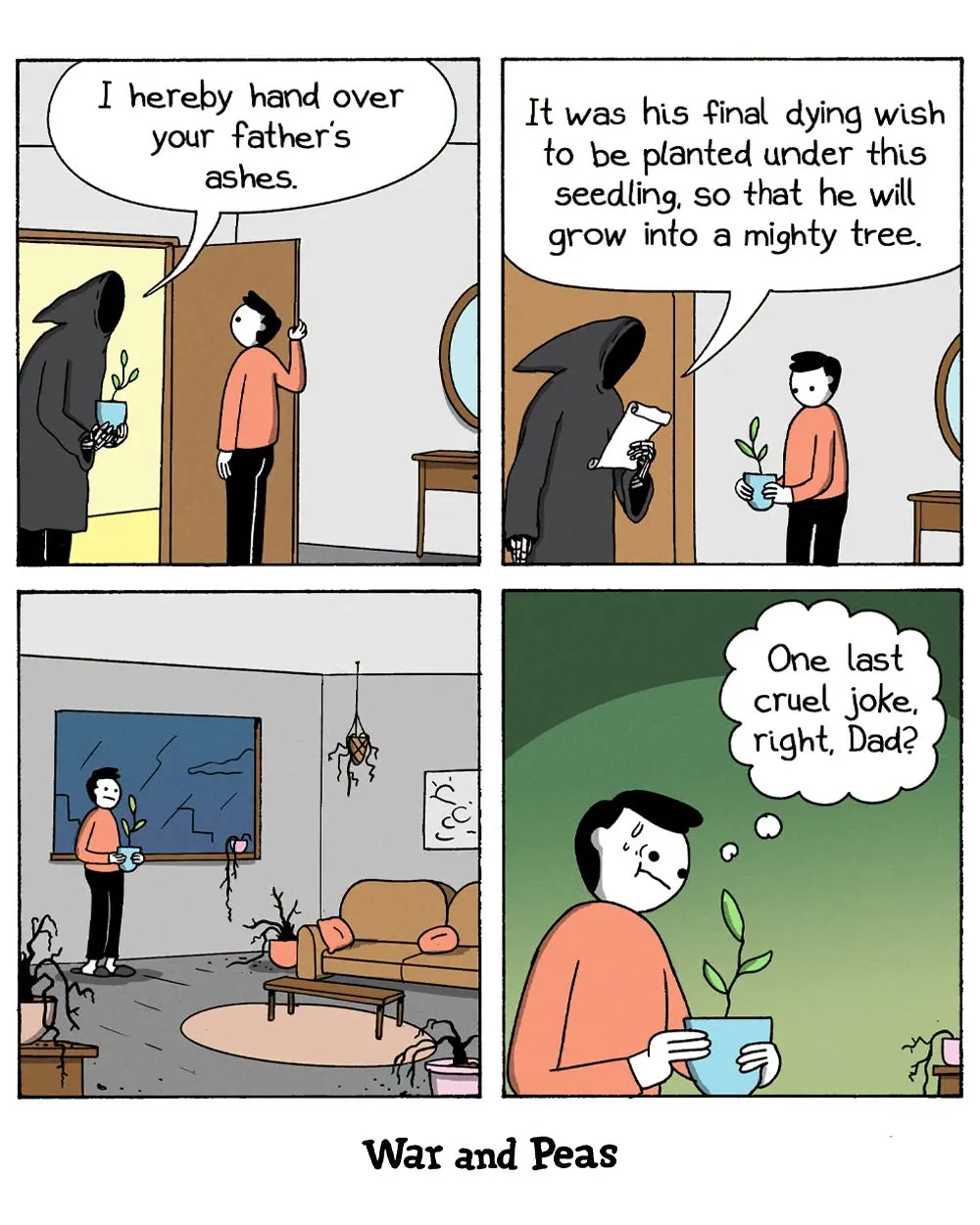
Who are the creators behind War and Peas?
War and Peas is the webcomic duo Elizabeth Pich and Jonathan Kunz. Their official About page identifies them as the creators of the series. In this collection, their accessible four-panel storytelling moves easily between folklore, social commentary, everyday anxieties, and macabre absurdity. The supplied Instagram profile is included for readers who want to explore their work directly.
Which final-panel turn worked best for you? For another look at the duo’s witch-centered humor, see our earlier Slutty Witch comic feature
Key Data & Statistics
The article presents 20 War and Peas comics.
The comics are created by Elizabeth Pich and Jonathan Kunz.
The collection uses accessible four-panel storytelling.
The strips jump between unrelated worlds but share a tight rhythm of an ordinary exchange, one sharp turn, and a final image.
Frequently Asked Questions
Who created the War and Peas comics?
War and Peas is created by the webcomic duo Elizabeth Pich and Jonathan Kunz. Their official About page identifies them as the creators of the series, and the article notes their accessible four-panel storytelling moves between folklore, social commentary, everyday anxieties, and macabre absurdity.
What themes do the 20 War and Peas comics cover?
The comics move from pirate inclusivity and witchy folklore to office resentment, cat etiquette, and a vampire's very literal idea of a snack. The artwork stays clean and colorful while the punchlines veer into dark, adult, or socially pointed territory across unrelated worlds.
How do War and Peas comics typically build their jokes?
War and Peas often builds a gag around a misread phrase or a character's unshakable logic. Many strips share a tight rhythm: an ordinary exchange, one sharp turn, and a final image that pushes the premise further, as seen in the vampire's double meaning and the captain's visual reveal.
Why does the vampire comic's punchline work?
The vampire's double meaning works because he misses the innuendo in his own words, while the cat catches it immediately. This gap between the vampire's literal idea of a snack and the cat's understanding creates the dark, twisted punchline the article highlights.
What happens in the comic about the Reaper and the cat?
A cosmic question becomes a deadpan bookkeeping problem: the cat's many lives exceed the Reaper's records. The article lists this among the strips that turn an ordinary exchange into a sharp turn followed by a final image pushing the premise further.


