


Quick Answer: Things in Squares is a webcomic by creator Cale featuring funny comics about life, funny letters, and longer tales. The strips use simple pastel drawings and minimal faces while dialogue shifts abruptly from ordinary conversation into absurdity. Recurring devices include literal misunderstandings, sudden reversals, awkward social moments, wordplay, pop-culture parody, and darker turns. Examples include a performer who declares she will improvise, a latte art insult, a runner worried about his shorts after a crash, and a student misapplying a sex-ed phrase. Follow on Instagram or the official site.
Things in Squares makes everyday exchanges wobble into absurdity: a performer loses her line, a coffee order turns hostile, and a family announcement swerves into an unexpected reveal. These funny comics about life use literal-minded characters and sudden shifts to make ordinary situations feel stranger.
Creator Cale describes the site as comics, “funny letters, and tales,” with a consistent style and erratic humor. This selection moves between awkward social moments, wordplay, pop-culture parody, and darker turns; the pastel drawings stay simple while the punchlines take a sharp detour.
What happens when the performer finally gets her line?
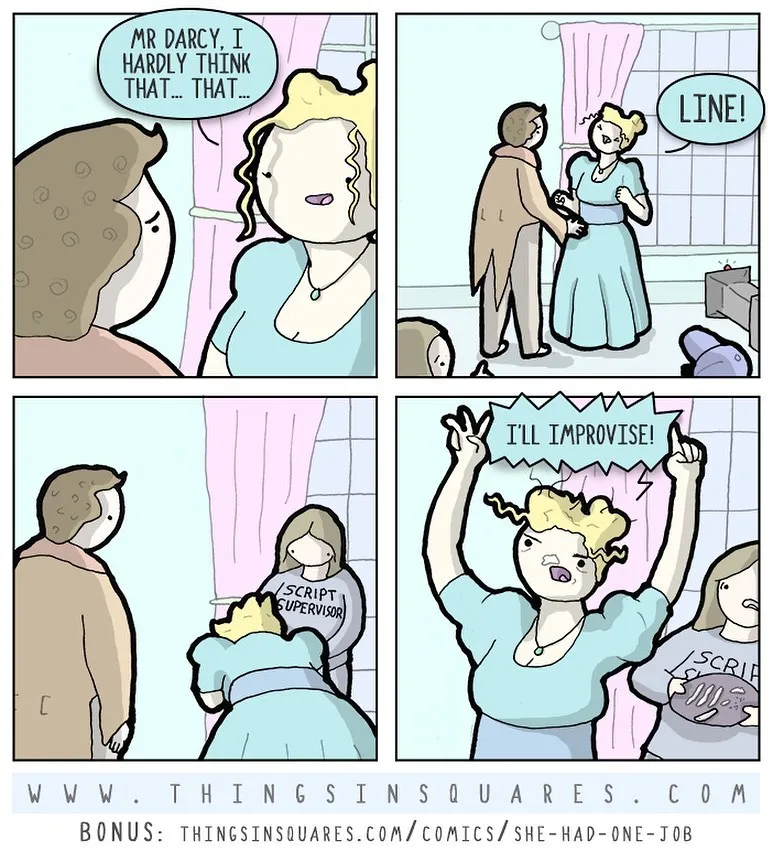
A long pause turns into a cue for chaos: she gets her line, then declares she will improvise instead.
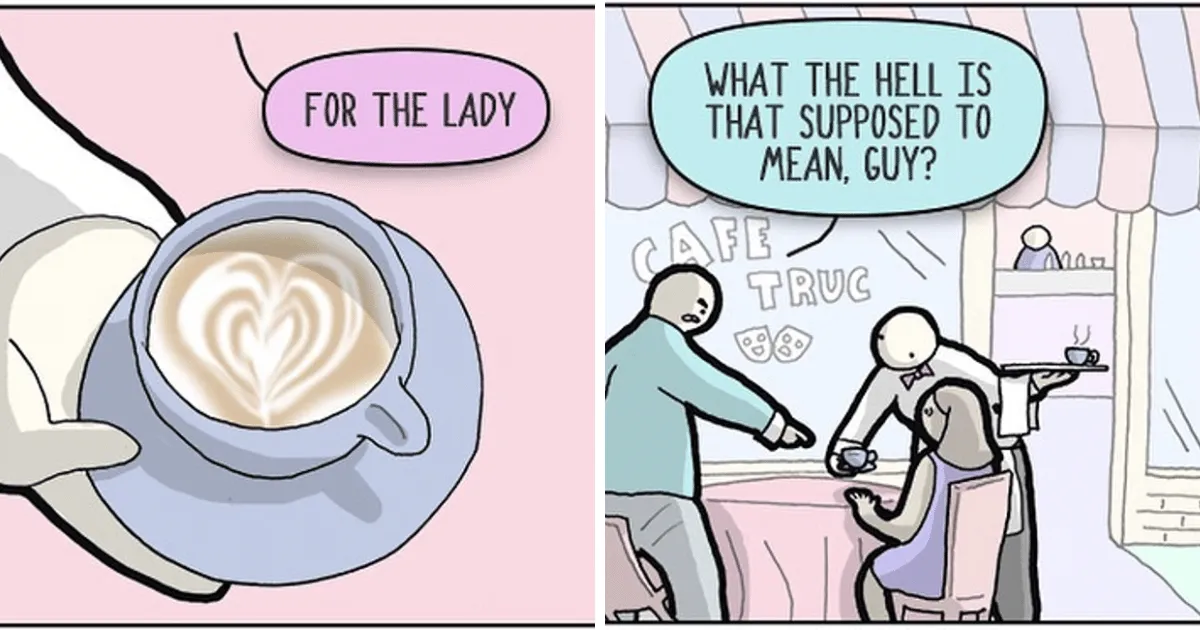
How does latte art turn into an insult?
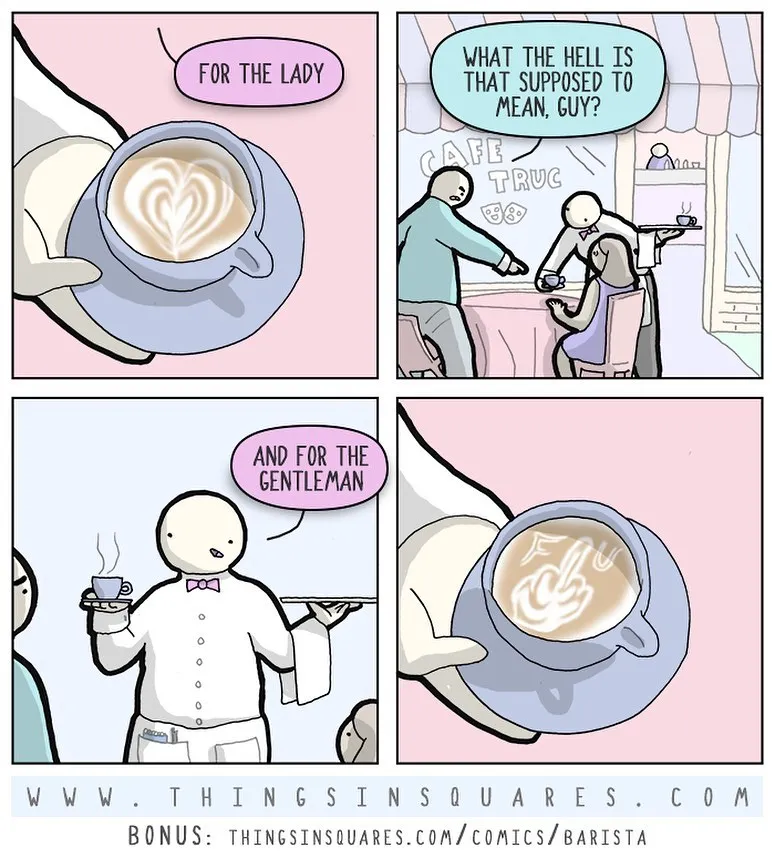
The latte art starts as decoration and becomes an insult once the customer reads a message into the cup.
What happens in comic #3?
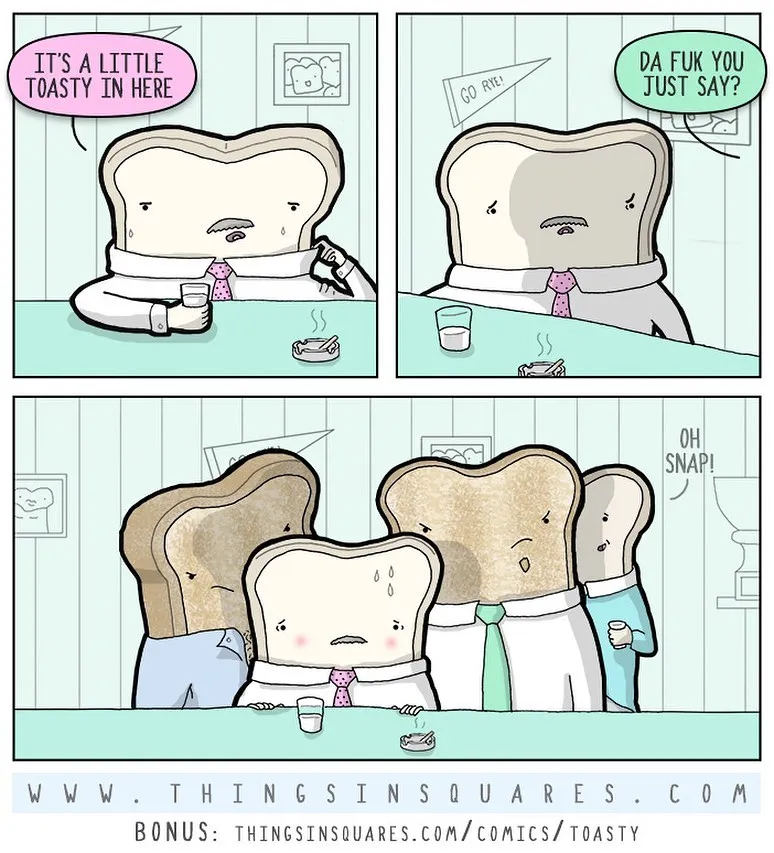
What happens in comic #4?
How does the parent's correction make a flood sound like a minor distinction?
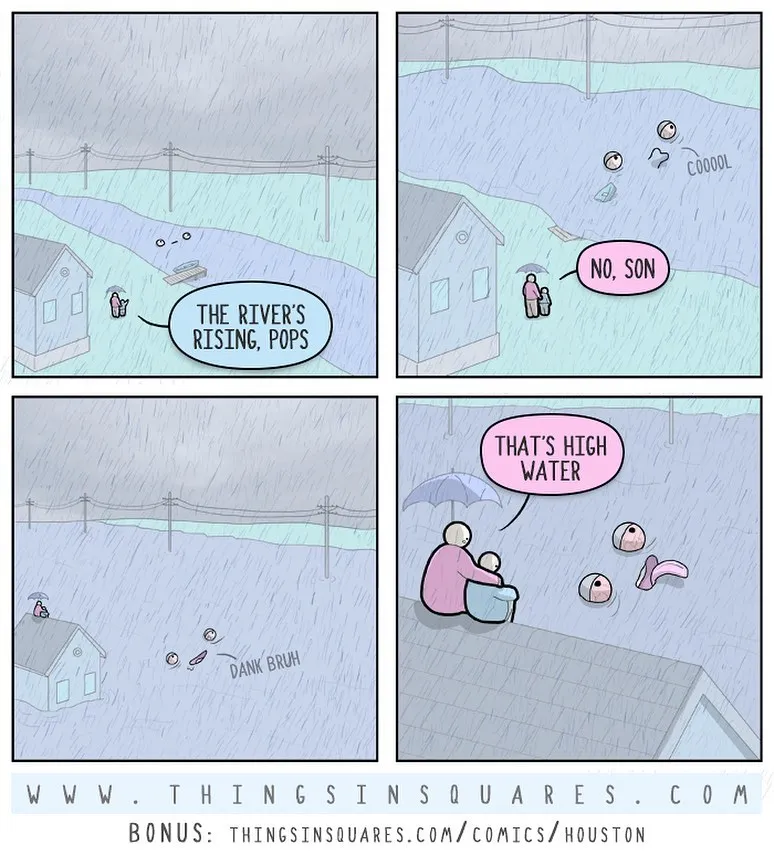
The quiet landscape clashes with the floating figures; the parent’s correction makes a flood sound like a minor distinction.
How does the final panel literalize "peas and carrots"?
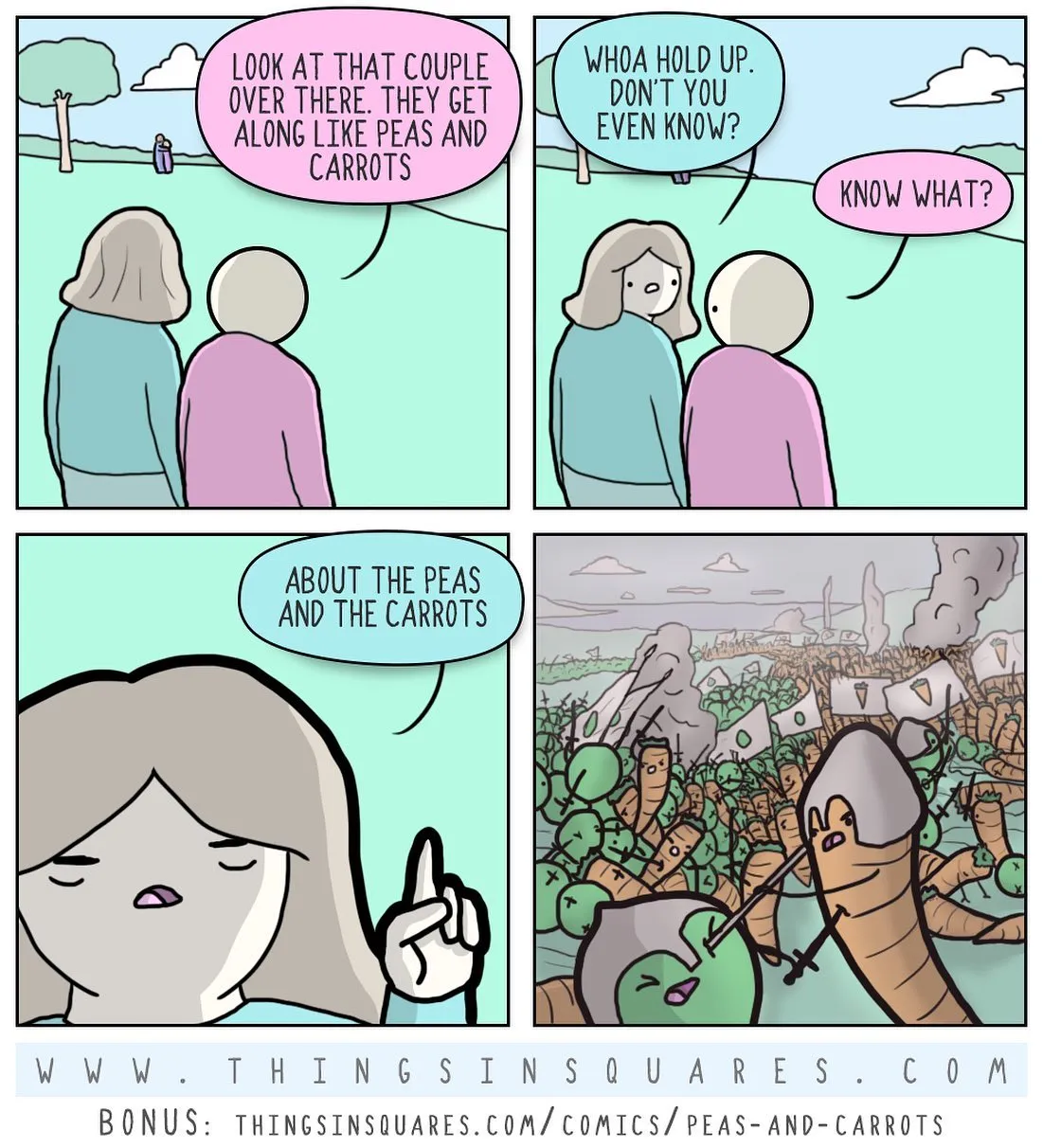
The final panel literalizes “peas and carrots,” turning a cliché about compatibility into a vegetable battle.
How does a tiny double make social anxiety visible?
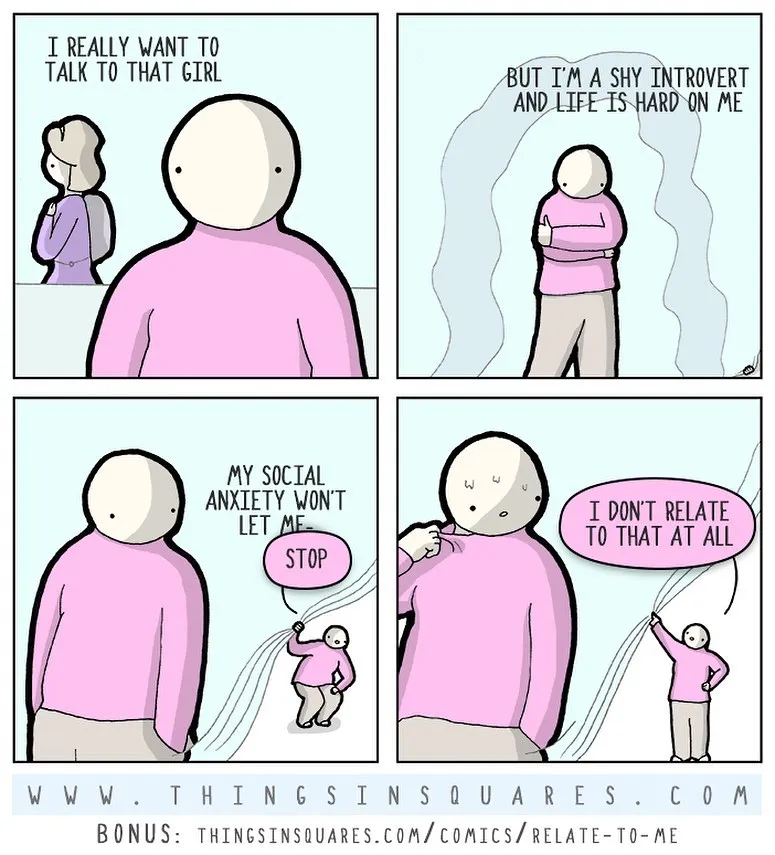
A tiny double makes social anxiety visible, literally tugging the main character away from the conversation.
What happens in comic #8?
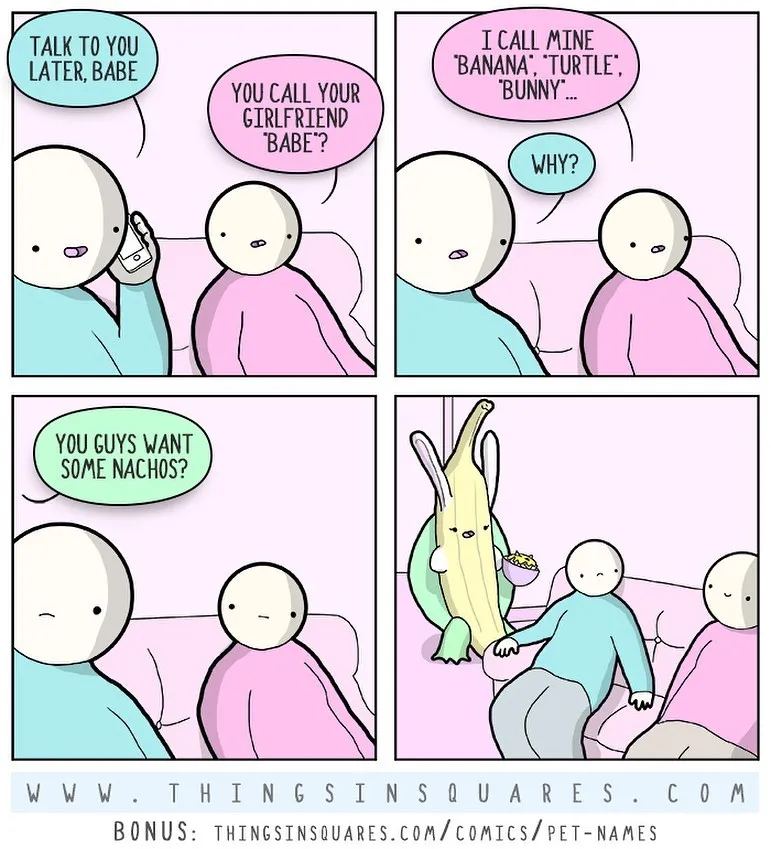
What happens in comic #9?
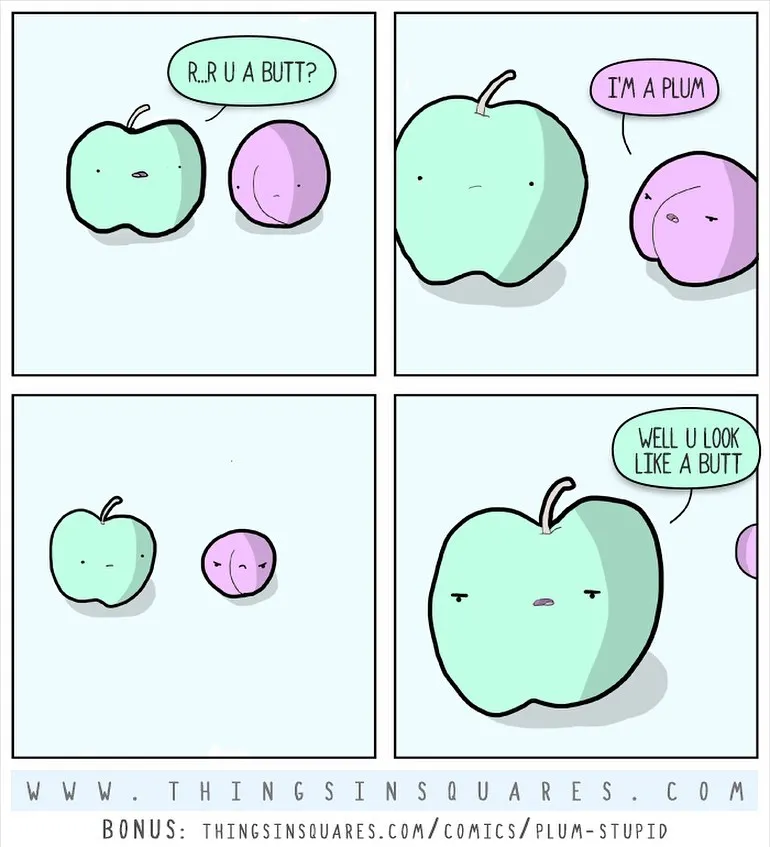
What happens in comic #10?
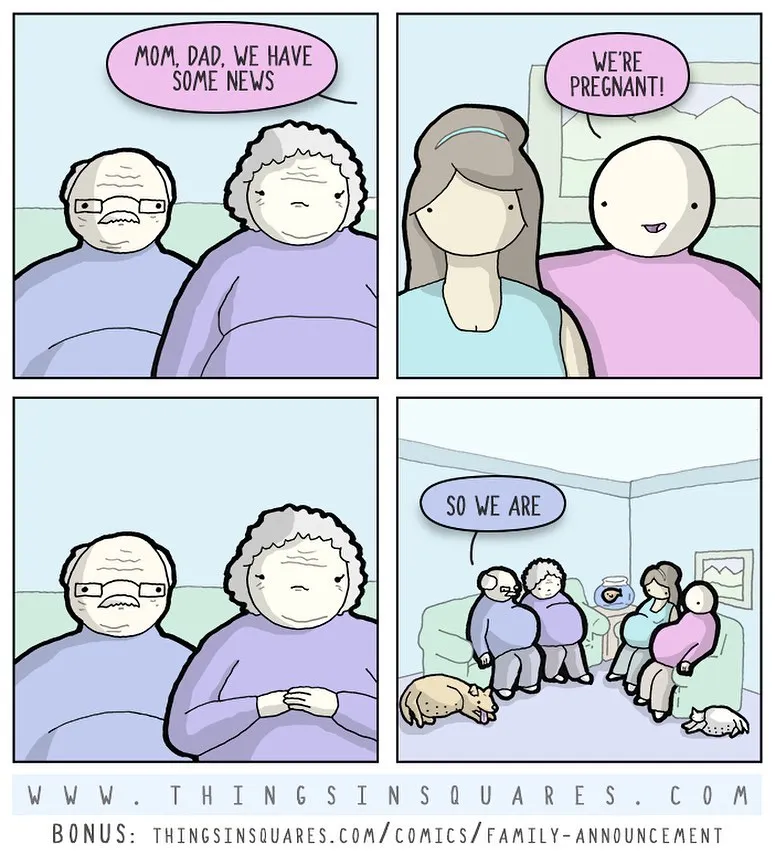
Why does the runner worry about his shorts after the crash?
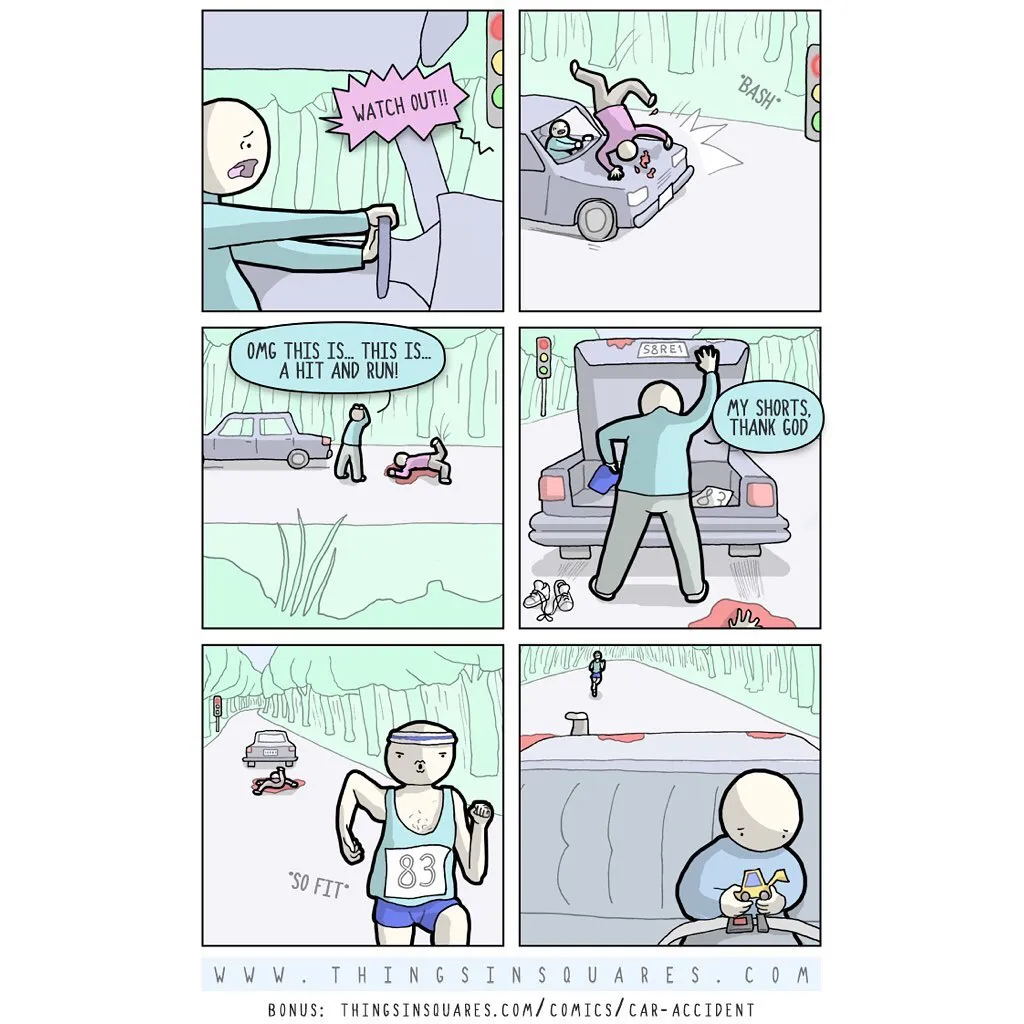
After the crash, the runner worries about his shorts, a startling mismatch between the accident and his priorities.
What happens in comic #12?
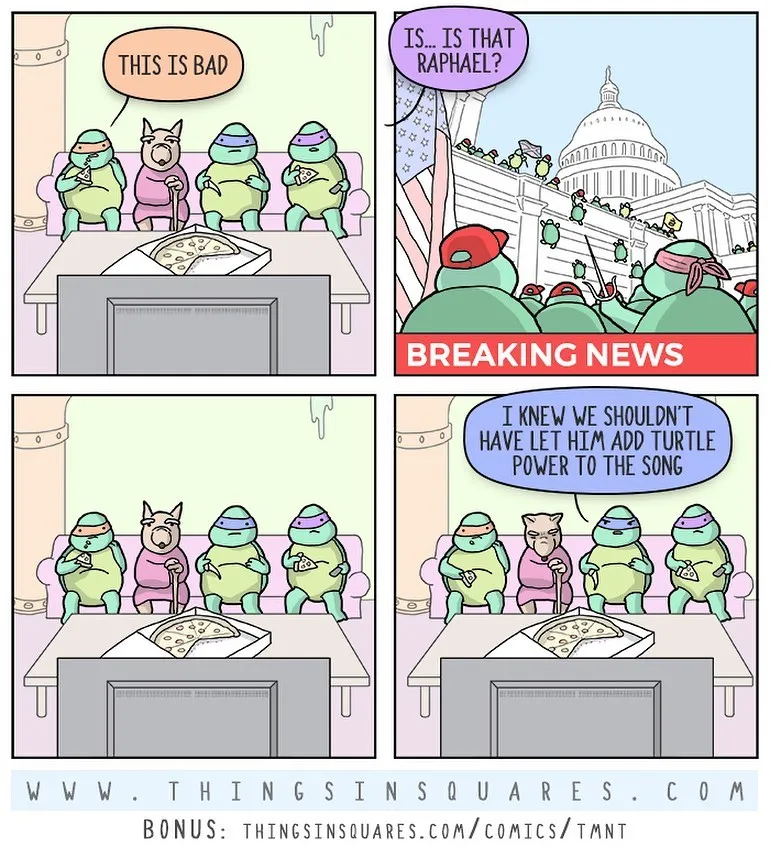
What happens in comic #13?
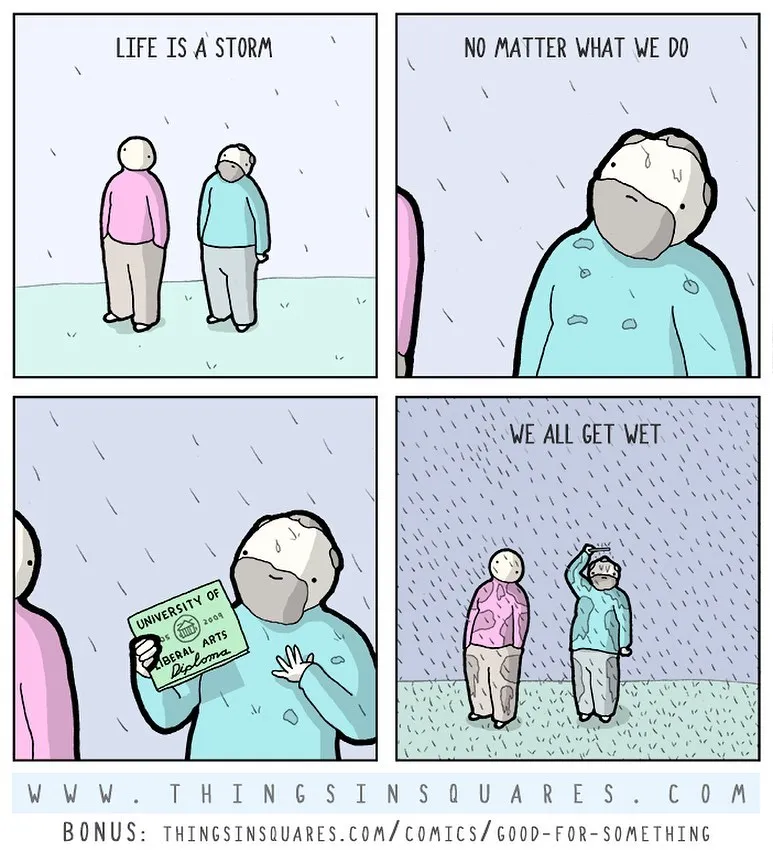
What does the request for an off-menu surprise earn?
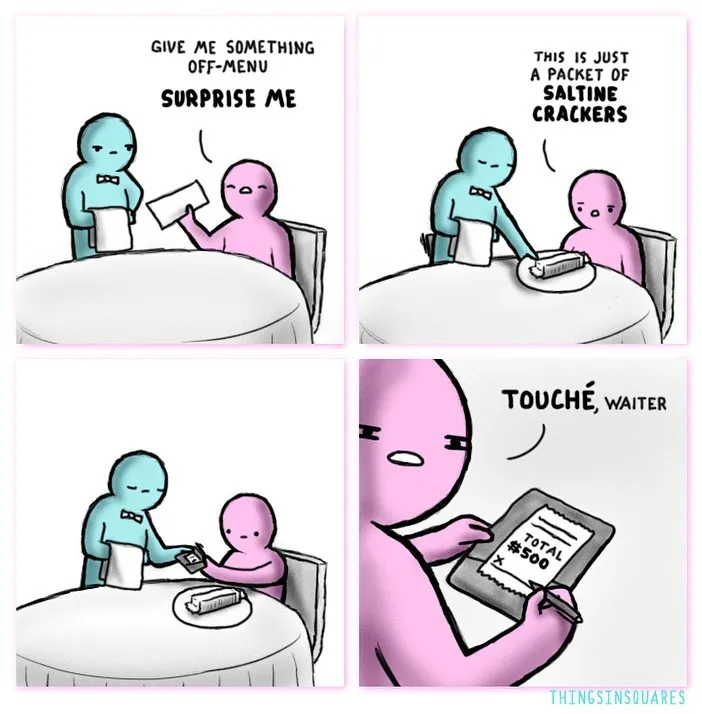
The request for an off-menu surprise earns the least inspired answer: a packet of crackers. The tip becomes its own punchline.
What happens in comic #15?
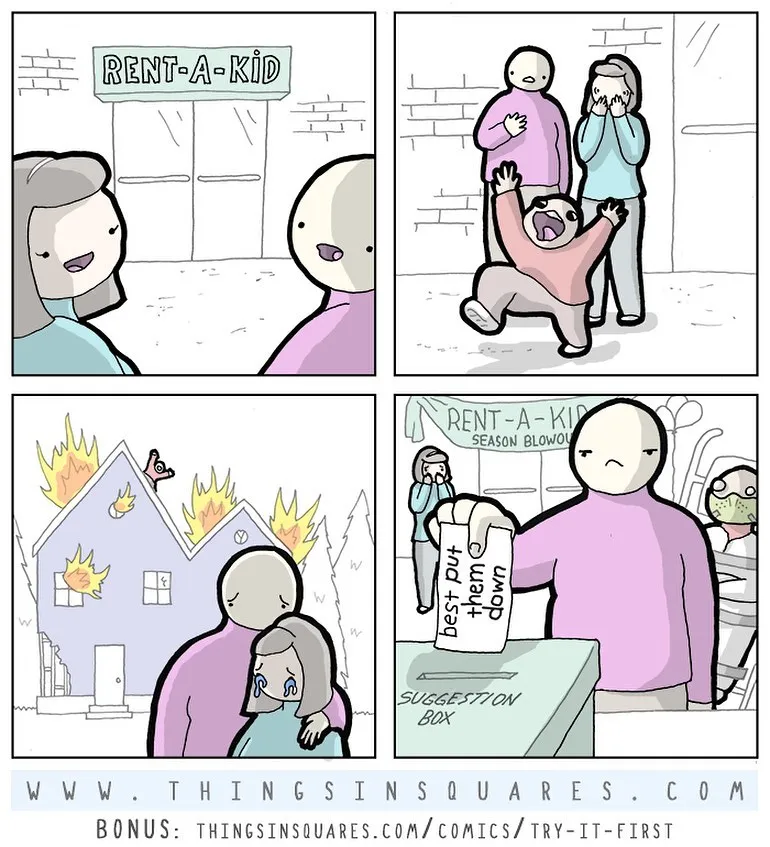
What happens in comic #16?
How does the student carry "protect your property" into a home-security context?
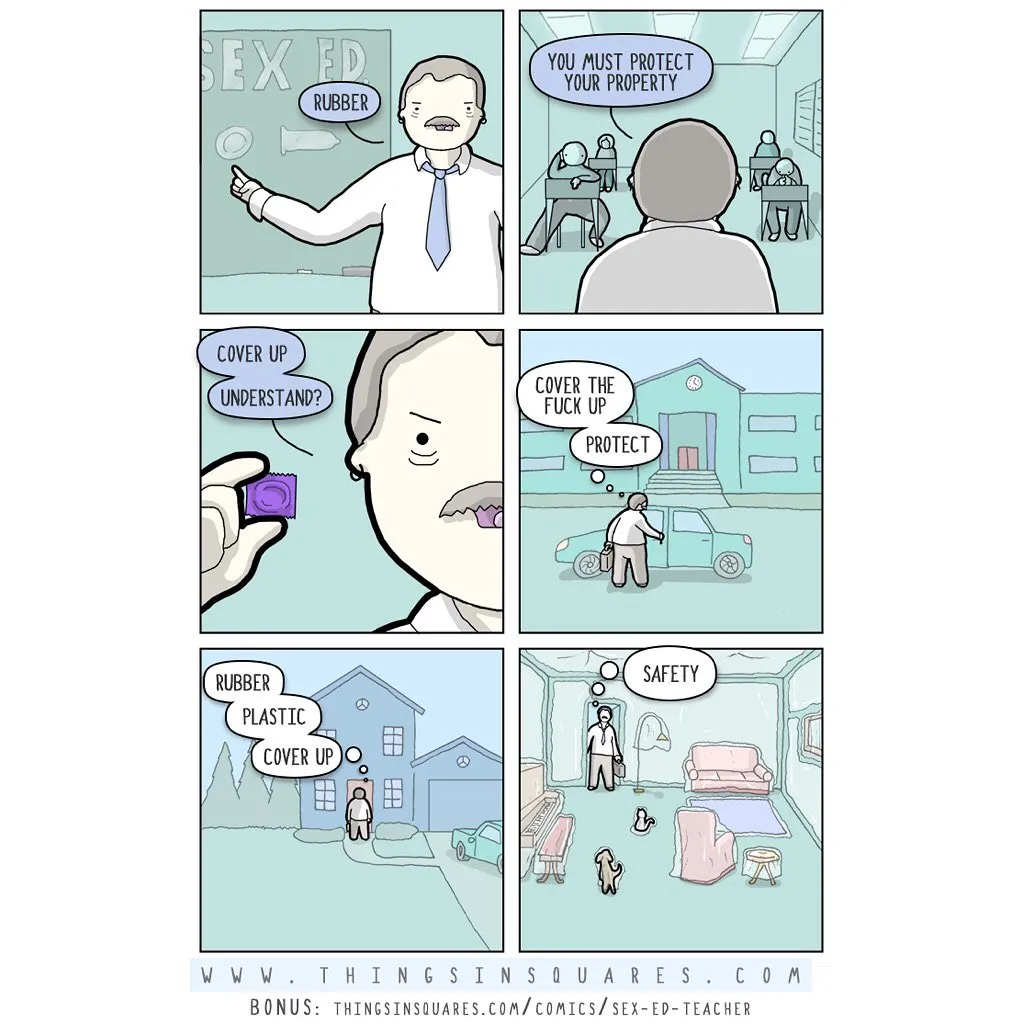
The student carries “protect your property” out of sex ed and into a completely different, home-security context.
What happens in comic #18?
Who creates Things in Squares and what does it feature?
Cale identifies himself as the creator of Things in Squares, a home for comics, funny letters, and longer tales. In this set, spare pastel art and minimal faces let dialogue shift abruptly from ordinary conversation to absurdity. Follow Things in Squares on Instagram or visit the official site.
Literal misunderstandings and sudden reversals tie these strips together without making them feel like one story. For another take on everyday absurdity, read our feature on Walk the Fish comics. Which punchline makes the sharpest turn?
Key Data & Statistics
The article presents a selection of 18 funny comics about life by Things in Squares.
Comic #6 literalizes "peas and carrots," turning a cliché about compatibility into a vegetable battle.
Comic #14 features a request for an off-menu surprise that earns a packet of crackers as the answer.
Comic #17 shows a student carrying "protect your property" from sex ed into a home-security context.
Frequently Asked Questions
Who creates the Things in Squares comics?
Cale identifies himself as the creator of Things in Squares, which he describes as a home for comics, funny letters, and longer tales. The site features a consistent style with erratic humor, using literal-minded characters and sudden shifts to make ordinary situations feel stranger.
What kind of humor do these funny comics about life use?
The comics use literal-minded characters and sudden shifts to make ordinary situations feel stranger. The selection moves between awkward social moments, wordplay, pop-culture parody, and darker turns, while the simple pastel drawings stay plain as the punchlines take a sharp detour.
How does the latte art comic turn hostile?
In that comic, the latte art starts as decoration but becomes an insult once the customer reads a message into the cup. It is one of several strips where everyday exchanges wobble into absurdity, alongside a performer losing her line and a family announcement swerving into an unexpected reveal.
Why does the tiny double appear in one comic?
A tiny double makes social anxiety visible, literally tugging the main character away from the conversation. This strip is one of the selections that tie together through literal misunderstandings and sudden reversals, showing anxiety as a physical presence rather than an internal feeling.
Where can readers follow Things in Squares?
Readers can follow Things in Squares on Instagram or visit the official site. The article also suggests reading a feature on Walk the Fish comics for another take on everyday absurdity, and asks which punchline makes the sharpest turn among the eighteen strips.


