


🎨 Behind the Comic: Akshara Ashok's Happy Fluff Comics spins bedtime mishaps, pet chaos, and family rules into tiny two-panel gems where a final contradiction does all the heavy lifting. Pastel colors and rounded characters keep things cozy, even when the jokes brush against loss, body image, or social expectations. Nineteen comics, plenty of soft edges, and a few sharper ones hiding in the fluff. Come for the ceiling fan, stay for the bedroom monarch.
Akshara Ashok’s Happy Fluff Comics turns familiar routines into compact jokes, often letting an expression or a final-panel contradiction do the work. This collection moves from bedtime mishaps and pet chaos to friendship, family rules and everyday awkwardness.
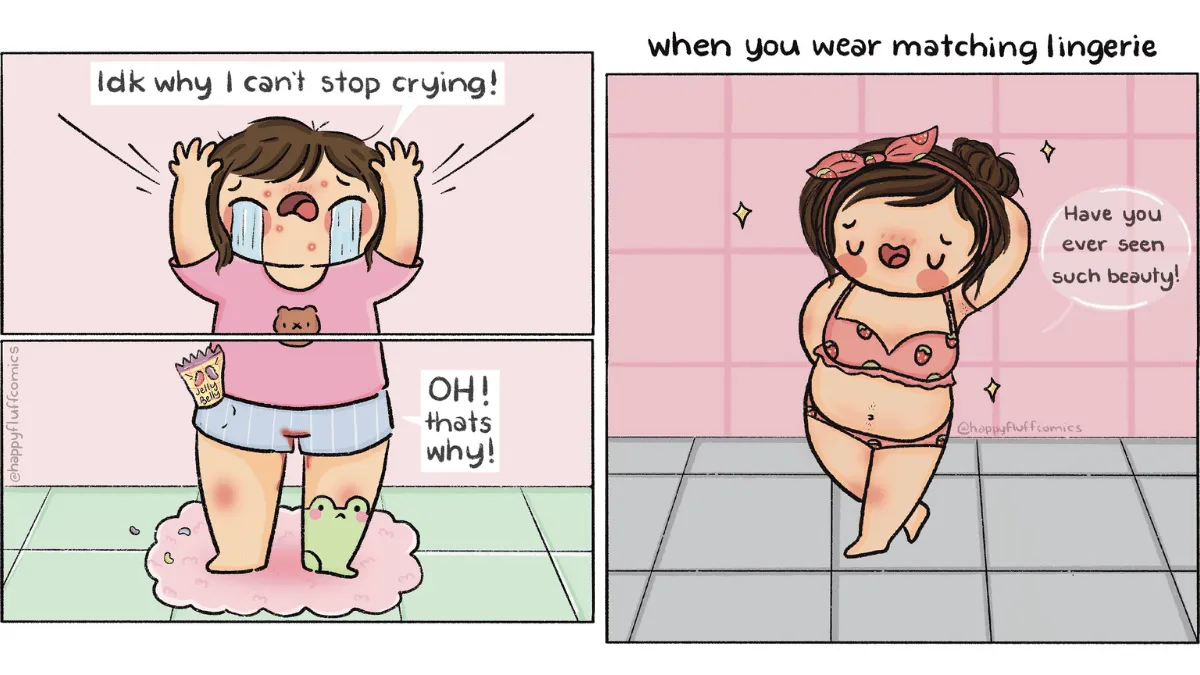
Across these 19 comics, soft pastel colors and rounded characters give the scenes a gentle look, even when the punchlines touch on loss, body image or social expectations. The result is a set of funny comics about life with occasional sharper edges.
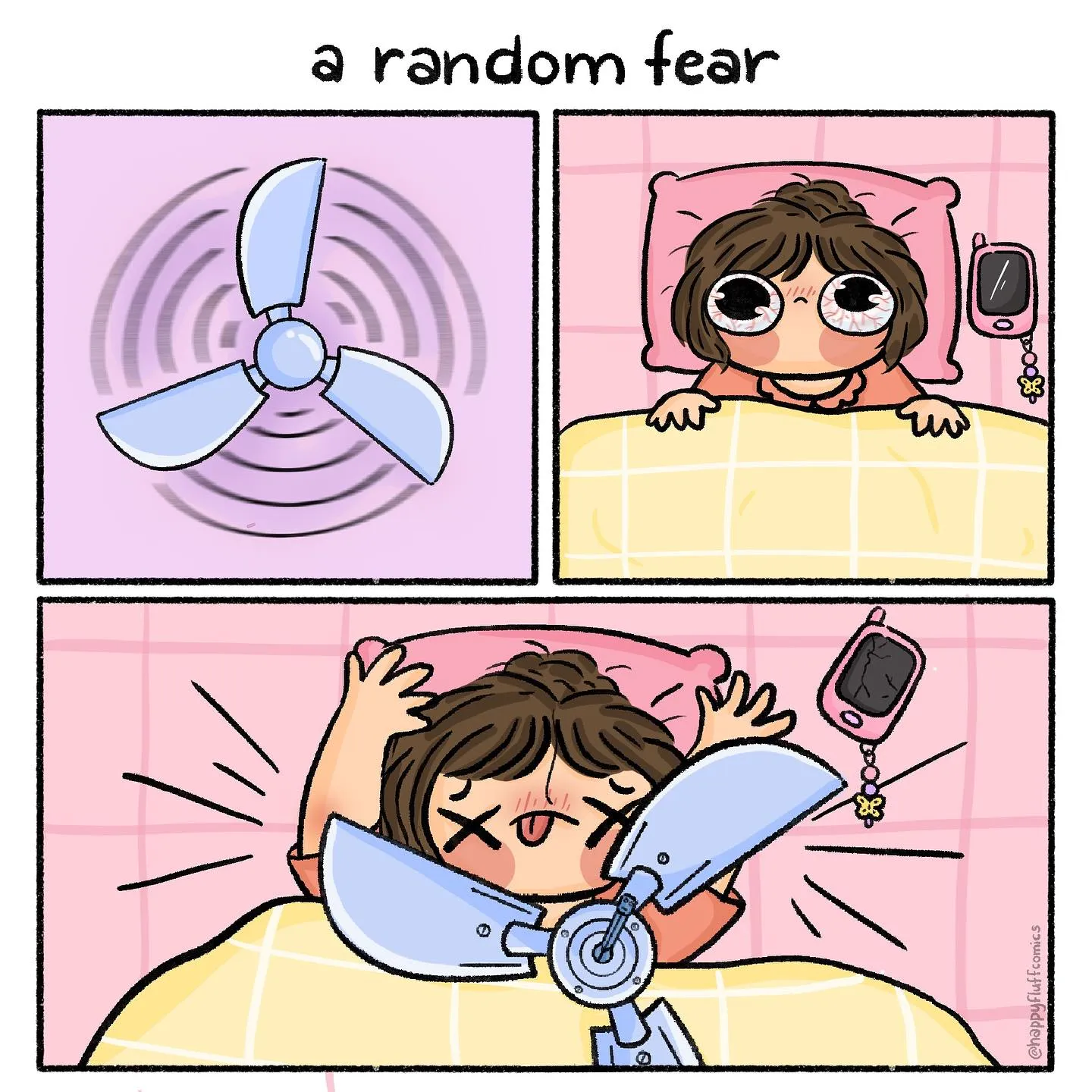
#1 What happens when the ceiling fan has other plans?
Which everyday moment is comic #2 hiding?
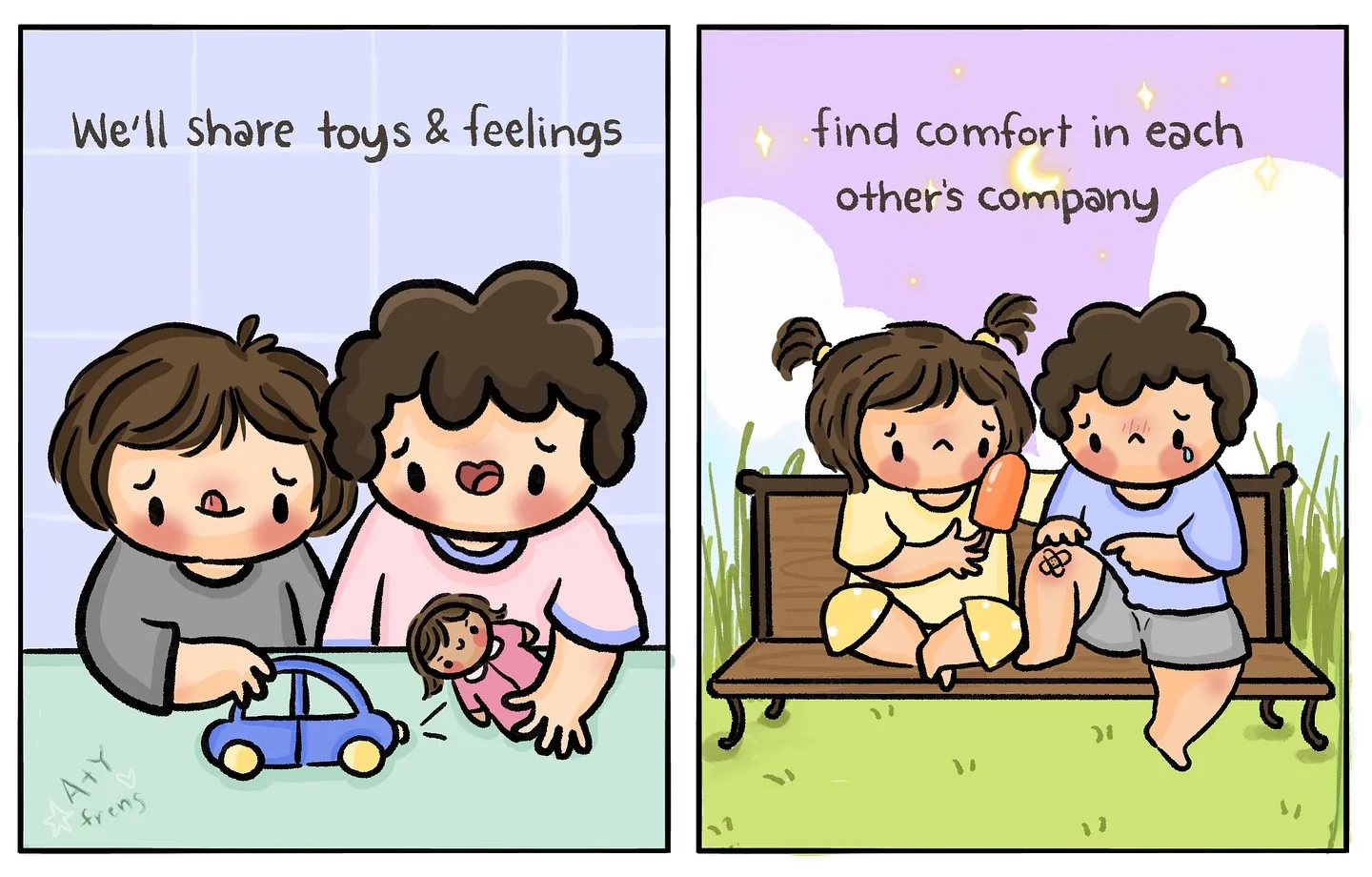
How do friendly ghosts keep a wedding joke warm?
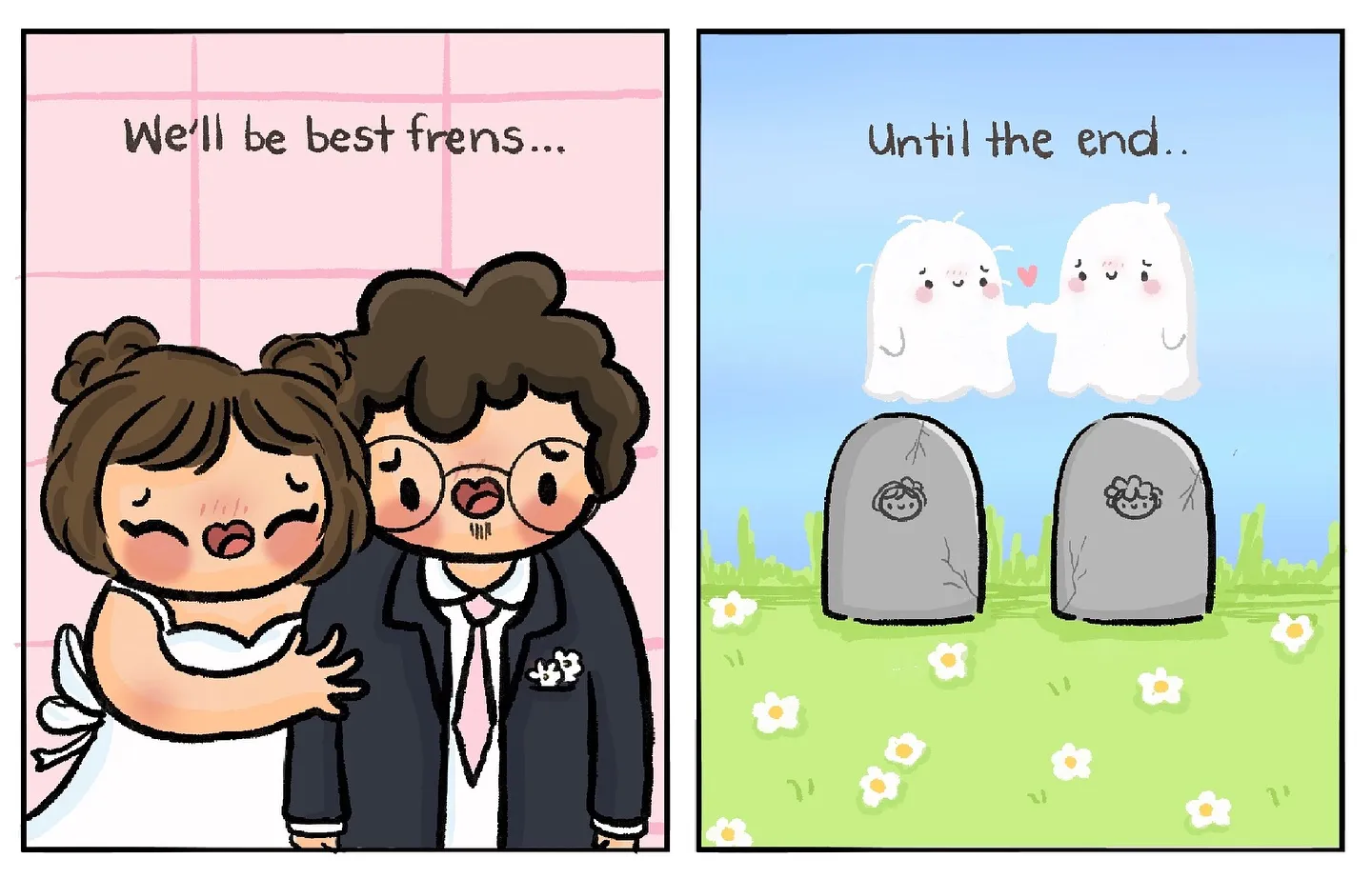
A wedding hug cuts to two matching gravestones; the friendly ghosts keep the joke affectionate instead of bleak.
What twist waits in comic #4?
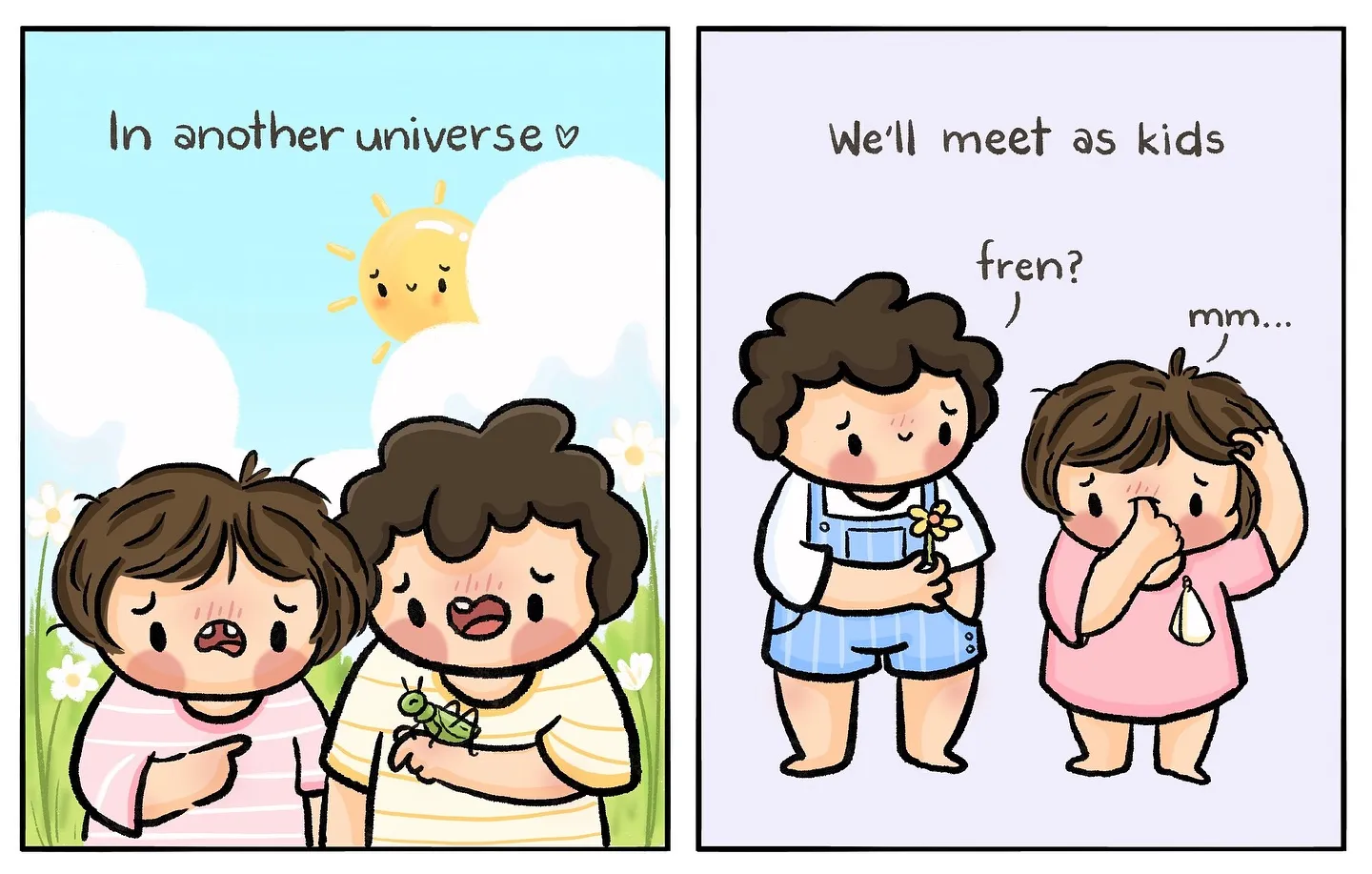
Which routine does comic #5 flip on its head?
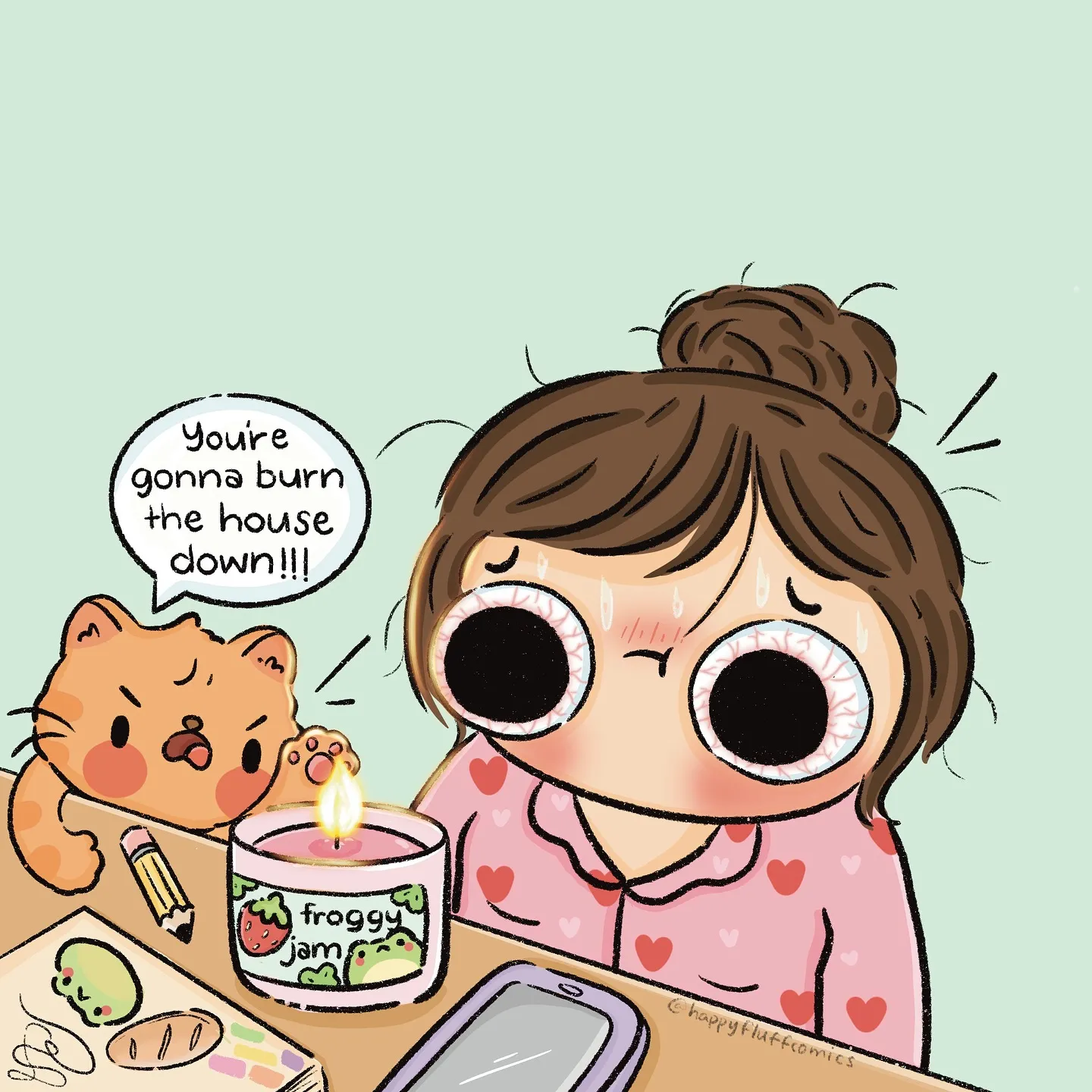
Why do the mother’s safety rules contradict each other?
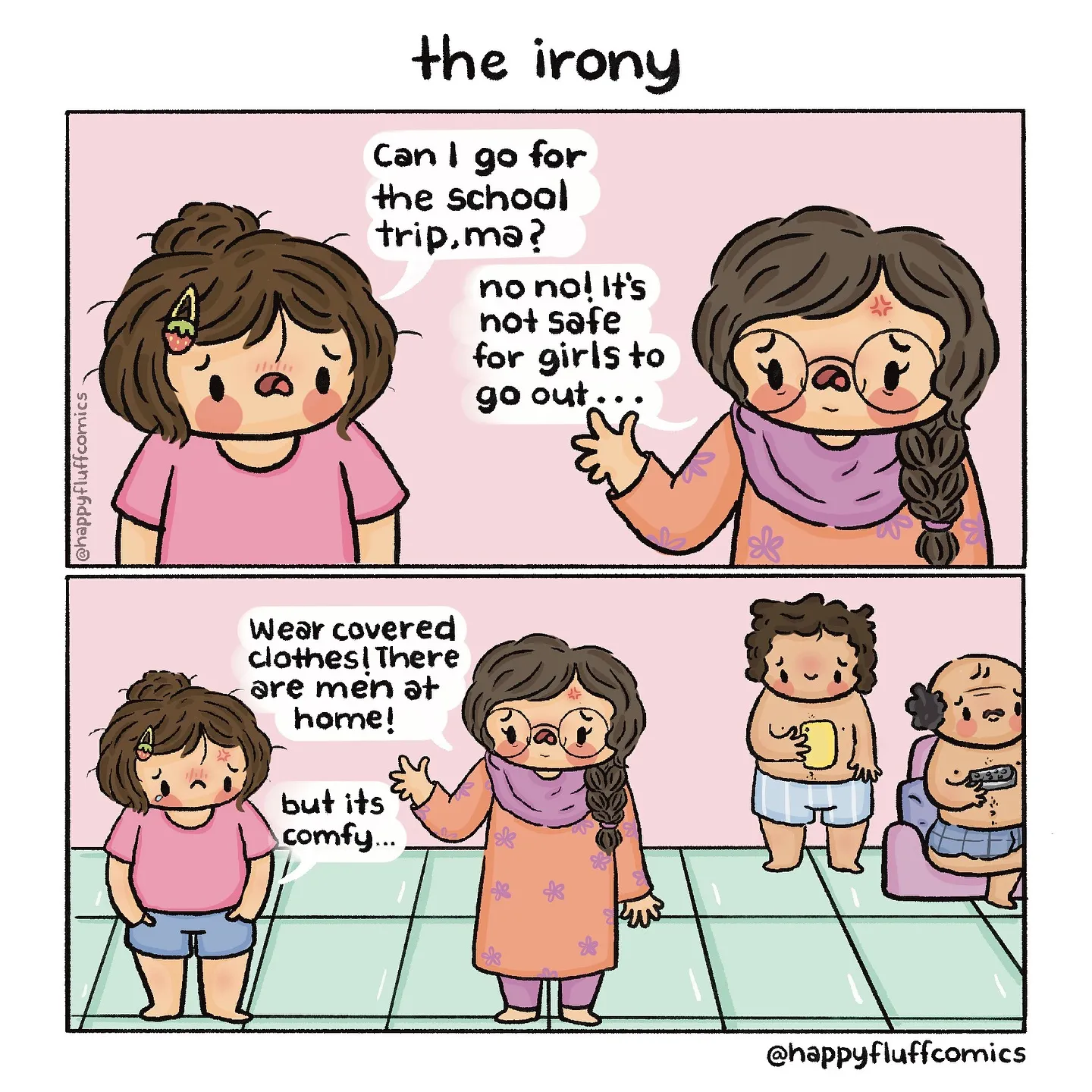
The mother’s safety rules contradict each other: her daughter is kept home, then told to dress modestly inside it.
What familiar awkwardness does comic #7 capture?
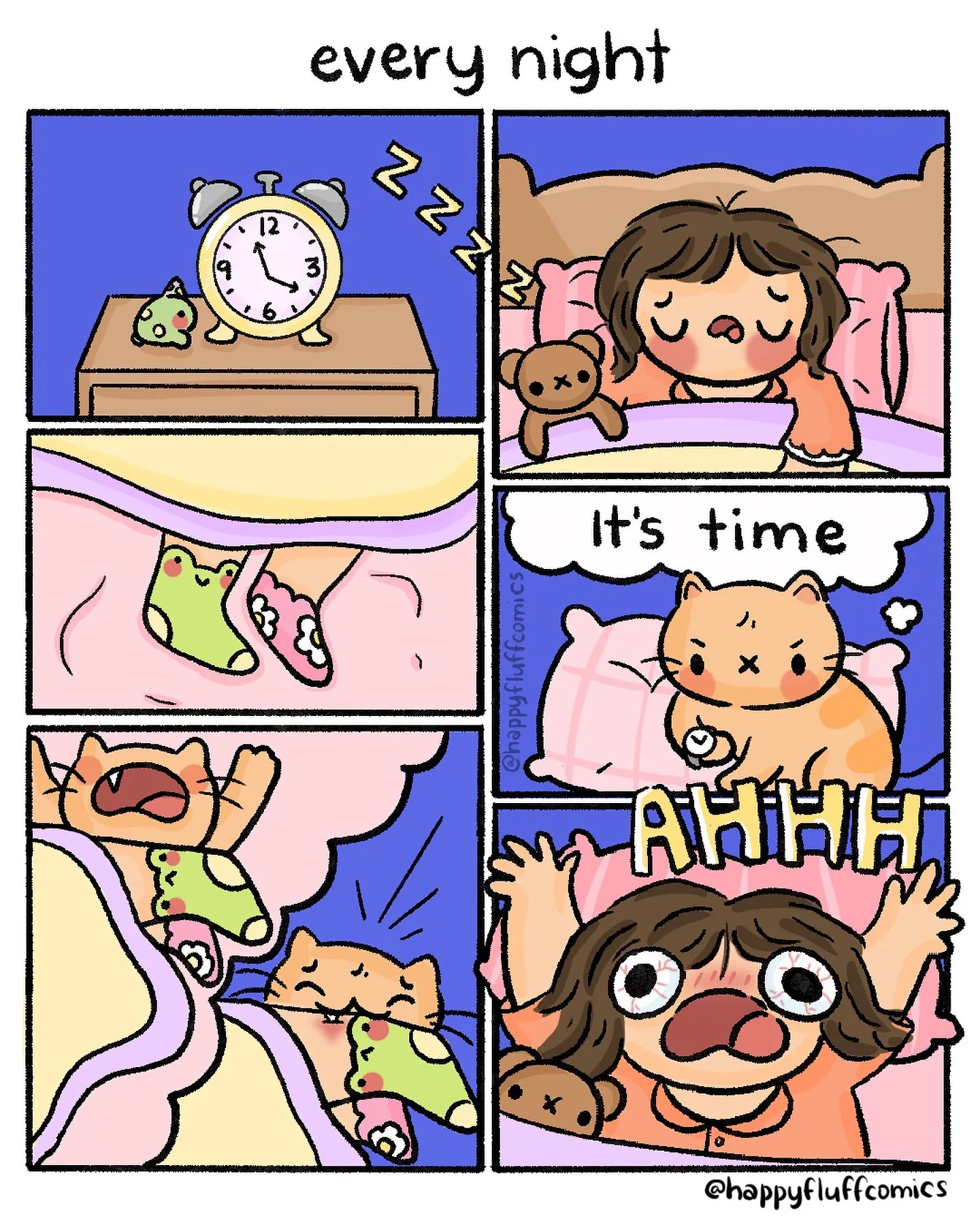
Which small moment does comic #8 turn into a joke?

How does a puppy gift become a bittersweet memorial?
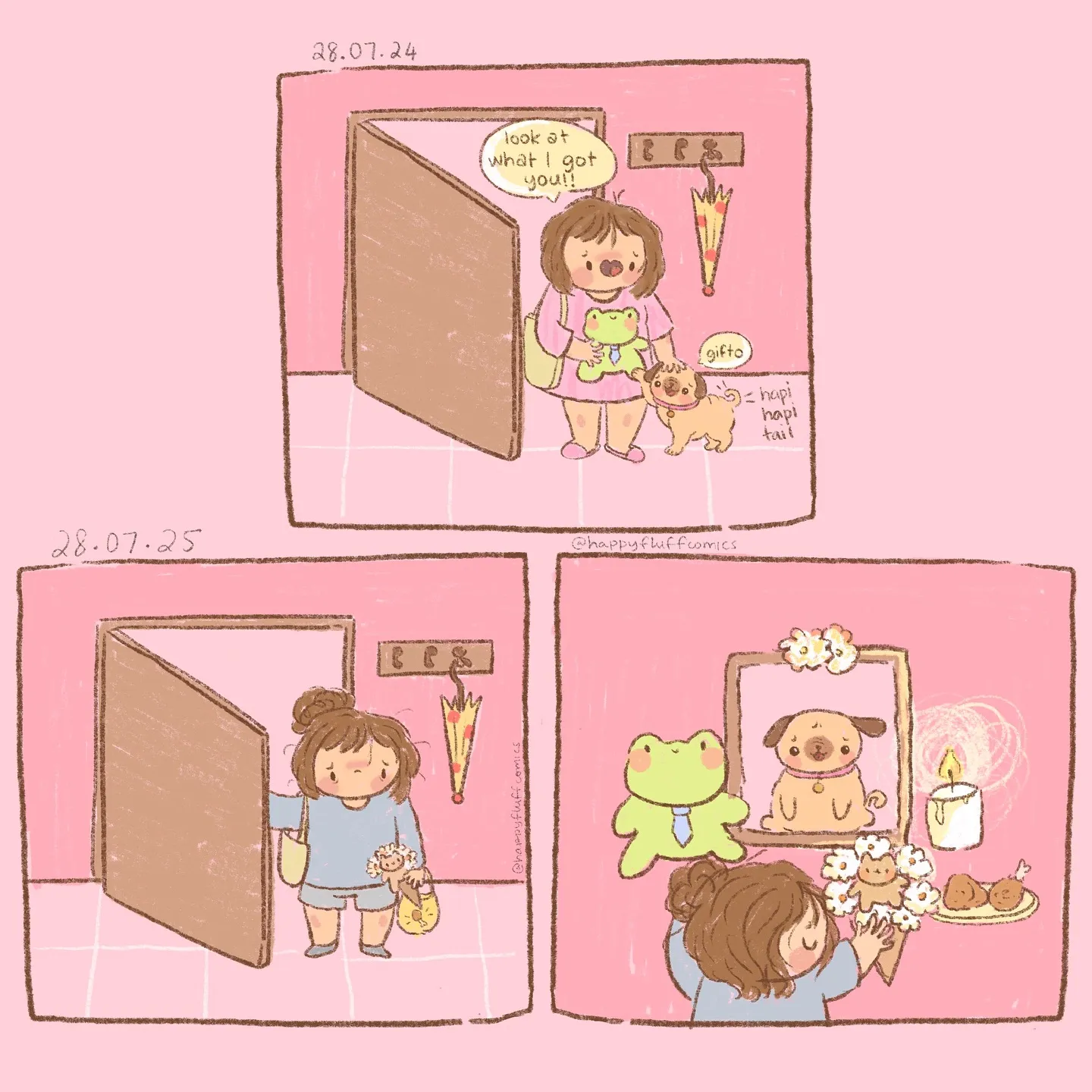
The shift from puppy gift to memorial portrait turns a dated keepsake into a quiet, bittersweet two-panel story.
What does comic #10 set up and knock down?
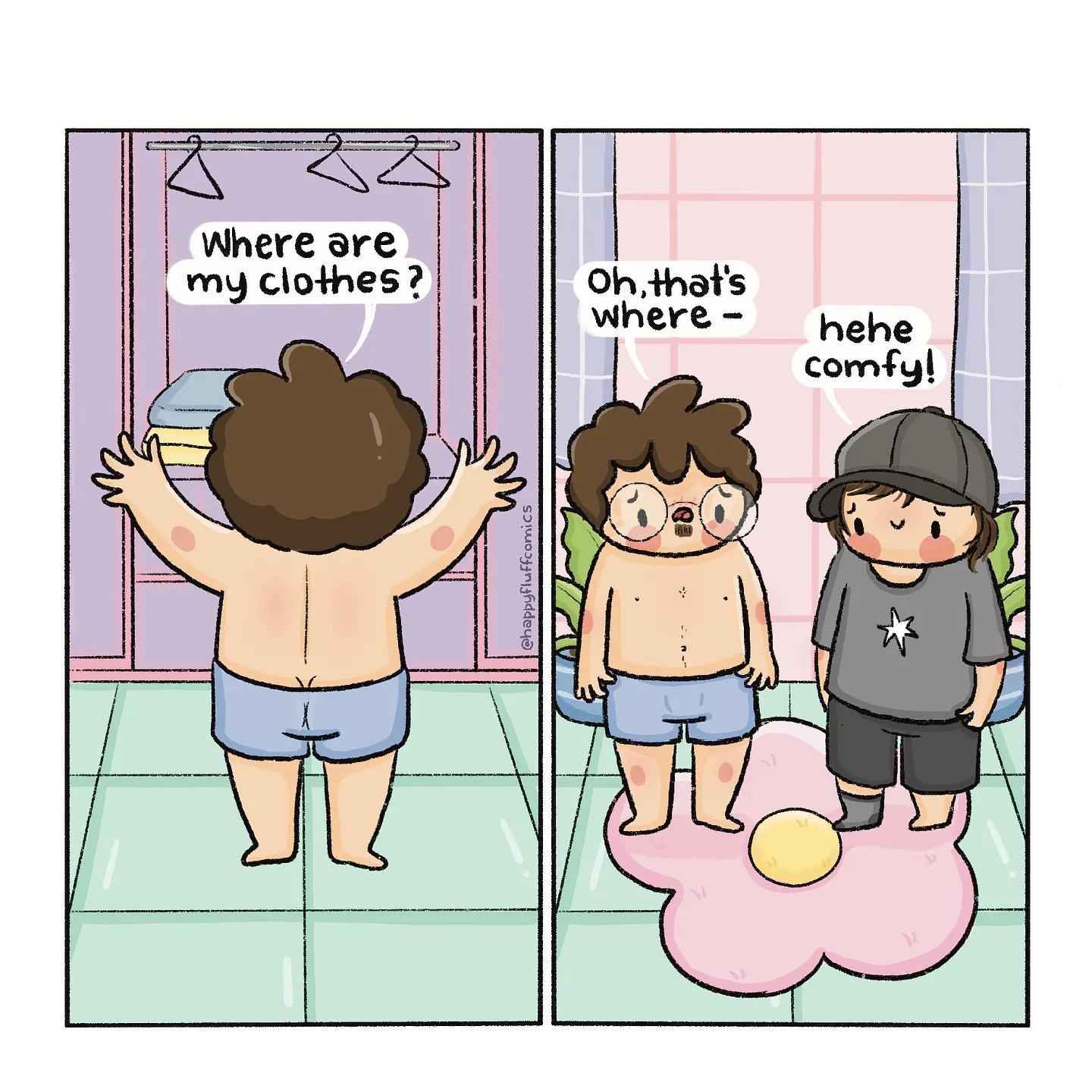
Which everyday scene does comic #11 skewer?

What blunt reveal lands in comic #12?

The first panel suggests one explanation; the second delivers a blunt reveal that makes the awkwardness literal.
Why is the child bewildered by Onam preparations?
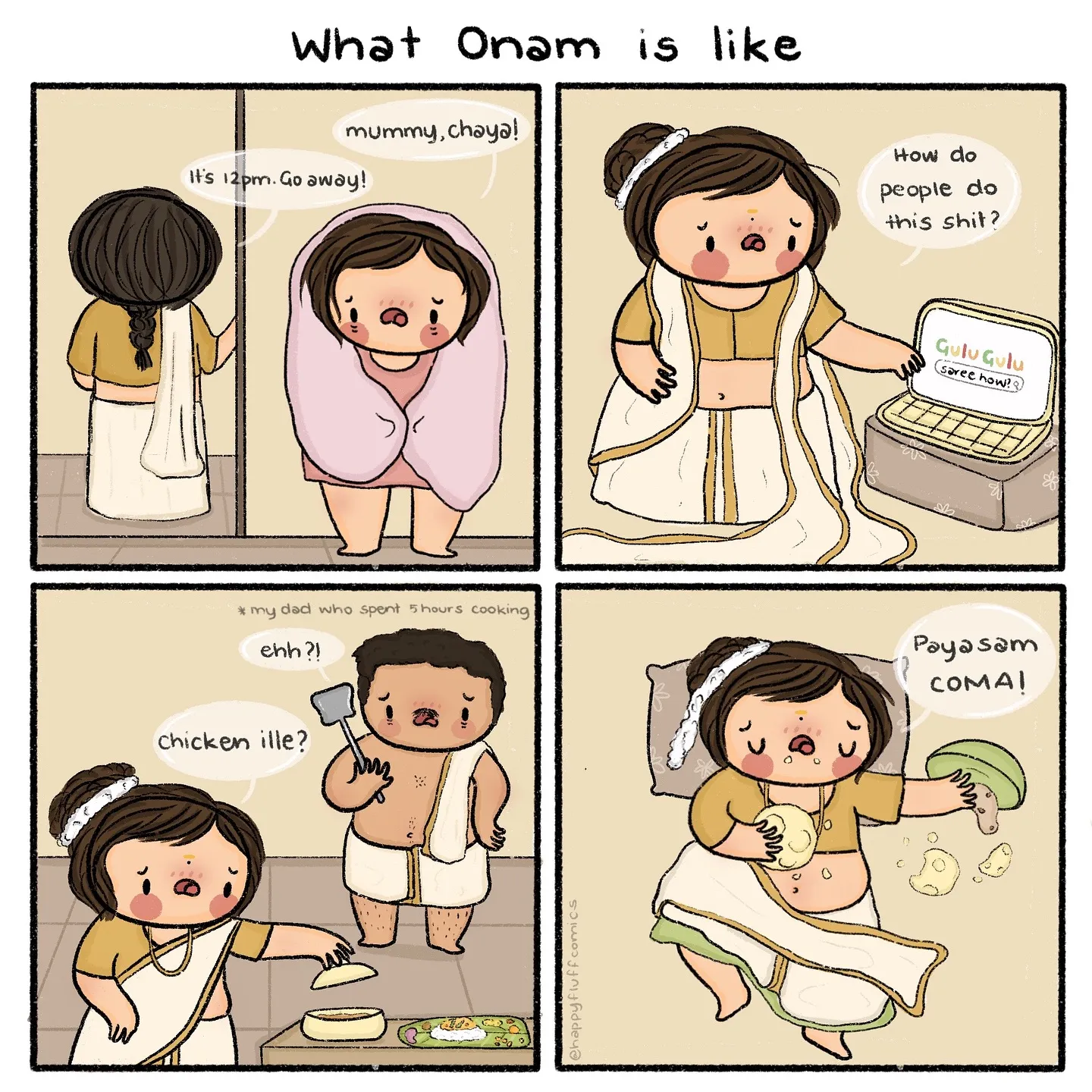
Onam provides the specific setting; the joke is the child’s bewilderment at how much goes into the family preparations.
What gentle gag does comic #14 deliver?
Why does the girl never leave bed as pets arrive?
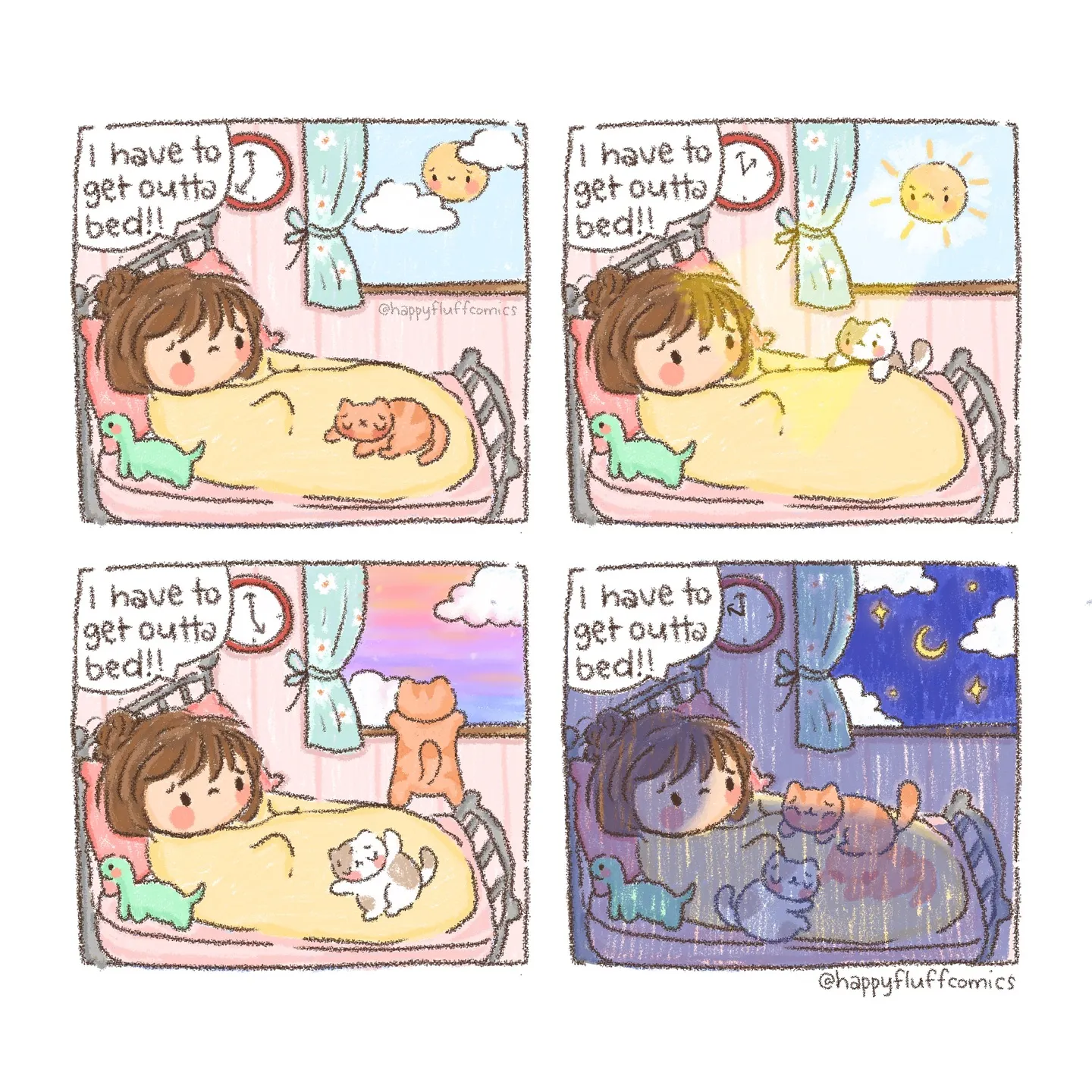
The daylight changes, but the girl never leaves bed; each pet arrival makes getting up less likely.
What obligation beats a dramatic collapse?
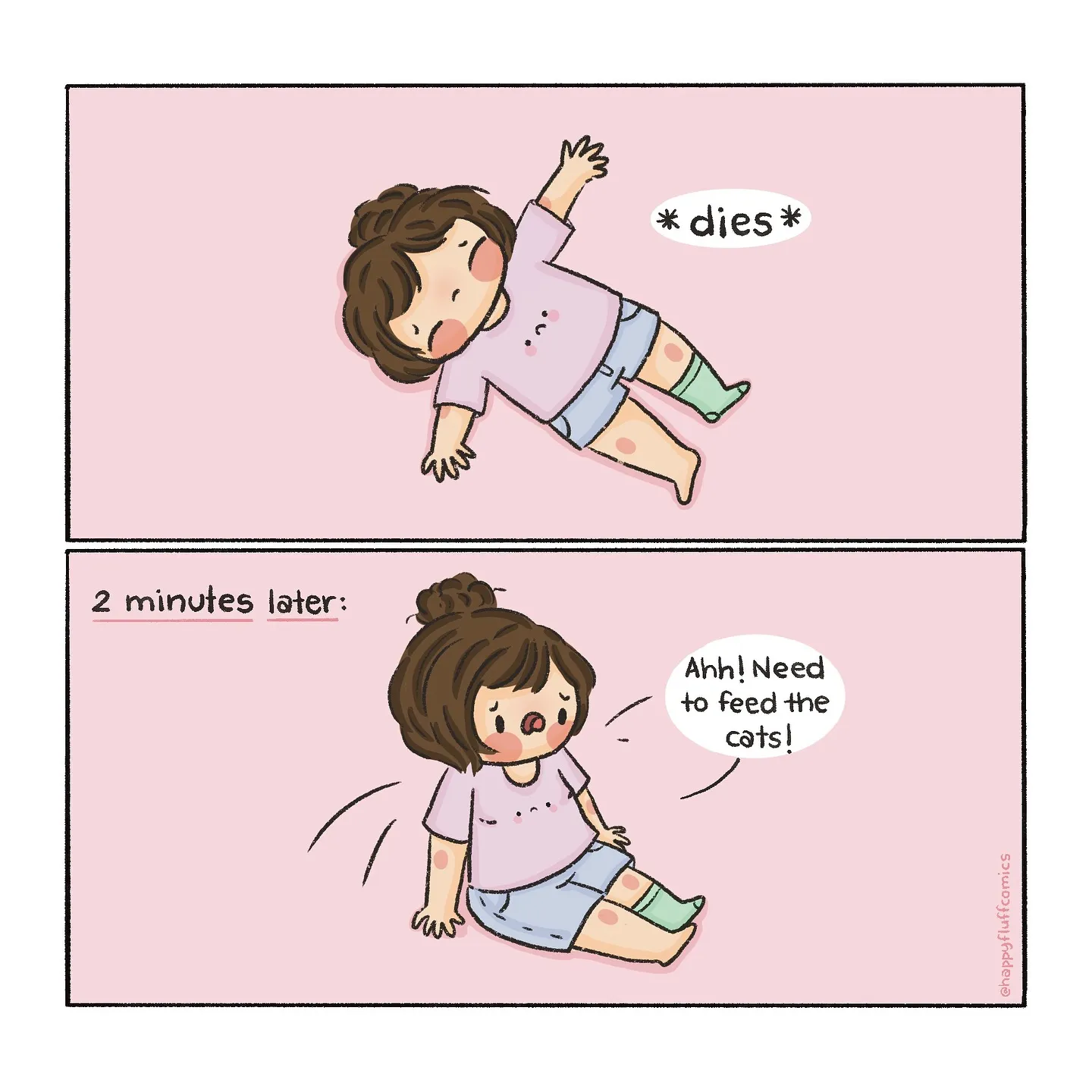
A dramatic collapse lasts only until she remembers the cats still need feeding—an obligation stronger than sleep.
Which relatable moment does comic #17 nail?

What quiet contradiction closes comic #18?

Why is the dog treated as the bedroom’s tiny monarch?
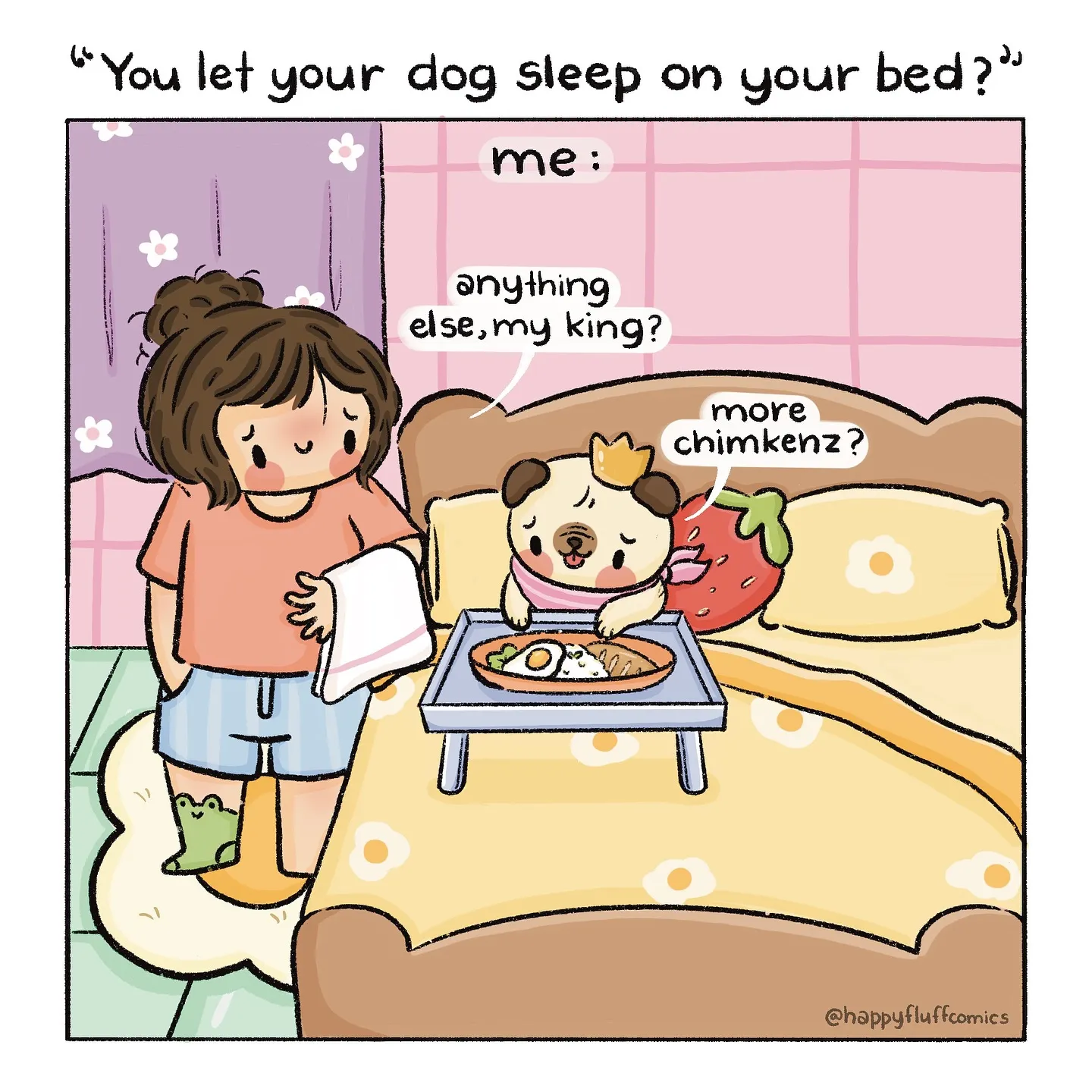
With tray, pillows and crown, the dog is treated less like a guest than the bedroom’s tiny monarch.
Who is Akshara Ashok, the artist behind Happy Fluff Comics?
Akshara Ashok is the illustrator behind Happy Fluff Comics and the author of The Little Book of Big Girl Things. Penguin Random House India says she began making comics in 2017, using humor to address everyday problems, body image, sex education and mental health. Her Instagram count could not be checked directly; third-party directories estimated 225,000–233,000 followers, not an official live figure. Her Ko-fi page displayed 1,042 followers on November 1, 2026.
For another look at Ashok’s themes, see our earlier Happy Fluff Comics feature on everyday women’s struggles. Which of these 19 comics felt most familiar to you?
📖 Comic Transcript, Scene Description & Humor Notes (Click to Expand)
What do the scenes and visual style look like?
Rounded, pastel-toned characters move through everyday settings: a girl waking beneath a ceiling fan, a mother lecturing her daughter at home, a couple setting off on a walk, a woman lounging across her bed before work. Expressions carry the comedy—wide eyes, dramatic tears, a mischievous orange cat mid-theft. Each comic is compact, often two panels, where a familiar routine or family rule quietly sets up a contradiction that lands in the final frame.
How do the panels and dialogue set up each joke?
- Panel 1: A girl settles into bed beneath a ceiling fan; the final panel shows the fan breaking apart above her.
- Panel 1: A mother refuses her daughter's school trip on safety grounds, then tells her to cover up because men are at home.
- Panel 1: A couple set different step goals for their walk; five minutes later, one is exhausted and asks for an orange soda with ice.
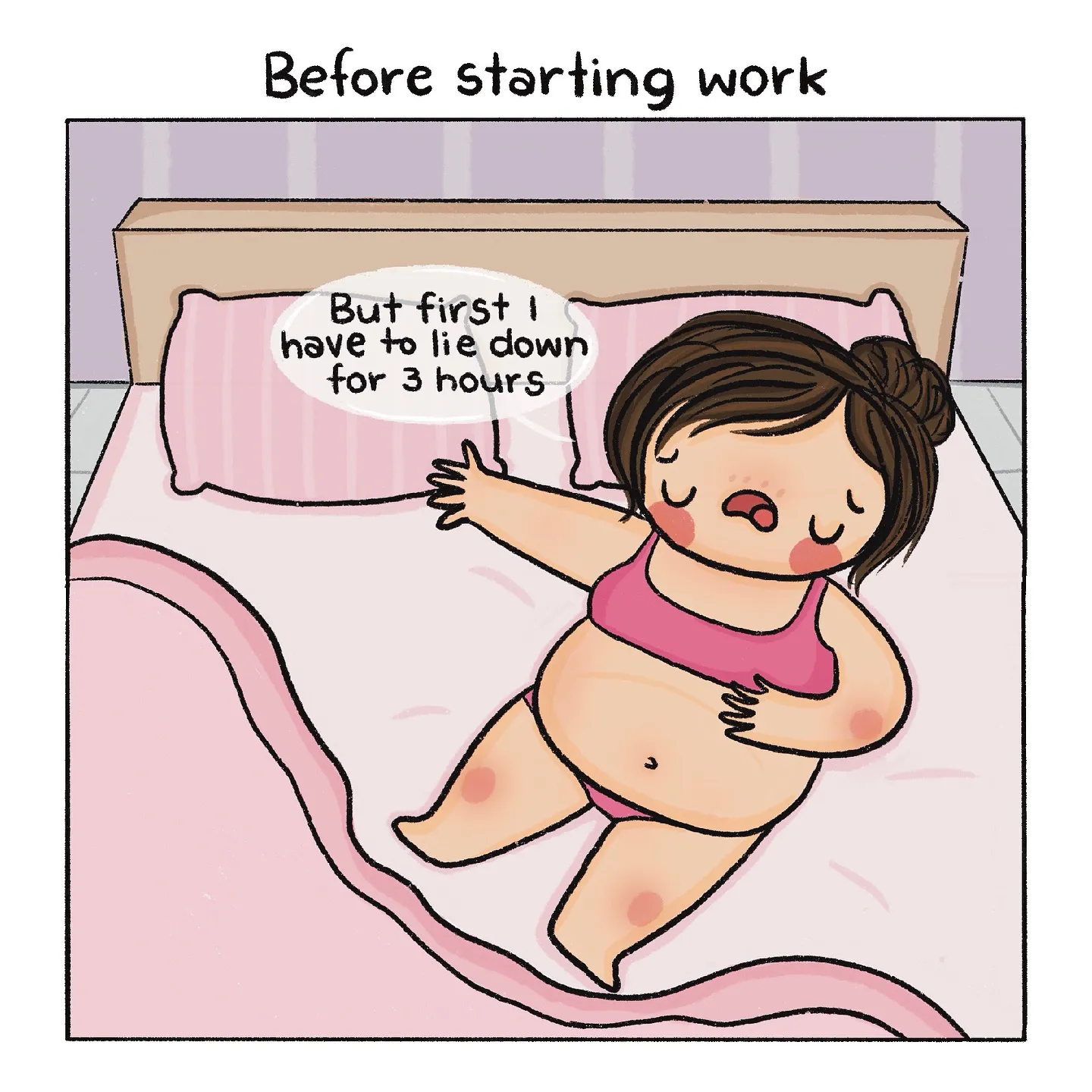
- Panel 1: A woman says she needs to lie down for three hours before starting work, lounging across her bed in a pink crop top.
Why do these comics feel so relatable?
These comics work because the setups are so ordinary—bedtime, family rules, exercise promises—that the twist feels like something that could happen to any of us. The gentle art softens even the sharper punchlines, making the recognition sting and smile at once.
🎭 Comic Highlights & Relatable Takeaways
✨ The comic where a girl settles into bed under a ceiling fan only to have it break apart above her captures the universal dread of bedtime mishaps striking right when you finally relax.
✨ A mother refusing her daughter's school trip for safety reasons and then telling her to cover up because men are at home shows how parental rules can contradict themselves in ways kids find baffling.
✨ The girl who stays in bed as daylight changes and each pet arrives makes getting up even less likely, perfectly capturing how pets become accomplices to laziness.
✨ A dramatic collapse that ends the moment she remembers the cats still need feeding proves that pet obligations are stronger than any urge to sleep.
💬 Comic Q&A & Behind the Scenes
💭 What makes Happy Fluff Comics stand out among everyday humor webcomics?
Akshara Ashok builds jokes from tiny domestic moments, then flips them with a final-panel contradiction. The soft pastel art and rounded characters keep things gentle, even when punchlines touch loss, body image, or family rules. It's compact, relatable storytelling that rewards a second read.
💭 Why do the two-panel twists in these comics land so effectively?
The first panel quietly establishes a familiar routine, so your brain fills in the expected ending. The second panel breaks that assumption with a blunt reveal or visual gag. Because the setup feels ordinary, the twist arrives fast and feels earned rather than random.
💭 How does Akshara Ashok balance humor with heavier themes like grief and body image?
She keeps the visuals soft and affectionate, letting the joke carry the weight instead of lecturing. The wedding hug that cuts to matching gravestones works because the friendly ghosts stay warm, not bleak. Humor becomes a gentle doorway into topics readers might otherwise avoid.
💭 Who is the artist behind Happy Fluff Comics and where can readers follow her work?
Akshara Ashok is the illustrator and author of The Little Book of Big Girl Things. She began making comics in 2017, using humor to explore body image, mental health, and everyday problems. You can find her work on Instagram and support her through Ko-fi.
💭 Where do the pet-themed comics get their charm, like the dog treated as a tiny monarch?
The pets behave with total confidence while the humans quietly rearrange their lives around them. A dog with tray, pillows, and crown isn't a guest but the bedroom's ruler. That deadpan role reversal mirrors how real pet owners actually feel about their animals.


