


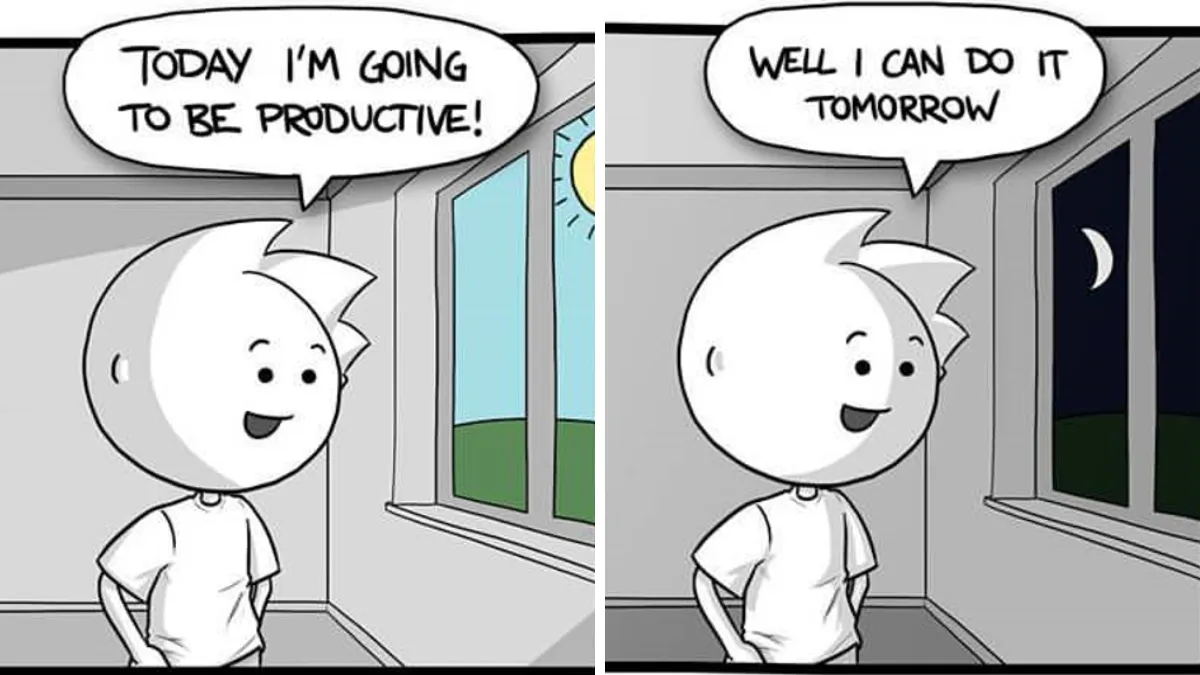
Behind the Comic: James of No Trades turns everyday plans into punchlines, and this collection of 18 dark humor comics is a masterclass in deadpan mischief. Expect pink brains staging bedtime ambushes, genies with employment dilemmas, and motivation on a leash that pulls both ways. James F. Regan, a Los Angeles film composer, crafts compact visual metaphors that land with a quiet thud. Each strip stands alone, so dip in anywhere and enjoy the awkward restaurant exchanges and cosmic-scale procrastination.
James of No Trades finds comedy in the gap between what a person plans to do and what actually happens. These 18 dark humor comics move from negotiations with a pink brain to awkward restaurant exchanges, stalled motivation, and promises that stretch far beyond tomorrow.
Creator James F. Regan publishes the webcomic as James of No Trades. The collection shifts between deadpan dialogue and compact visual metaphors: a genie has an employment problem, a cloud drains a lake, and a familiar motivational phrase becomes a literal descent. The strips stand alone rather than following one continuous storyline.
What happens when a pink brain ambushes bedtime?
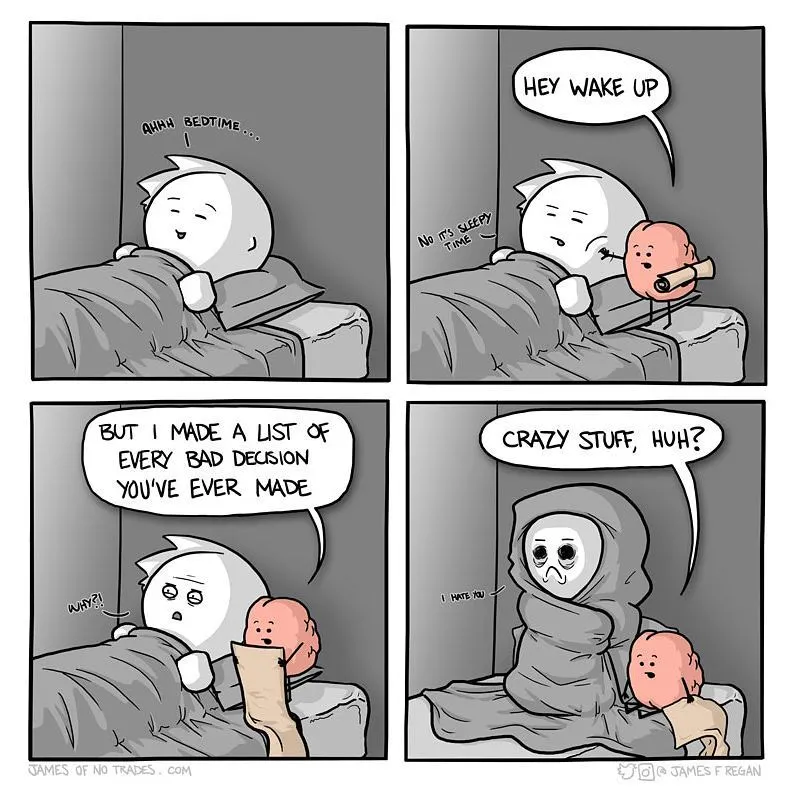
The pink brain turns an ordinary bedtime into an ambush, arriving with a list of past mistakes and leaving the sleeper wrapped up.
What’s the setup in strip #2?
Why does the genie’s wish backfire?
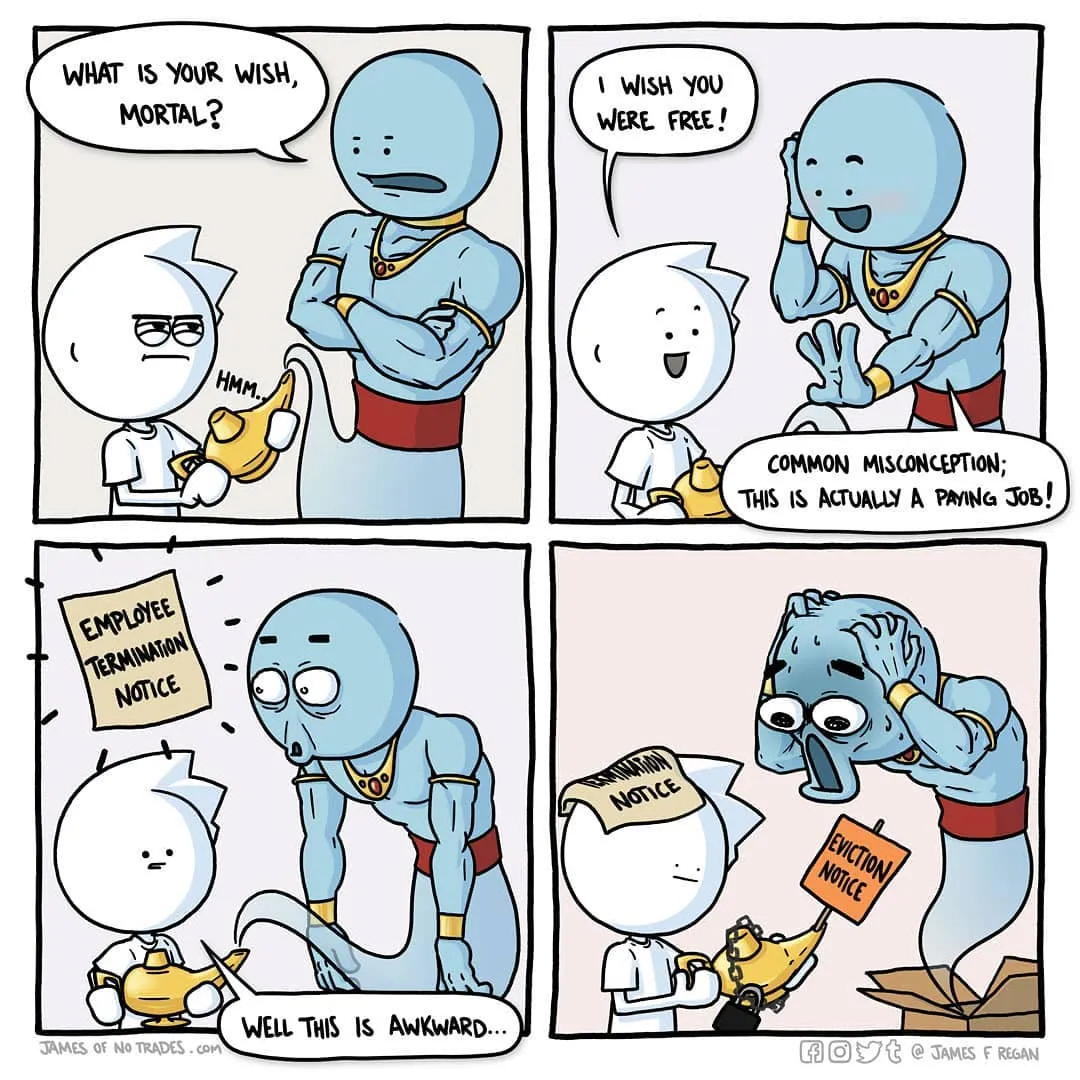
The wish backfires when the genie explains that freedom means losing a paying job—and a place to live.
Which menu item costs a person?
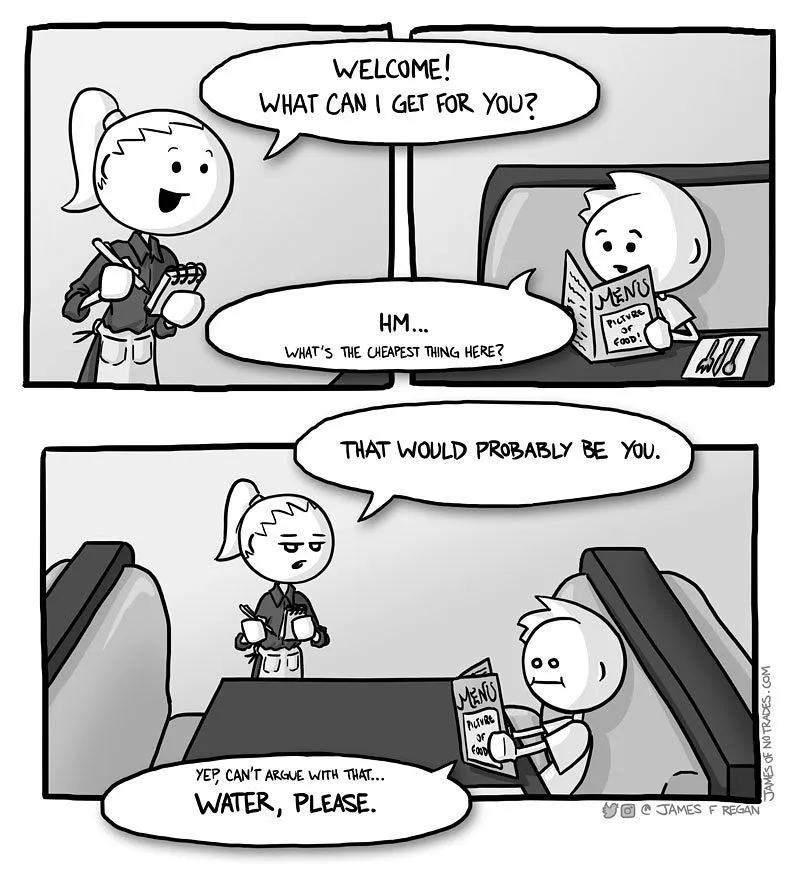
The server’s deadpan answer makes the cheapest menu item a person; the customer settles for water.
What’s happening in strip #5?
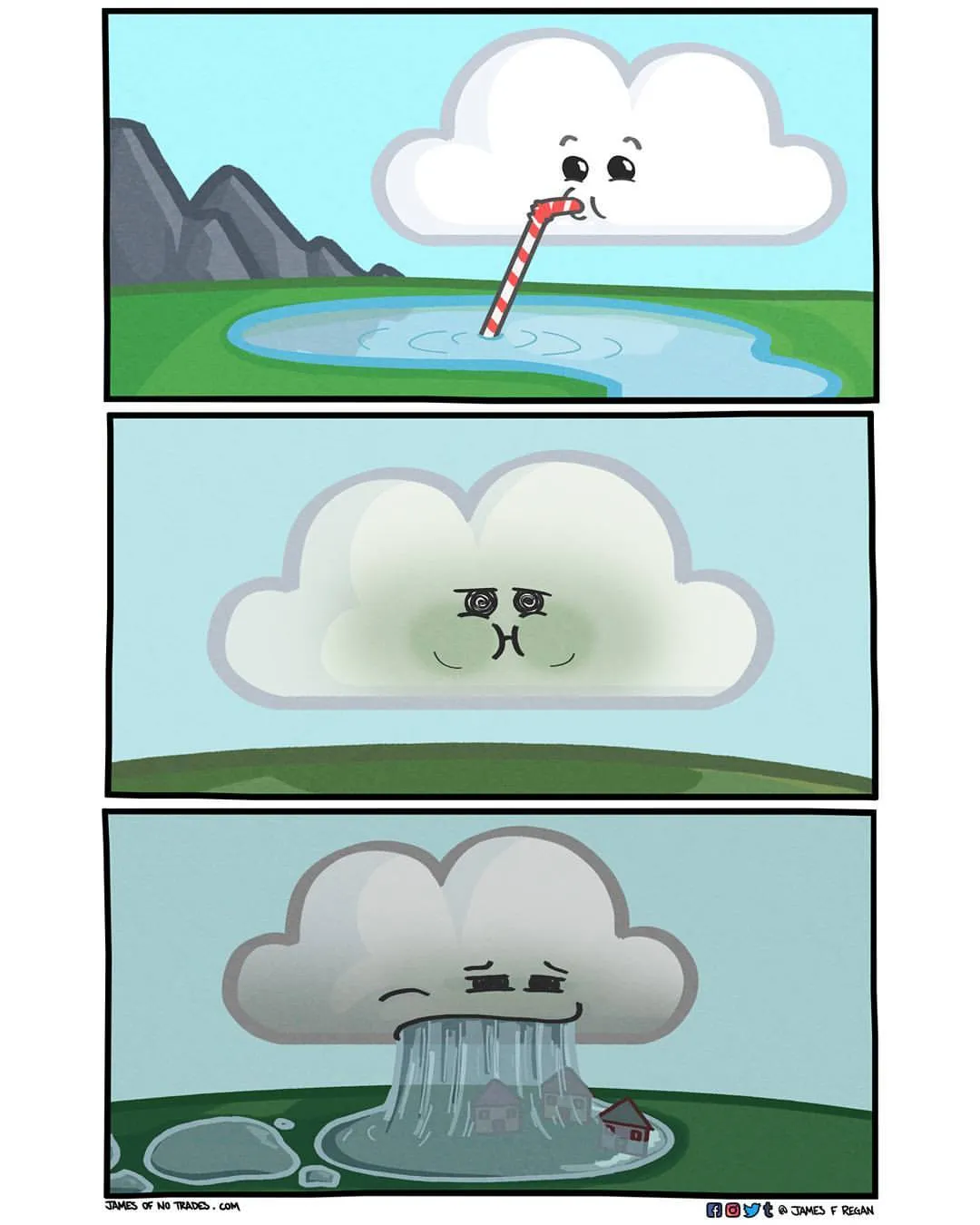
What’s the joke in strip #6?
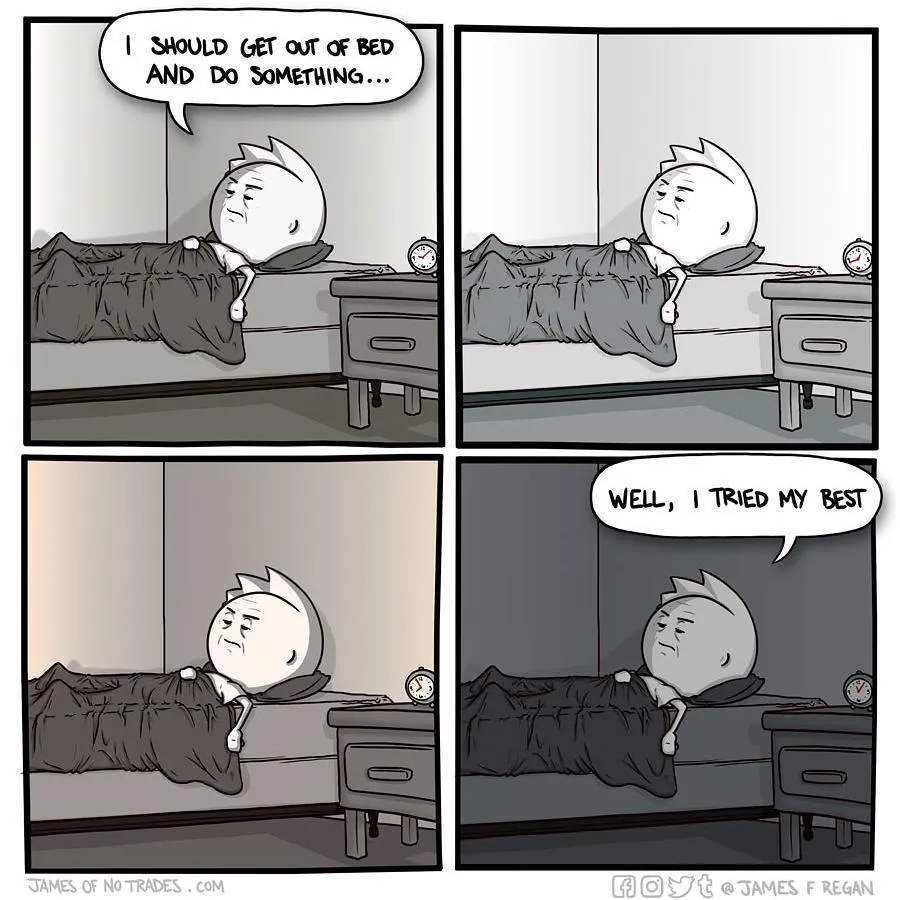
Who’s pulling the motivation leash?
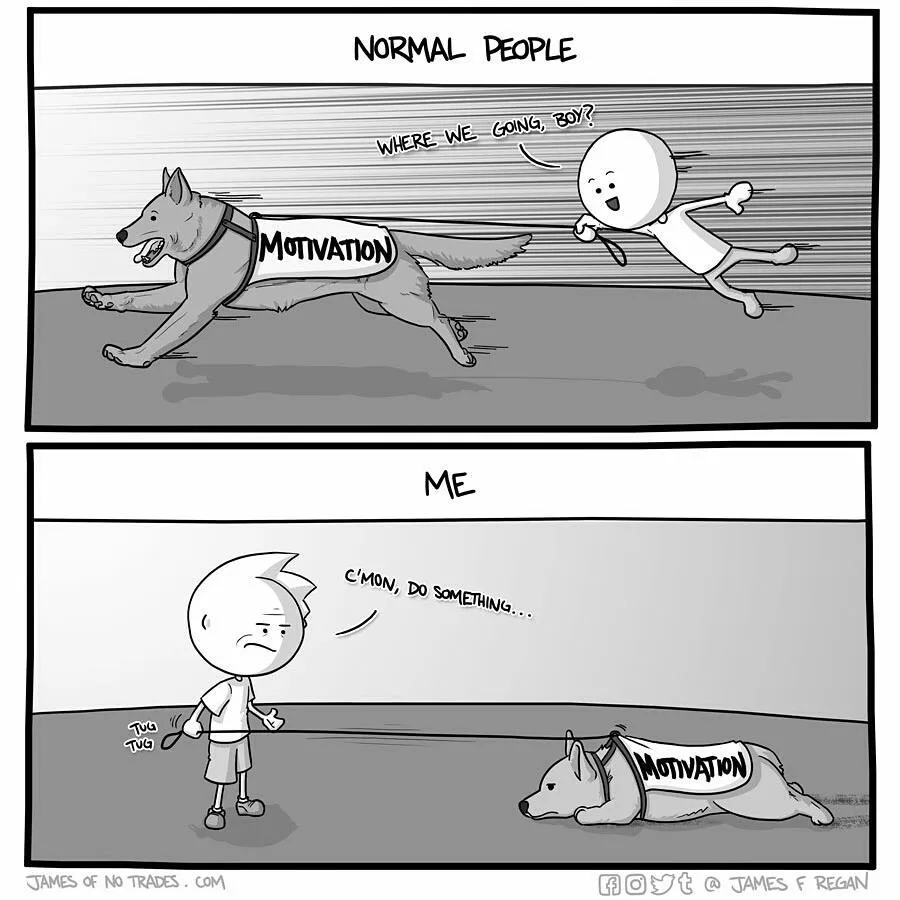
The leash makes motivation visible: sometimes it drags a person forward, sometimes the person has to pull it.
What unfolds in strip #8?
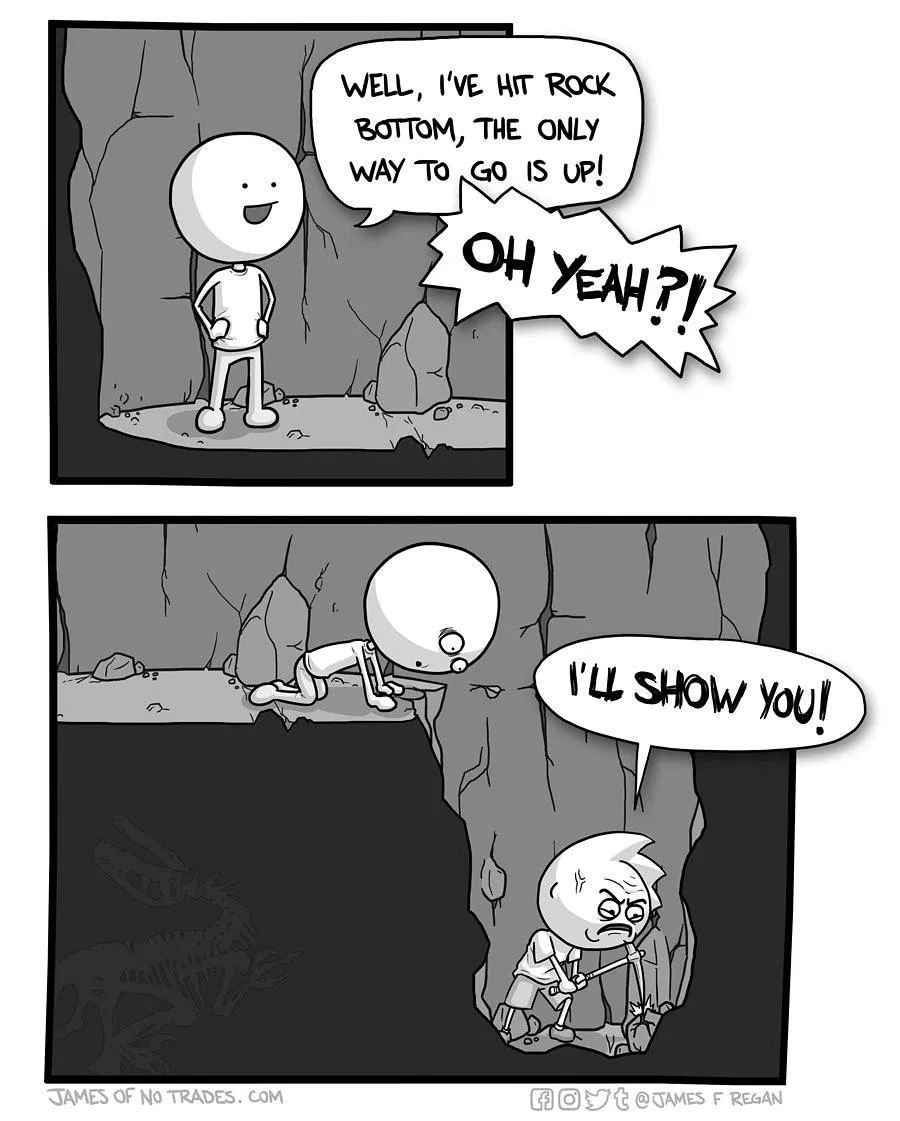
What’s the twist in strip #9?
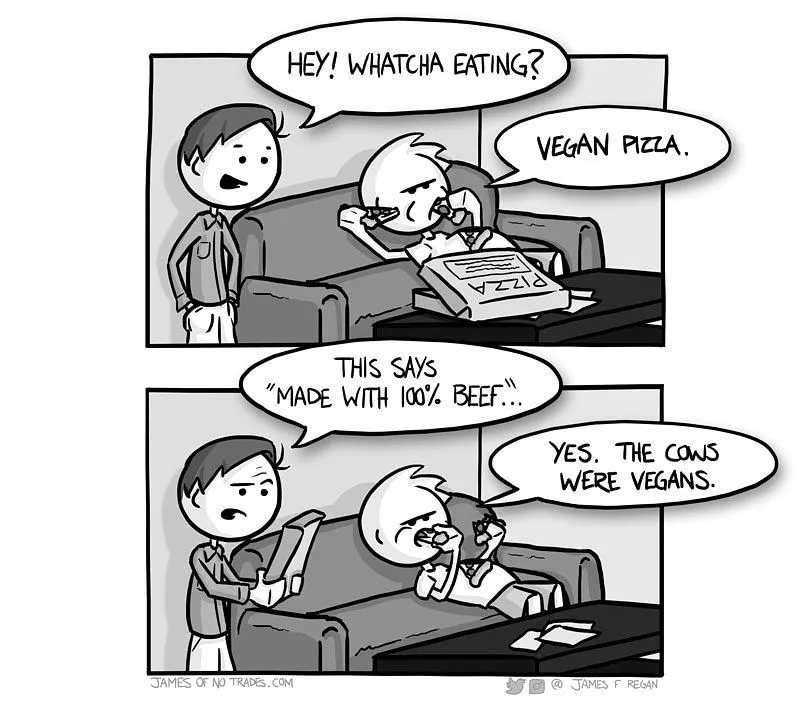
How do work, rejection, and debt fight back?
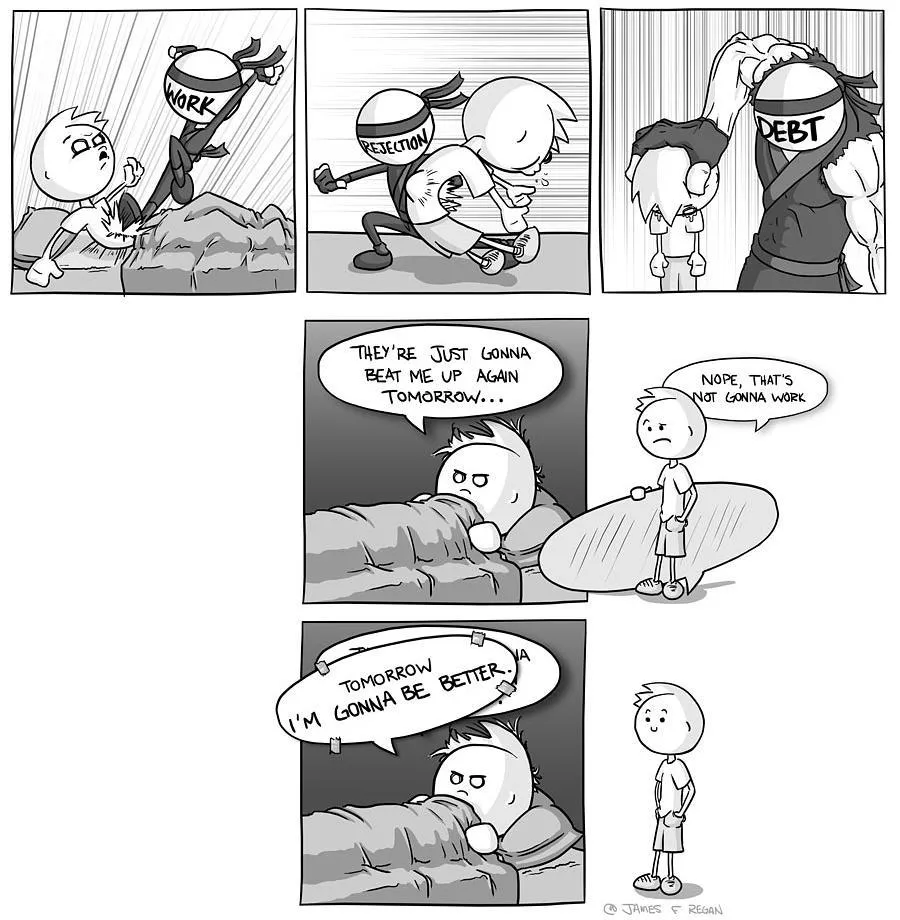
Work, rejection, and debt become physical opponents; “tomorrow” sounds less like a plan than another round.
What’s going on in strip #11?
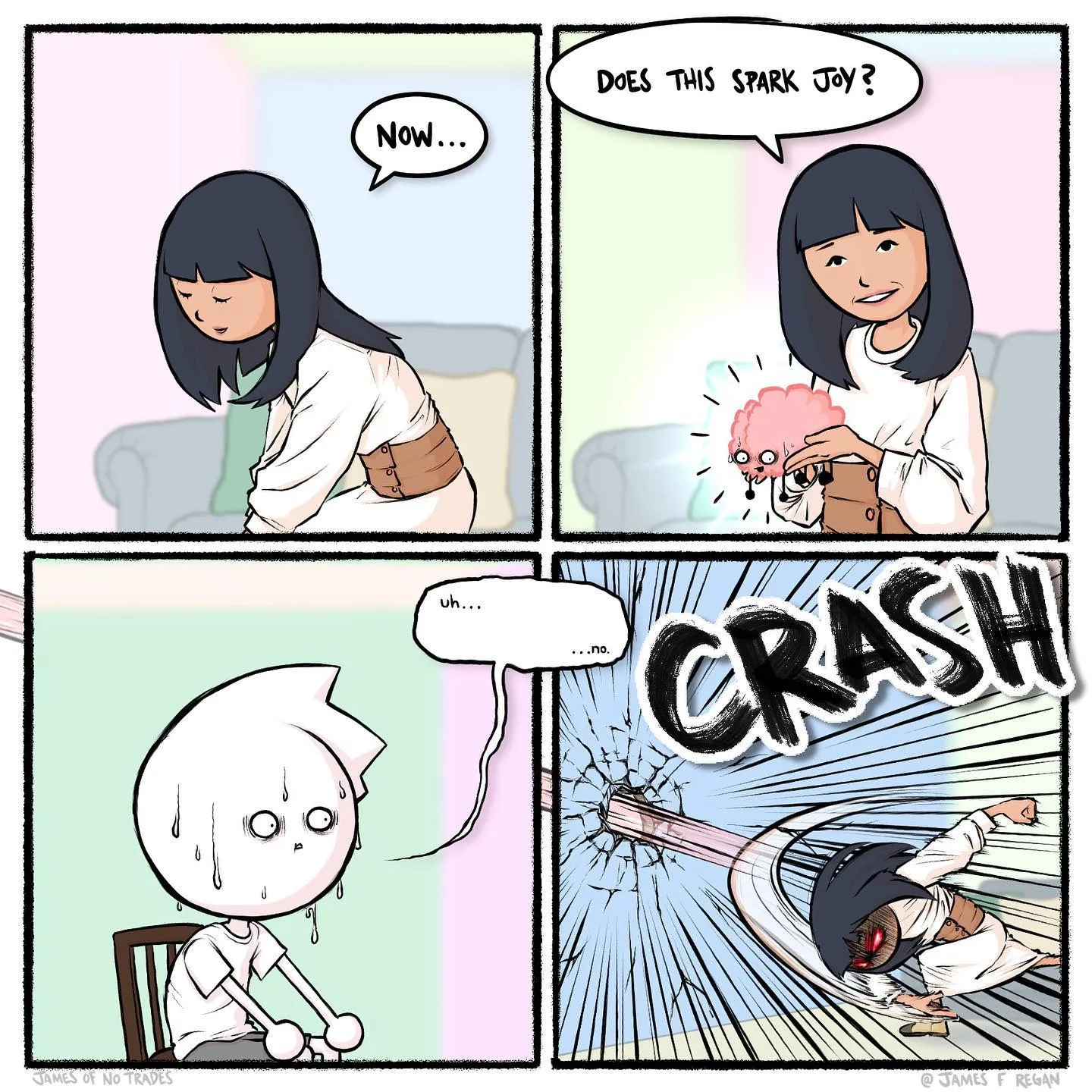
What’s the gag in strip #12?
Why does the brain throw the dream away?
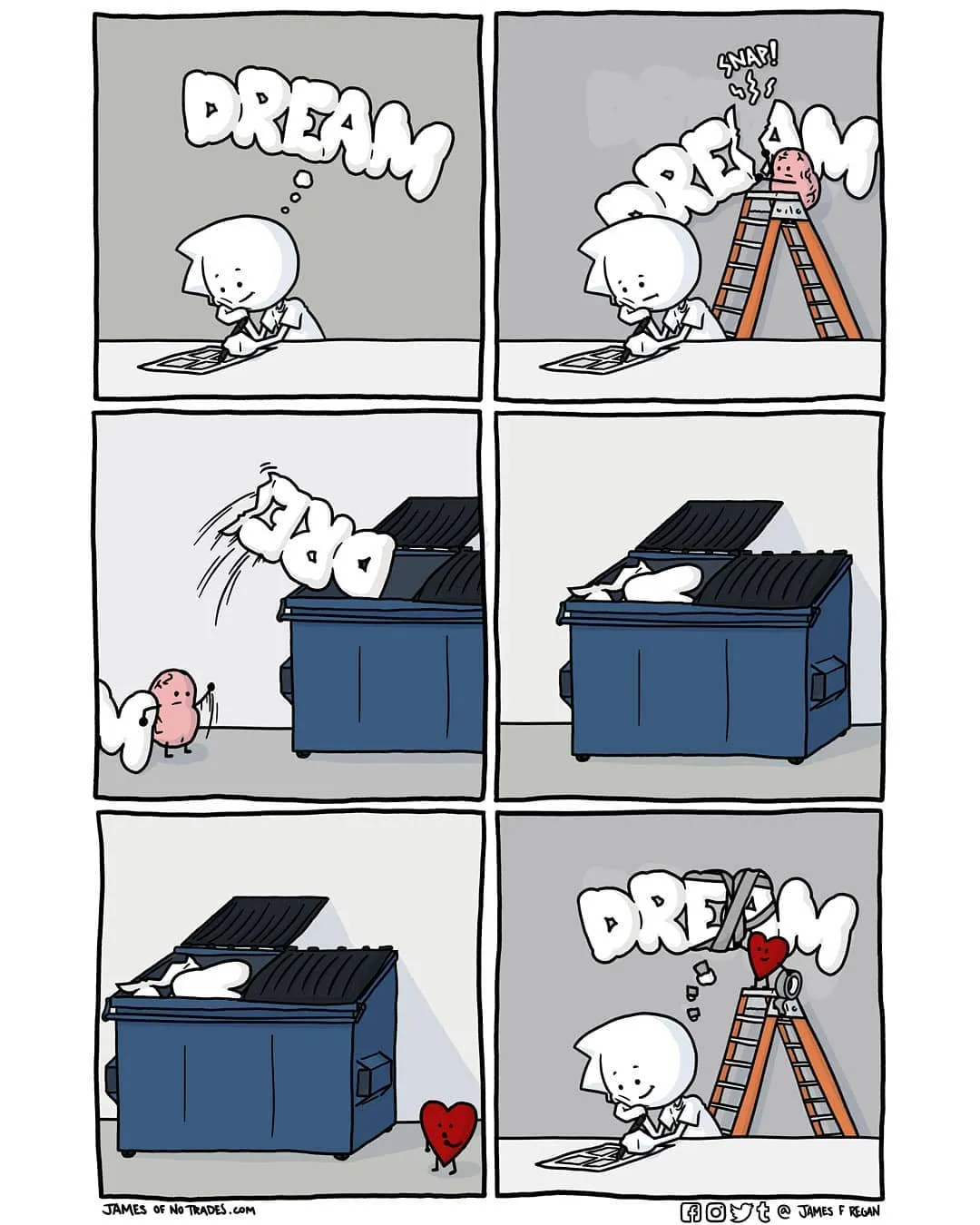
The brain throws the dream away, while the heart retrieves it—a simple physical metaphor for competing inner voices.
What happens in strip #14?
How far does ‘tomorrow’ stretch?
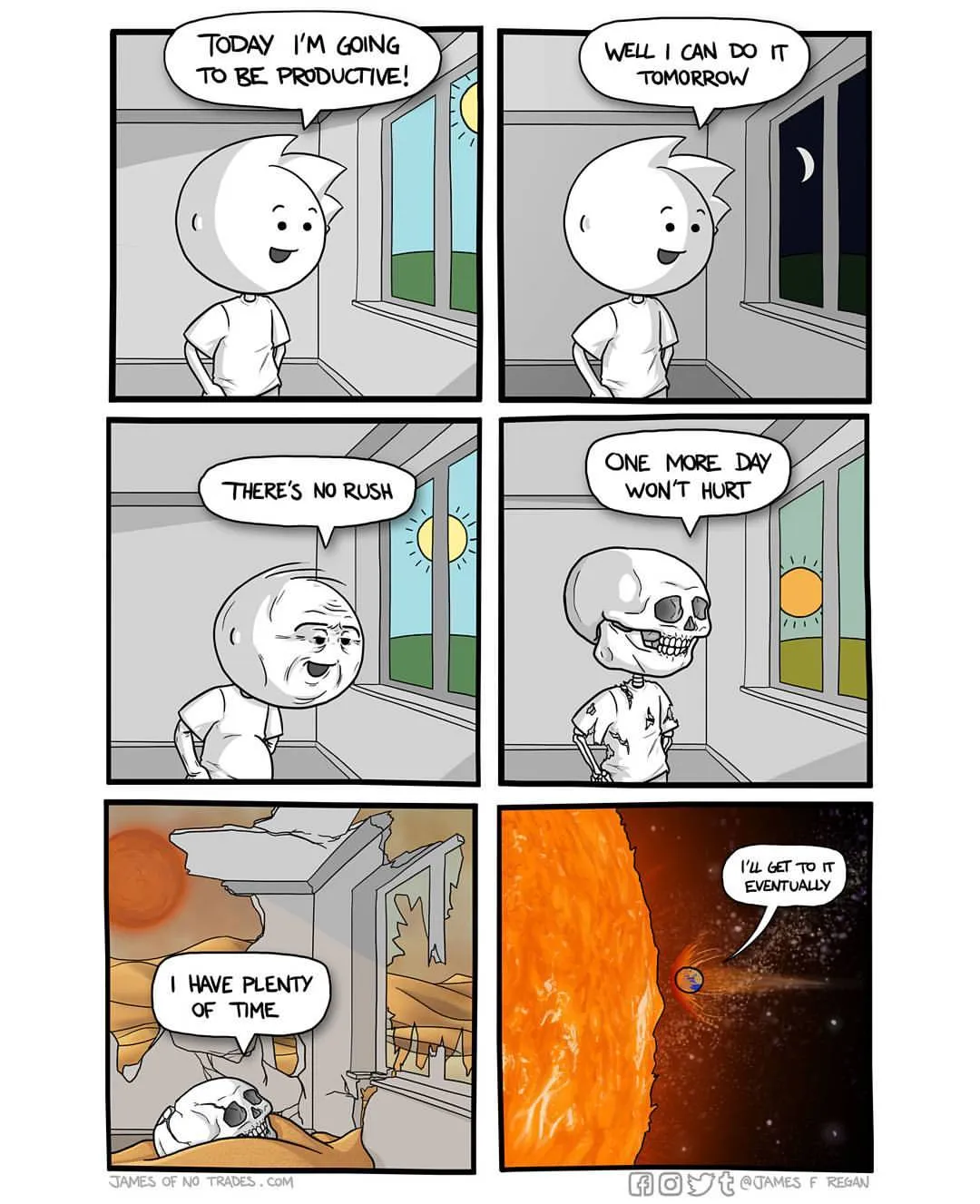
The promise to start tomorrow stretches from a day into a lifetime, ending on a bleak cosmic scale.
What’s the scene in strip #16?
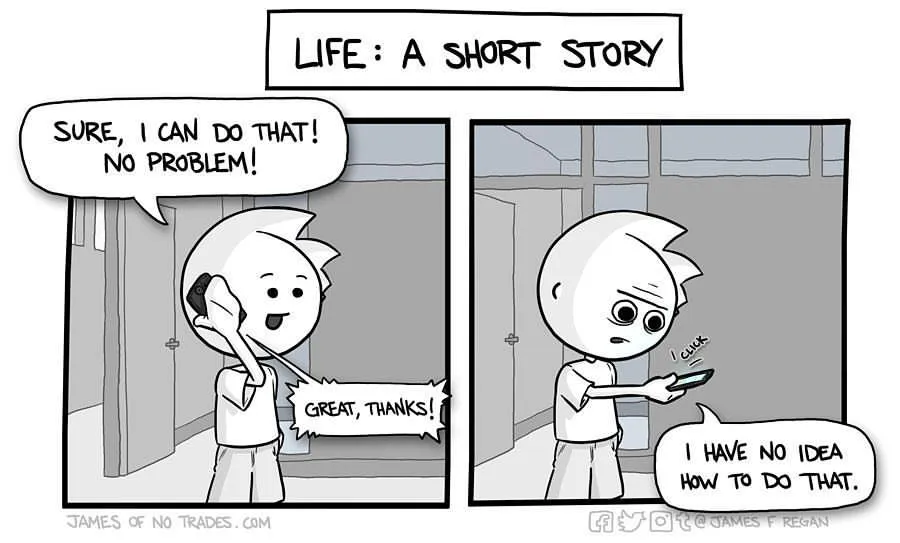
What’s the punchline in strip #17?
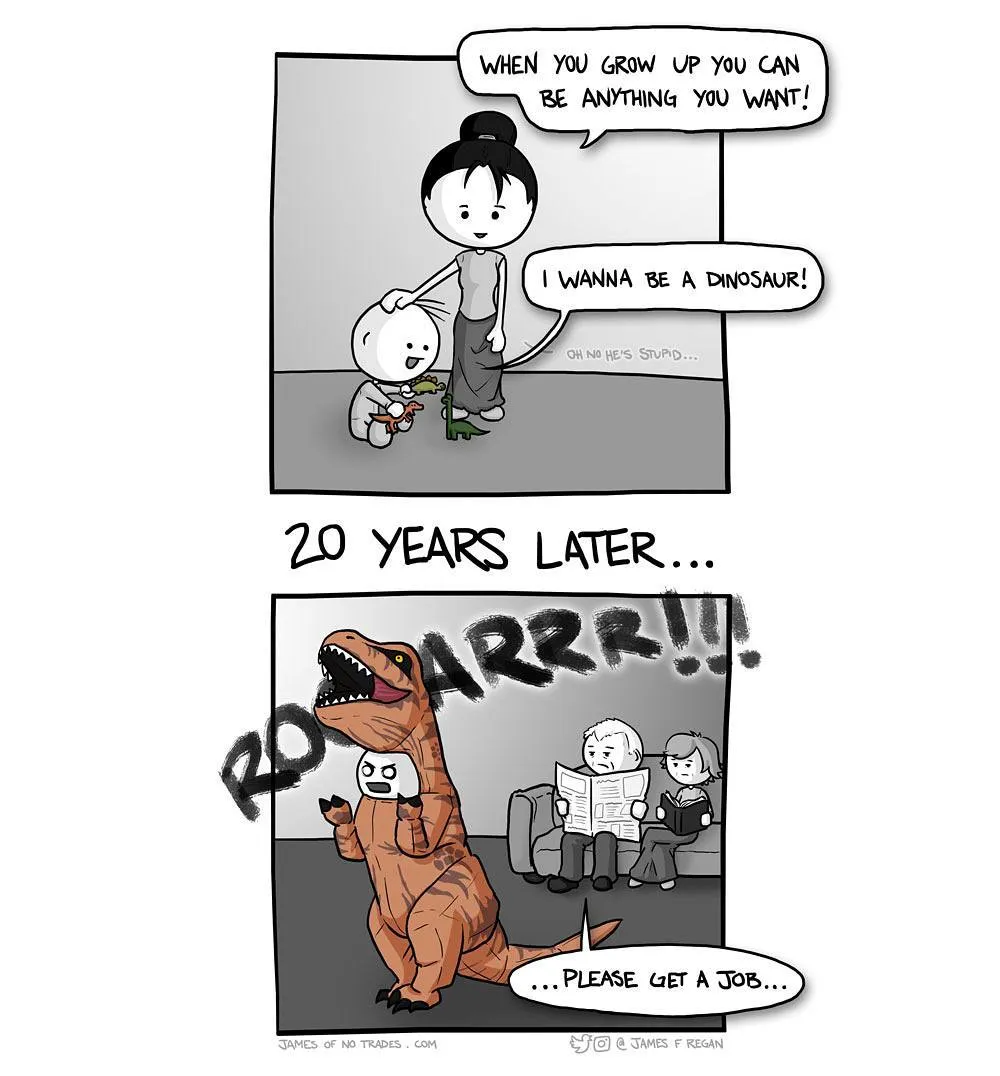
What’s happening in strip #18?
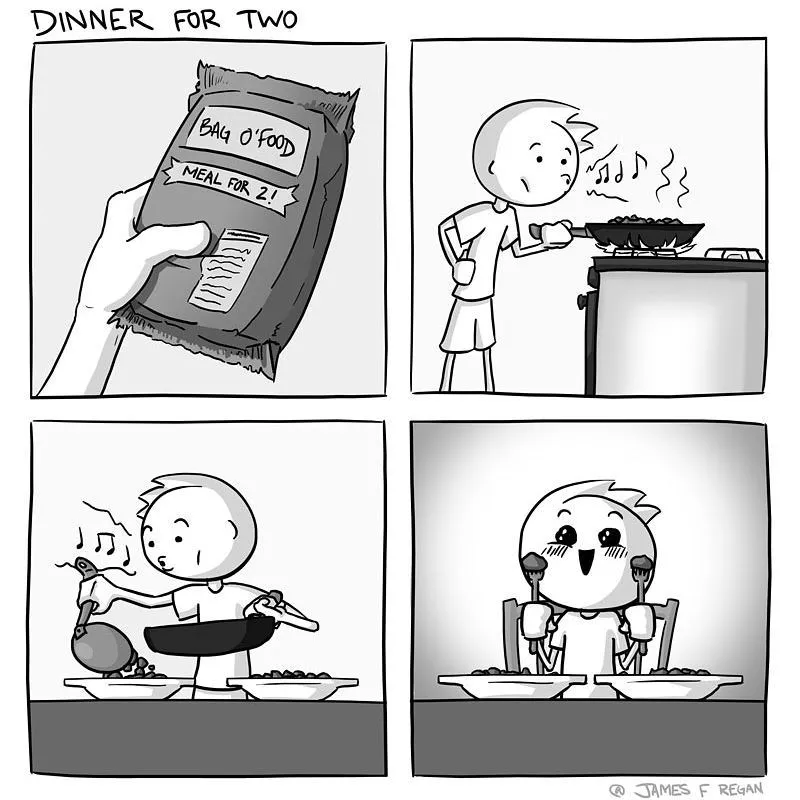
What’s the joke in strip #19?
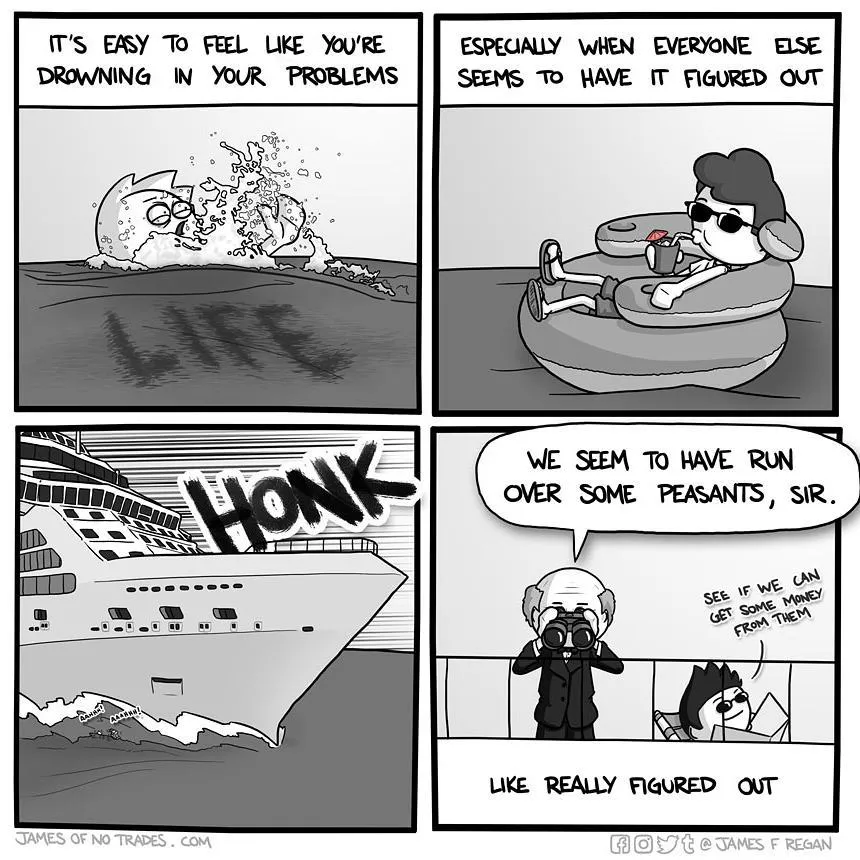
How does the collection close out?
Who is the creator behind James of No Trades?
James F. Regan describes himself on the official James of No Trades site as a freelance film composer and artist in Los Angeles. He says the comic began as a hobby between freelance gigs, turning everyday experiences and harder moments into jokes. The site links to his Instagram, Facebook, X, Tumblr, and WEBTOON pages. We previously featured another James of No Trades collection.
Which strip has the sharpest turn for you: the genie’s employment problem, the motivation dog, or the promise to start tomorrow?
💬 Comic Q&A & Behind the Scenes
💭 What makes James of No Trades comics so effective at dark humor?
James F. Regan mines the gap between intention and reality, turning small failures into punchlines. His deadpan dialogue and compact visual metaphors let bleak ideas land gently, so you laugh before the discomfort sets in. That balance of warmth and honesty is why the strips linger.
💭 Why do the strips stand alone instead of following one storyline?
Each comic works as a self-contained joke, so you can jump in anywhere without missing context. That format suits webcomic browsing and lets Regan explore wildly different ideas, from a genie’s job woes to a motivational dog, without forcing connections between them.
💭 How does the motivation dog strip use a leash as a metaphor?
The leash makes an invisible struggle physical: sometimes motivation drags you forward, other times you have to haul it along yourself. It captures how effort feels inconsistent rather than heroic, which is exactly the kind of honest, relatable observation that gives Regan’s humor its bite.
💭 Who is James of No Trades and where can you follow his work?
James F. Regan is a freelance film composer and artist in Los Angeles who started the comic as a hobby between gigs. You can follow James of No Trades on Instagram, Facebook, X, Tumblr, and WEBTOON through links on the official site.
💭 What is the sharpest turn in this collection of dark humor comics?
It depends on your taste: the genie’s freedom costing him his job and home, the motivation dog’s unpredictable leash, or the promise to start tomorrow stretching into a bleak cosmic scale. Each delivers a different flavor of dark punchline, so the sharpest turn is the one that catches you off guard.
📖 Comic Transcript, Scene Description & Humor Notes (Click to Expand)
🎨 Scene & Visual Setup
A white-haired cartoon character lies in bed, wide awake, as a pink brain-shaped figure looms over him holding a long list of past mistakes. The brain’s deadpan expression contrasts with the sleeper’s growing dread. The scene captures the universal bedtime ambush of regrets and to-do lists, rendered in James of No Trades’ signature minimalist style with muted colors and expressive, simple faces.
💬 Panel & Dialogue Breakdown
- Panel 1: The white-haired character settles into bed, ready to sleep.
- Panel 2: The pink brain appears, holding a scroll of bad decisions, and begins listing them.
- Panel 3: The sleeper looks increasingly overwhelmed as the brain continues.
- Panel 4: The brain leaves, and the sleeper is left wrapped up in the list, unable to sleep.
💡 Why It’s So Relatable
It captures the universal experience of lying in bed while your brain replays every mistake. The absurdity of a literal brain ambush makes the internal struggle external and laugh-out-loud relatable.


