


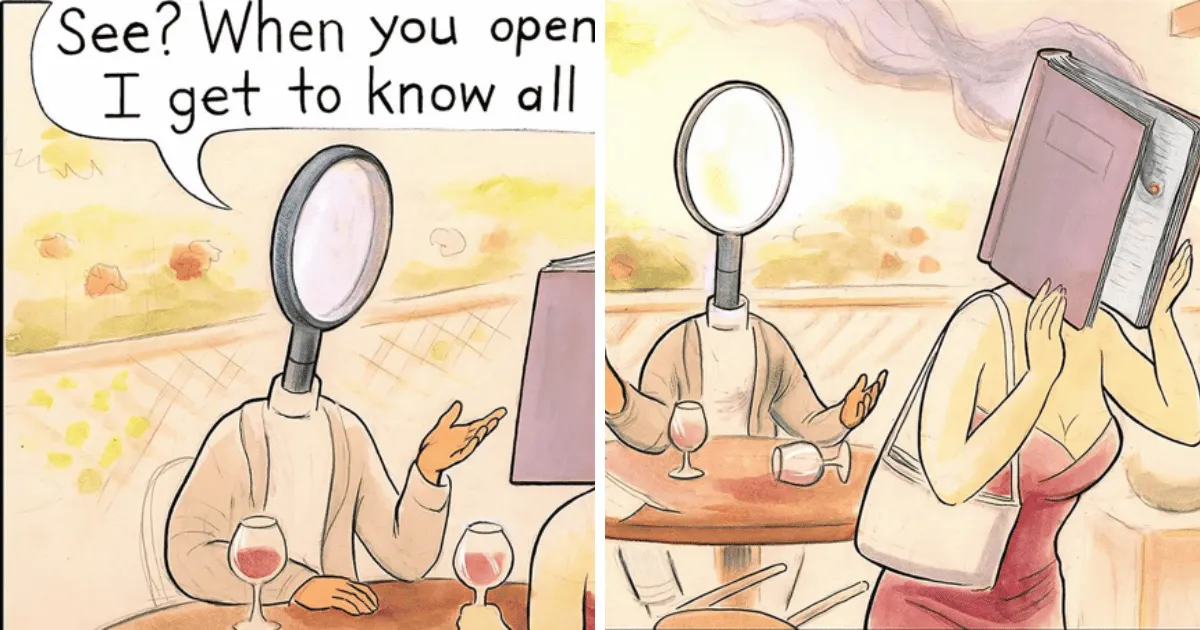
Quick Answer: These PBF comics begin with ordinary situations—a chess match, a dog walk, a doctor's goodbye—and twist them into deadpan wordplay and surreal reversals. Nicholas Gurewitch's The Perry Bible Fellowship treats familiar phrases and objects as prompts for absurd new logic, with each strip building toward a detail that reframes everything before it. Examples include a heat-wave headline adding a second joke, spiders choosing a sleeper's open mouth as their cave, and a cat scattering chess pieces to break an announced checkmate.
These PBF comics start with familiar scenes—a chess game, a dog walk, a doctor’s farewell—then veer into deadpan wordplay and dark, surreal reversals.
Nicholas Gurewitch’s The Perry Bible Fellowship treats everyday phrases and objects as invitations to absurd new logic. Each strip builds toward a detail that recasts what came before.
What makes the first comic's monkey-and-man scene funny?
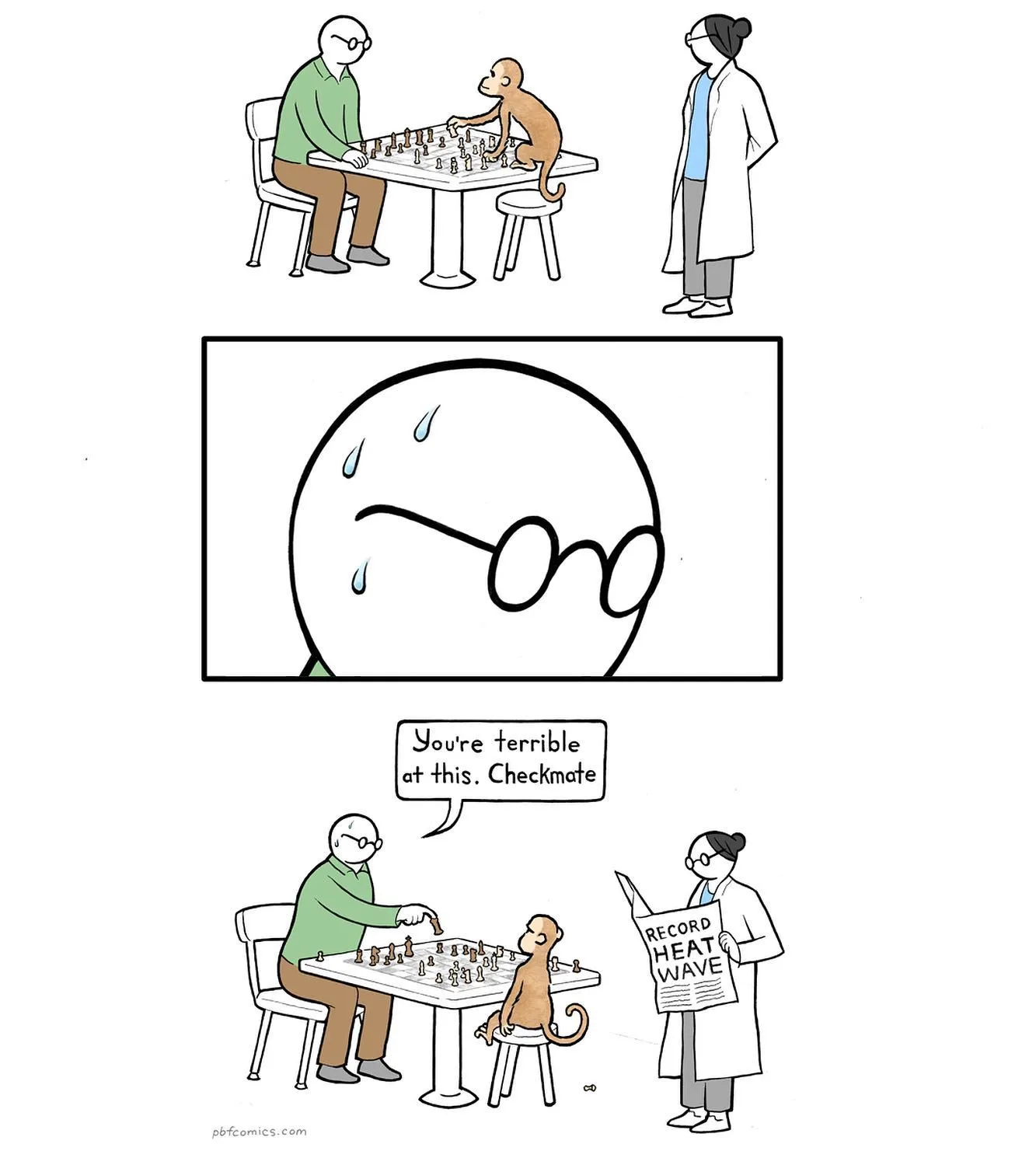
The monkey’s easy posture contrasts with the man’s anxious sweat. The heat-wave headline adds a quiet second joke.
Why do the spiders reject the corner in comic #2?
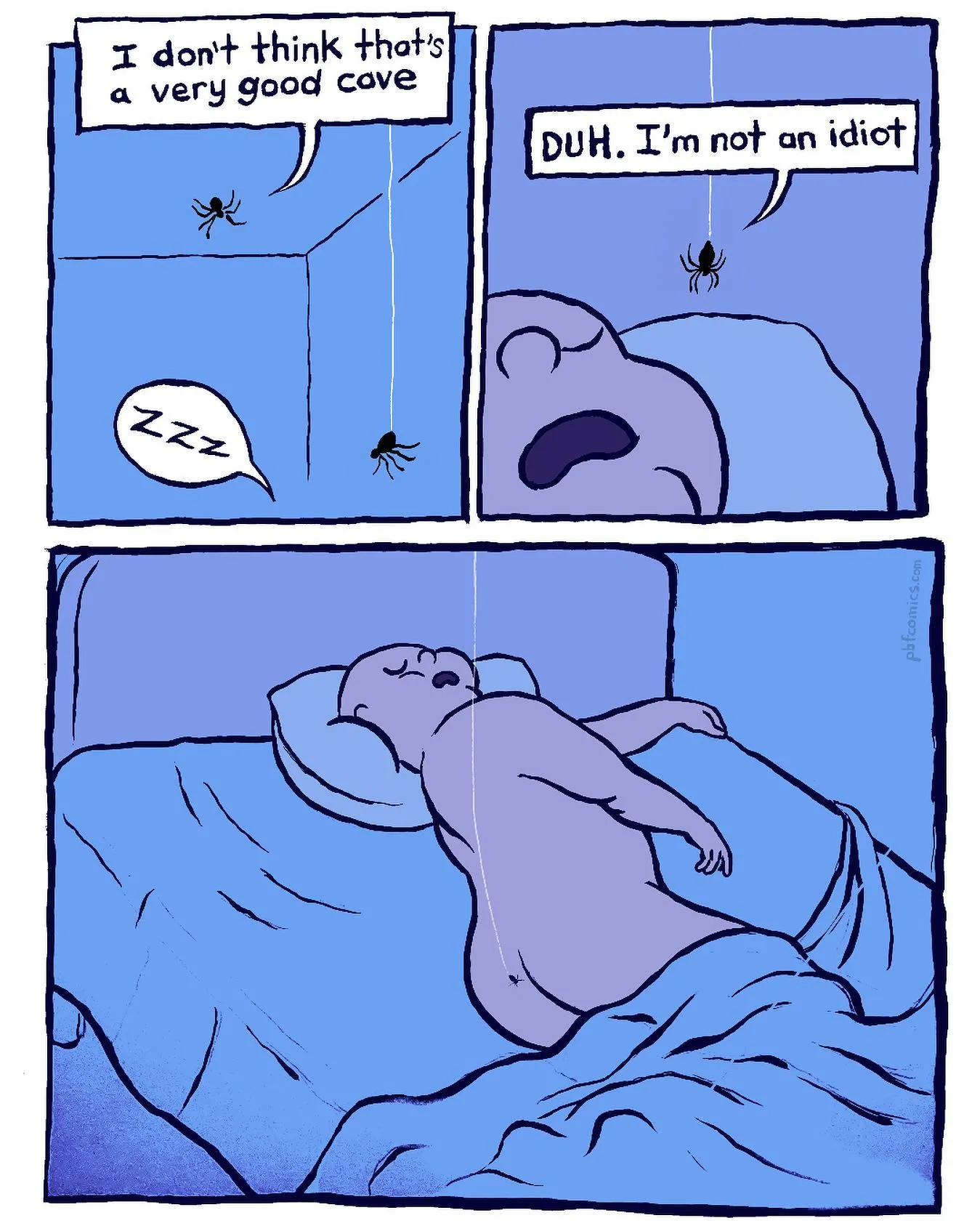
The spiders dismiss a corner as shelter, then reveal a sleeper’s open mouth as the cave they actually chose.
What happens in comic #3?
How does the cemetery scene undercut the prayer in comic #4?
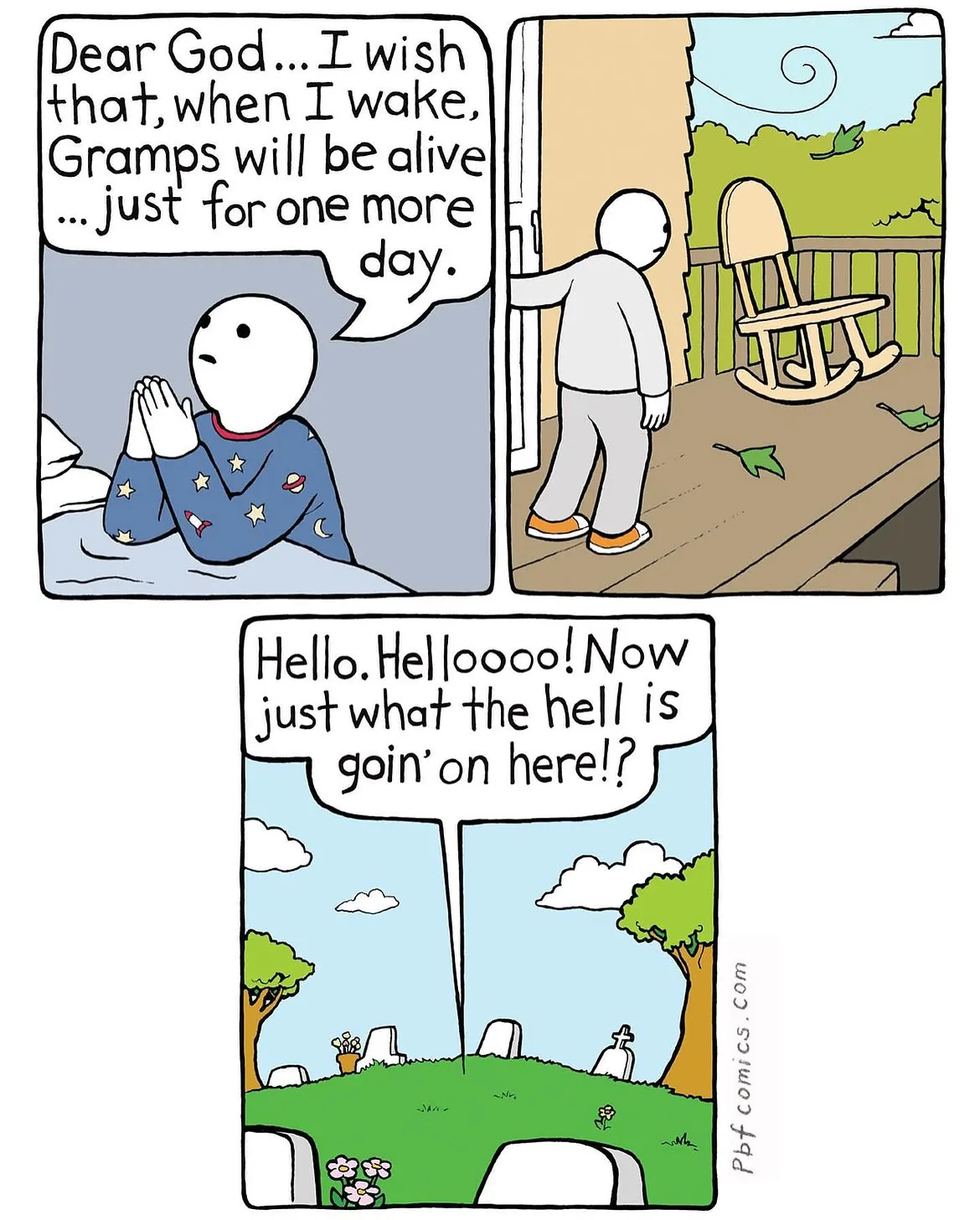
The prayer’s tender setup is cut against a cemetery scene, and the child’s final shout punctures the solemnity.
What happens in comic #5?
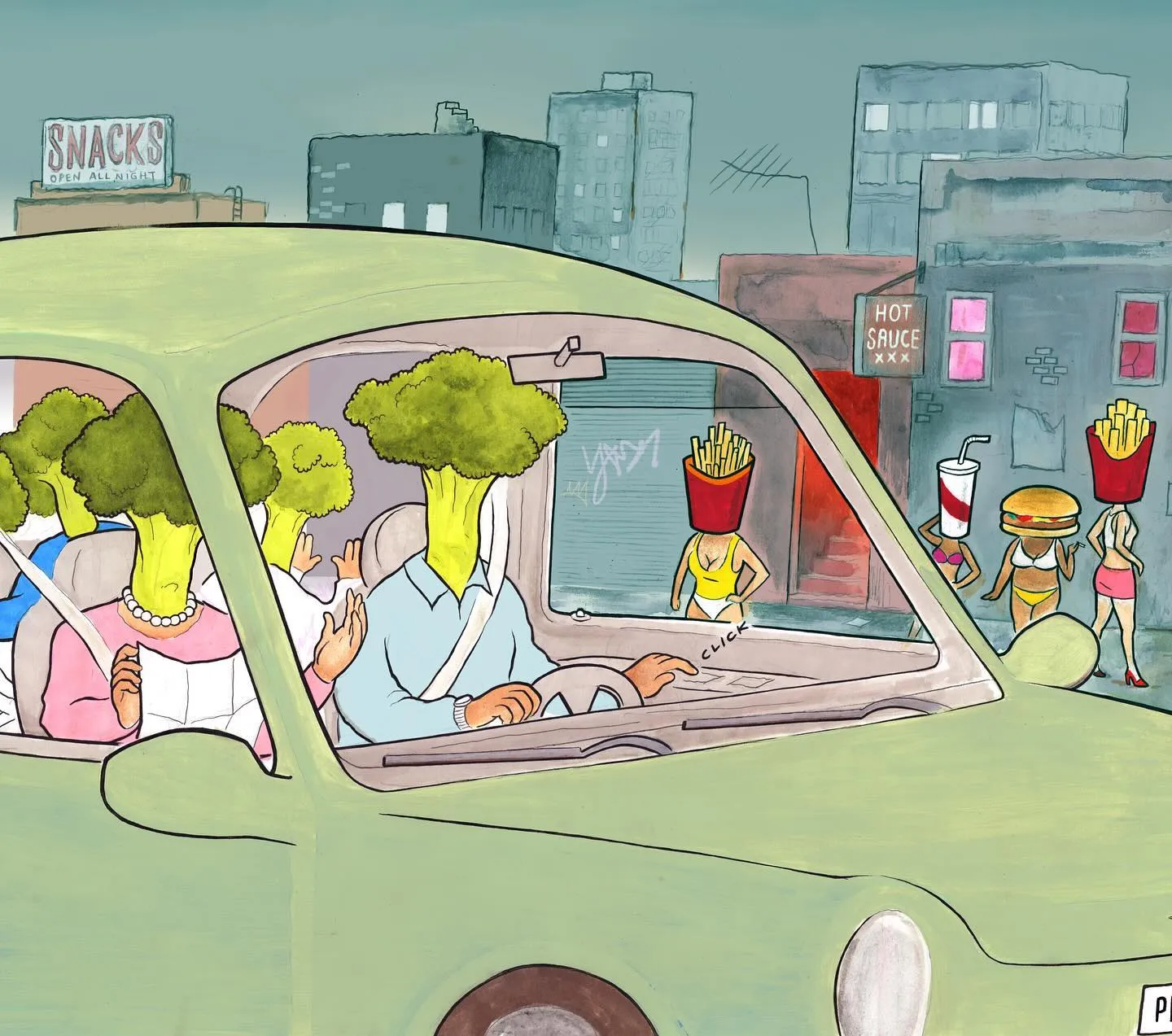
What happens in comic #6?
How does the no-snacks rule escalate in comic #7?
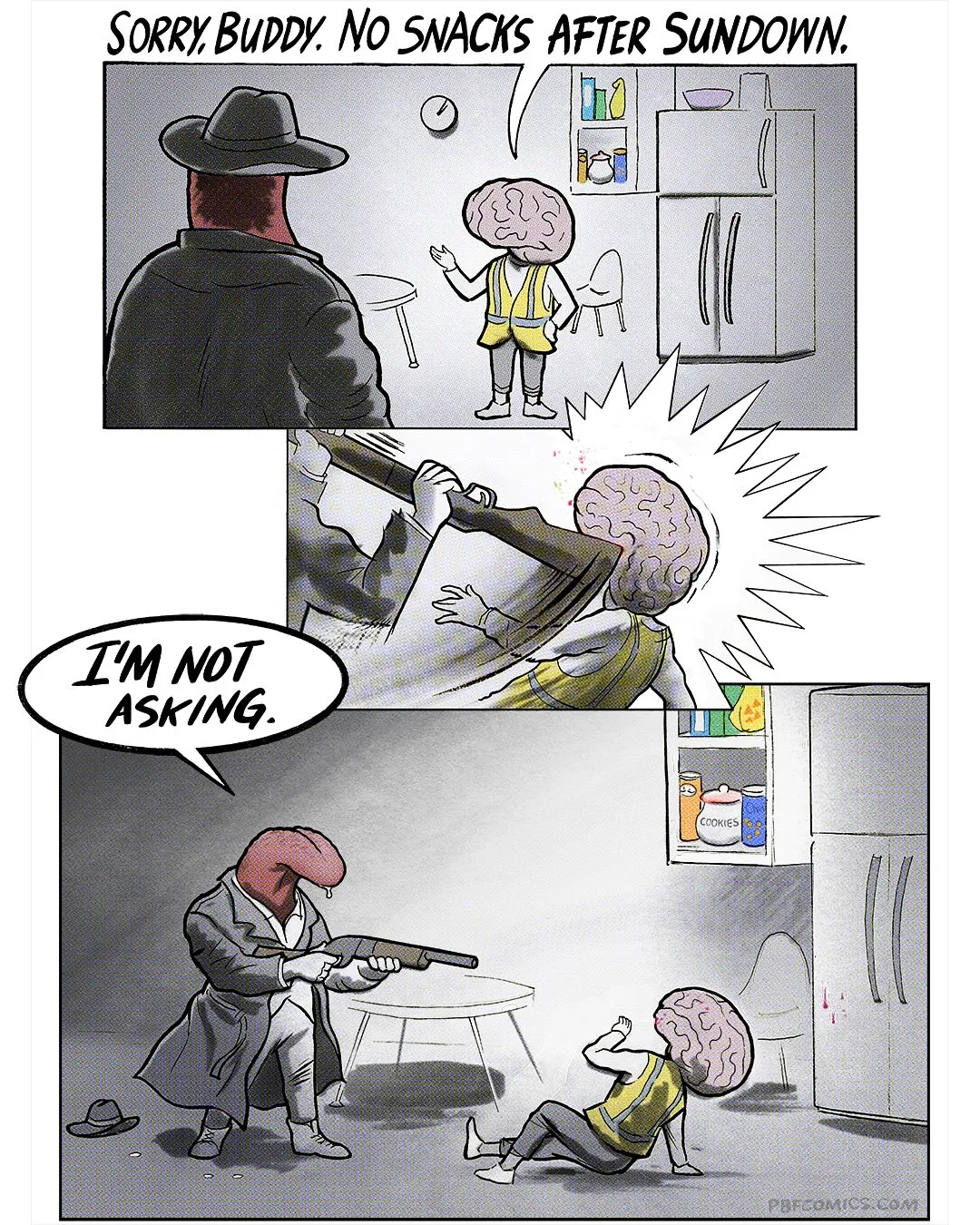
A no-snacks rule escalates into an armed kitchen standoff; the brain’s safety vest makes the mismatch absurd.
What happens in comic #8?

What happens in comic #9?
How does the weather change reflect the driver's mood in comic #10?
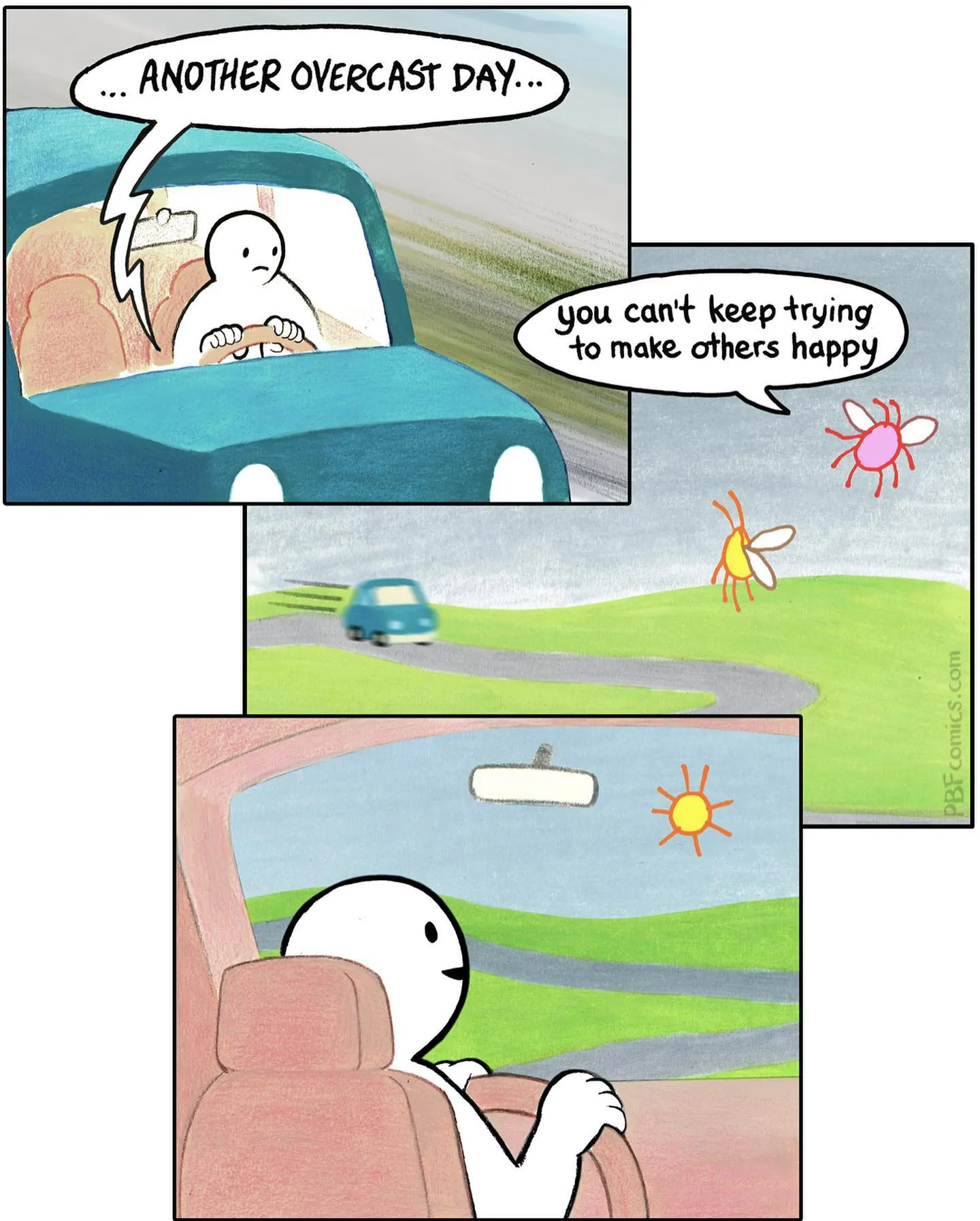
Grey skies frame the insects’ advice; the final sunlit panel turns the driver’s mood into a literal change in weather.
What happens in comic #11?
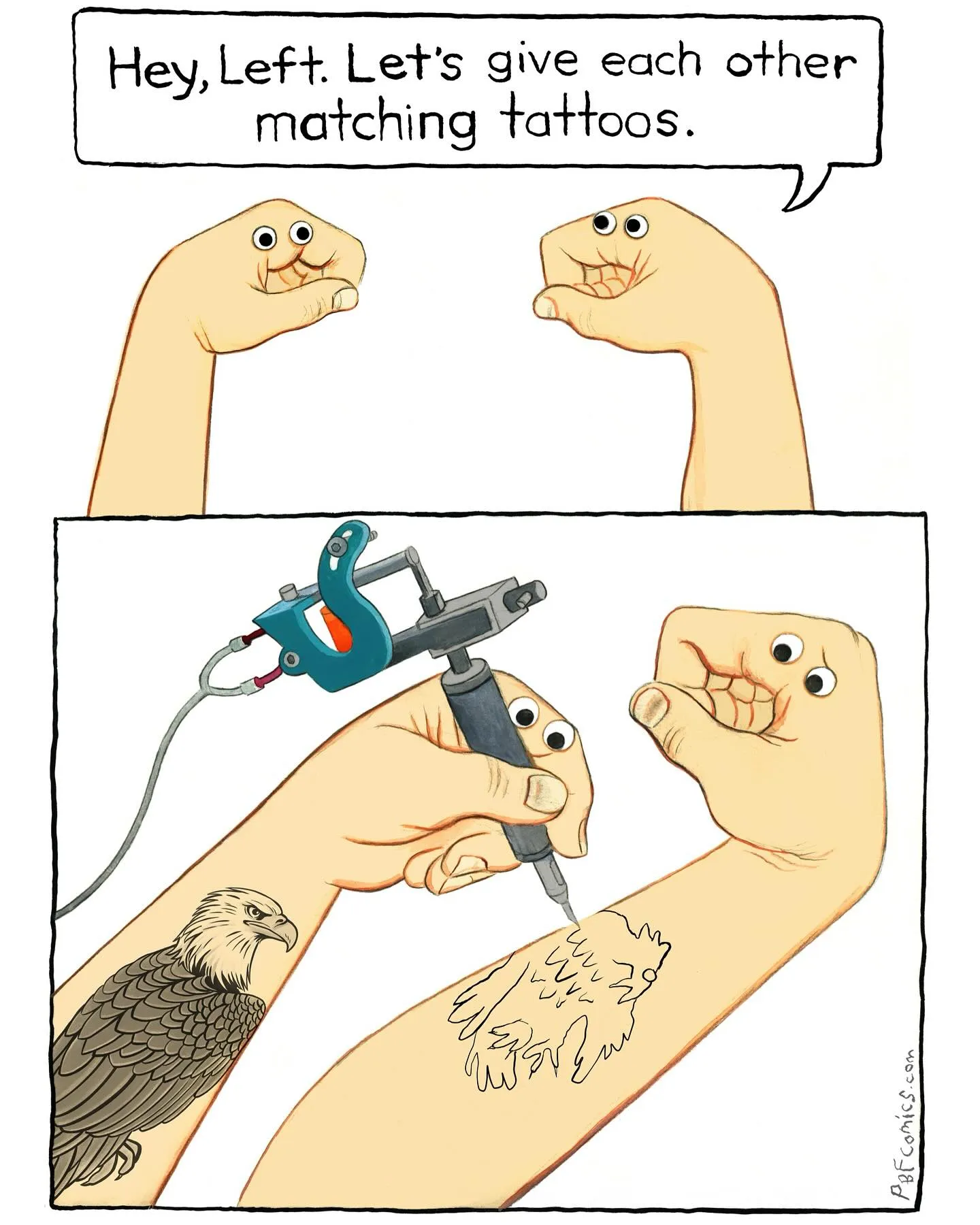
What happens in comic #12?
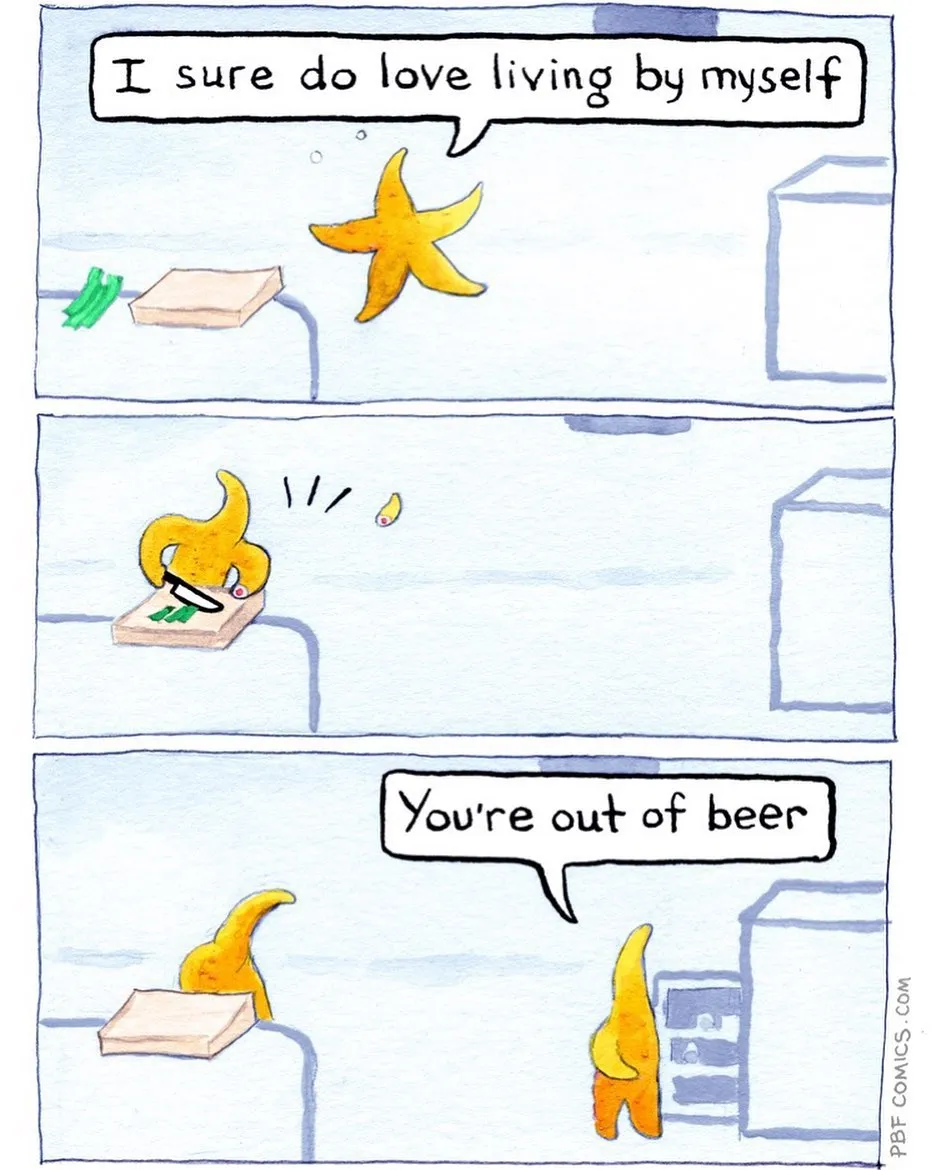
What happens in comic #13?
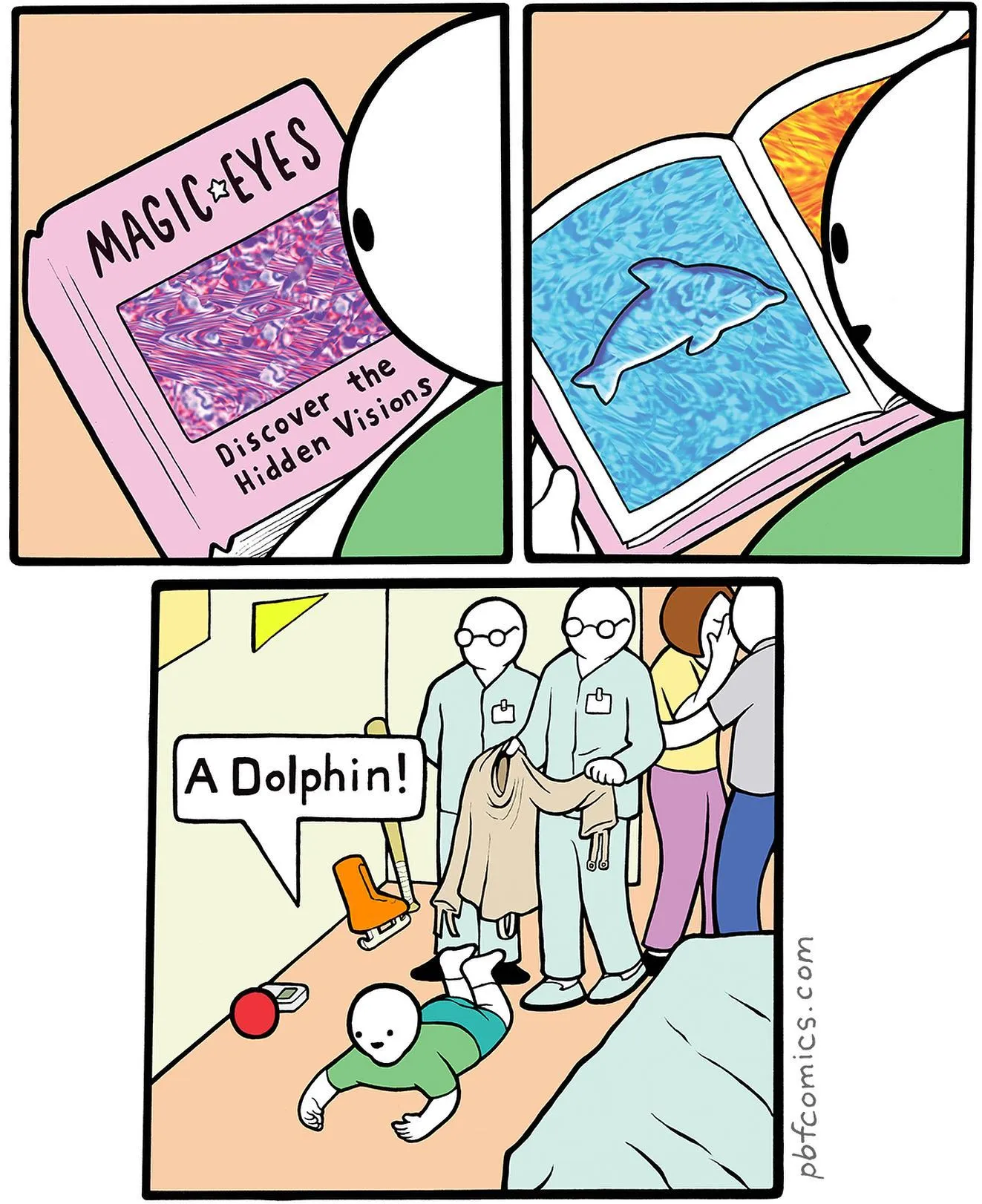
How does comic #14 turn a dating cliché into a visual metaphor?
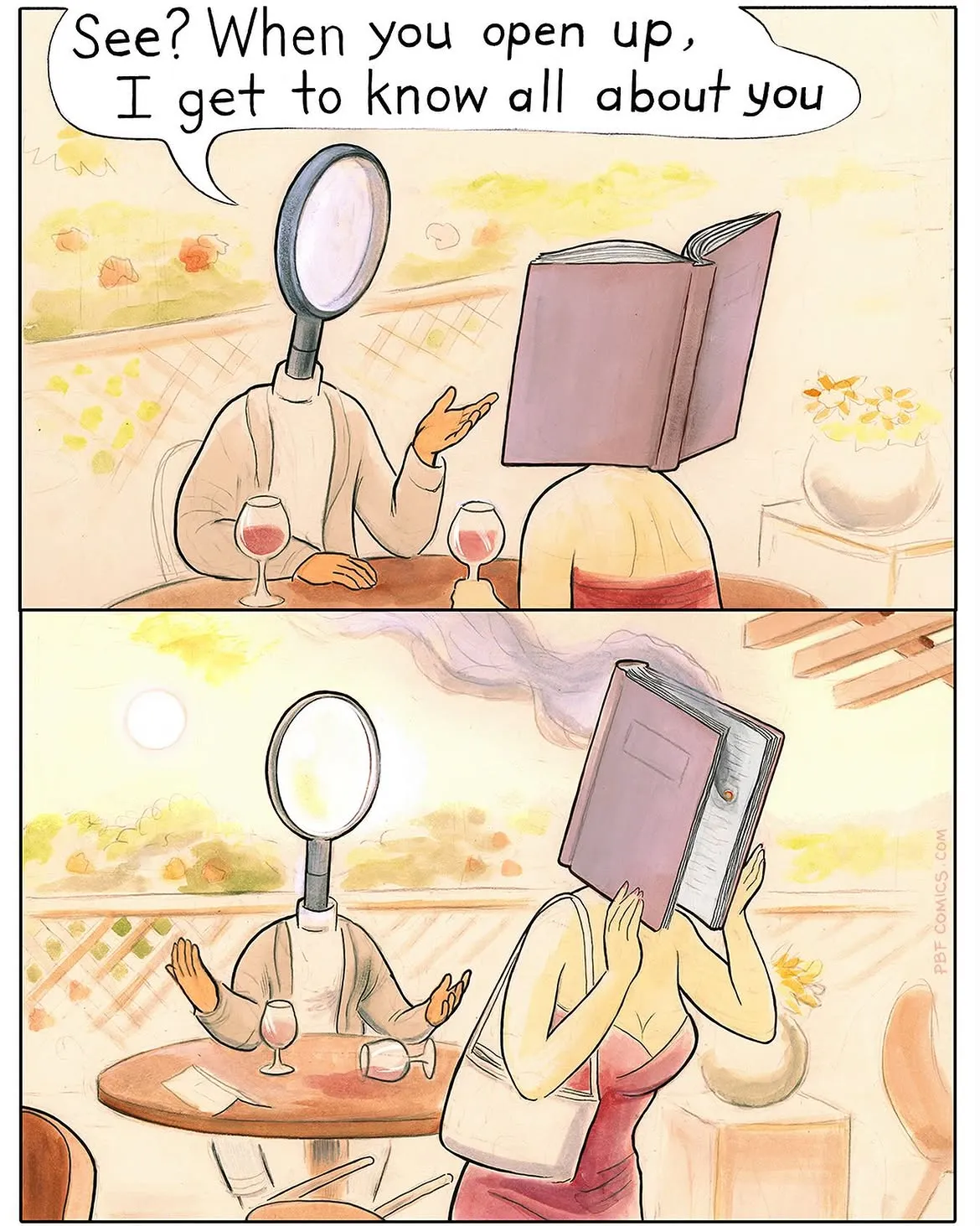
A magnifying glass and open book turn a dating cliché into a literal visual metaphor; the book’s retreat completes it.
What is the punchline of the MUTE setting in comic #15?
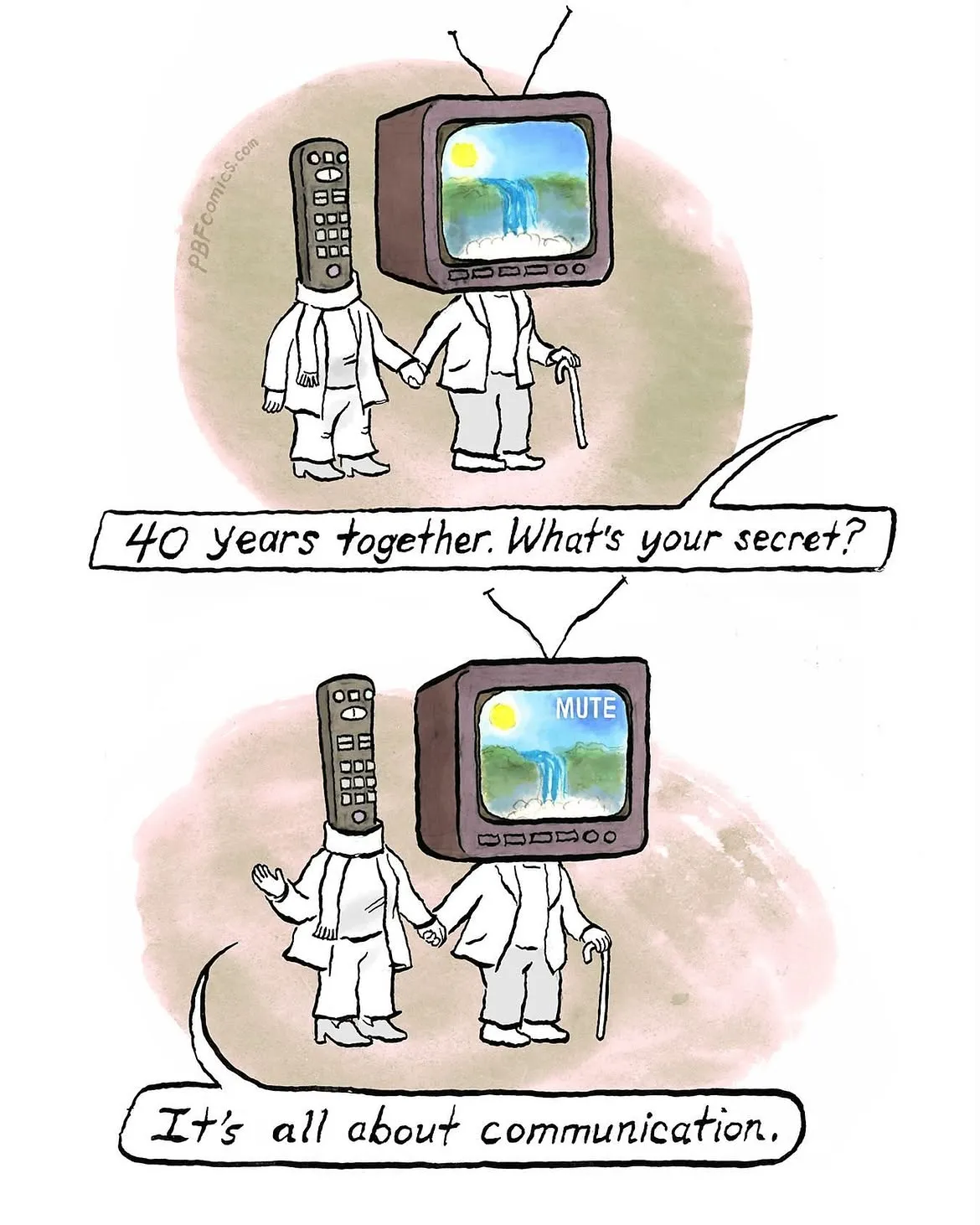
The TV’s MUTE setting gives the couple’s claim about communication a bluntly literal punchline.
What happens in comic #16?
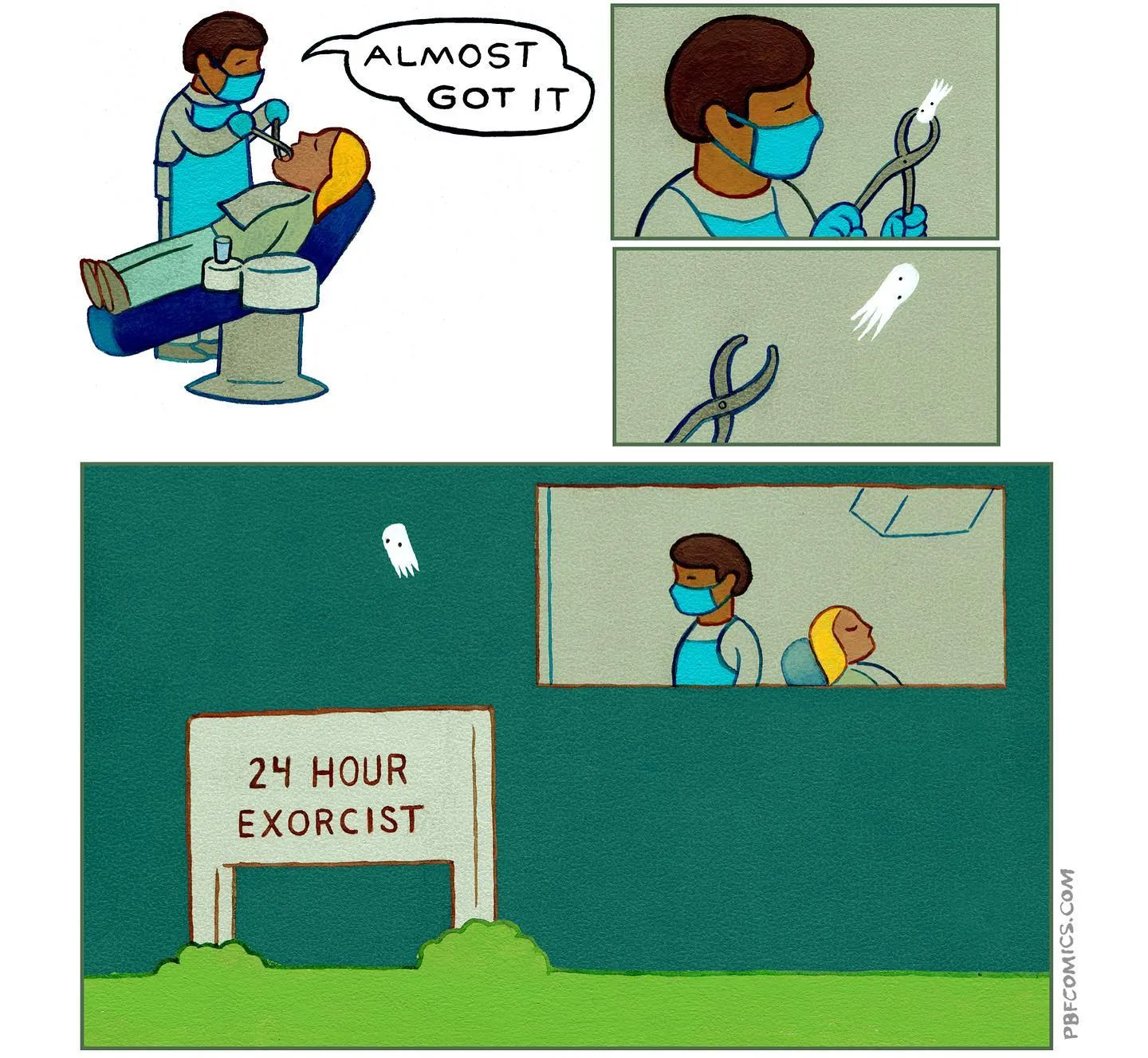
What happens in comic #17?
How does the cat disrupt the chess game in comic #18?
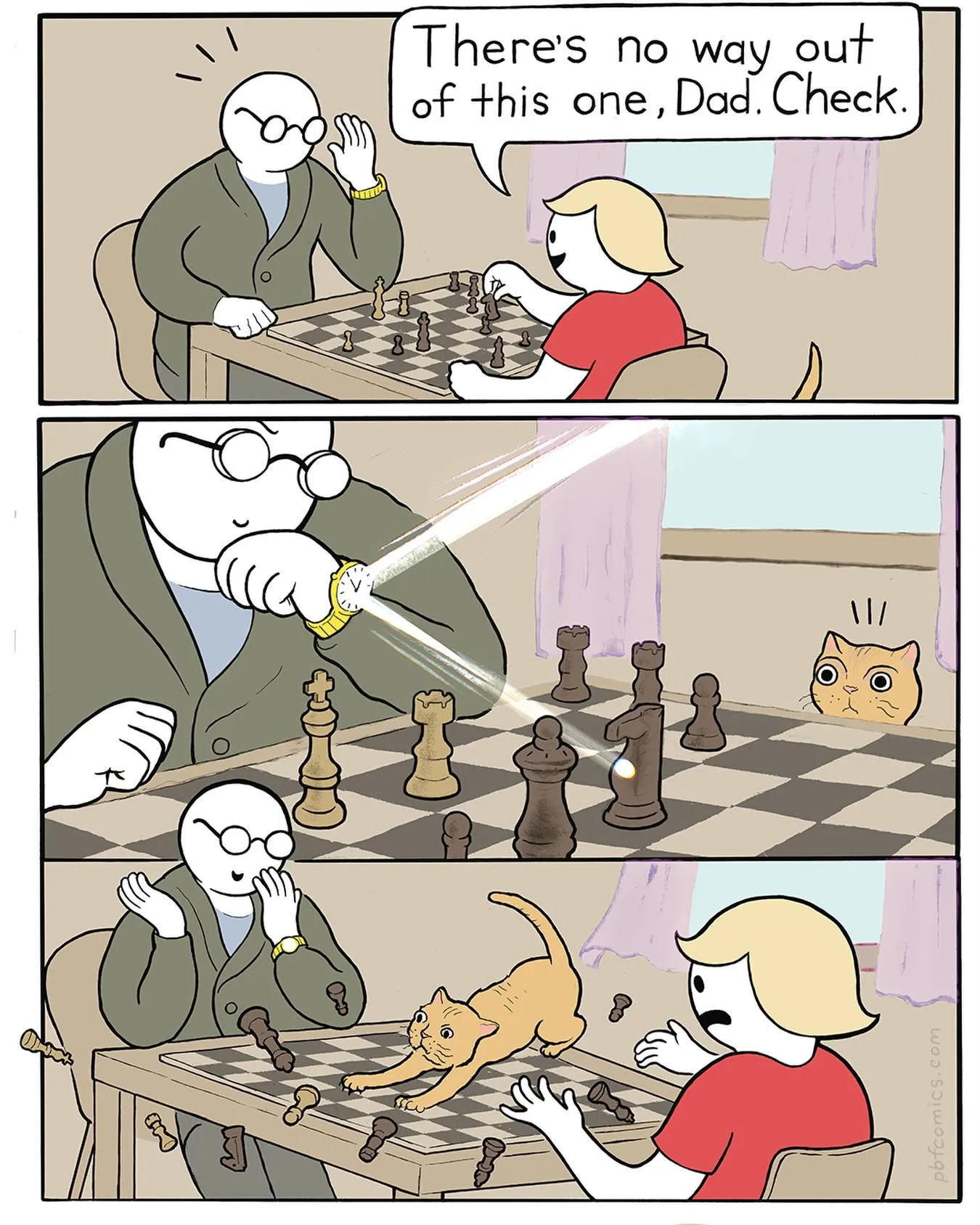
A cat leaps onto the chessboard, scattering the pieces and breaking the certainty of an announced checkmate.
Who is Nicholas Gurewitch and what is The Perry Bible Fellowship?
Nicholas Gurewitch draws The Perry Bible Fellowship, founded in 2001 with Albert Birney and Evan Keogh. Its official site notes publication in The Guardian and Playboy, and Ignatz, Harvey and Eisner awards. The supplied @pbf_comics Instagram account is listed as Perry Bible Fellowship Comics; a October 2026 StarNgage ranking recorded about 361,000 followers, a rounded third-party snapshot rather than a live count.
Which strip landed best? See our earlier PBF feature for another selection.
Key Data & Statistics
Nicholas Gurewitch founded The Perry Bible Fellowship in 2001 with Albert Birney and Evan Keogh.
The Perry Bible Fellowship has received Ignatz, Harvey and Eisner awards.
A October 2026 StarNgage ranking recorded about 361,000 followers for the @pbf_comics Instagram account.
The article presents 18 PBF comics that find the absurd in everyday life.
Frequently Asked Questions
Who draws The Perry Bible Fellowship comics?
Nicholas Gurewitch draws The Perry Bible Fellowship, which he founded in 2001 with Albert Birney and Evan Keogh. The official site notes publication in The Guardian and Playboy, and the strip has won Ignatz, Harvey and Eisner awards.
What do the PBF comics typically start with?
The comics start with familiar scenes such as a chess game, a dog walk, or a doctor's farewell, then veer into deadpan wordplay and dark, surreal reversals. Each strip builds toward a detail that recasts what came before.
How does the heat-wave strip work?
In the first strip, the monkey's easy posture contrasts with the man's anxious sweat, and the heat-wave headline adds a quiet second joke. The everyday phrase becomes an invitation to absurd new logic.
Why does the TV MUTE strip land as a punchline?
The TV's MUTE setting gives the couple's claim about communication a bluntly literal punchline. The everyday object turns an ordinary statement into absurd new logic, which is the pattern across the strips.
Where has The Perry Bible Fellowship been published?
The official site notes publication in The Guardian and Playboy. The supplied @pbf_comics Instagram account is listed as Perry Bible Fellowship Comics, and an October 2026 StarNgage ranking recorded about 361,000 followers, a rounded third-party snapshot rather than a live count.
📖 Comic Transcript, Scene Description & Humor Notes (Click to Expand)
🎨 Scene & Visual Setup
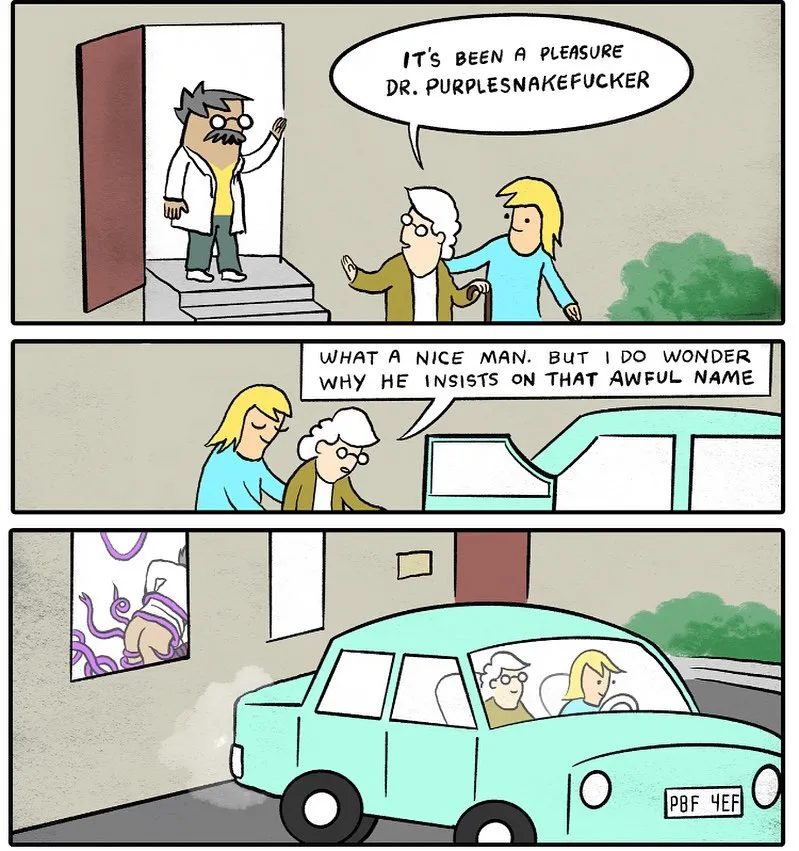
Across eighteen strips, Nicholas Gurewitch stages deadpan absurdity in recognizable settings: a park chess table where a man faces a monkey, a bedroom where spiders debate real estate, a clinic doorway where a doctor waves off a patient with an odd surname. The characters are flat-eyed and matter-of-fact, delivering surreal logic in calm speech bubbles. Recurring visual gags—object heads, costumed figures, sudden weather shifts—turn mundane props into the joke's engine, building each strip toward a final panel that quietly reframes everything before it.
💬 Panel & Dialogue Breakdown
- Panel 1: A man sweats through a chess match against an unbothered monkey while a woman watches, then a newspaper headline adds a second, quieter joke.
- Panel 2: Two spiders dismiss a corner as a poor cave, then reveal the sleeper's open mouth as the shelter they actually chose.
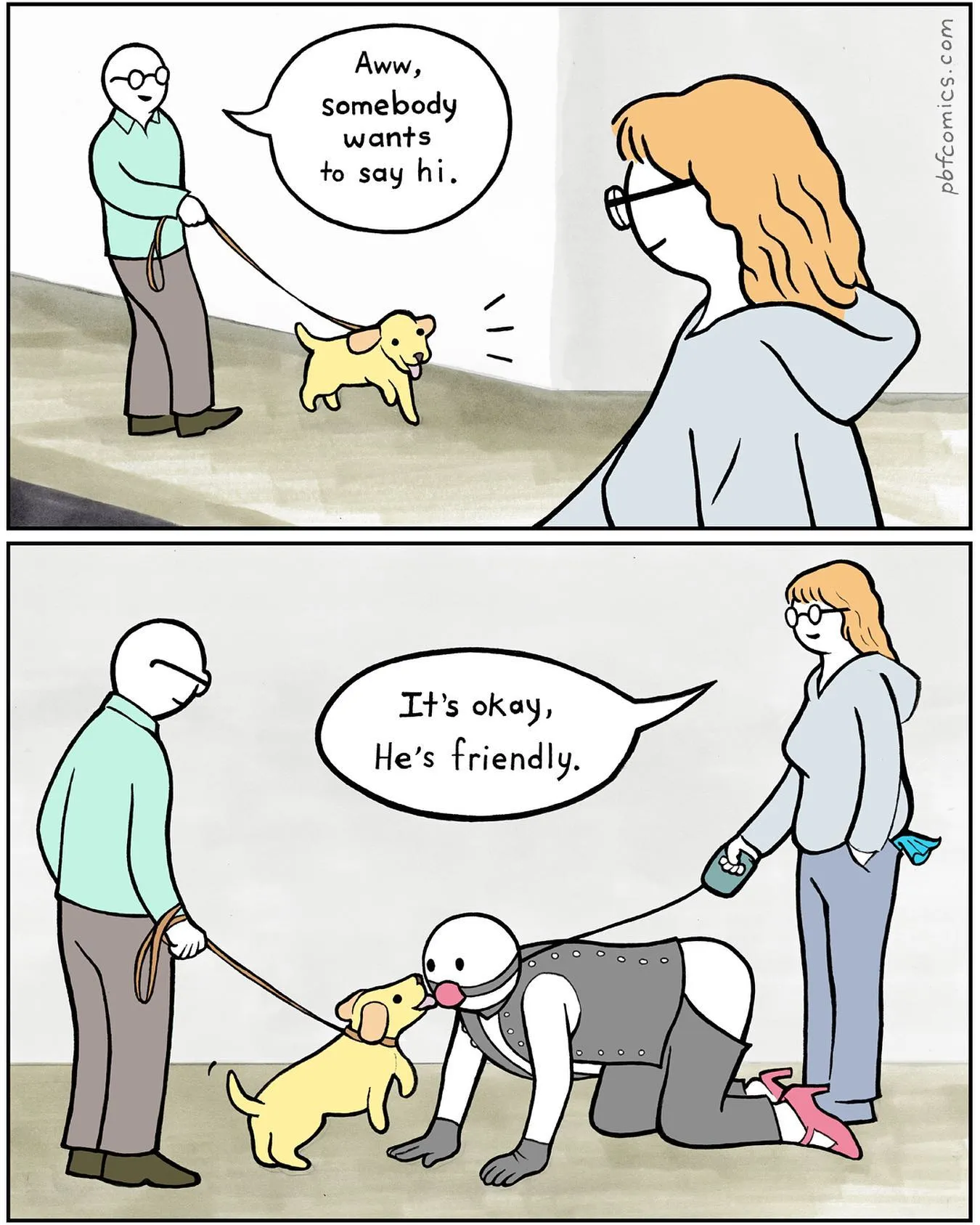
- Panel 3: A small dog greets a passerby on a leash, and the next panel shows the person crouching to greet a costumed figure on all fours.
- Panel 4: A child prays for Gramps to live one more day, then a graveyard scene and a confused shout puncture the solemnity.
💡 Why It's So Relatable
These strips work because they start where we live—errands, small talk, bedtime routines—and let one detail quietly break the rules. The deadpan delivery means we laugh a beat late, recognizing our own everyday logic turned inside out.
🗺️ More in the Comics Hub
- 🔗 Related Read in This Series: Check out our complete guide & collection on funny comic strips about life (19 Funny Comic Strips About Life by Ordinary Haircut).


