Behind the Comic: Toonhole Ryan (Ryan Kramer) serves up eighteen dark comics where ordinary life quietly goes sideways. A coffee-shop proposal deflates over powdered creamer, fitness dashboards turn a man into a spectator sport, and a smart speaker dispenses political boilerplate. With flat colors, deadpan faces, and tiny visual clues, Kramer mines awkward dating, family chaos, tech, and satire for absurd punchlines. Come for the relatable cringe, stay for the sharp reversals.
A coffee-shop proposal falls apart over powdered creamer, a man’s fitness data becomes a spectator sport, and a politician hands a public crisis to a smart speaker. These dark comics from Toonhole Ryan find the absurd hiding inside ordinary routines and confident assumptions.
The jokes move between awkward dating, family mishaps, technology, and political satire. Ryan Kramer is one of the artists behind Toonhole, a team of cartoonists and professional animation artists; his portfolio also lists comedy-forward story and directing work for major animated properties.
What happens when a proposal meets powdered creamer?
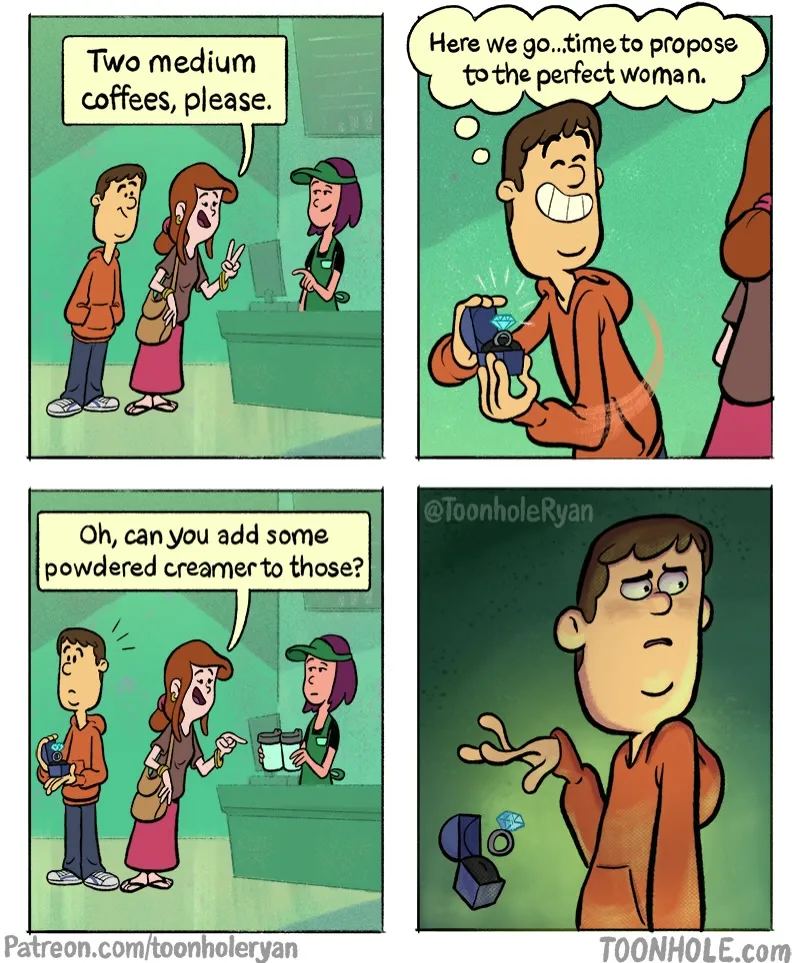
A romantic setup unravels over a request for powdered creamer; the abandoned ring box makes the disappointment visible.
What awkward moment unfolds in comic #2?
How does the last duck flip the oil-spill cleanup?
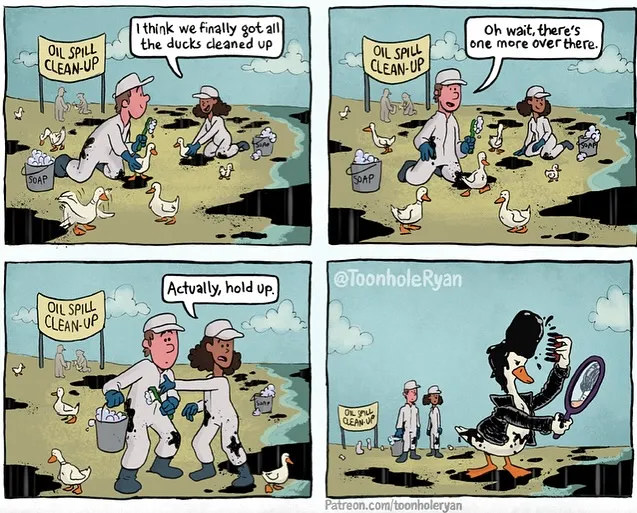
The cleanup count seems to be improving until the last duck turns the oil-spill scene into a strange reveal.
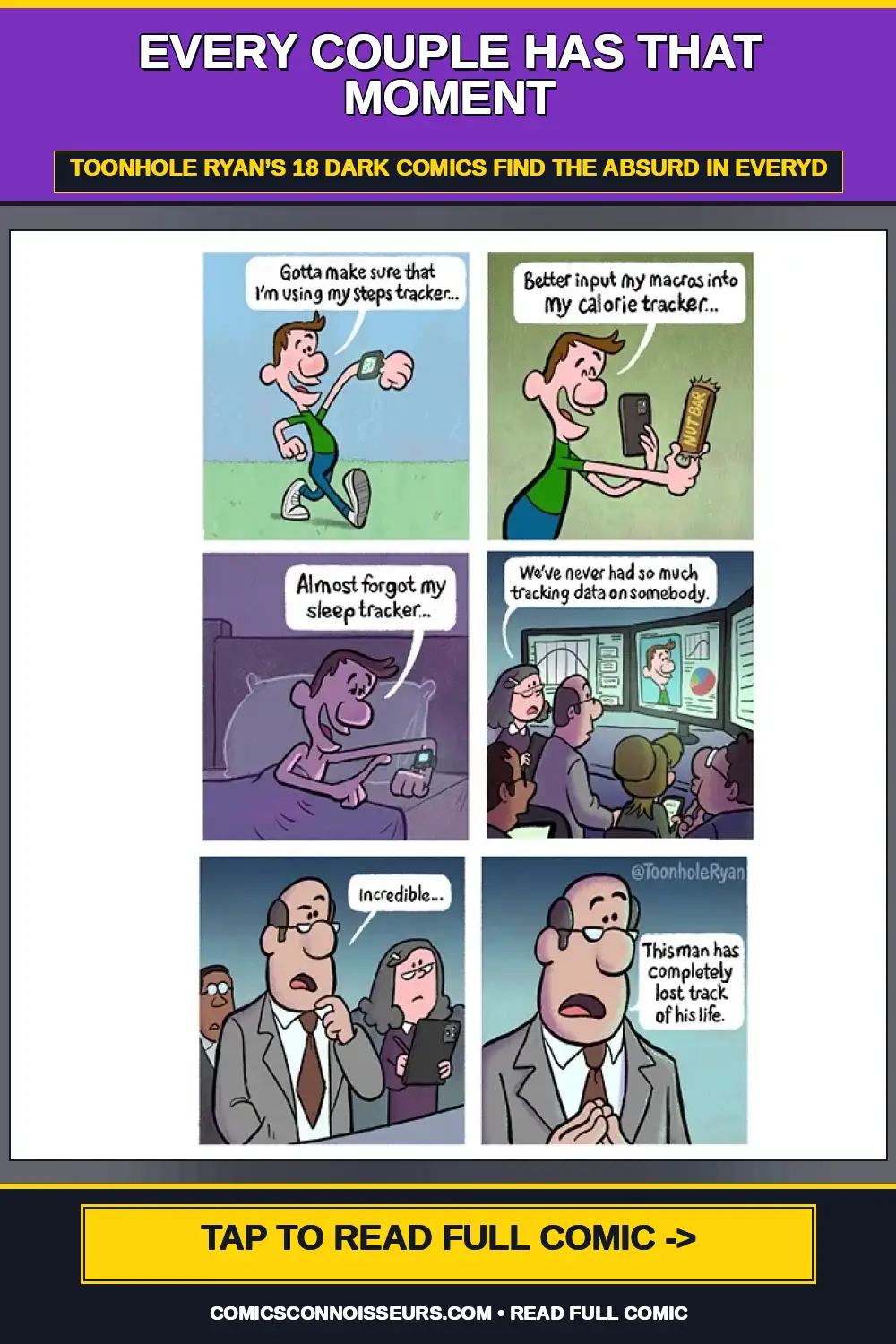
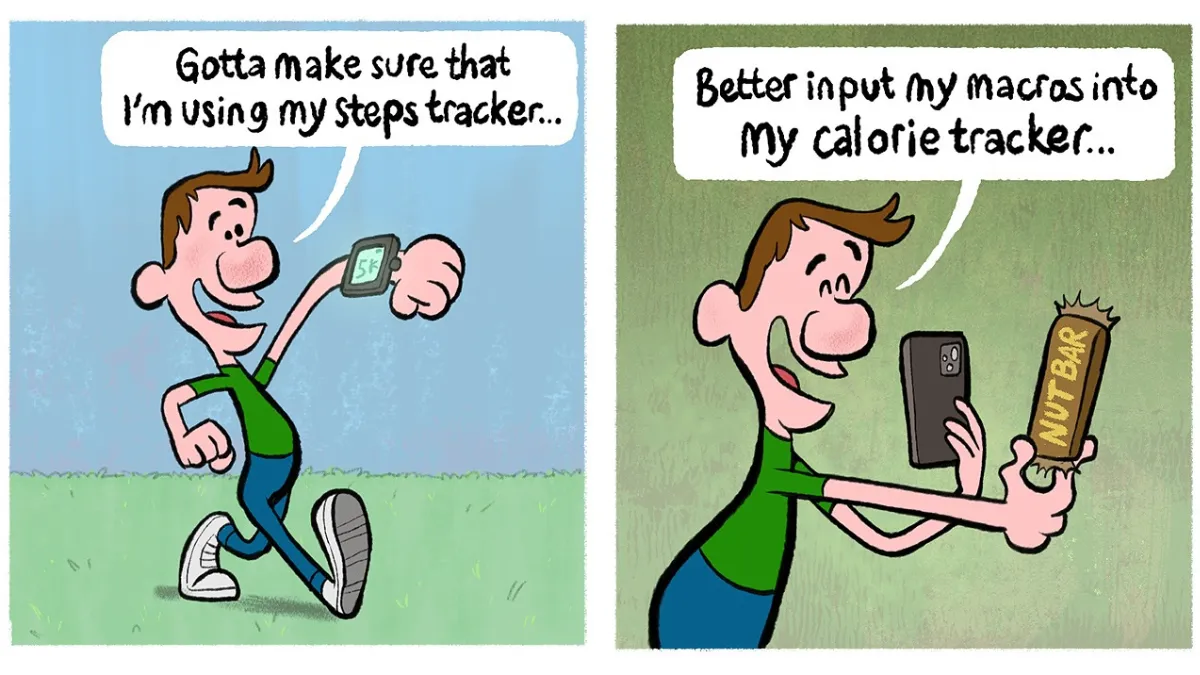
Why do the fitness dashboards make the man look less self-aware?
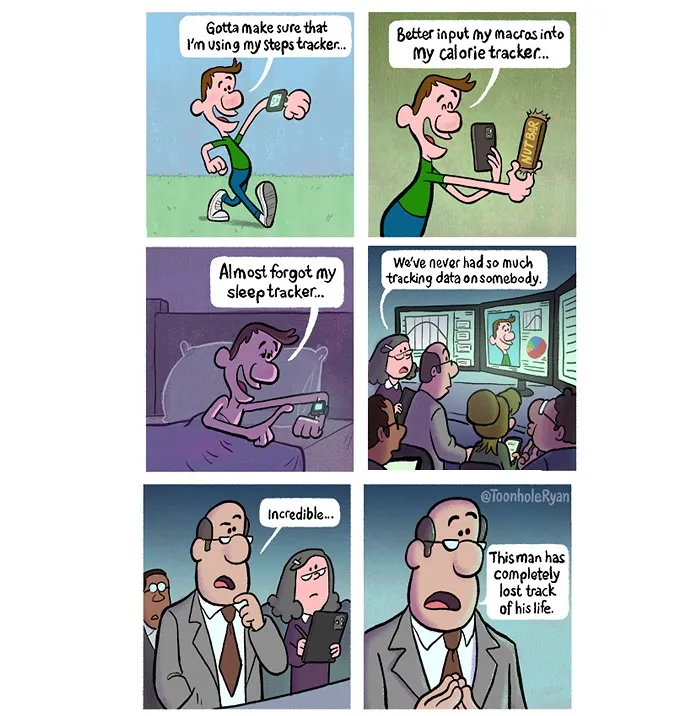
The trackers promise control, but the wall of dashboards makes the man look less self-aware, not more.
What everyday absurdity does comic #5 reveal?
How does a dog’s alarm become a lesson in online cruelty?
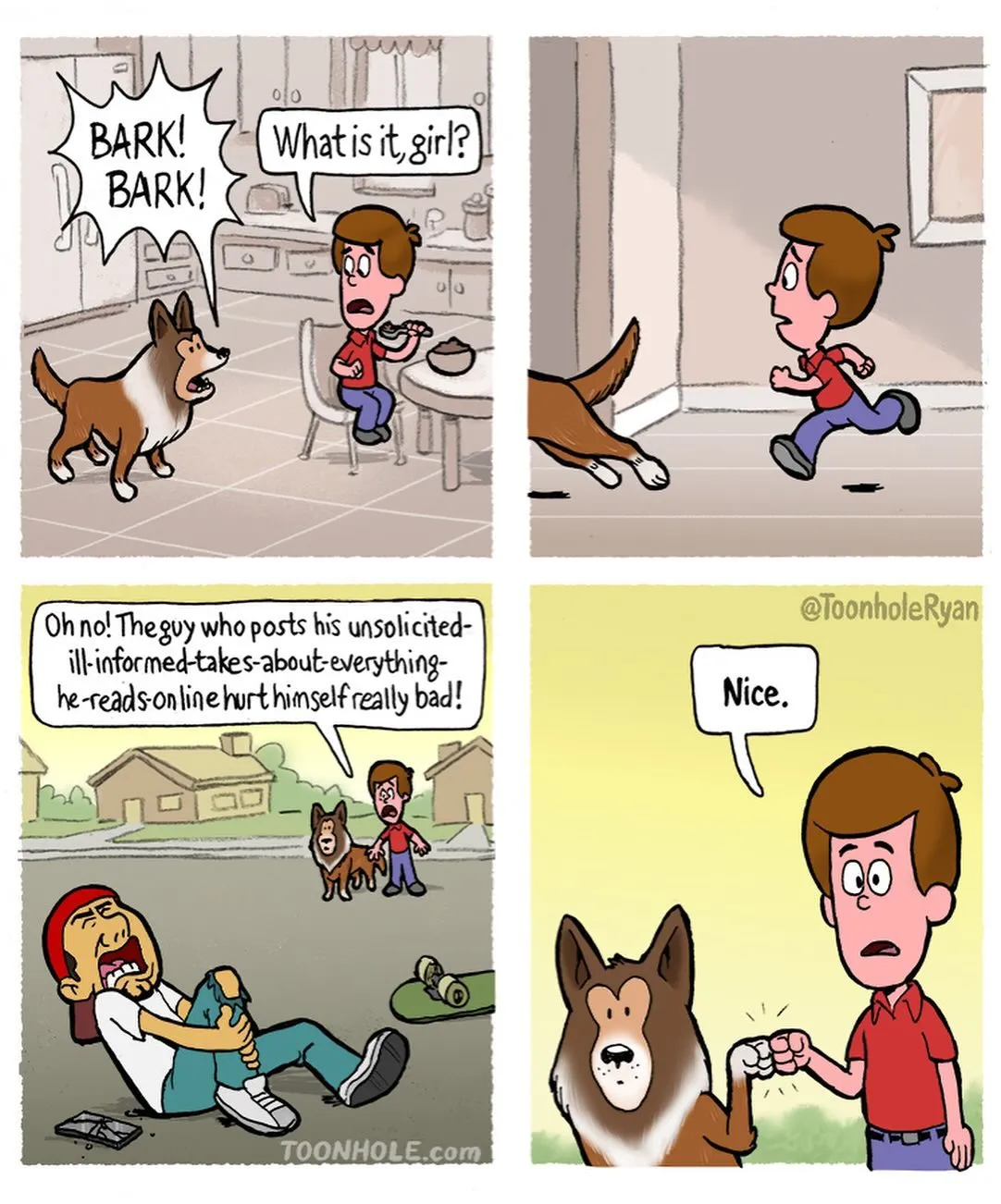
The dog’s alarm quickly becomes an explanation of online cruelty; the owner’s tiny “Nice” and fist bump complete the joke.
What quiet joke hides inside comic #7?
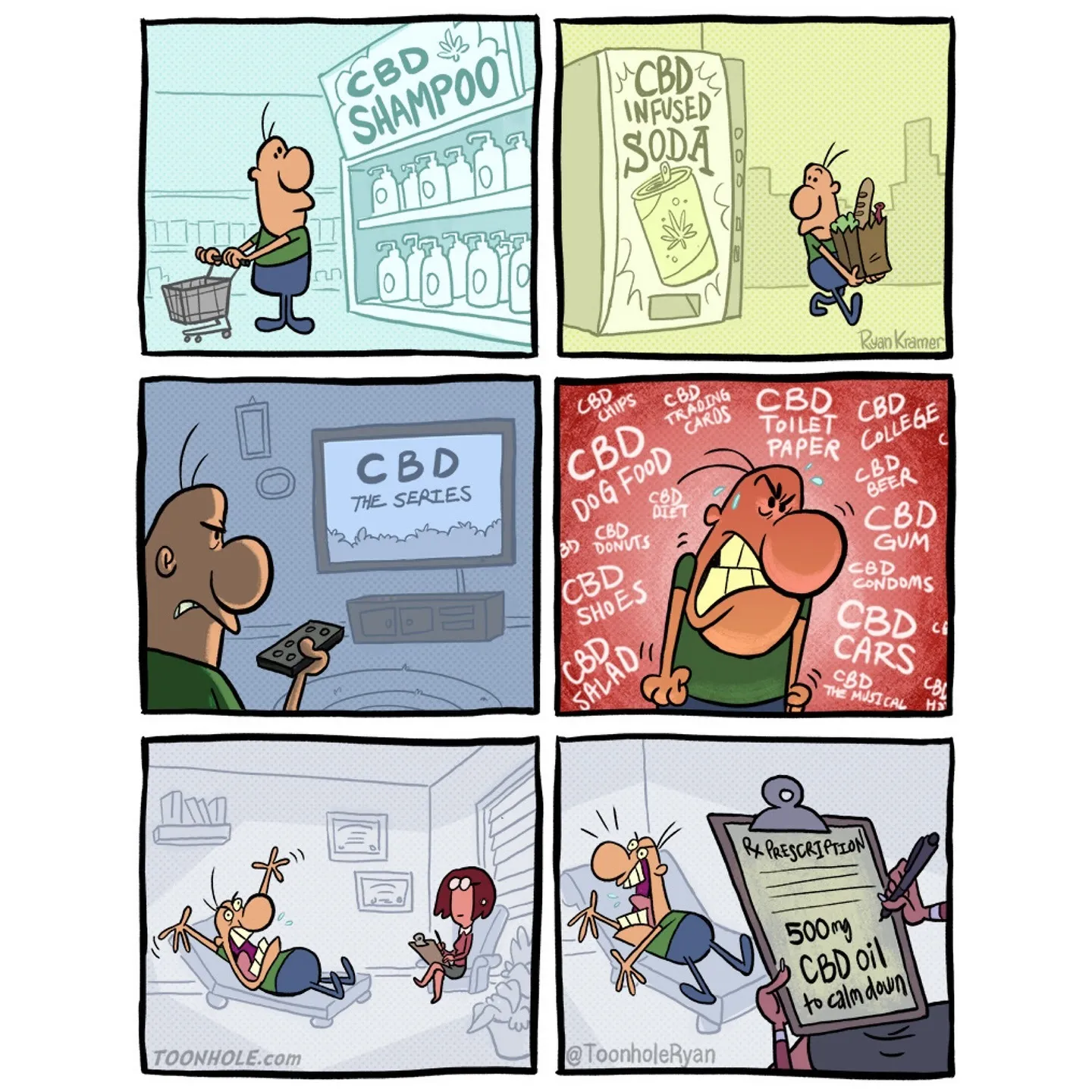
What familiar routine goes wrong in comic #8?
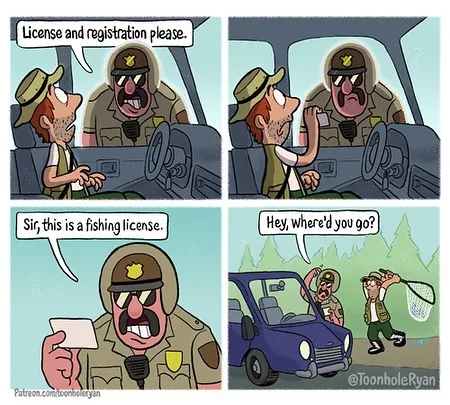
What confident assumption backfires in comic #9?
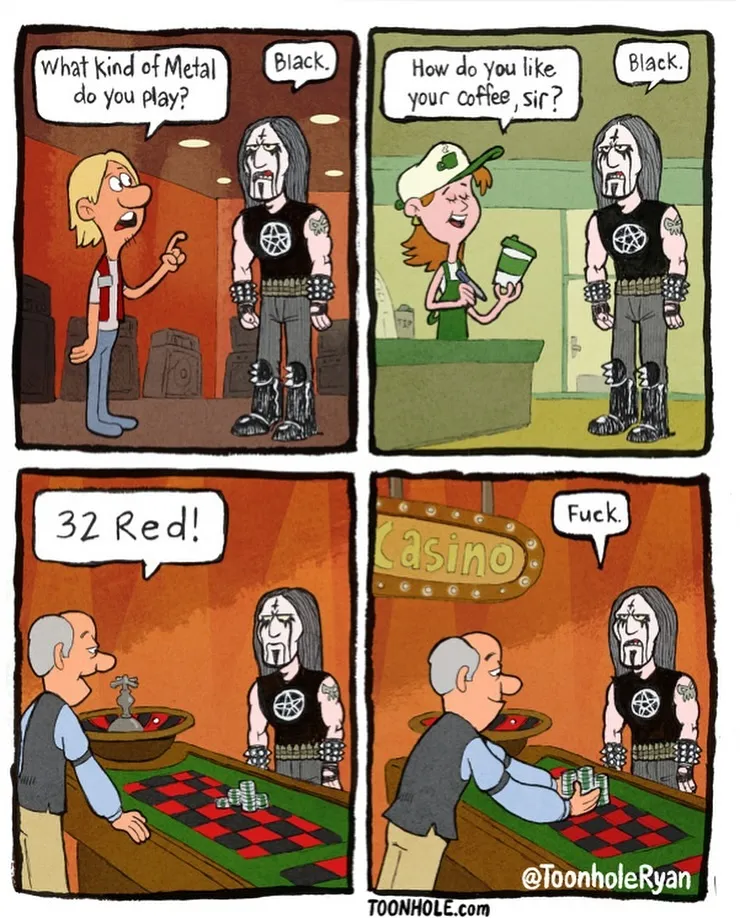
Why does the smart speaker spouting political boilerplate land as the punchline?
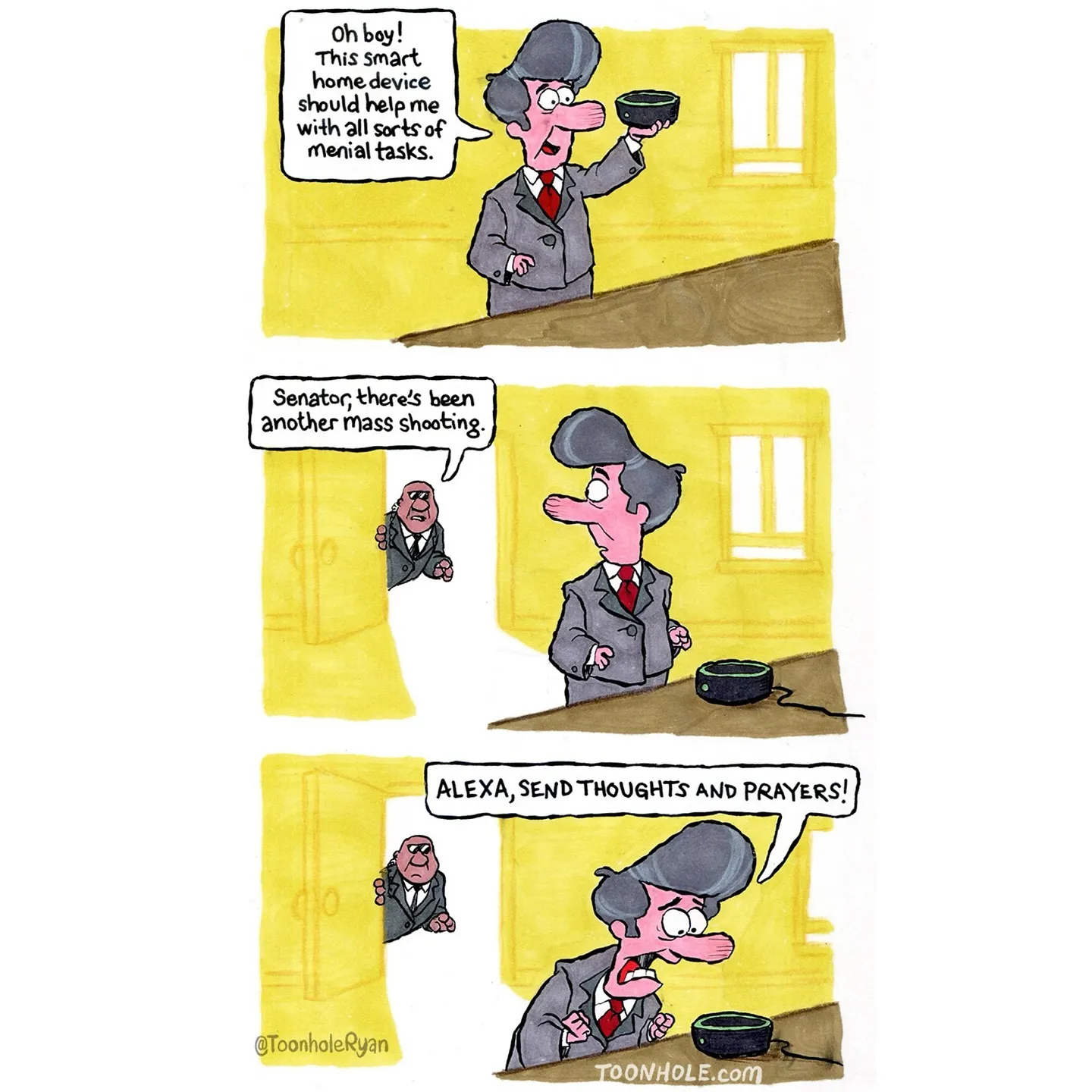
The smart speaker shifts from household assistant to a dispenser of political boilerplate, making the contrast the punchline.
What awkward family moment plays out in comic #11?
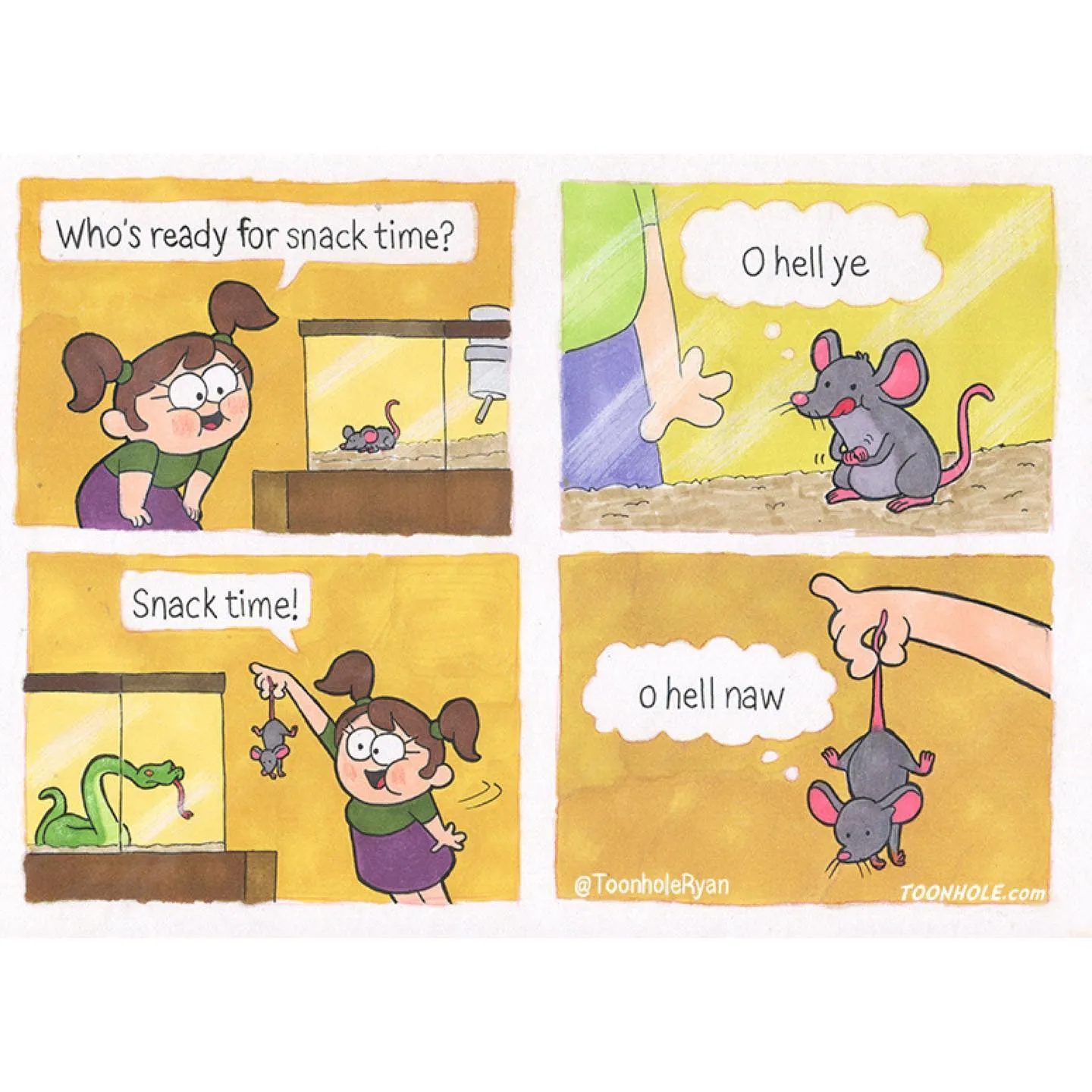
What tech-driven absurdity does comic #12 poke at?
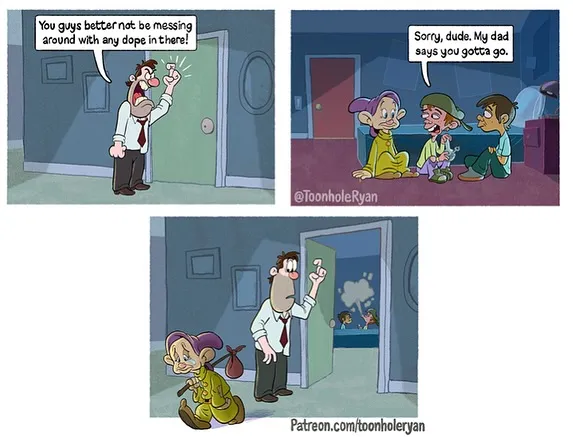
What everyday mishap does comic #13 turn strange?
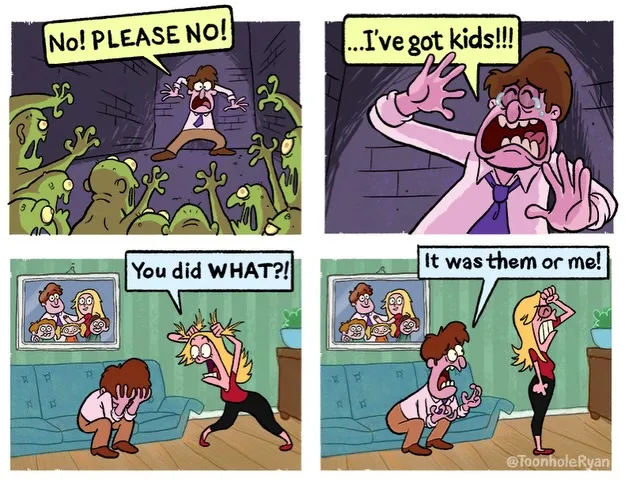
Why does the theme park’s magic feel so costly by night?
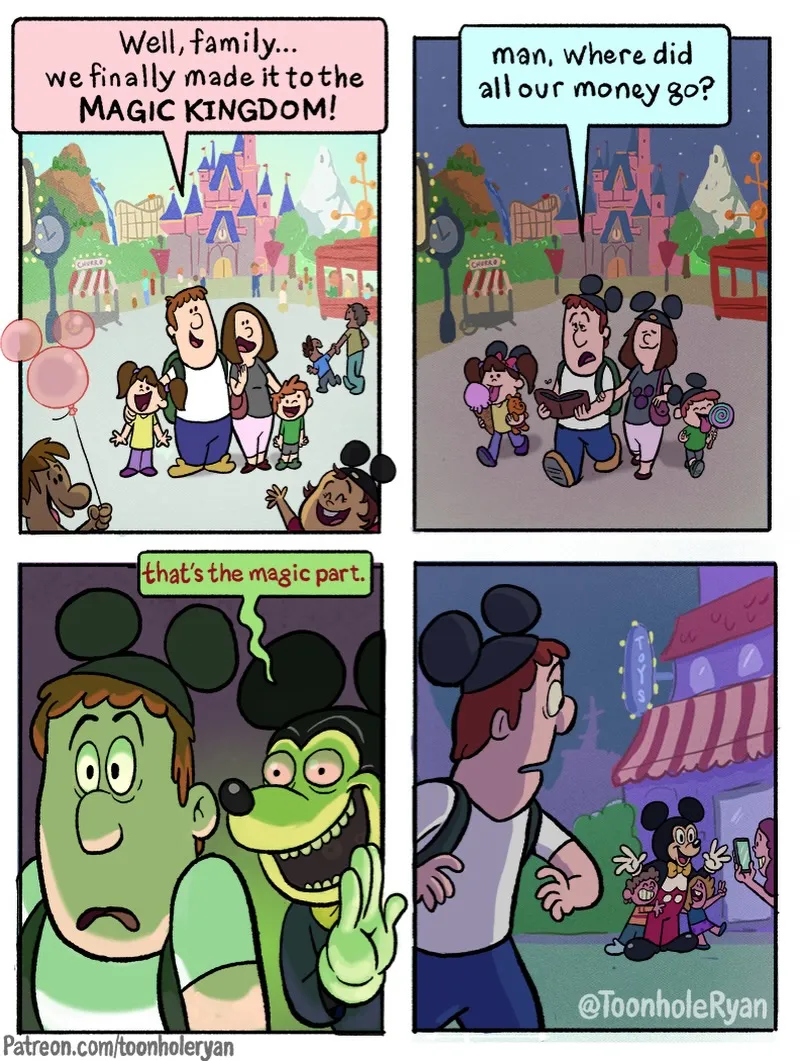
The switch from a cheerful daytime arrival to a drained family at night gives the theme park’s “magic” a costly meaning.
How does the dating-app reveal turn the man’s criticism back on him?
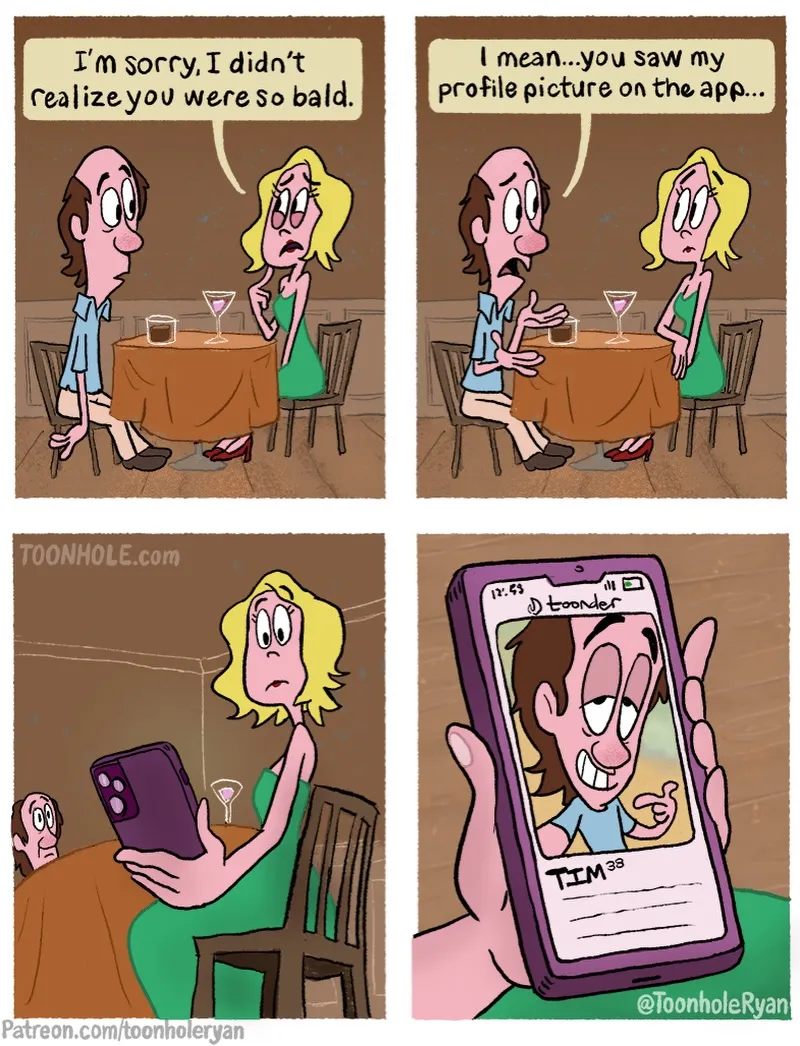
The dating-app reveal turns the man’s criticism back on him: his own profile sells an older, more flattering version.
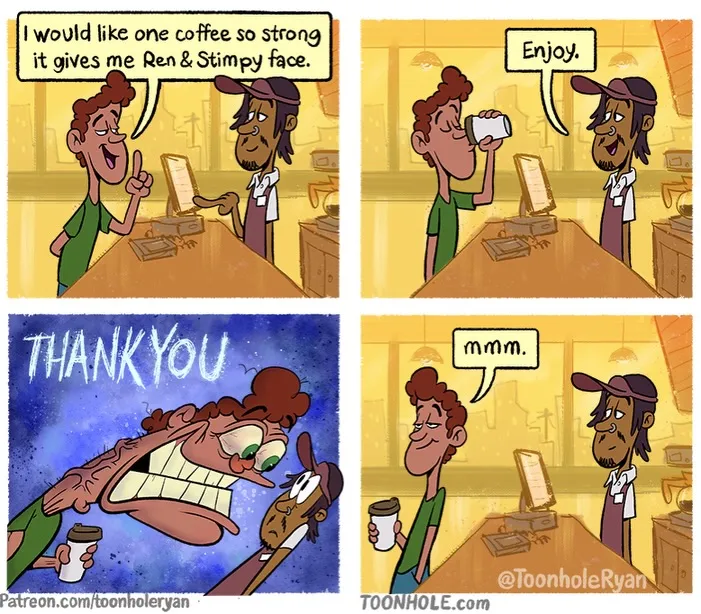
What deadpan twist arrives in comic #16?
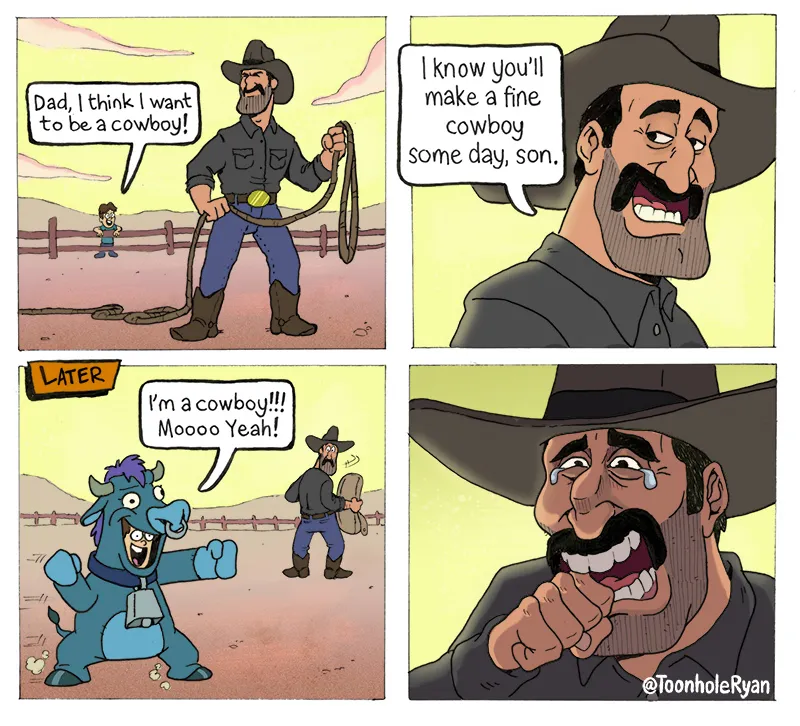
Why does the father’s warning end up feeling affectionate?
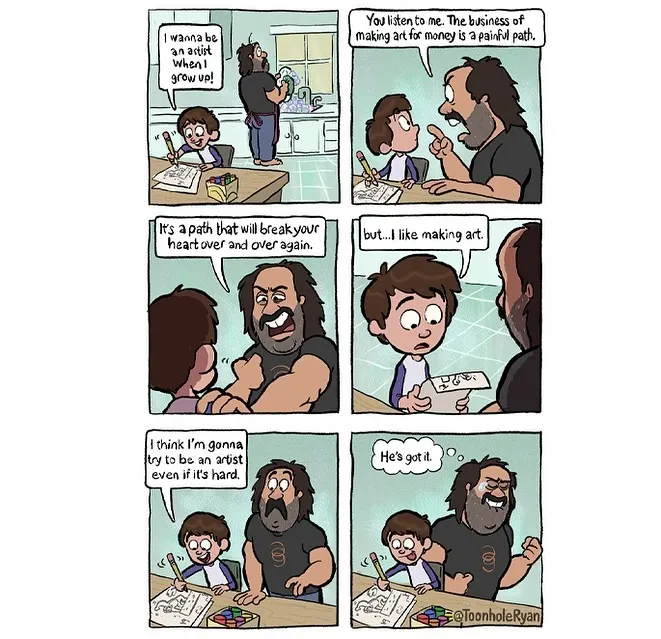
The father’s practical warning fades when the child stays committed; the closing thought bubble makes the reversal affectionate.
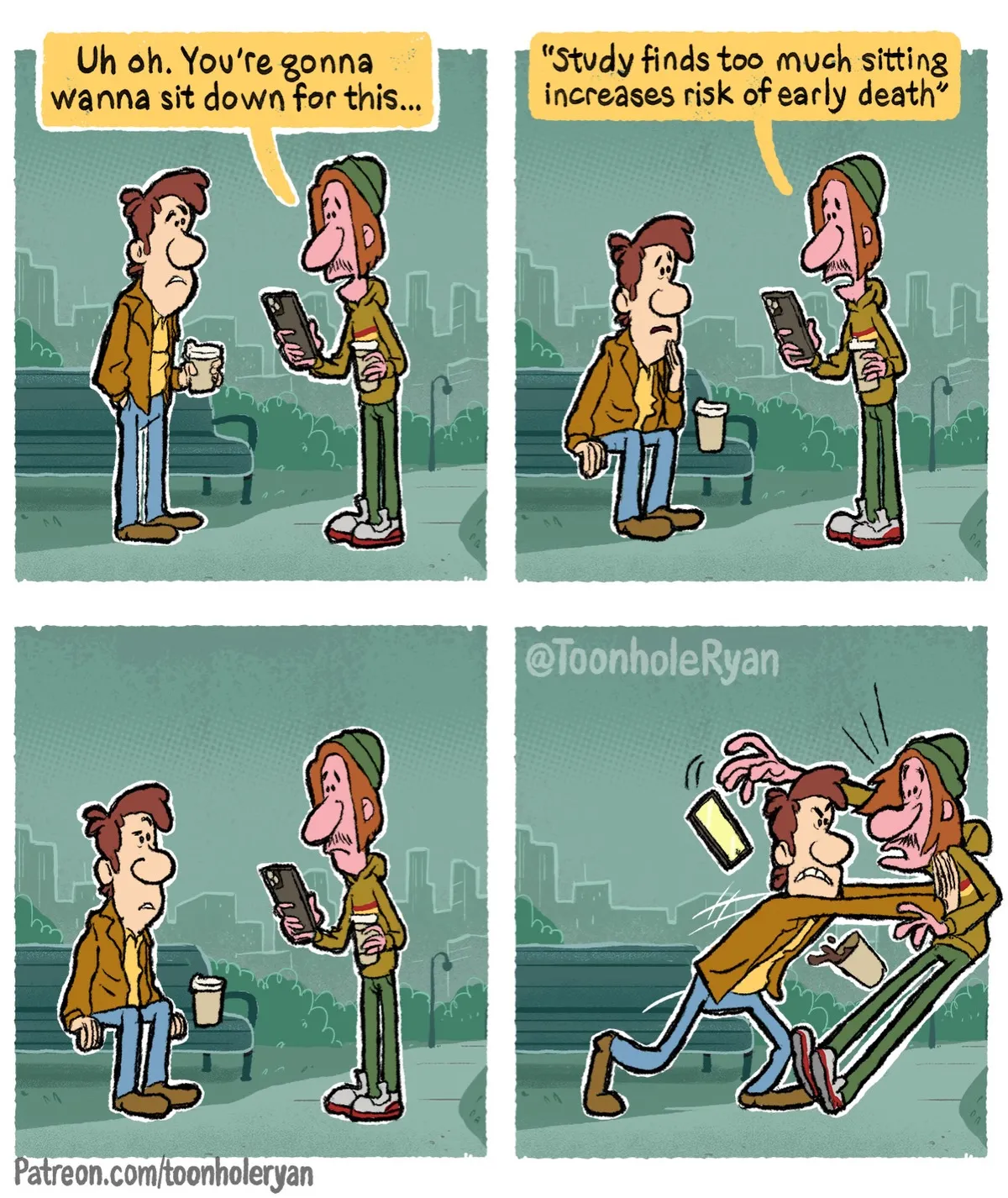
What final absurdity closes out comic #18?
Who is Toonhole Ryan, and what defines his dark comics?
Ryan Kramer, credited as Toonhole Ryan, works as a director, story artist, and cartoonist. His official portfolio describes his projects as comedy-forward and lists credits on SpongeBob SquarePants, Kung Fu Panda, and Looney Tunes, along with an Annie Award nomination. Toonhole’s creator page links his Instagram profile; a current public follower count 94.8K verified on November 9, 2026. For another selection of his work, see our earlier Toonhole Ryan feature.
Which punchline lands best for you?
Which turn lands best for you: the dating-app hypocrisy, the tracking gadgets, or the smart-speaker punchline?
📖 Comic Transcript, Scene Description & Humor Notes (Click to Expand)
How do the scenes and visual setups sell each joke?
Across eighteen single-panel comics, Ryan Kramer draws deadpan characters in familiar settings: a nervous man kneeling with a ring box in a coffee shop, a father watching his kid in a bull costume, cleanup workers herding ducks after an oil spill, and a man surrounded by glowing fitness dashboards. Flat colors, simple linework, and wide-eyed expressions sell the awkwardness, while small details—an abandoned ring box, a tiny fist bump, a sinister figure near a theme park gate—quietly set up each punchline.
What happens panel by panel in the dialogue breakdown?
- Panel 1: A proposal stalls when the woman asks for powdered creamer, leaving the ring box and the moment deflated.
- Panel 4: A man tracks steps, food, and sleep until coworkers monitor his data and ask how much of his life he has lost track of.
- Panel 10: A politician asks a smart speaker for household help, then uses it to deliver thoughts and prayers after a crisis.
- Panel 15: A man criticizes a dating profile until the reveal shows his own profile selling an older, more flattering version of himself.
Why do these dark comics feel so relatable?
These comics work because the setups are painfully familiar—dating, parenting, gadgets, politics—and the punchlines expose the small hypocrisies and absurdities we all recognize. The deadpan delivery lets readers laugh at the gap between what people assume and what actually happens.
🎭 Comic Highlights & Relatable Takeaways
✨ A coffee-shop proposal collapses over something as trivial as powdered creamer, and the abandoned ring box makes the heartbreak visible without a single word.
✨ The fitness-tracking comic shows a man surrounded by glowing dashboards who looks less self-aware the more data he collects, poking fun at how gadgets promise control but deliver obsession.
✨ A smart speaker switching from helpful household assistant to reciting political boilerplate captures how we hand over serious crises to devices that can't actually care.
✨ The theme park comic contrasts a cheerful daytime arrival with a drained family at night, giving the park's 'magic' a quietly expensive meaning.
💬 Comic Q&A & Behind the Scenes
💭 What makes Toonhole Ryan's dark comics stand out from other webcomics?
Ryan Kramer's strength is finding absurdity in mundane routines—powdered creamer ruining a proposal, fitness dashboards exposing vanity. His flat colors and deadpan expressions let small details like an abandoned ring box do the heavy lifting, so the punchlines feel earned rather than forced. That restraint is what separates his work.
💭 Why do the dating-app and smart-speaker comics land so well with readers?
Both turn confident assumptions back on the characters. The dating-app reveal exposes the man's own flattering profile, while the smart speaker swaps helpfulness for political boilerplate. Readers recognize their own hypocrisy and tech dependence, which makes the jokes sting warmly instead of coldly. Recognition is the engine of the humor.
💭 Who is Ryan Kramer, the artist behind Toonhole Ryan?
Kramer is a director, story artist, and cartoonist whose portfolio lists comedy-forward work on SpongeBob SquarePants, Kung Fu Panda, and Looney Tunes, plus an Annie Award nomination. He's part of Toonhole, a team of cartoonists and professional animation artists, and his Instagram following sits around 94.8K.
💭 How does the theme park comic use visual contrast to deliver its punchline?
It juxtaposes a cheerful daytime arrival with a drained family at night, letting the park's promised magic curdle into exhaustion. The sinister figure near the gate quietly reinforces the cost. Kramer trusts the before-and-after structure to carry the joke without extra dialogue, which is classic single-panel craft.
💭 Where can comics connoisseurs find more of Toonhole Ryan's work?
Start with Toonhole's creator page, which links Kramer's Instagram profile for current strips and sketches. His official portfolio showcases animation and directing credits, and earlier features on sites covering his dark comics collect additional selections. Following both channels gives you the fullest picture of his range.