


Behind the Comic: PortSherry delivers eighteen dark humor gems where skeletons bicker over birthday gifts and witches, ravens, and distracted parents steal the show. Pedro Arizpe’s long-running webcomic thrives on compact setups and perfectly staged reversals, each strip introducing fresh characters and comedic rules before a visual detail or final line tilts everything sideways. Expect gothic gags, pop-culture send-ups, and small social disasters with punchlines you won’t see coming.
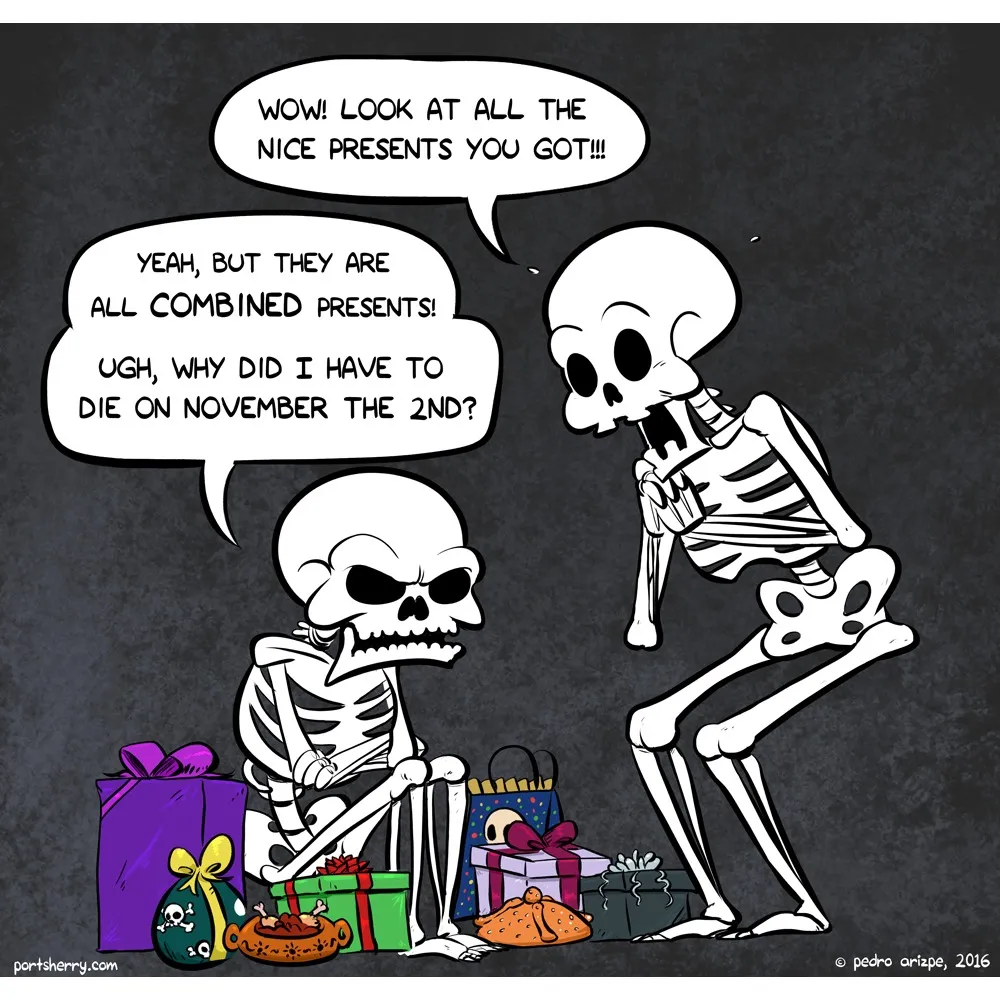
PortSherry’s comics move between gothic jokes, pop-culture send-ups and small social disasters. This selection of 18 dark humor comics opens with skeletons arguing over birthday presents, then jumps to witches, a raven with a microphone and characters whose ordinary situations turn strange.
Created by cartoonist Pedro Arizpe, Port Sherry is a long-running webcomic built around compact setups and carefully staged reversals. These strips are not one continuous story: each introduces a new cast, setting and comedic rule, then lets a visual detail or final line tilt the scene in an unexpected direction.
#1
#2
#3
#4
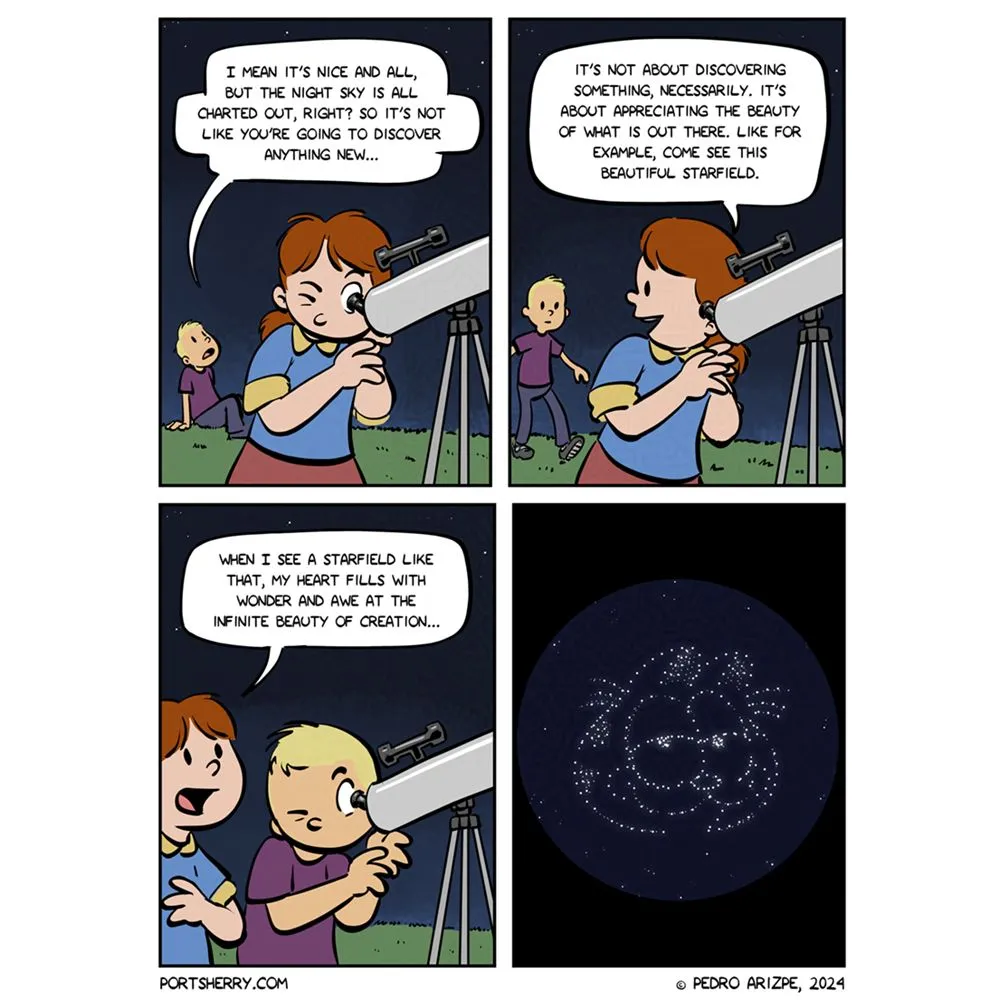
The telescope builds a sincere defense of wonder, then the last panel turns that lofty starfield into a visual punchline.
#5
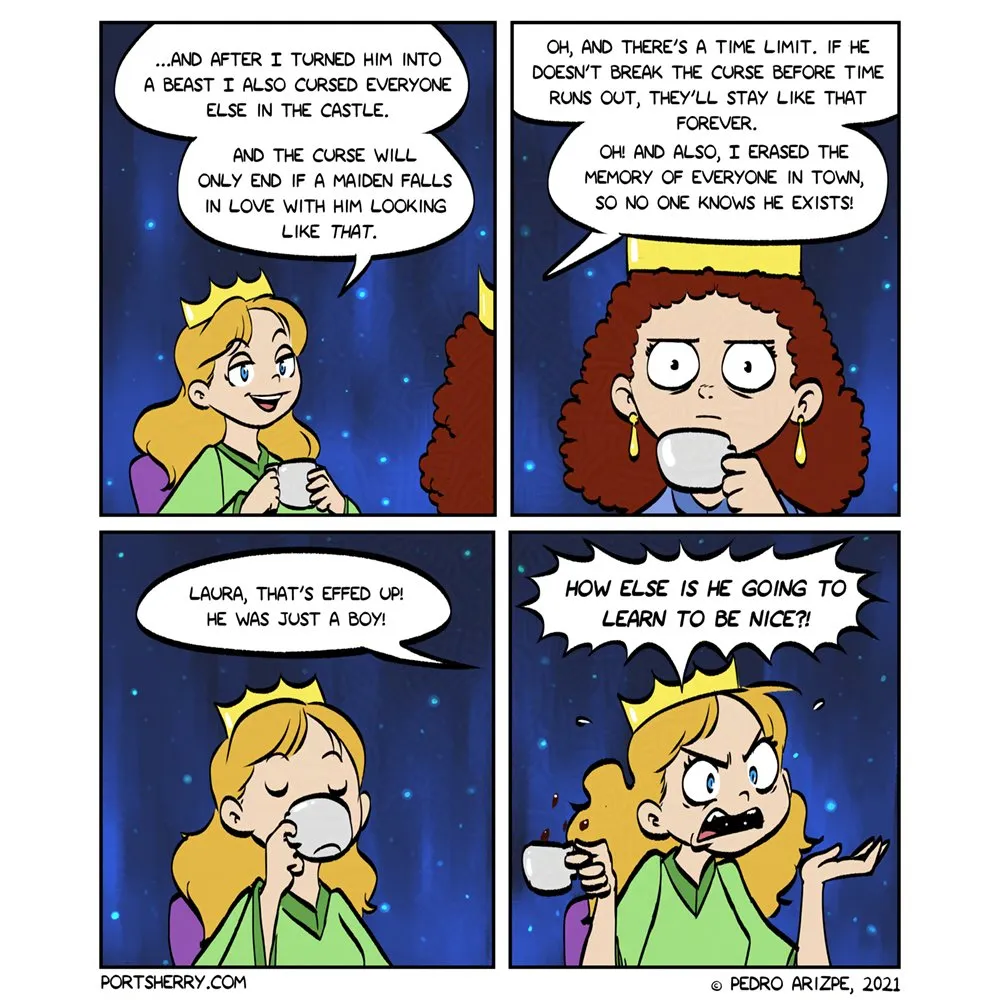
#6
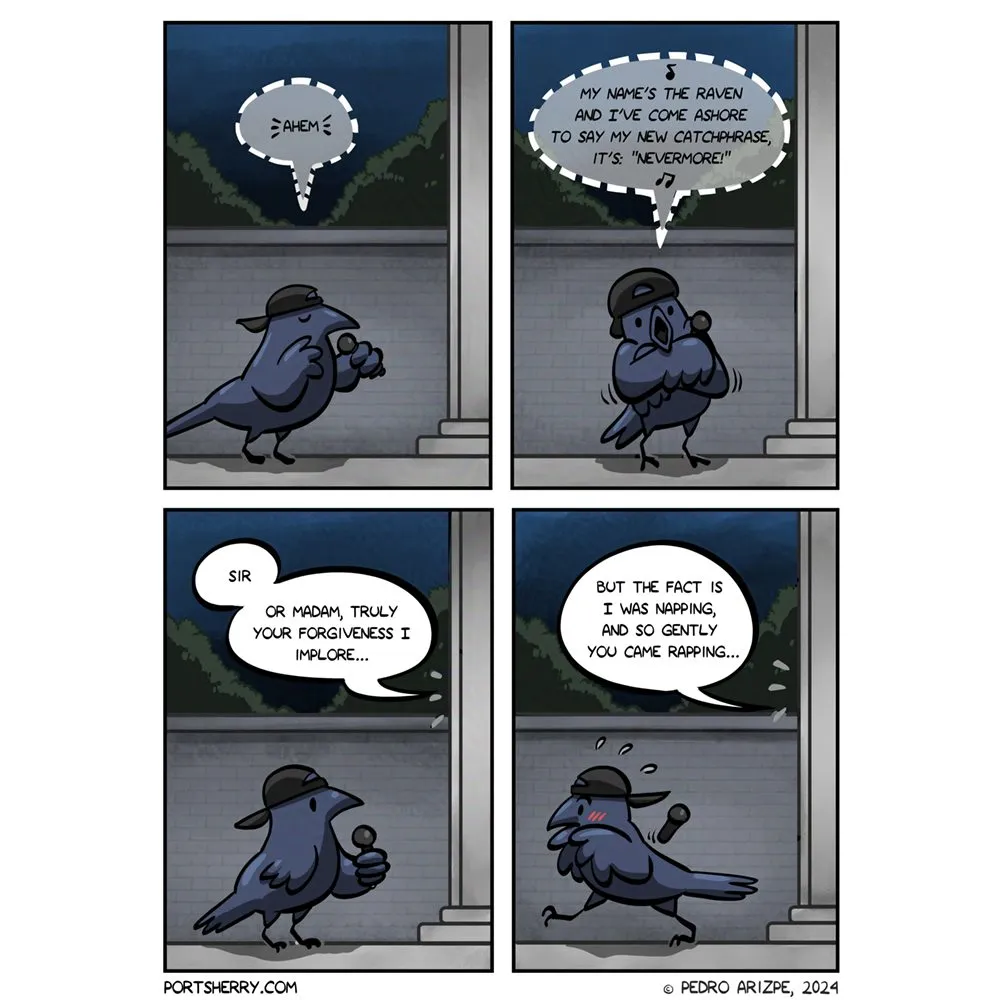
The raven’s grand microphone entrance promises drama; the final panel deflates it with the ordinary annoyance of waking someone.
#7
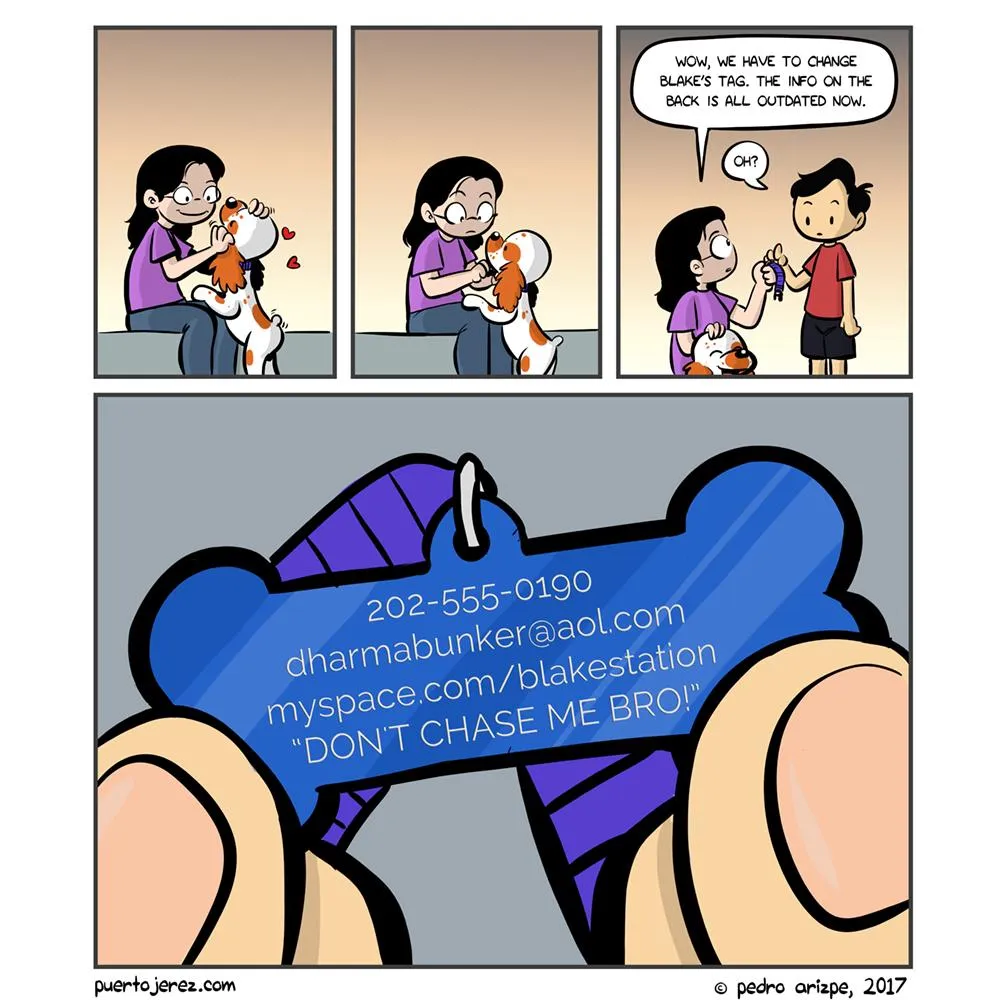
#8
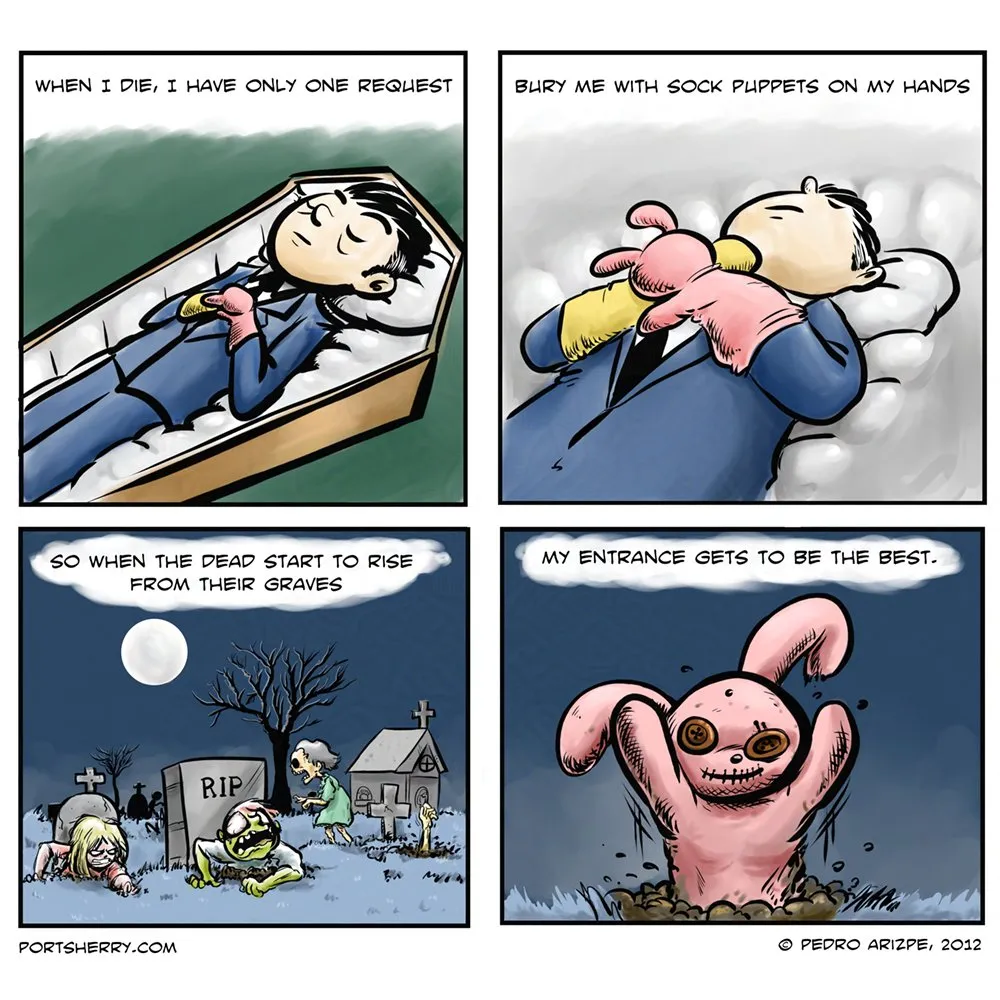
#9
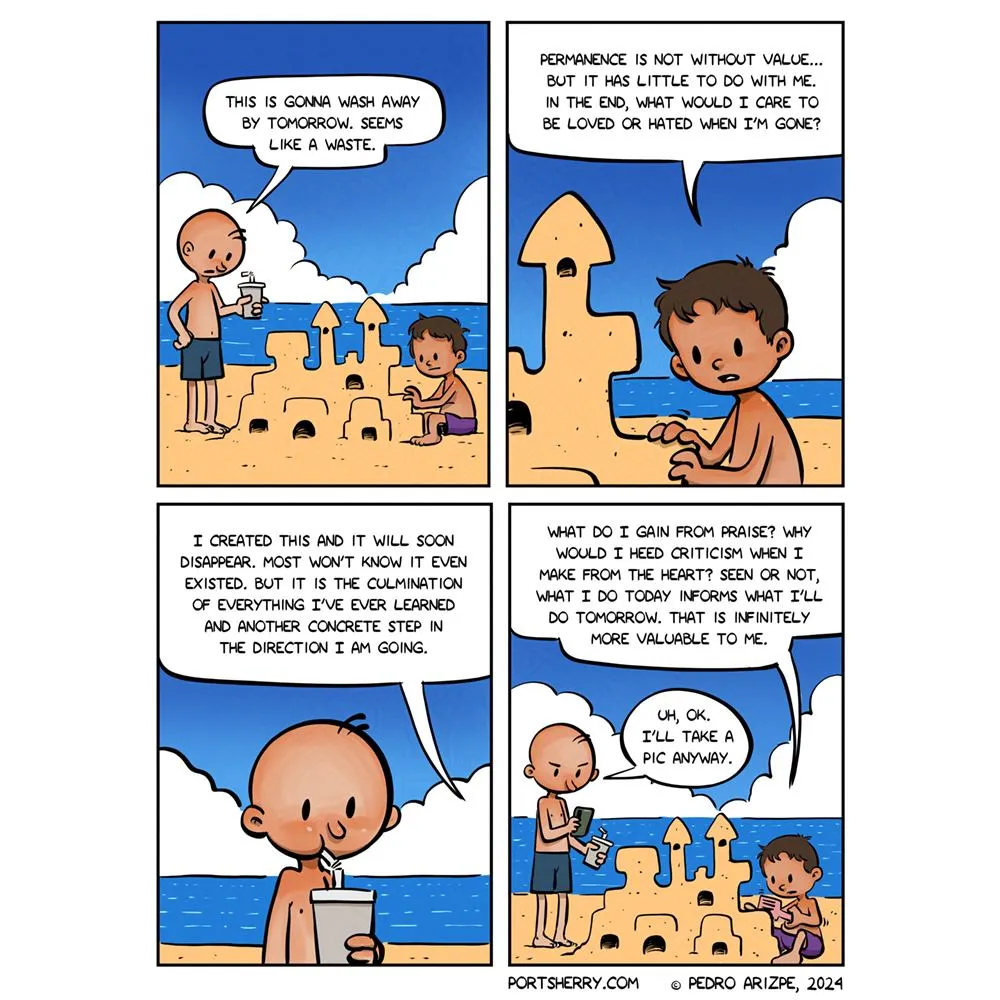
One child treats the sandcastle as a lasting achievement; the other’s camera offers a practical answer to impermanence.
#10
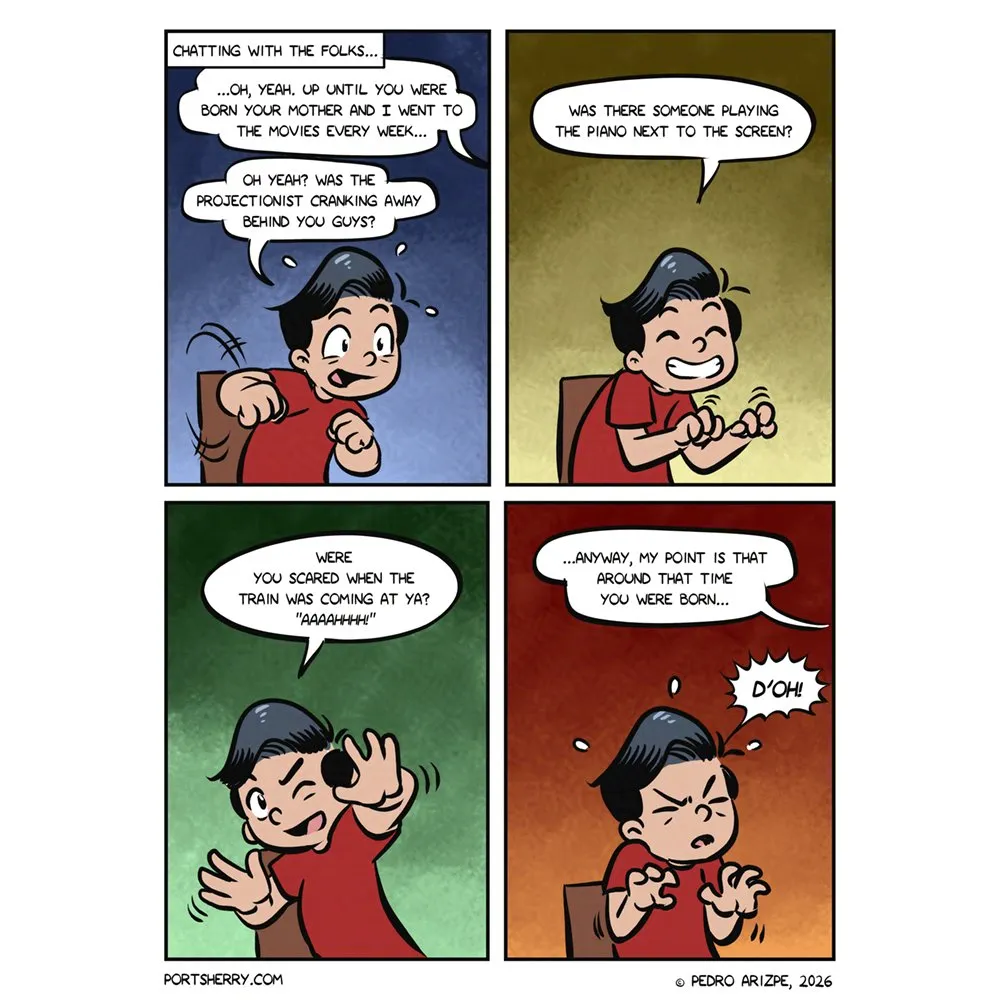
#11
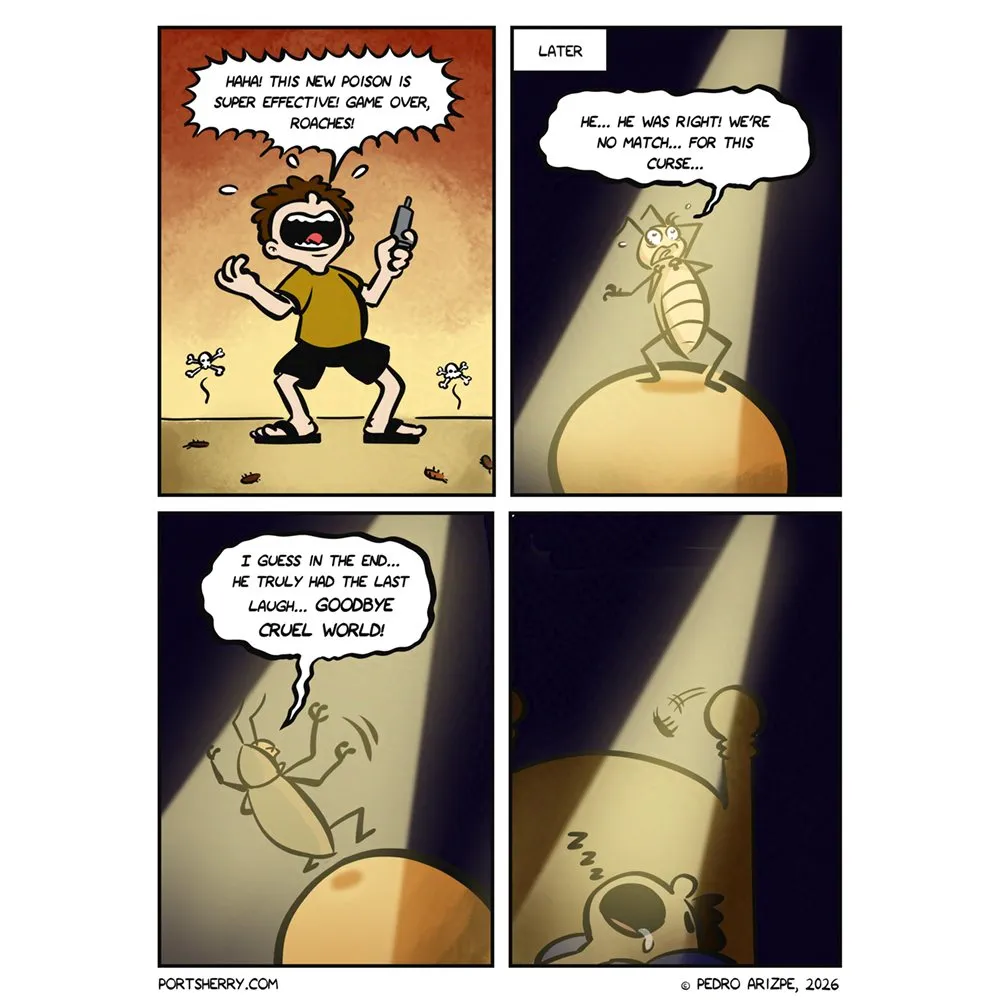
#12
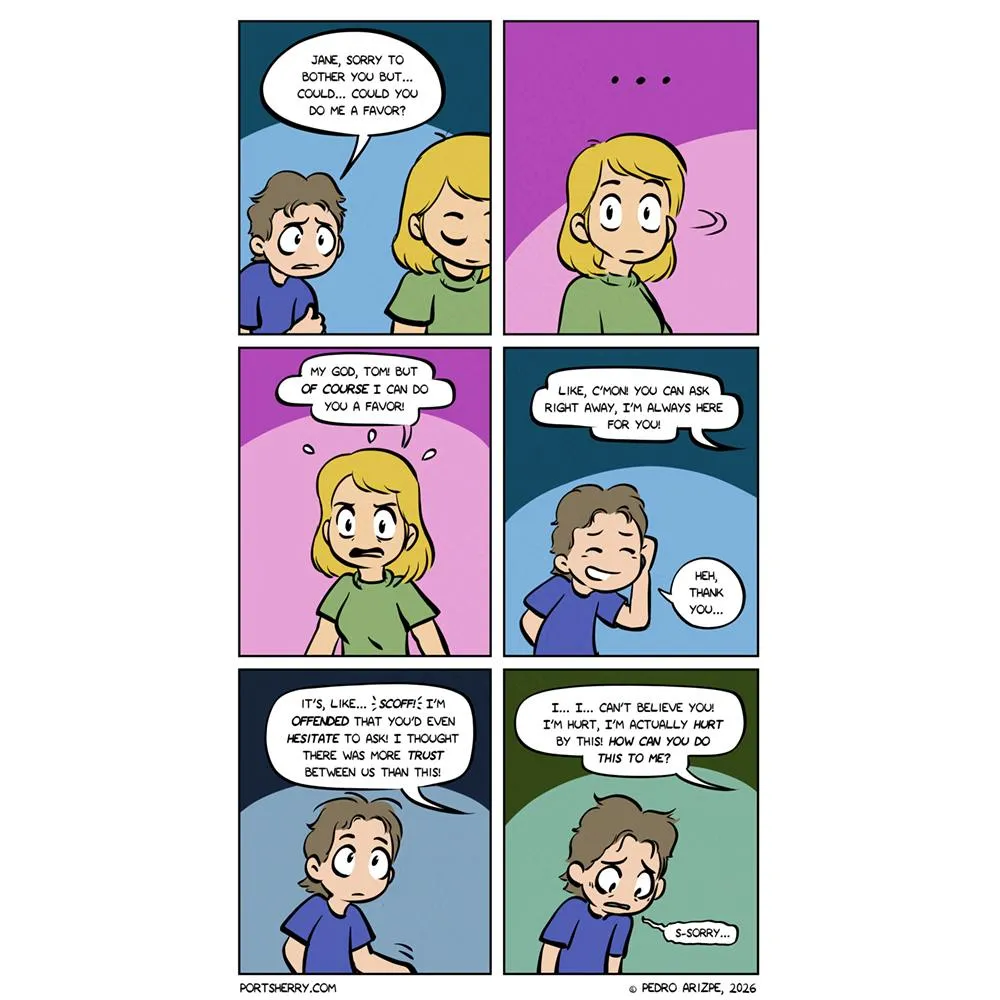
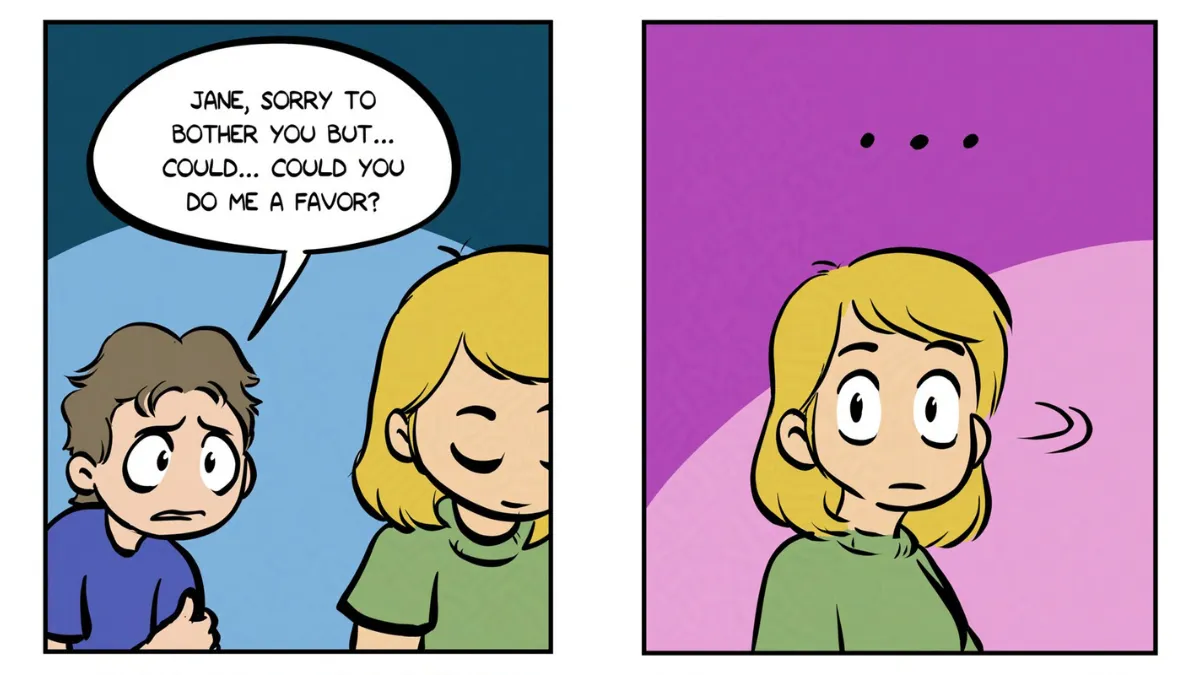
The offer of help turns into a guilt trip: hesitation is treated as betrayal before the favor is even named.
#13
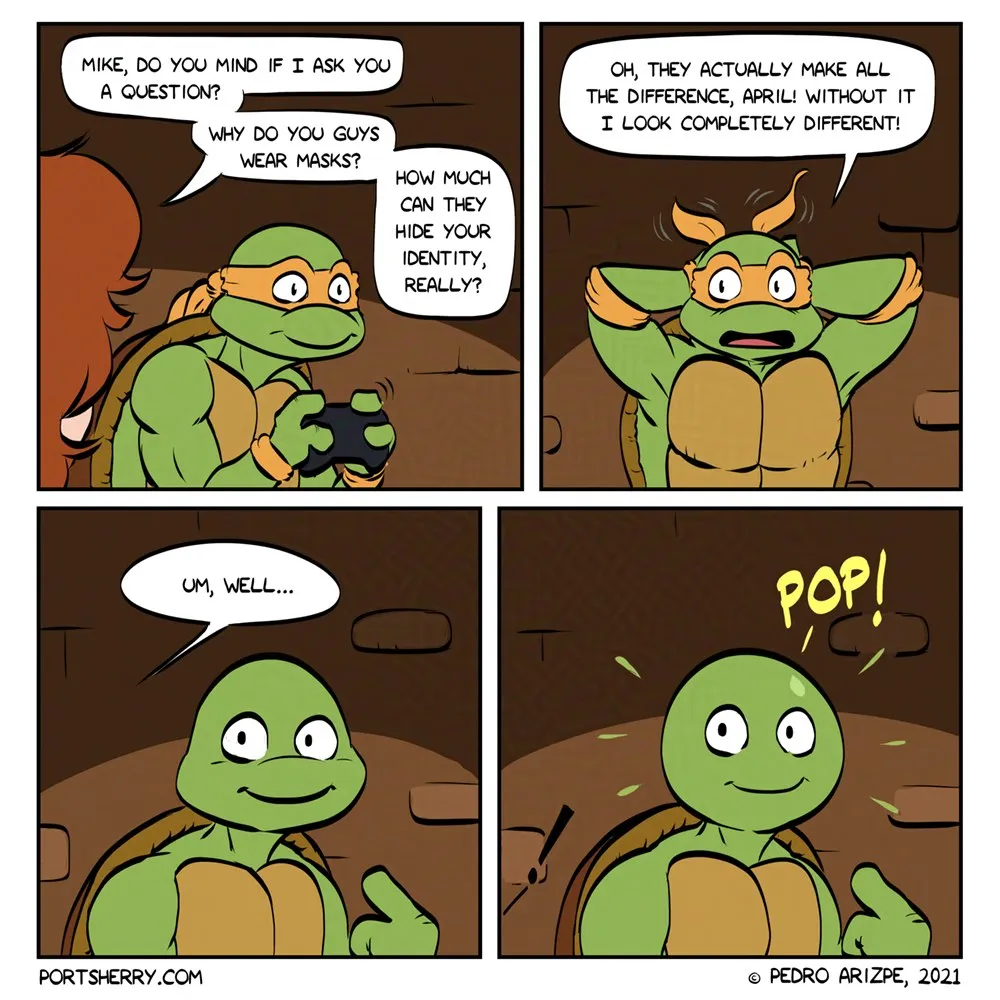
#14
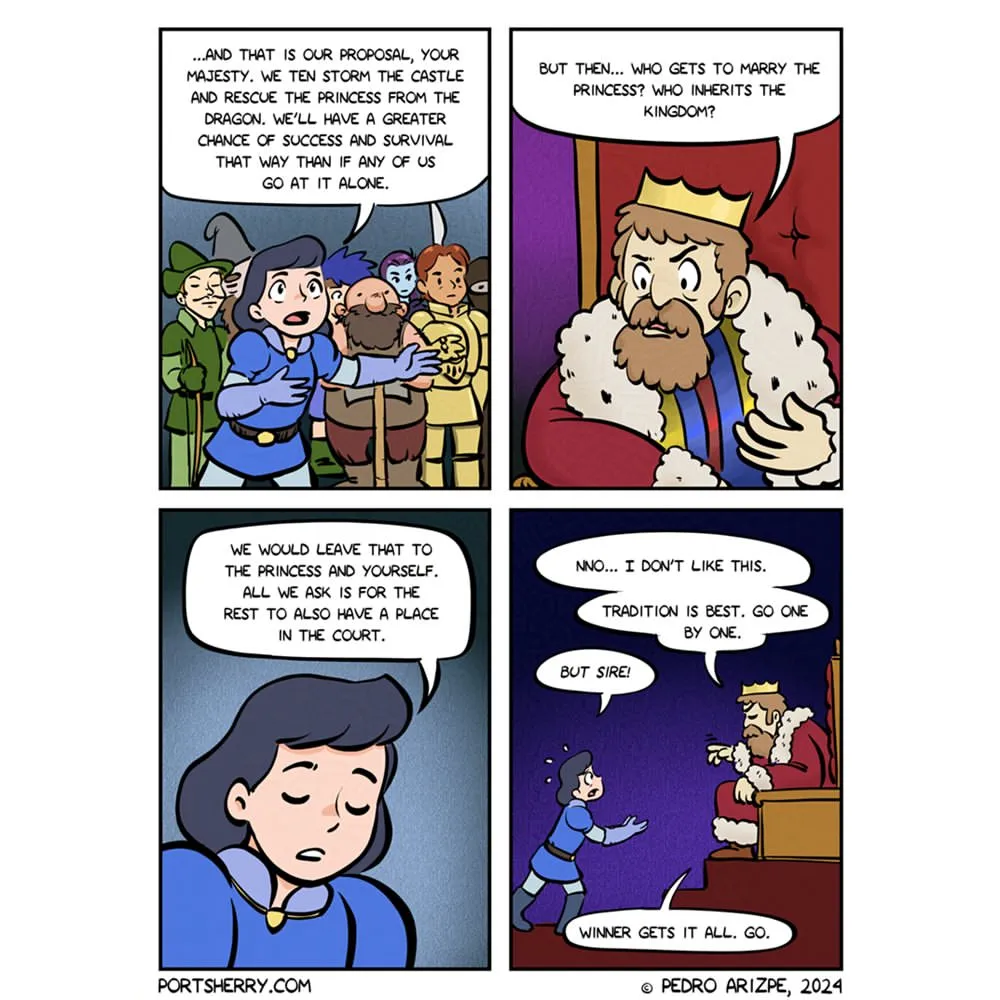
#15
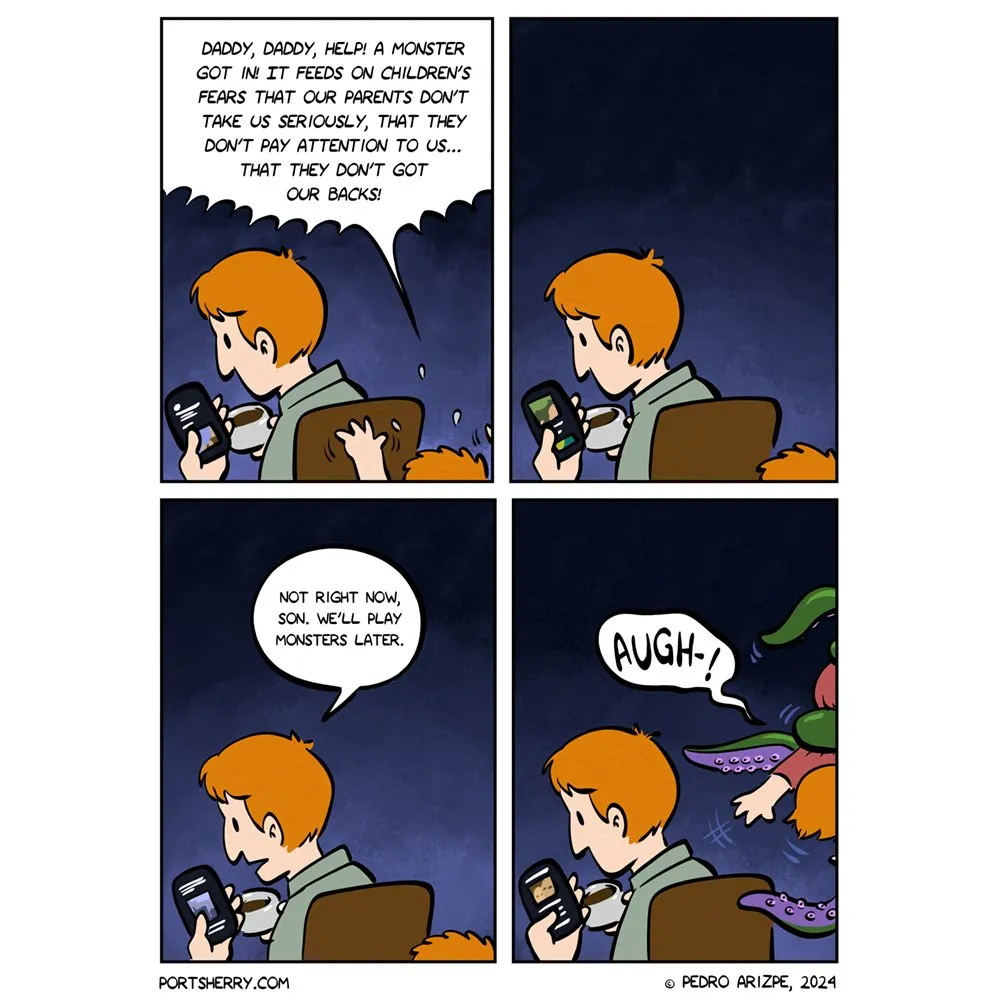
The monster’s premise makes parental distraction literal: while the father studies his phone, the threat slips into the room.
#16
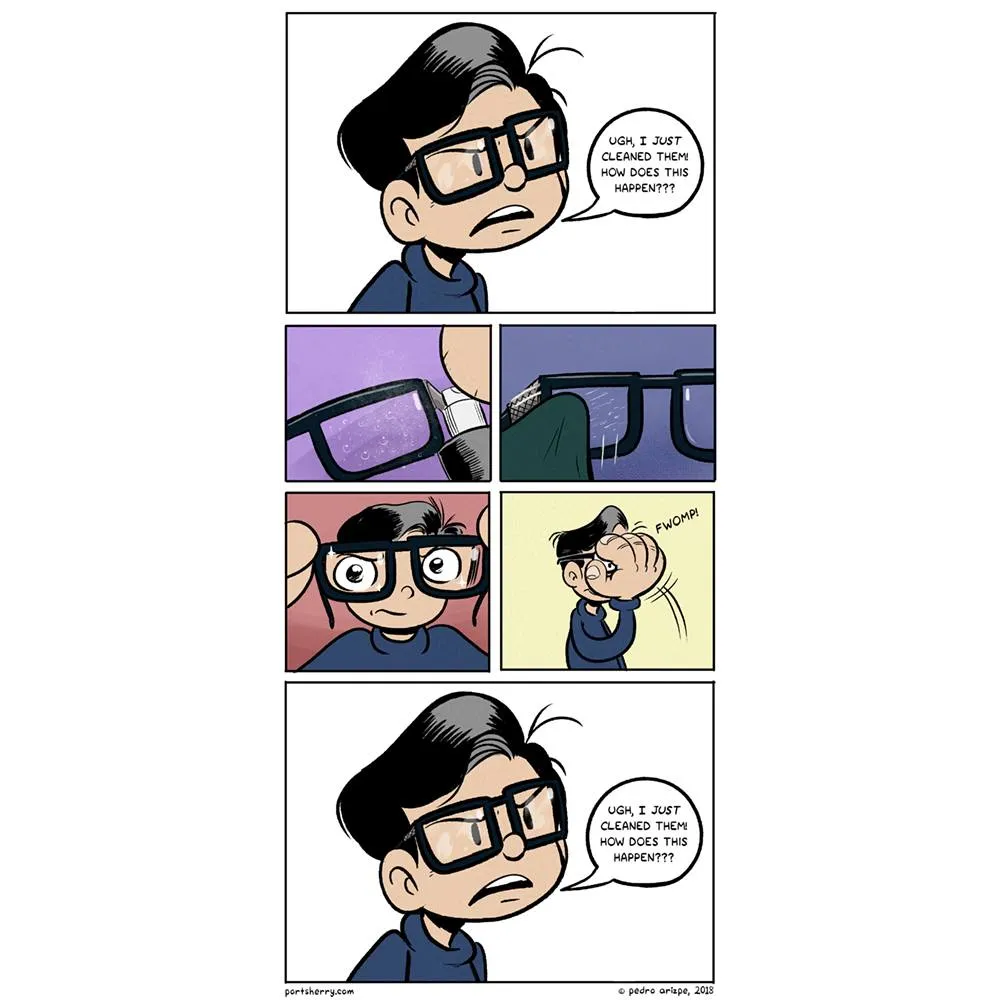
#17
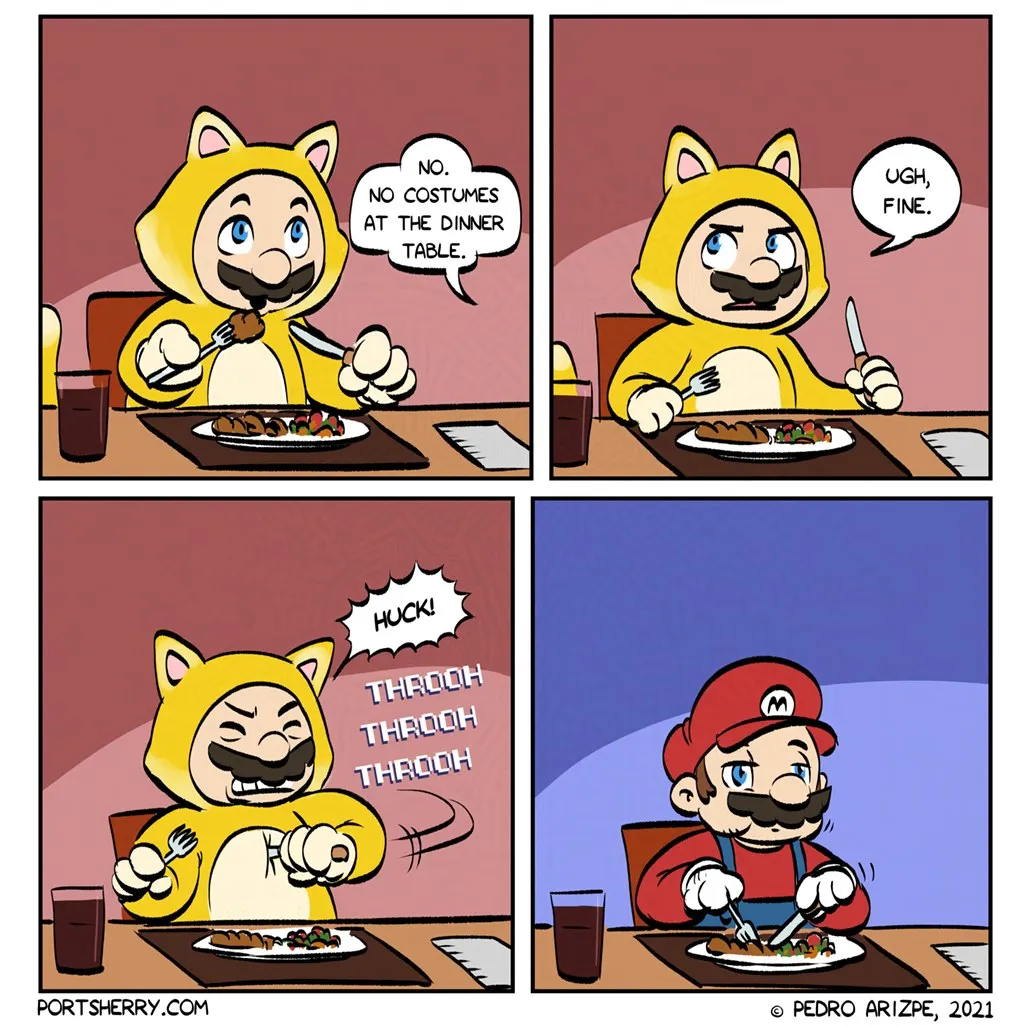
#18
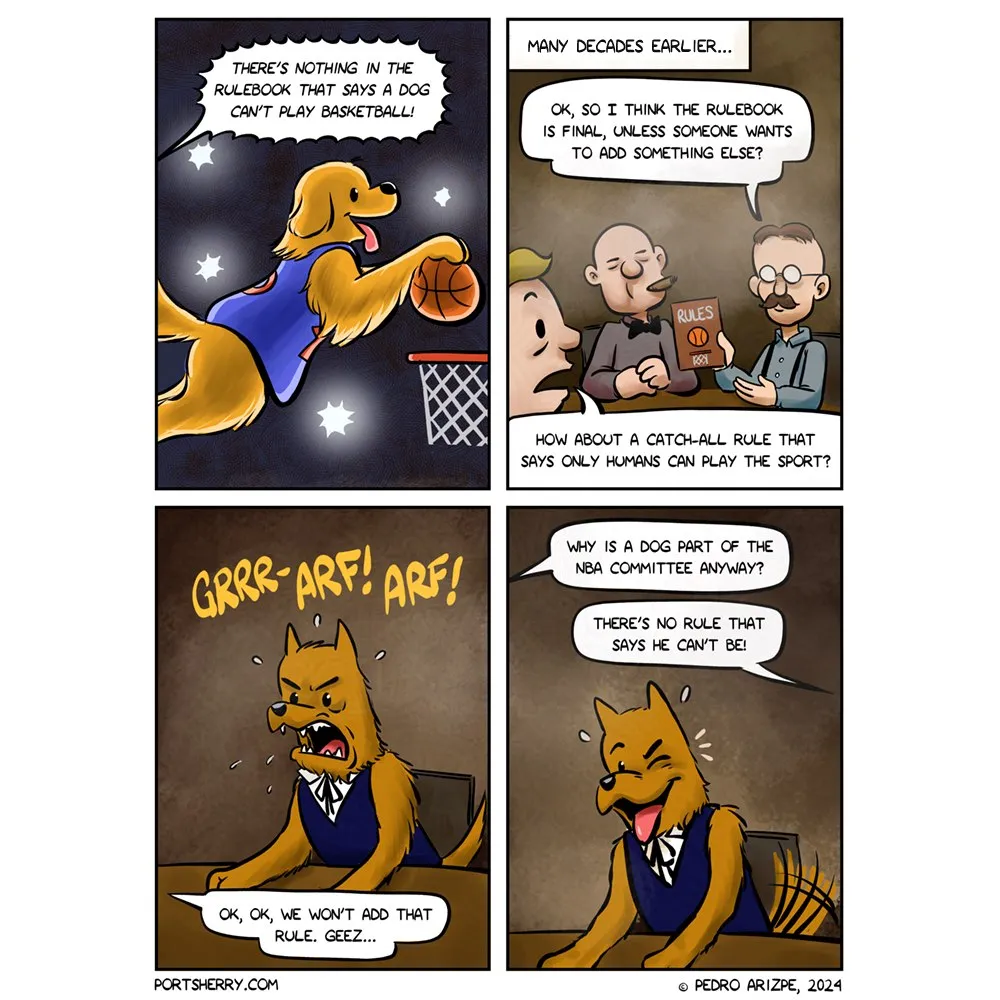
The rulebook flashback turns a silly sports question into a loophole joke: the dog has somehow joined the committee.
Who is Pedro Arizpe, and what is Port Sherry?
Pedro Arizpe is the creator of Port Sherry, which describes itself as “weird and wonderful comics.” A 2022 Bored Panda profile dates the webcomic to 2010; a 2024 follow-up discusses Arizpe’s attention to expression, timing, framing and tone. The official site links his Instagram and Bluesky profiles.
Which turn lands best for you: the raven’s botched dramatic entrance, the favor that becomes a guilt trip, or the monster taking advantage of a distracted parent? Share your favorite in the comments.
For another collection built around surreal narrative reversals, see our PBF comics feature.
🎭 Comic Highlights & Relatable Takeaways
✨ Skeletons arguing over birthday presents is a relatable reminder that even the undead can't avoid awkward gift-giving etiquette.
✨ The raven's grand microphone entrance promising drama only to be deflated by someone's ordinary annoyance at being woken up captures how life undercuts our most theatrical moments.
✨ One child treating a sandcastle as a lasting achievement while the other's camera offers a practical answer to impermanence nails the sibling dynamic of earnestness versus pragmatism.
✨ The monster slipping into the room while the father studies his phone makes parental distraction hilariously literal.
💬 Comic Q&A & Behind the Scenes
💭 What makes PortSherry comics so effective at dark humor?
Pedro Arizpe builds each strip on a compact setup, then lets a single visual detail or final line tilt the scene sideways. The humor lands because the reversal feels earned, not random, and the careful staging keeps even gothic or surreal premises grounded in recognizable human behavior.
💭 Why do PortSherry comics use a different cast and setting in every strip?
Port Sherry isn't one continuous story but a long-running anthology of self-contained jokes. Each strip introduces fresh characters and its own comedic rule, which frees Arizpe to jump between skeletons, witches, ravens and social disasters without continuity baggage, keeping the punchlines unpredictable.
💭 How does the raven comic turn a grand entrance into a punchline?
The raven's microphone moment promises theatrical drama, so readers brace for something ominous. The final panel deflates it with the mundane annoyance of waking someone up. It's classic Port Sherry: build expectation through framing and timing, then undercut it with an ordinary, relatable detail.
💭 Who is Pedro Arizpe and when did Port Sherry begin?
Pedro Arizpe is the cartoonist behind Port Sherry, which he describes as weird and wonderful comics. A 2022 Bored Panda profile dates the webcomic to 2010, and a 2024 follow-up highlights his attention to expression, timing, framing and tone across the long-running series.
💭 Where can I find more comics like these surreal narrative reversals?
Beyond the official Port Sherry site, which links Arizpe's Instagram and Bluesky profiles, you can explore our PBF comics feature for another collection built around surreal narrative reversals. Both offer the same pleasure: tight setups that flip into unexpected, darkly funny final beats.
📖 Comic Transcript, Scene Description & Humor Notes (Click to Expand)
🎨 Scene & Visual Setup
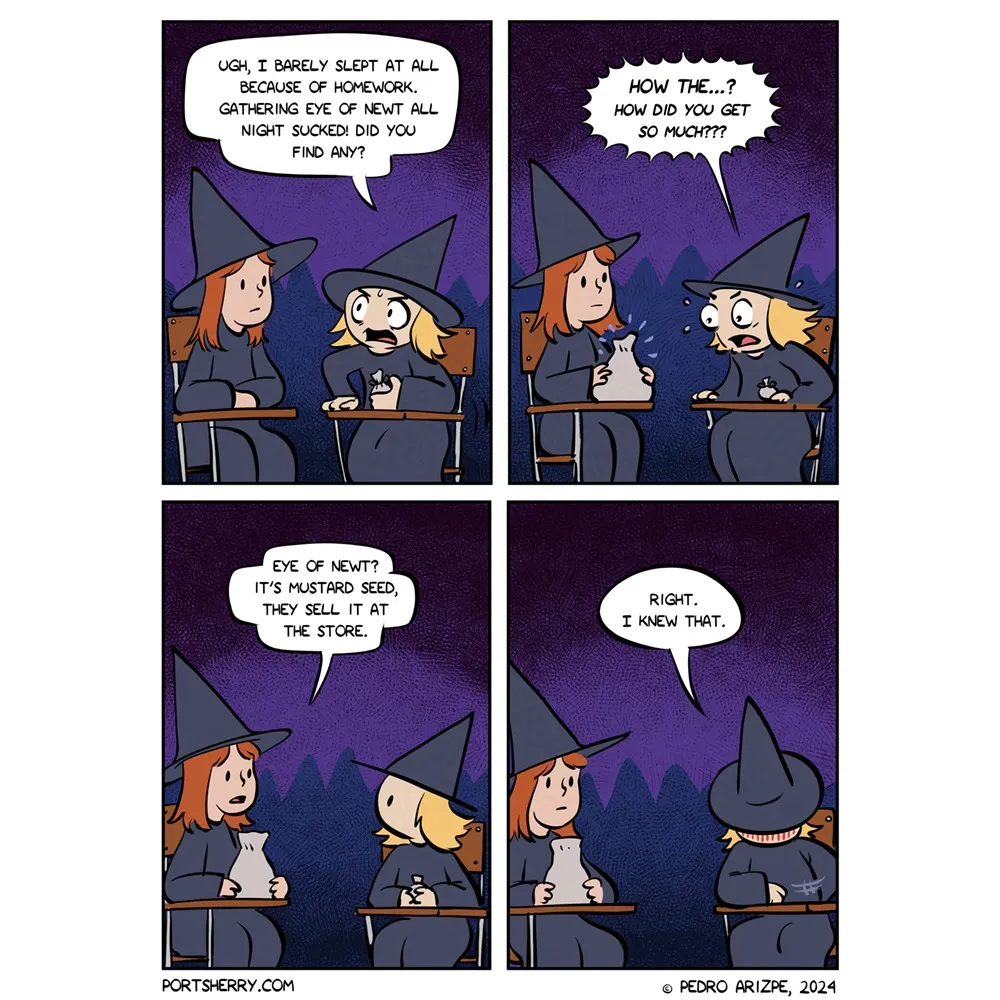
Across eighteen self-contained strips, Arizpe stages a parade of gothic and everyday characters: two skeletons haggling over a pile of birthday presents, young witches comparing a potion haul, a raven in a cap striding in with a microphone, a man in a coffin requesting sock puppets, and a father scrolling his phone while something monstrous creeps into the room. Clean linework and deadpan expressions keep each setup calm and ordinary, so the tilt—a face hidden in the stars, a dog on the committee—lands like a trapdoor opening.
💬 Panel & Dialogue Breakdown
- Panel 1: Two skeletons size up a stack of birthday gifts, and one dryly notes the presents are combined.
- Panel 6: A raven in a cap makes a grand microphone entrance to debut a catchphrase, only to find he's woken someone napping.
- Panel 12: A girl eagerly offers to help with a favor, then takes the boy's hesitation as betrayal before he's even asked.
- Panel 15: A father studies his phone while a monster slips into the room, making parental distraction hilariously literal.
💡 Why It's So Relatable
Each strip builds a tidy, believable premise, then flips it with one visual detail or final line. The reversals feel earned rather than random, and the gothic or surreal casts still behave like recognizable people—petty, distracted, theatrical—so the dark punchlines sting and delight at once.


