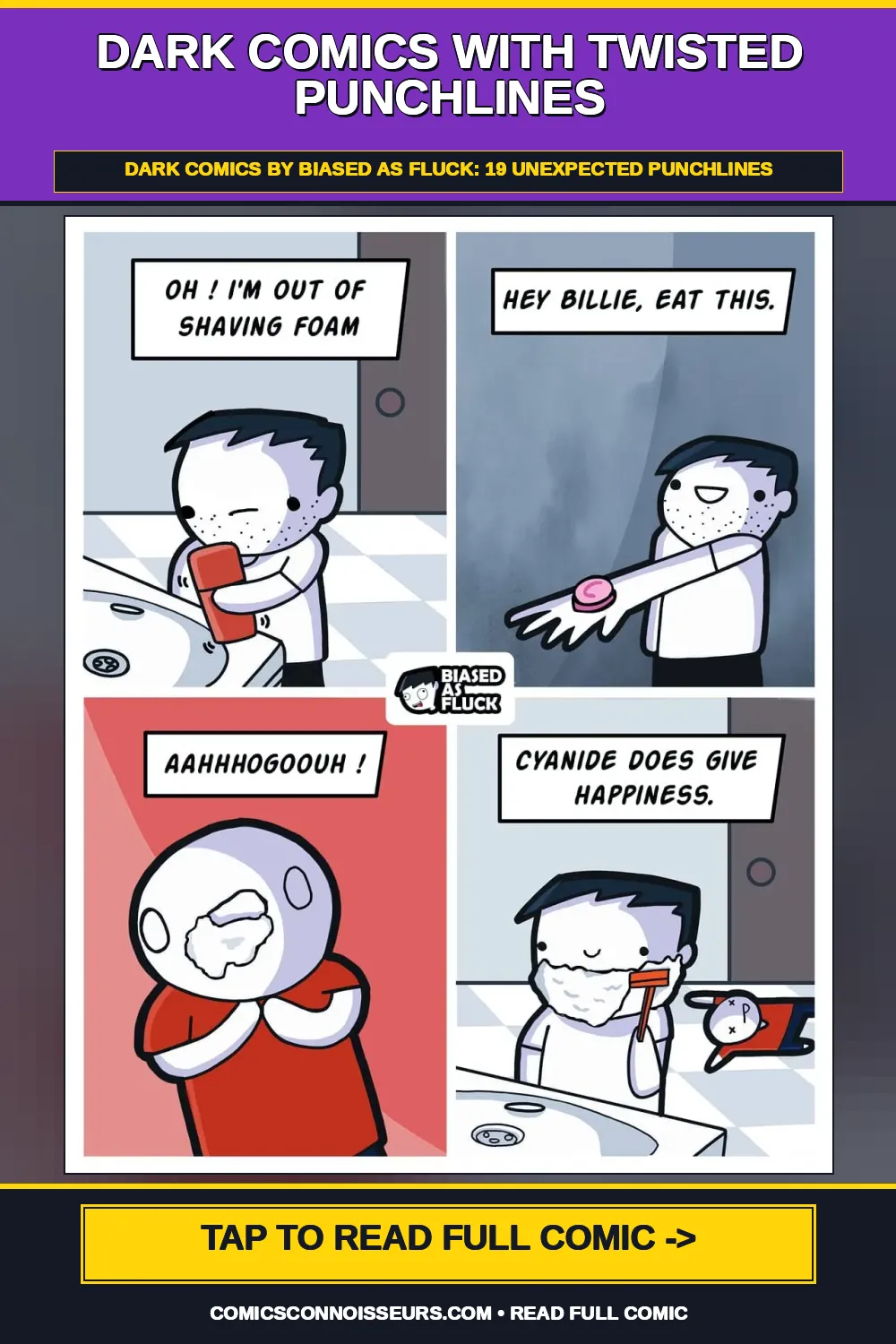
Behind the Comic: Biased As Fluck serves up nineteen dark comics where the setup is a trap and the final panel is the ambush. Rounded characters, heavy outlines, and bright color blocks keep things deceptively cheerful while shaving routines, wedding condolences, and AI marriages take sharp turns into the morbid and absurd. Timing is the real star here—each closing beat quietly rewrites everything you just read. Come for the wordplay, stay for the uncomfortable reversals.
This set of 19 comics by Biased As Fluck includes dark comics, awkward relationship exchanges, and absurd wordplay. The punchlines are often darker or stranger than the setup first suggests. A shaving routine becomes a lethal misunderstanding; a reassuring hug turns into a counting gag; and familiar relationship chatter gets interrupted by a blunt visual reversal.
Across the collection, rounded characters, heavy outlines, bright blocks of color, and compact dialogue do most of the storytelling. Some strips lean on morbid surprise, others on double meanings or pop-culture references. Their common thread is timing: the final panel often changes how the earlier panels read.
What lethal misunderstanding does the shaving mishap in #1 set up?
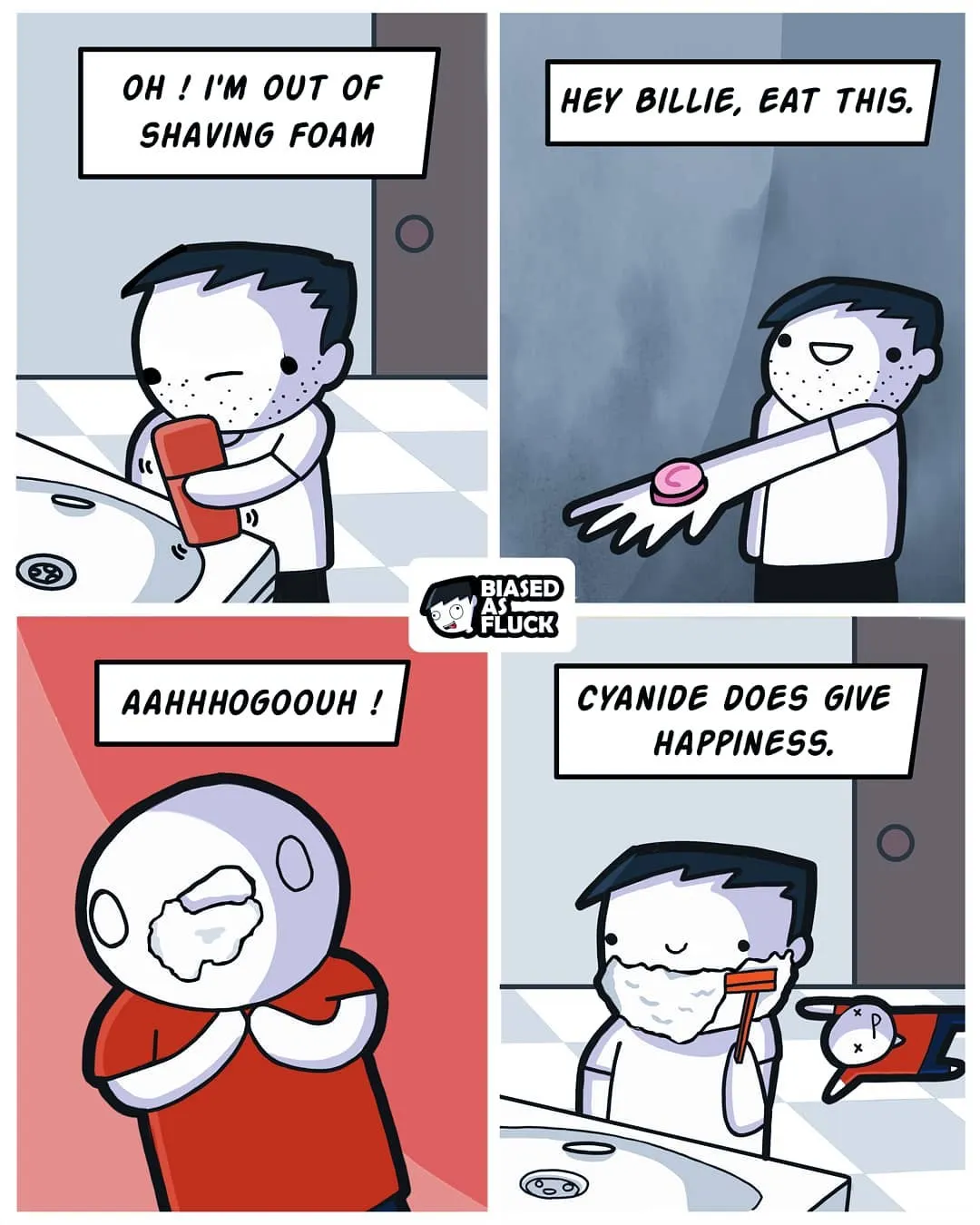
A shaving mishap sets up a lethal misunderstanding. The cheerful handoff of the pink object makes the last line land with particular bluntness.
How does the red book in #2 signal the pun before the text arrives?
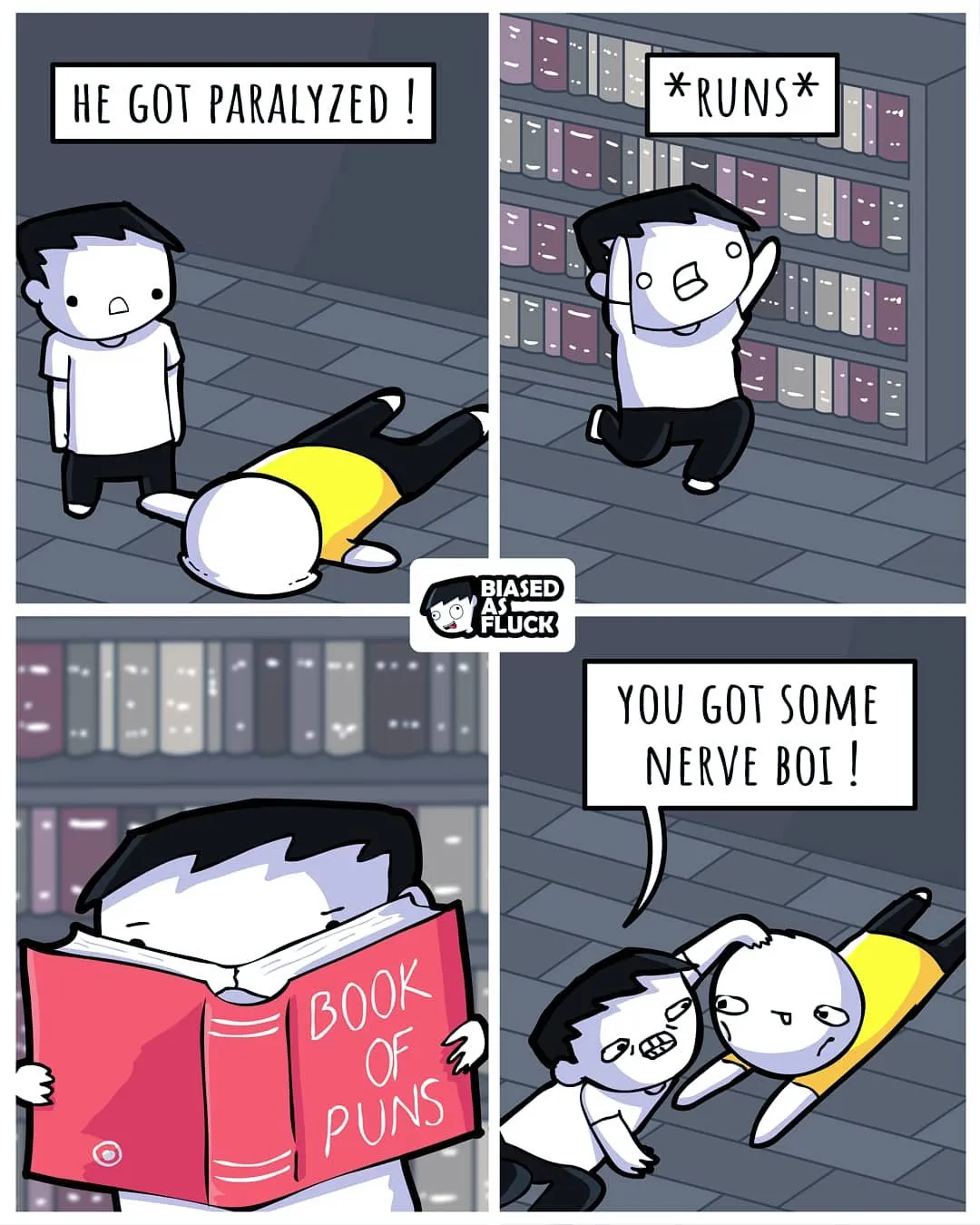
The red book signals the pun before the text arrives; paralysis becomes the setup for a joke about nerve.
Why does the reassuring hug in #3 turn into an uncomfortable counting gag?
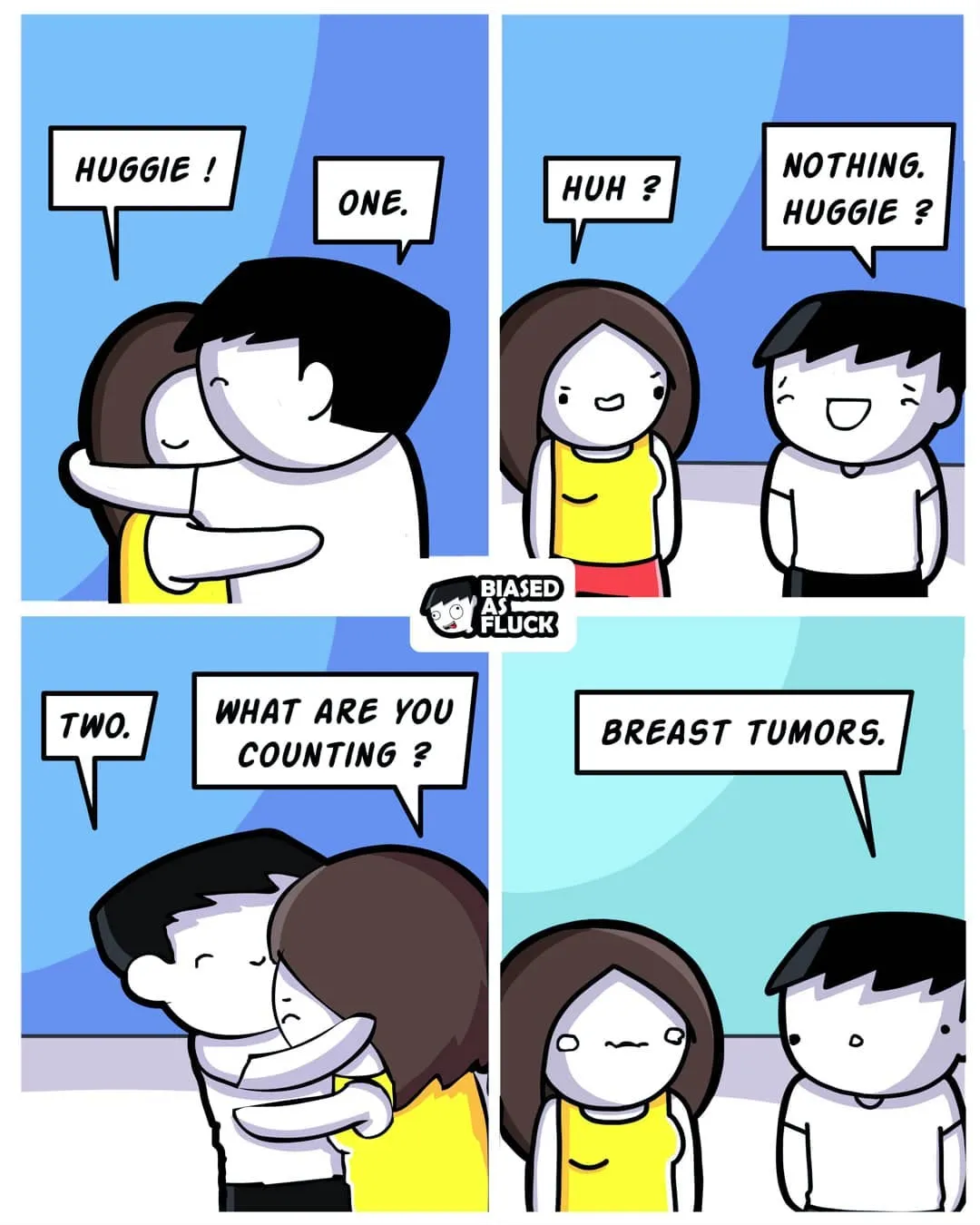
The embrace looks reassuring until the answer reframes the counting as a tumor gag, turning warmth into an uncomfortable reversal.
What twist does comic #4 deliver?
How does the setting make ‘you’re next’ a threat in #5?
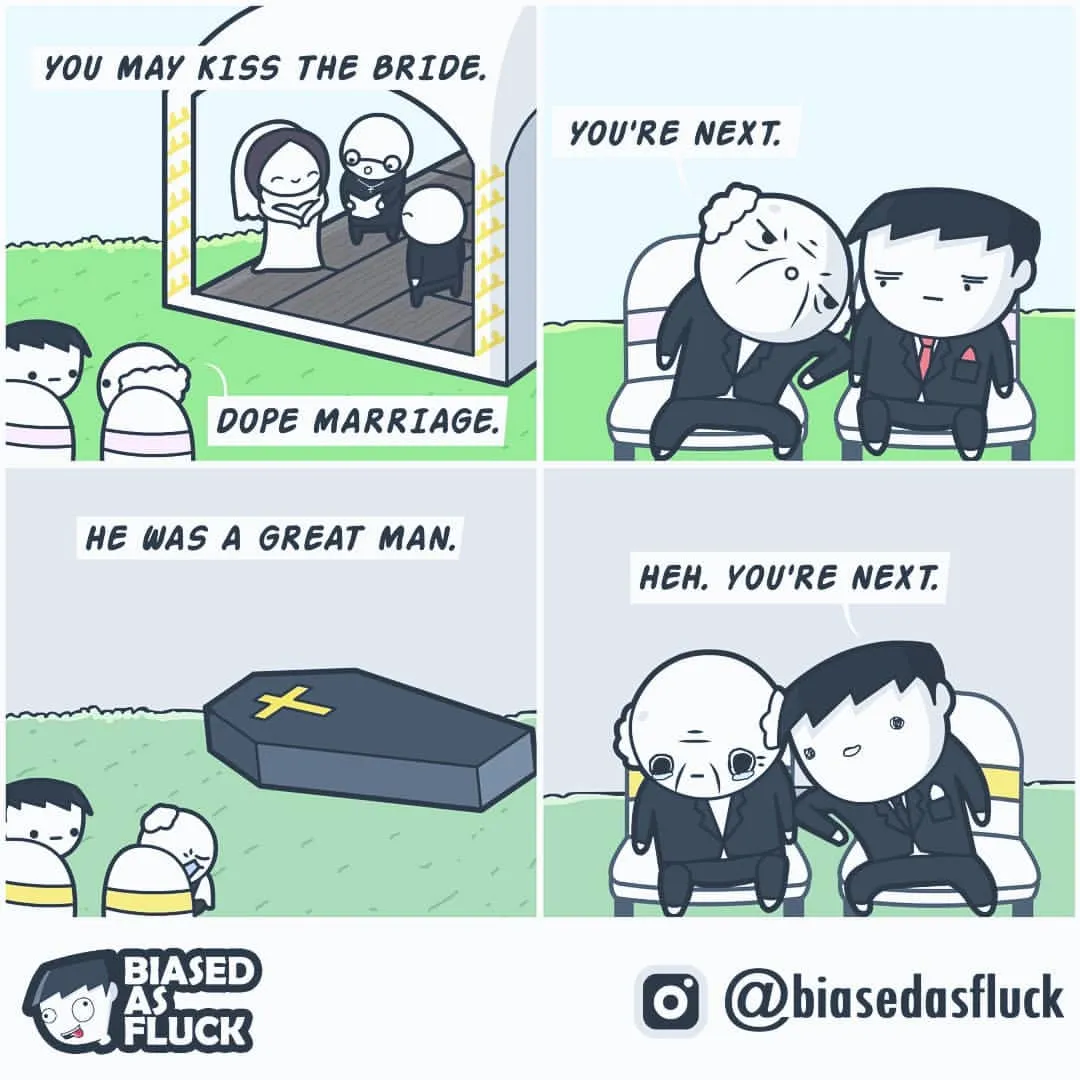
At a wedding, ‘you’re next’ sounds playful; beside a coffin, the same line becomes a threat. The setting does the work.
What happens when the AI-marriage couple’s adopted children turn out to be tablets in #6?
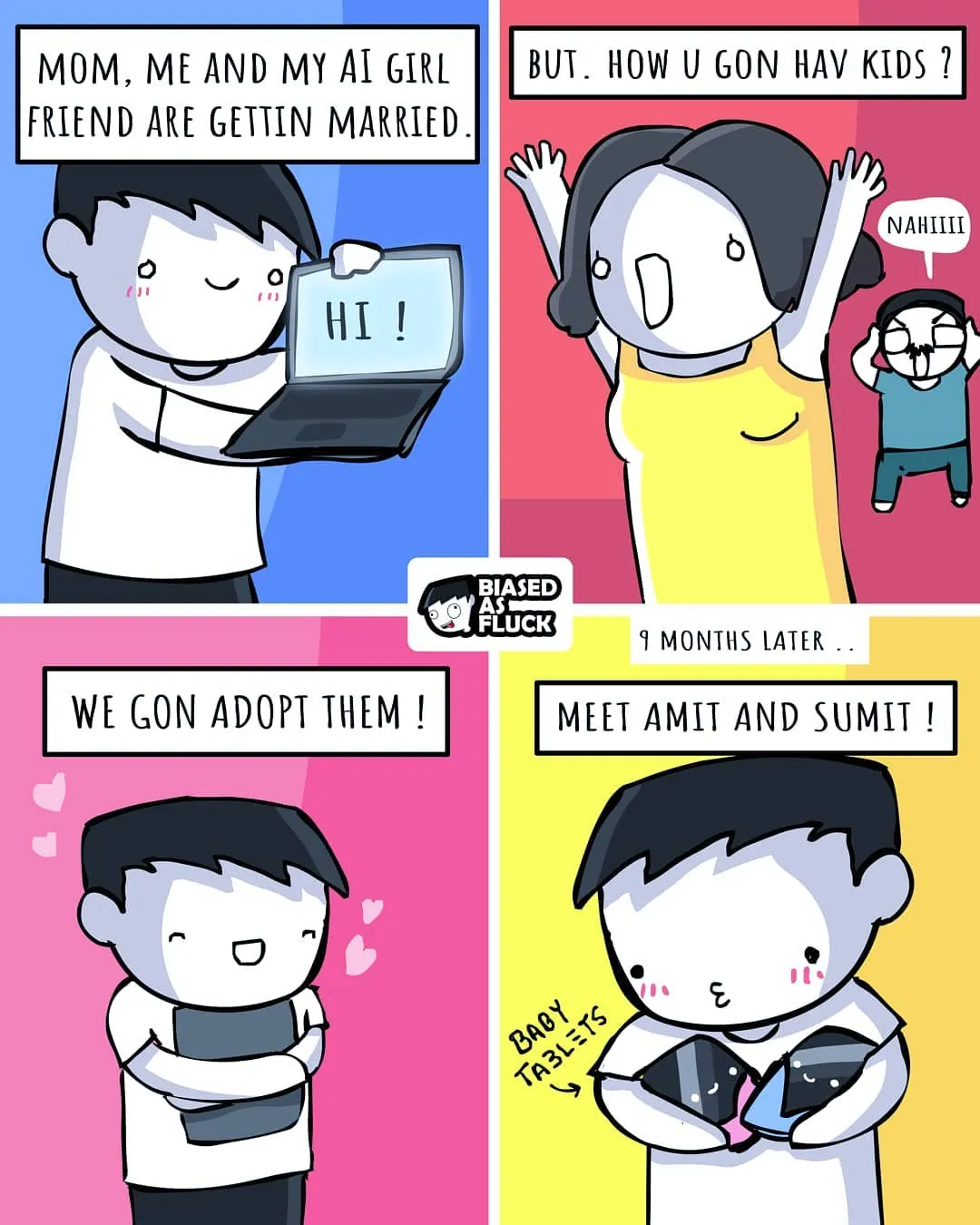
The AI-marriage premise becomes literal when the couple’s adopted ‘children’ turn out to be tablets with names.
What punchline lands in comic #7?
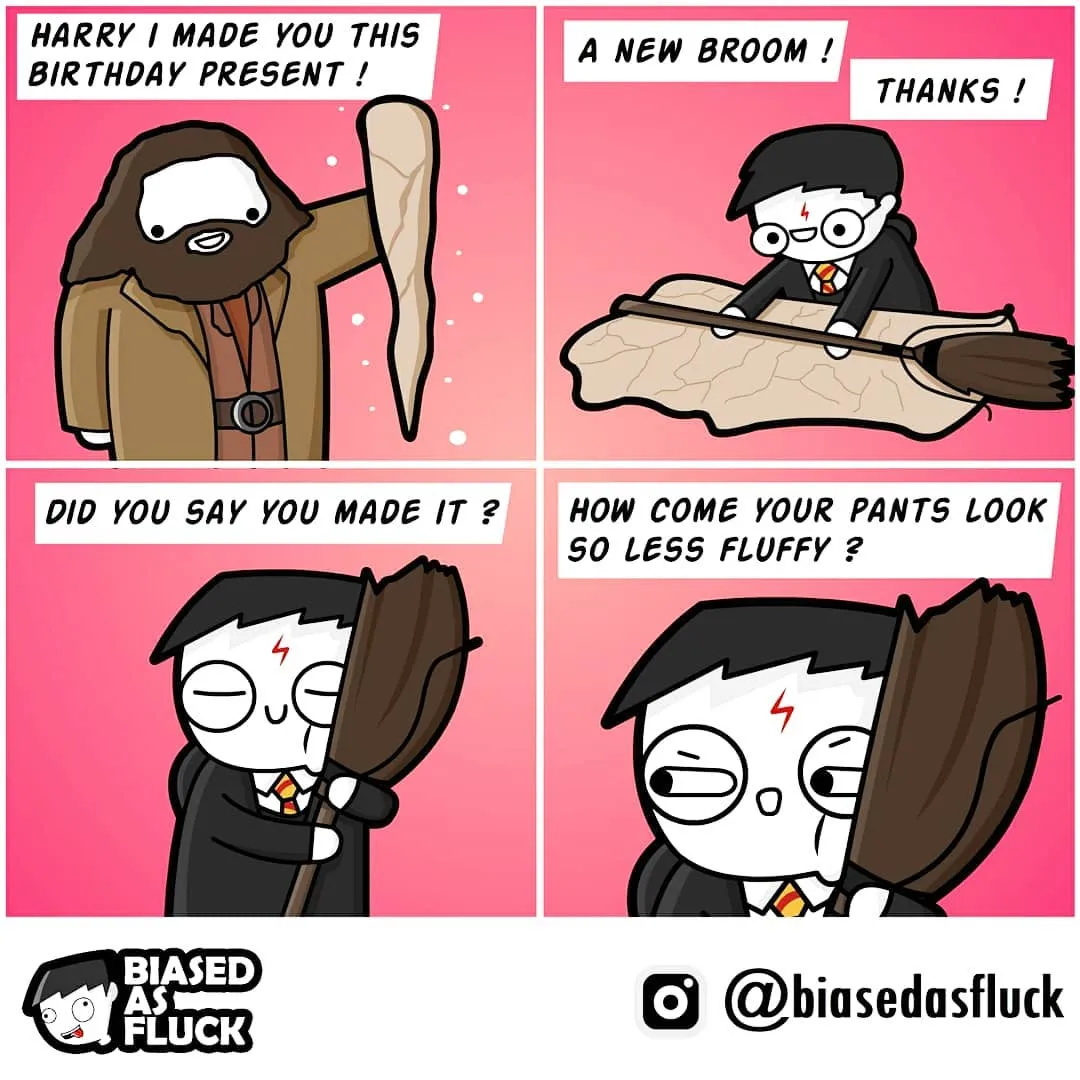
What surprise does comic #8 hold?
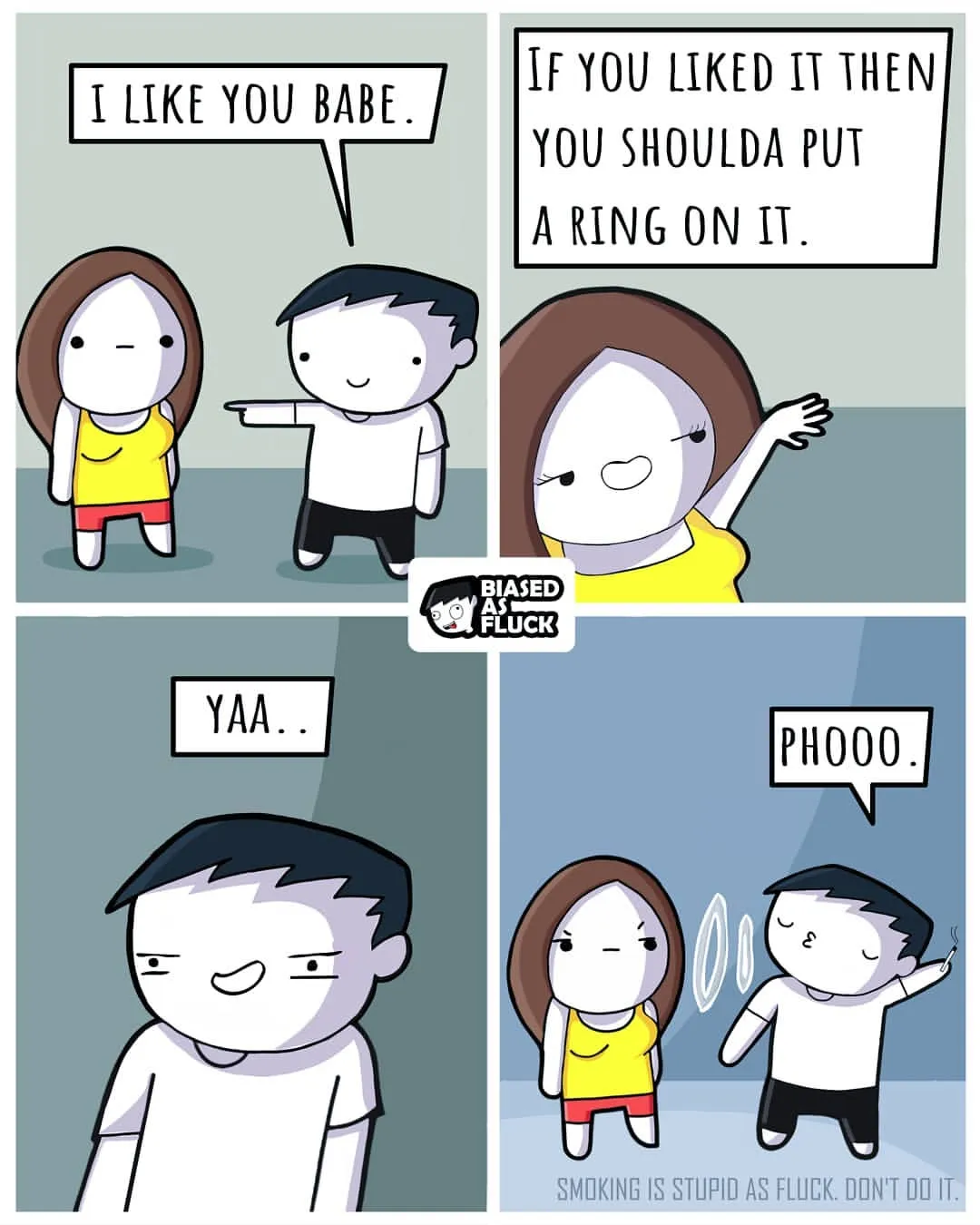
How does comic #9 flip its setup?
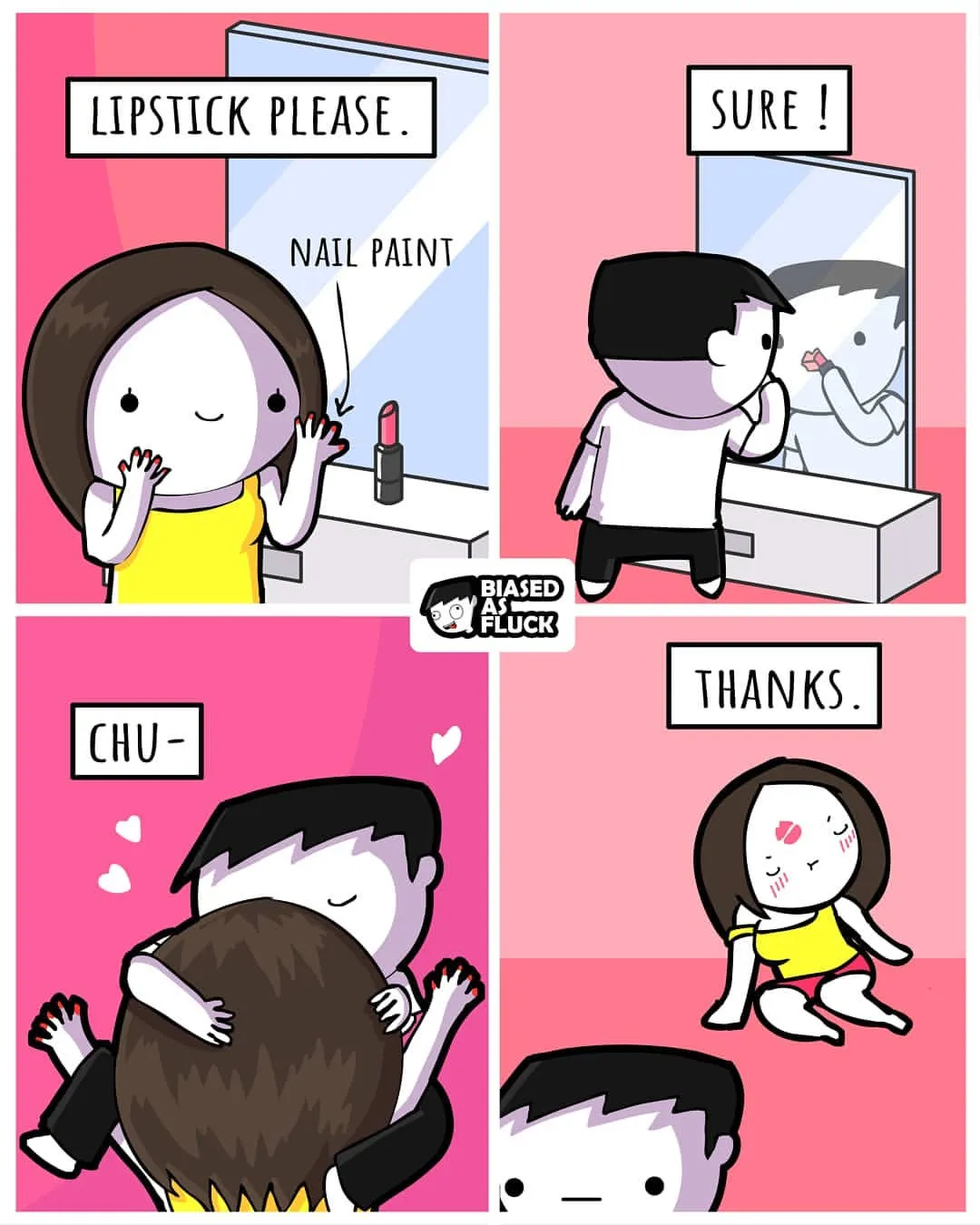
What dark turn arrives in comic #10?
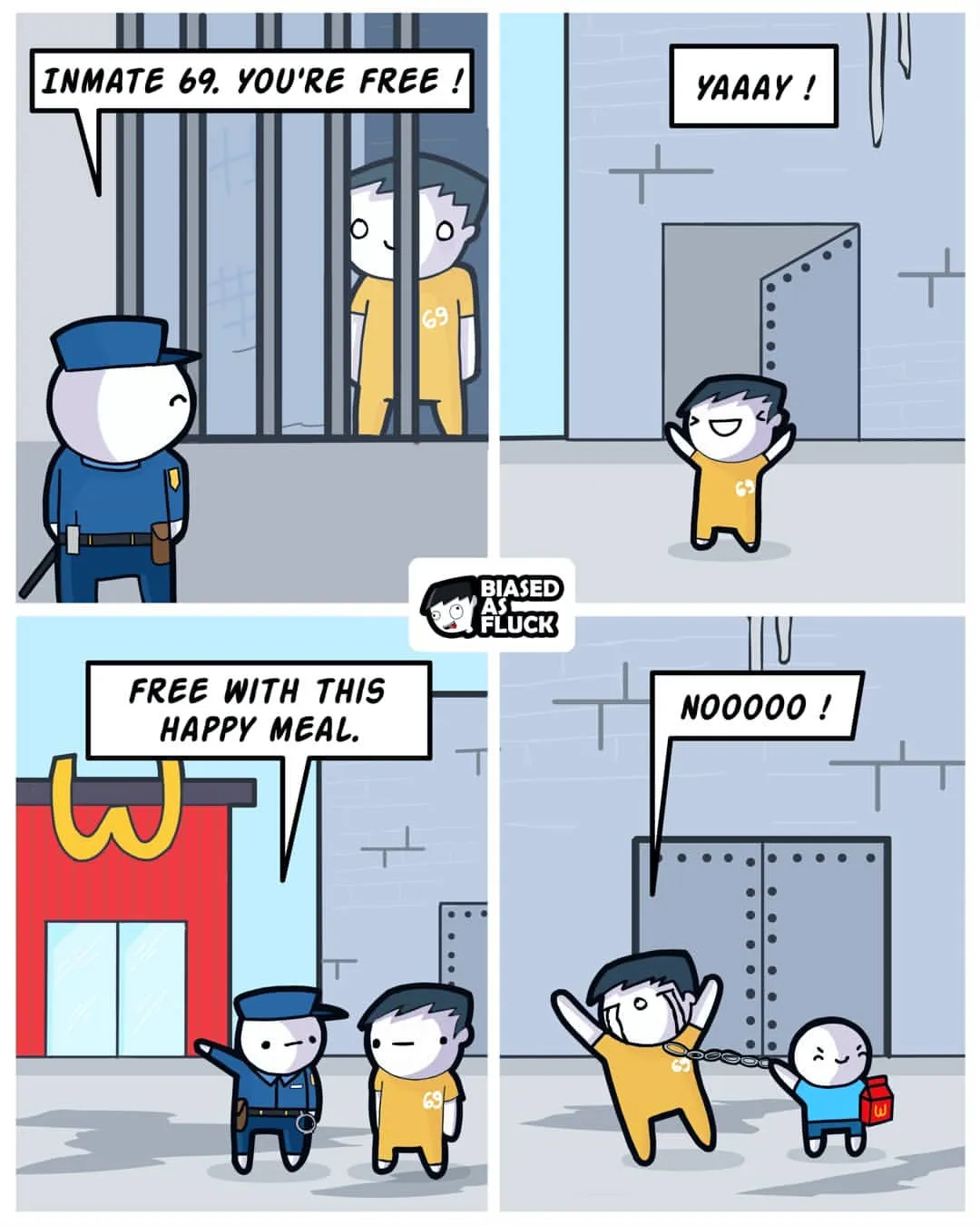
What unexpected reversal does comic #11 deliver?
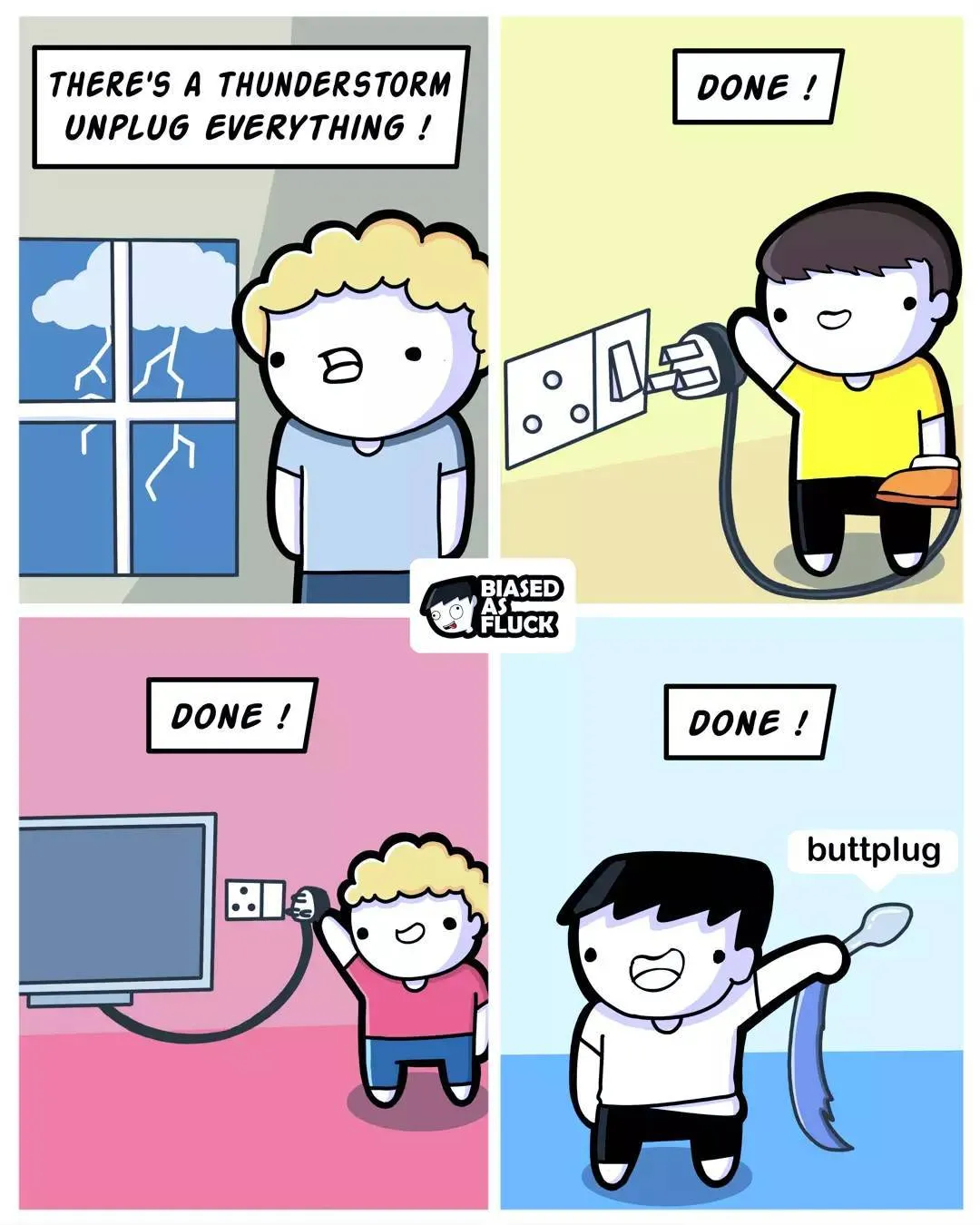
How does comic #12 subvert expectations?
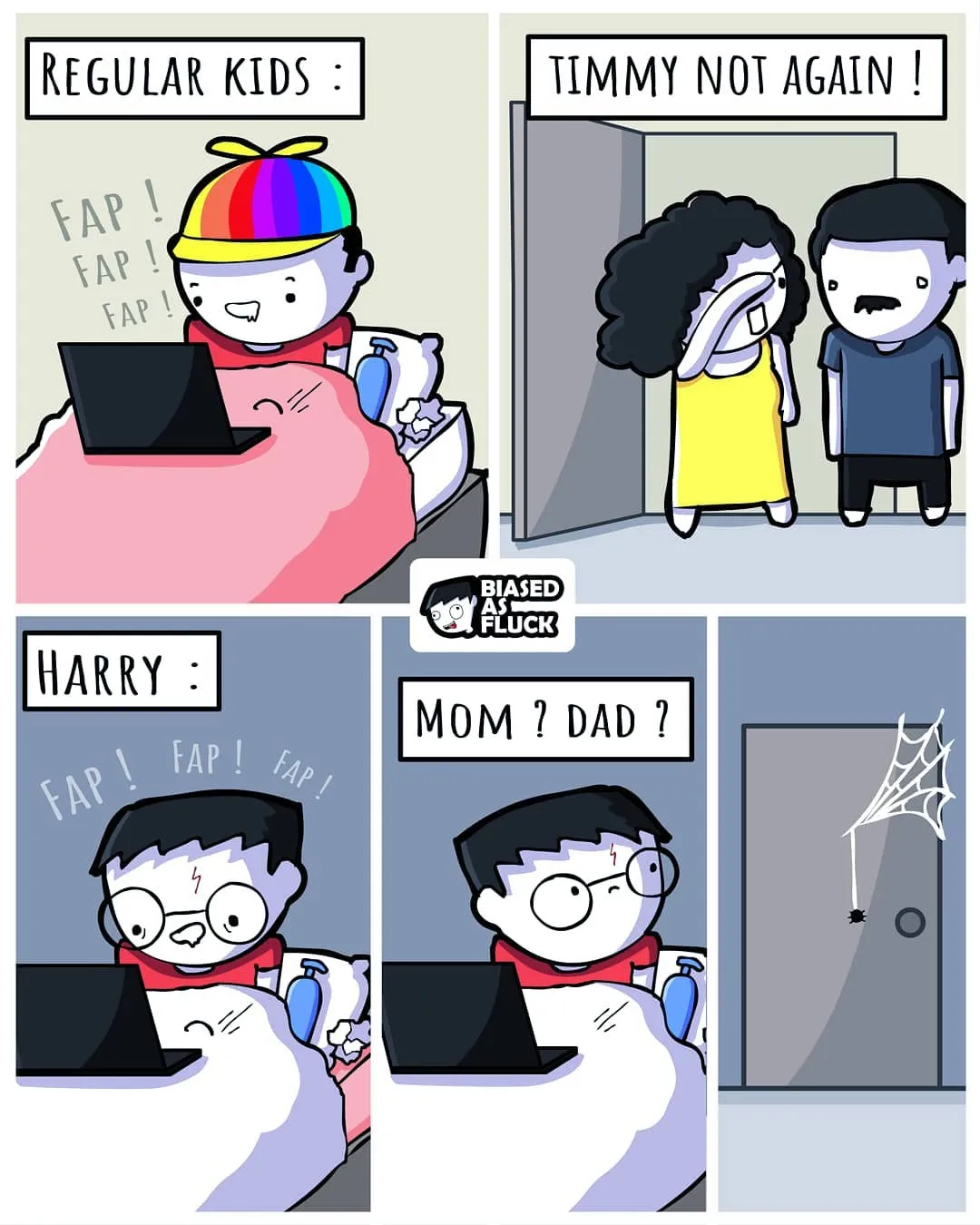
What twist closes comic #13?
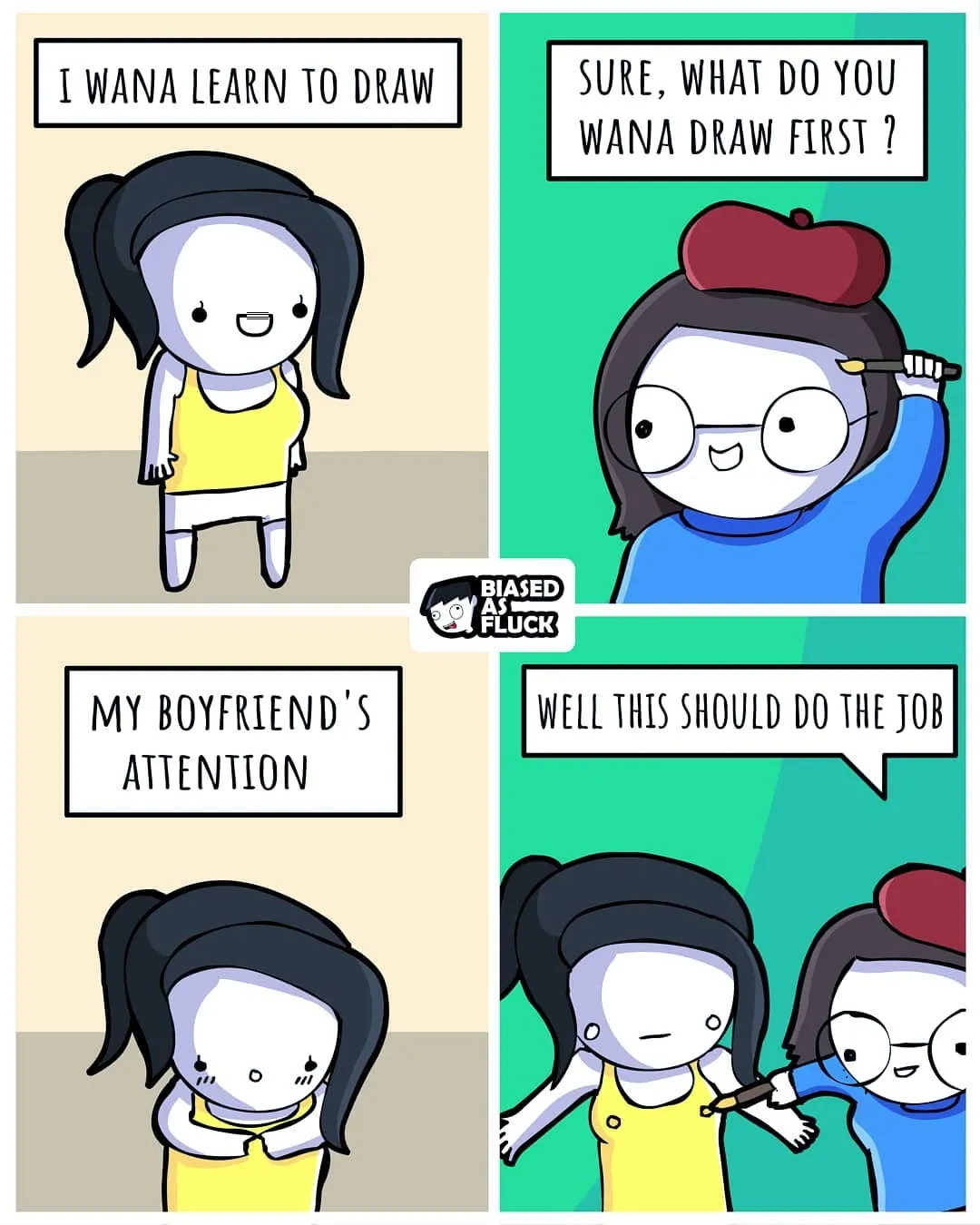
Why does the percentage keep climbing toward 100 in #14?
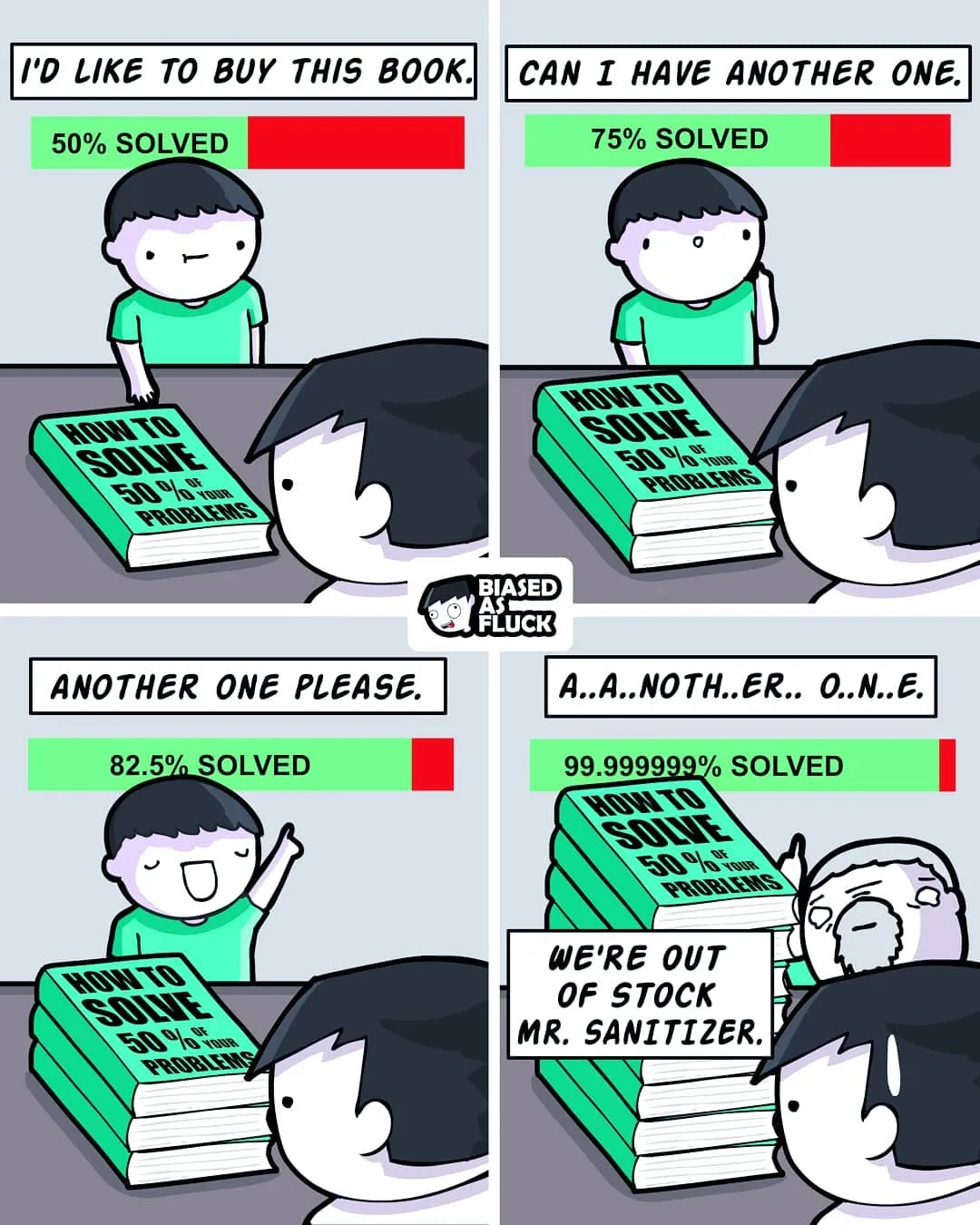
Each new copy supposedly halves the problems left, so the percentage keeps climbing toward 100 while the store runs out.
What punchline does comic #15 reveal?
How does #16 turn a food question into an anxiety gag?
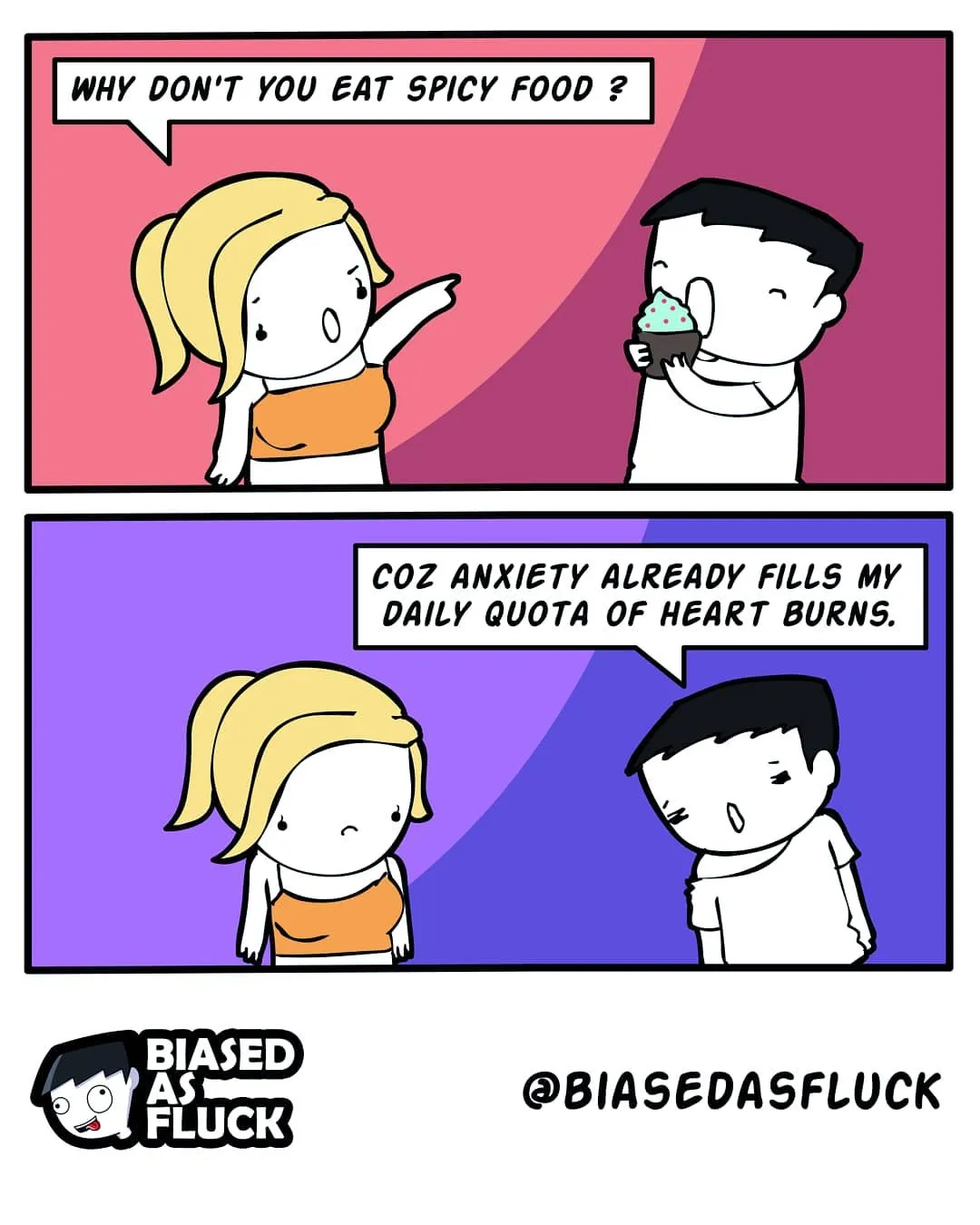
The answer shifts a food question to anxiety, treating heartburn as an everyday side effect of worry.
What surprise does comic #17 spring?
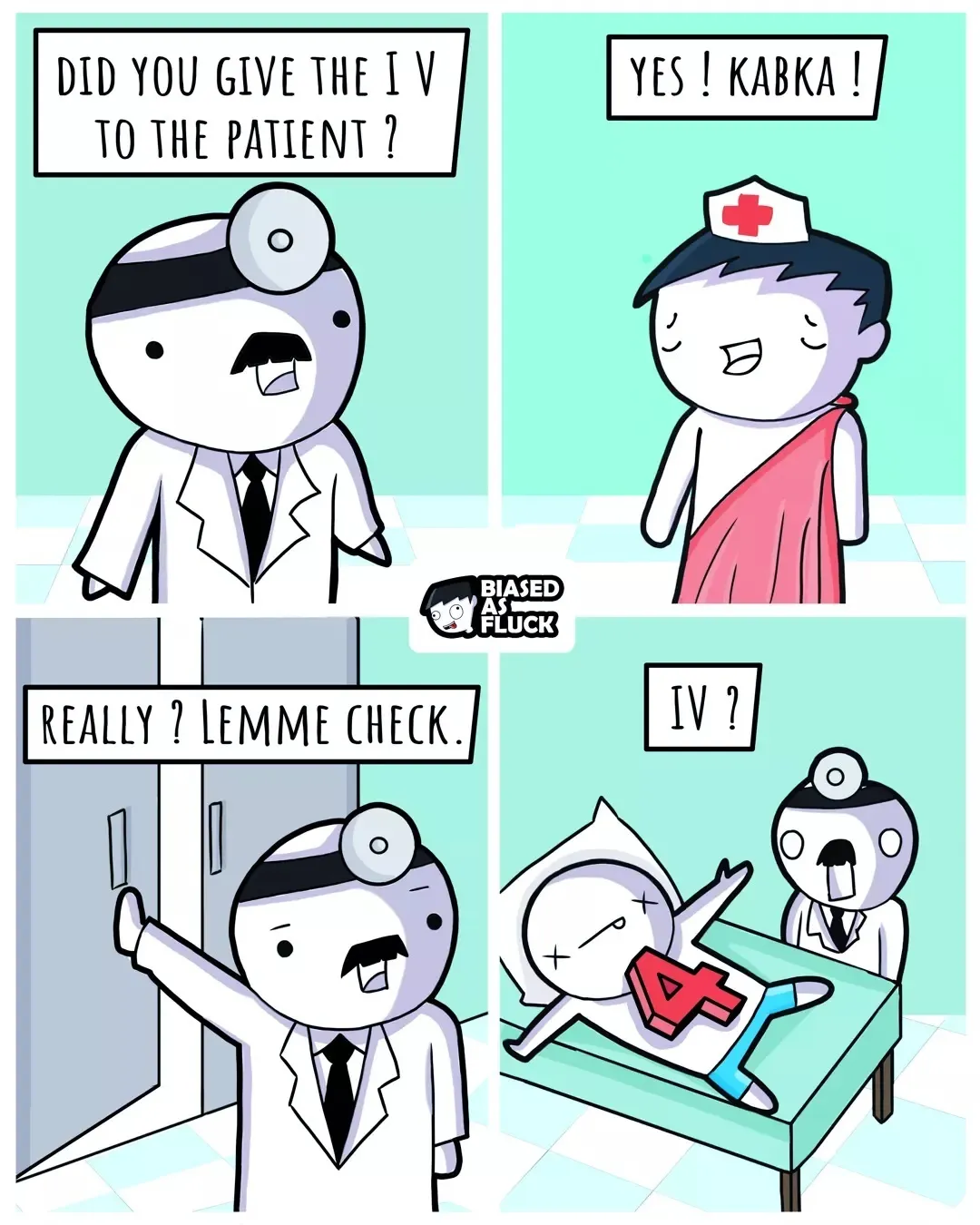
How does comic #18 land its final beat?
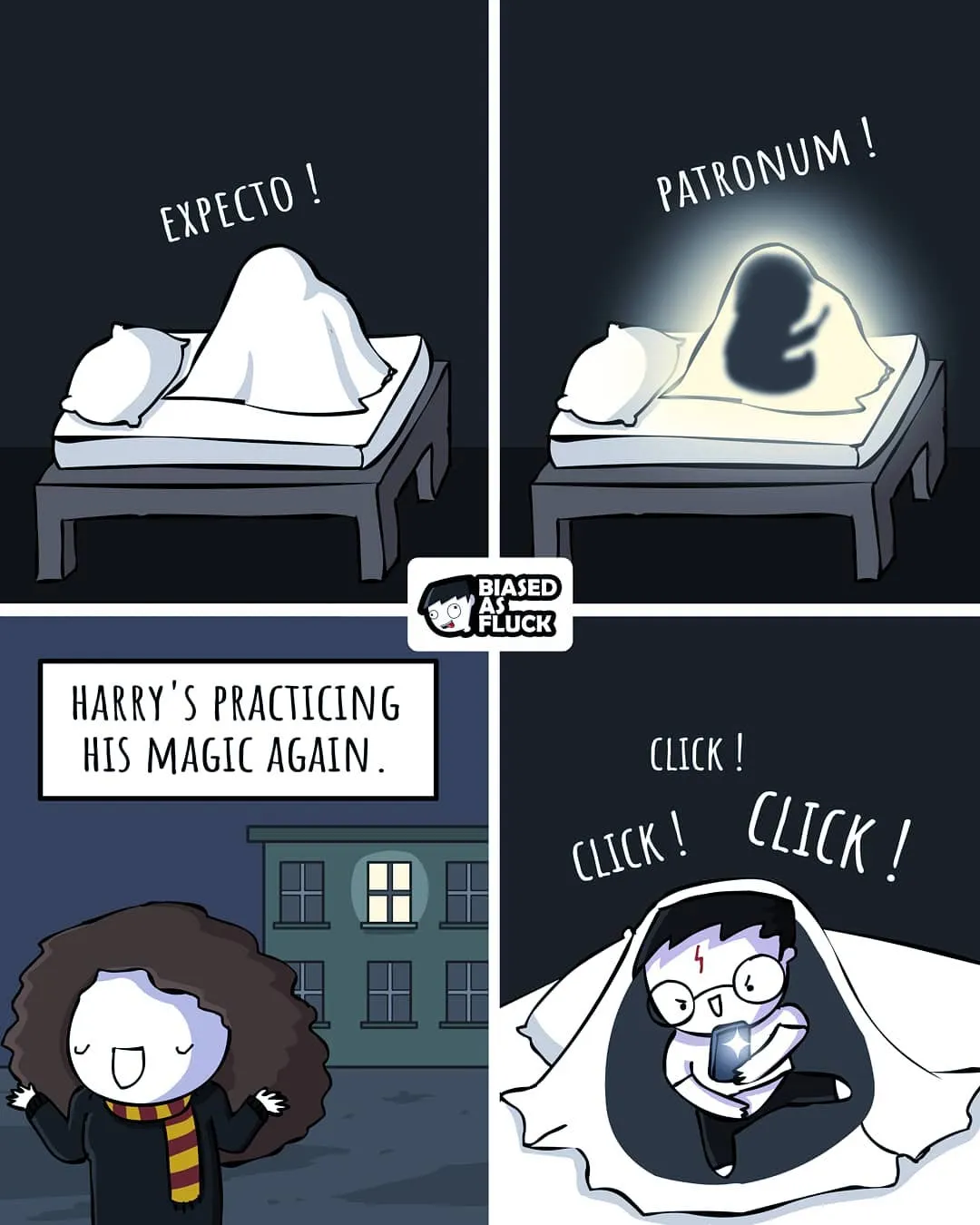
What twist ends comic #19?
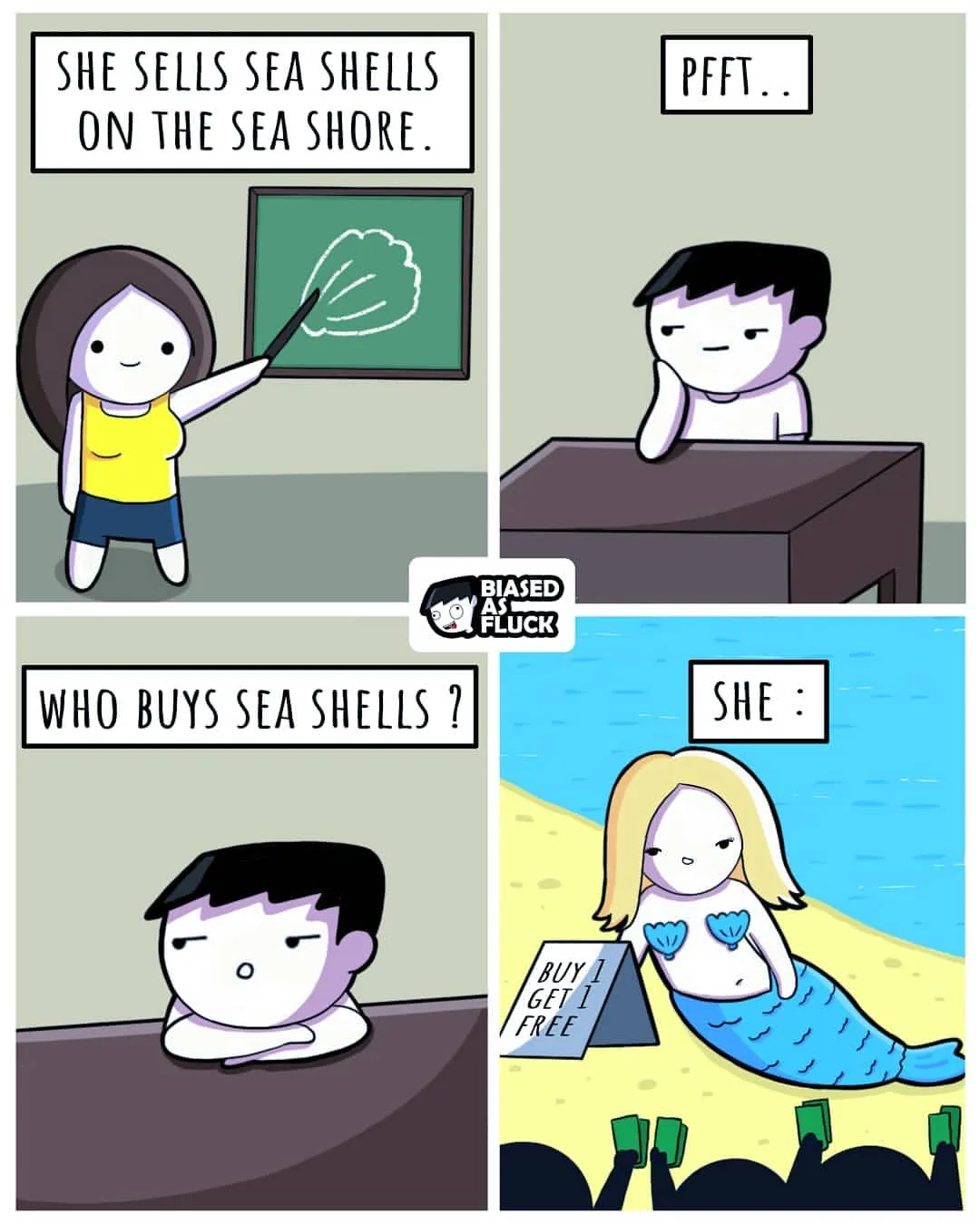
Who is the artist behind these dark comics?
Biased As Fluck is the displayed name on the supplied Instagram profile and on the comic watermarks. Instagram could not be opened directly during research. A third-party SocialAuditor snapshot, indexed roughly two weeks before November 10, 2026, listed 26,100 followers and 331 posts; this is an indicative snapshot, not a live first-party count. No independent biography or further official platform account was verified.
Why does the punchline land in the last panel?
The strongest turns here often arrive with almost no warning, especially when a harmless setup is reinterpreted by the closing panel. For more examples, see our dark-humor comics by James of No Trades and relationship comics by Yehuda Devir. Which strip landed hardest for you—the funeral exchange, the puns, or the AI-family reveal?
📖 Comic Transcript, Scene Description & Humor Notes (Click to Expand)
What does the scene and visual setup look like?
Rounded cartoon characters with heavy black outlines and bright blocks of color act out everyday scenes: a man hunting for shaving foam, a couple locked in a warm embrace, a young man chatting with an elderly mourner at a wedding, and a shopper clutching a green self-help book. Expressions shift from cheerful to deadpan as compact dialogue bubbles build the setup, and each strip's final panel quietly reframes everything that came before with a morbid or absurd twist.
How do the panels and dialogue break down?
- Panel 1: A man runs out of shaving foam and cheerfully accepts a pink item, leading to a blunt cyanide punchline.
- Panel 2: A character finds a man paralyzed on the floor, opens a red Book of Puns, and delivers a joke about having some nerve.
- Panel 3: A reassuring hug turns uncomfortable when the counting is revealed to be about breast tumors.
- Panel 4: At a wedding, 'you're next' sounds playful, but the same line beside a coffin becomes a threat.
Why is this comic so relatable?
These strips work because they start with moments we all recognize, then let one line or image flip the meaning entirely. The humor comes from timing, not shock alone, so the darker punchlines feel earned rather than random.
🎭 Comic Highlights & Relatable Takeaways
✨ A shaving routine turns into a lethal misunderstanding when the cheerful handoff of a pink object makes the final line land with blunt, dark humor.
✨ The same phrase 'you're next' feels playful at a wedding but becomes a threat beside a coffin, showing how setting alone can flip a joke's meaning.
✨ A reassuring hug gets reframed as a tumor gag when the answer turns the counting into an uncomfortable reversal, turning warmth into dread.
✨ The AI-marriage premise becomes literal when the couple's adopted 'children' turn out to be named tablets, blending tech absurdity with family life.
💬 Comic Q&A & Behind the Scenes
💭 What makes the punchlines in Biased As Fluck's dark comics land so hard?
It's all about timing and the final panel. The setup feels ordinary, then the closing frame quietly reframes everything before it, turning a shaving routine or a warm hug into something morbid or absurd. That sudden reinterpretation is what gives these strips their uncomfortable, memorable bite.
💭 Why do the funeral and wedding 'you're next' jokes work so differently?
Context does all the heavy lifting. At a wedding, 'you're next' sounds playful and celebratory, but beside a coffin the exact same words become a chilling threat. It's a clever reminder that identical dialogue can flip meaning entirely depending on the setting the artist places it in.
💭 How does the artist use visual style to support the dark humor?
Rounded characters, heavy black outlines, and bright color blocks keep the scenes deceptively cheerful. That friendly cartoon look makes the morbid twists hit harder, because the warm visual language lulls you into expecting something safe before the final panel delivers its blunt, unsettling reversal.
💭 Who is behind Biased As Fluck and where can readers find more of these comics?
Biased As Fluck is the name shown on the Instagram profile and comic watermarks. A third-party snapshot listed roughly 26,100 followers and 331 posts, though that's indicative rather than live. No independent biography was verified, so treat the account itself as the primary source for new strips.
💭 Where should fans of dark humor look next after finishing these 19 strips?
If the funeral exchange and AI-family reveal landed for you, explore similar work like dark-humor comics by James of No Trades or relationship comics by Yehuda Devir. Both share that same instinct for timing, where a harmless setup gets quietly reinterpreted by a closing panel you never saw coming.